
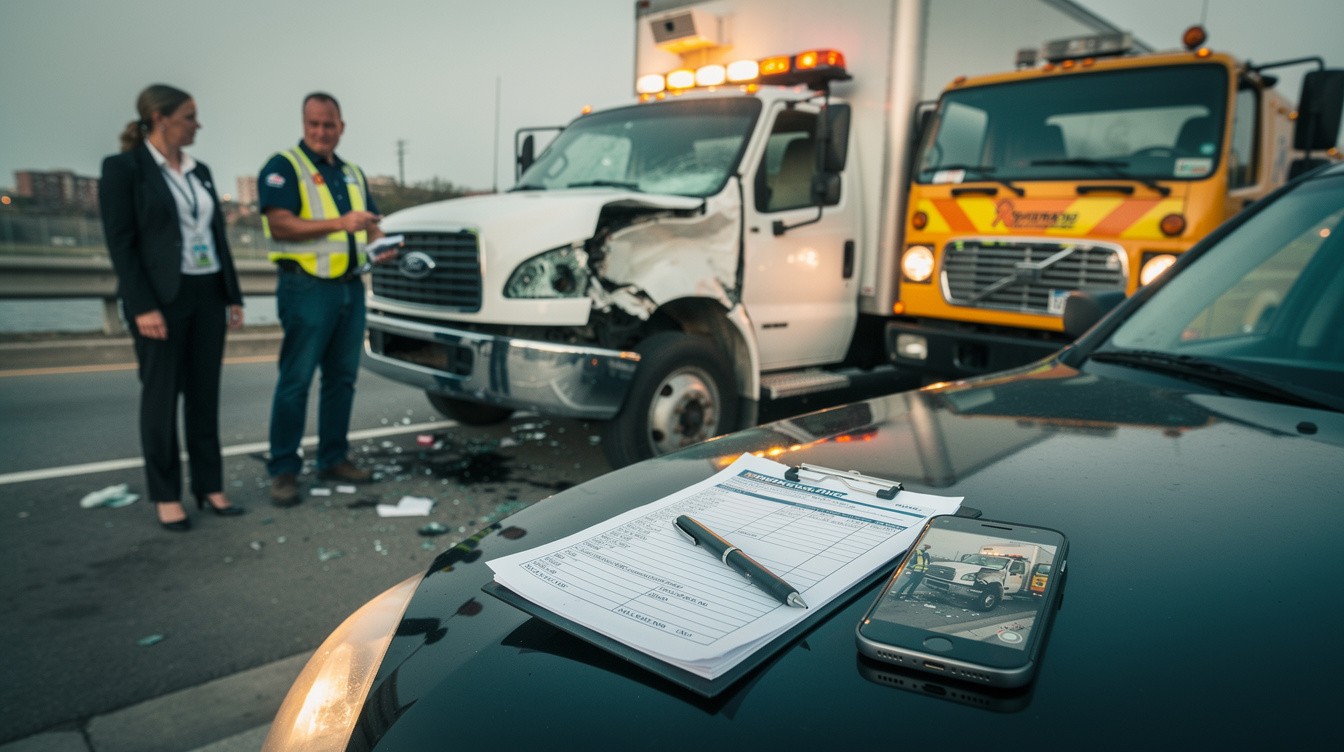
A truck accident can turn your life upside down in seconds. Medical bills pile up, your vehicle needs repairs, and you’re left wondering what happens next.
If you’ve been in a truck accident in Santa Cruz, you have legal rights-and we at Schaar & Silva LLP want you to know what they are. This guide walks you through your truck claim Santa Cruz options, the obstacles you might face, and how to protect yourself.
What Makes a Truck Claim Different
A truck accident claim in Santa Cruz differs fundamentally from a fender-bender with another car, and the law recognizes this distinction. Commercial trucks operating in California must comply with strict state and federal safety regulations that don’t apply to passenger vehicles. When a truck crashes, investigators examine whether the driver followed Vehicle Code requirements around speed, lane changes, braking distance, and cargo weight. A speeding citation or overweight cargo violation found in the truck’s records can establish that the driver breached a legal duty, which forms the foundation of your claim. However, a citation alone doesn’t automatically mean you win compensation. The violation must connect directly to your injuries or property damage. If a truck was speeding and that excessive speed prevented the driver from stopping in time to avoid hitting your vehicle, the violation strengthens your case considerably. Without that connection, the citation remains just evidence in the record.
Liability Beyond the Driver
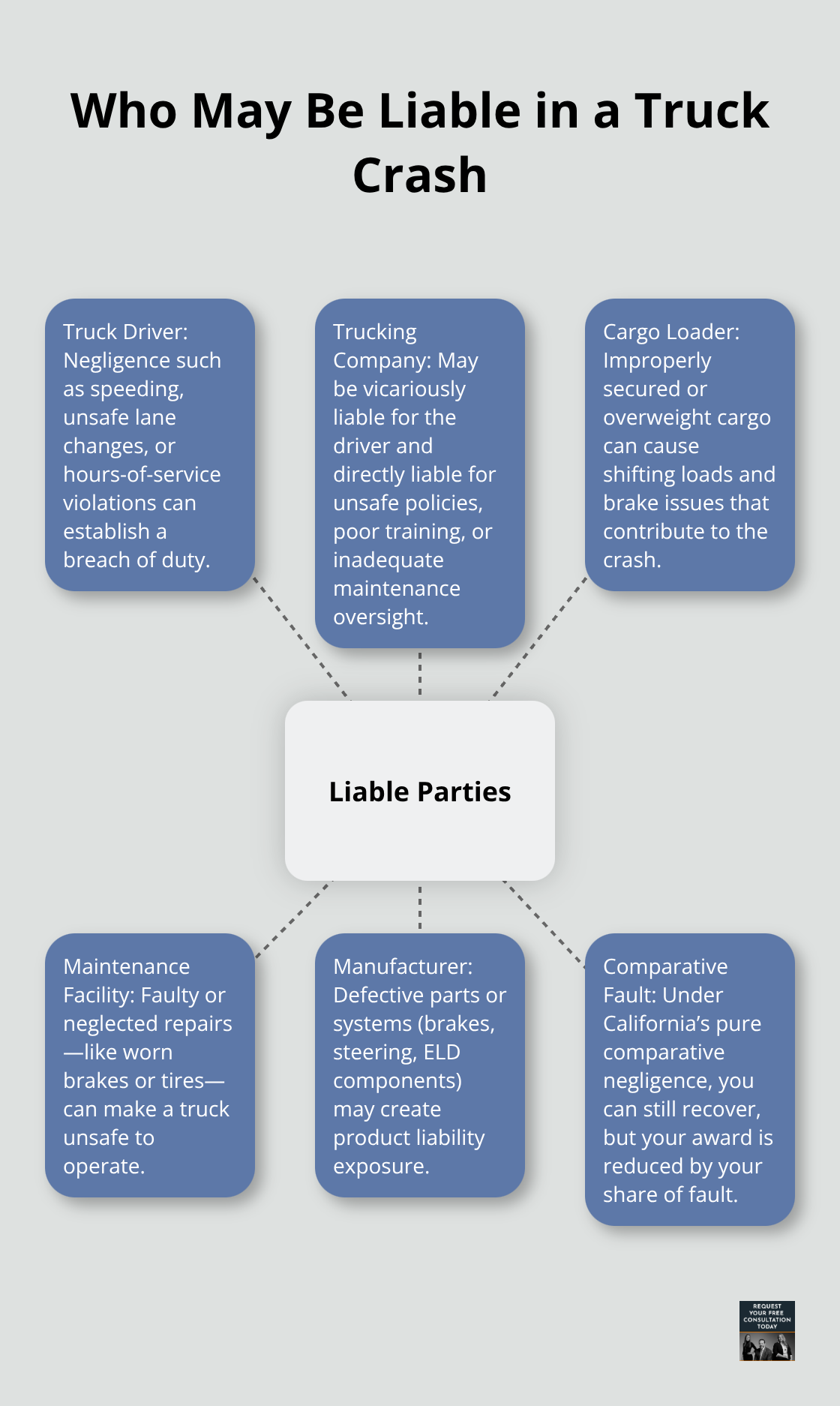
Truck accidents almost always involve multiple liable parties, which is what makes them fundamentally different from car accidents. You might pursue a claim against the truck driver, the trucking company, the cargo loader, the vehicle maintenance facility, or even the manufacturer if equipment failed. California’s pure comparative negligence standard means you can recover damages even if you’re partially at fault, though your compensation reduces by your percentage of fault. This complexity demands attention to detail from day one.
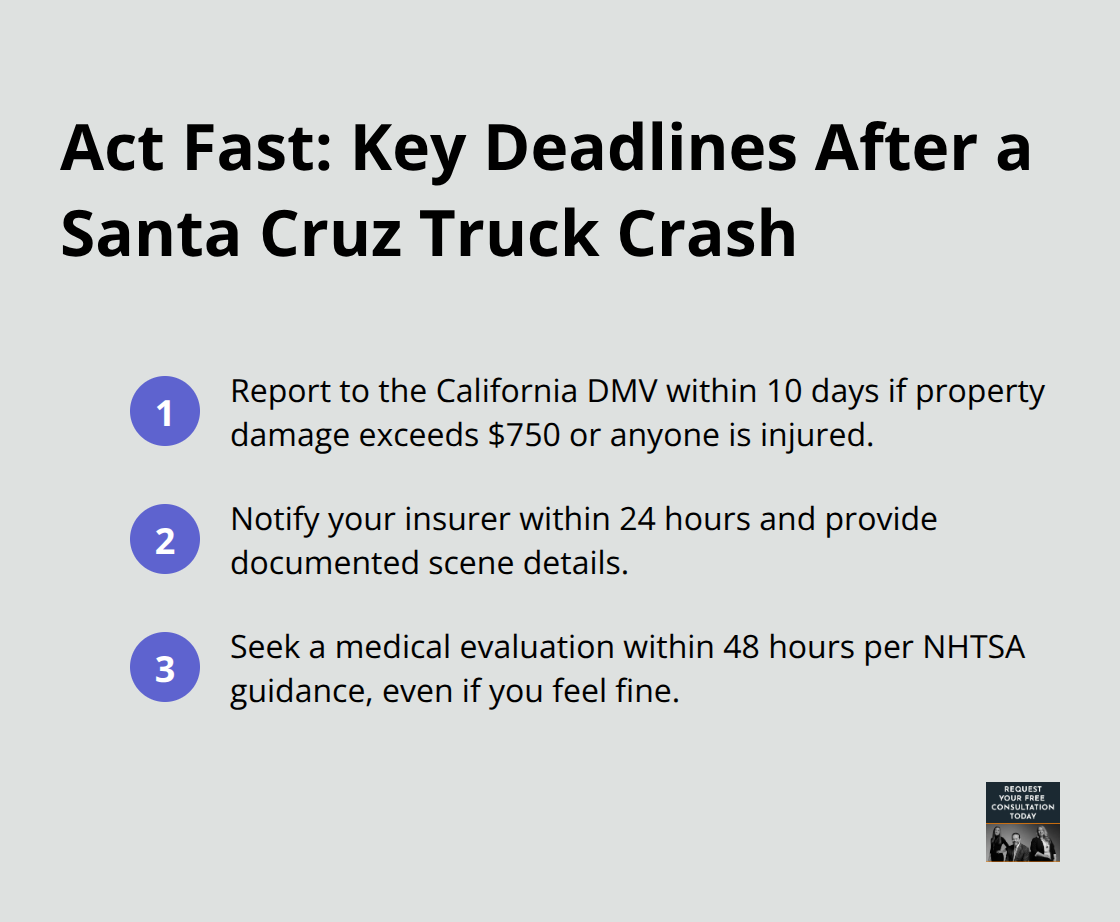
After a Santa Cruz truck crash, you should photograph everything at the scene: vehicle positions, road conditions, and visible damage. Request the official incident report from the Santa Cruz CHP within days, as this becomes critical evidence. Under California Vehicle Code, you must report the accident to the DMV within 10 days if property damage exceeds $750 or anyone is injured. Notify your insurer within 24 hours with documented scene details. Seek medical evaluation within 48 hours according to National Highway Traffic Safety Administration guidelines, even if you feel fine, because hidden injuries frequently emerge later. Your medical records from day one onward become proof of damages.
Time Limits That Matter
California gives you two years from the accident date to file a personal injury lawsuit, but waiting that long weakens your case substantially. Witness memories fade, evidence disappears, and the other side builds their defense while your trail grows cold. Medical documentation must start immediately and continue consistently throughout your recovery. If you stop treatment for months then restart, the other side argues your injuries weren’t serious. Property damage claims follow different timing rules, so understanding your specific deadlines matters enormously. Early preservation of evidence-including driver logbooks, electronic logging data, and vehicle maintenance records-protects your rights before trucking companies limit access to these documents.
What You Can Recover After a Truck Accident
After a truck accident in Santa Cruz, you’re entitled to recover three distinct categories of damages, and understanding each one prevents you from leaving money on the table.
Medical Expenses and Lost Wages
Medical expenses represent the most straightforward component of your recovery. If you received emergency care at Watsonville Hospital or Dominican Hospital following your crash, those bills are recoverable. You must document every visit, treatment, prescription, and cost from day one forward because insurers scrutinize gaps in medical records.
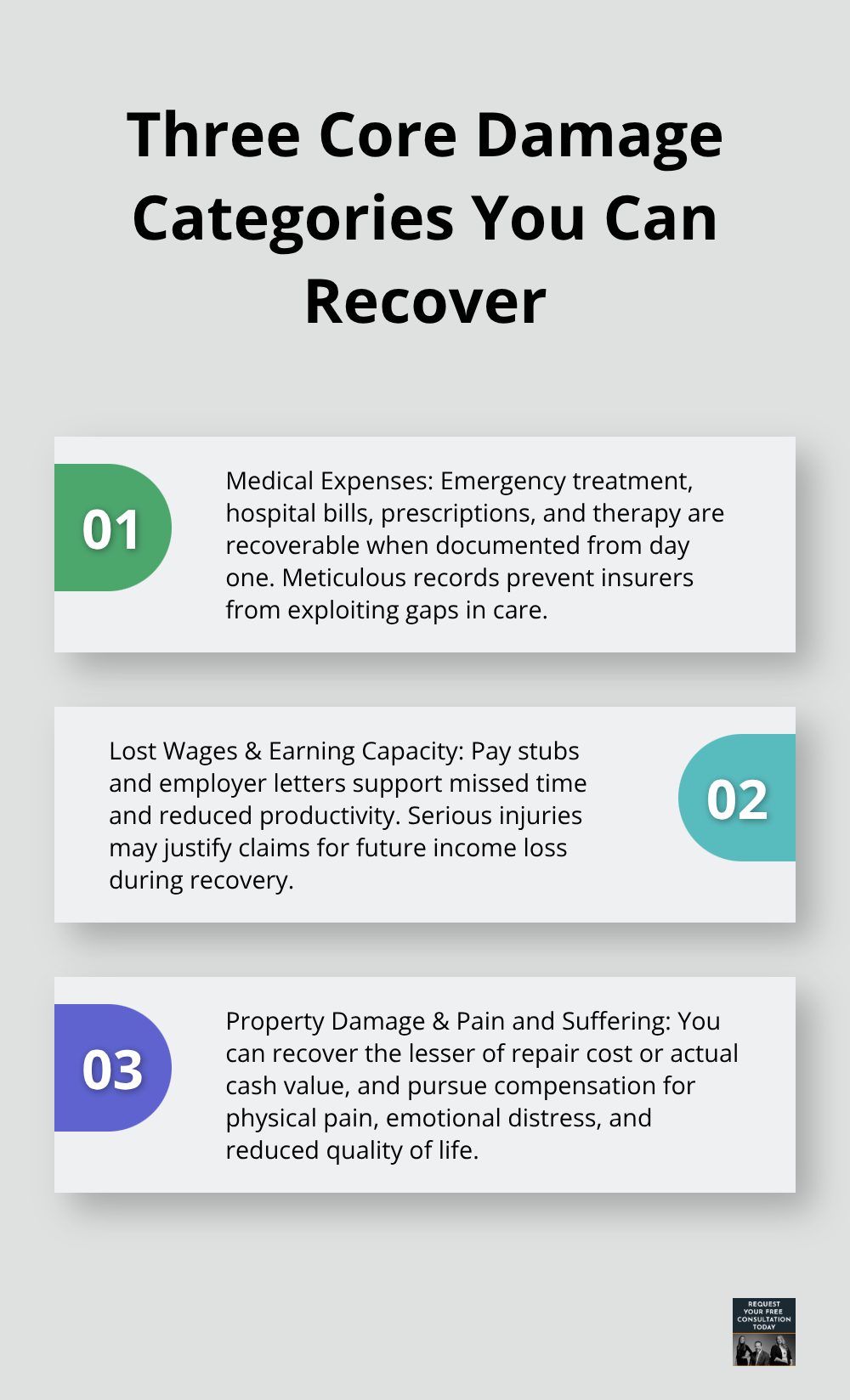
Lost wages follow the same principle: you should keep payroll records and documentation of reduced productivity if you returned to work before full recovery. Many people underestimate this category and accept settlements without calculating their actual income loss. If your truck accident caused long-term injuries that require ongoing rehabilitation, you can claim loss of earning capacity, which accounts for future income you’ll lose during recovery. Medical lien services can help you manage mounting bills; providers place liens on settlement proceeds, which allows you to receive treatment now without immediate payment pressure.
Property Damage Recovery
Property damage recovery operates differently than medical claims. California law requires insurers to pay the lesser of repair cost or your vehicle’s actual cash value at the time of loss. You should have your vehicle inspected by a professional immediately for hidden damage that affects safety and future repair costs. Your repair bill should itemize parts as original equipment manufacturer, aftermarket, or reconditioned because insurers resist paying for premium replacements when lower-cost alternatives exist. If you disagree with the insurer’s valuation, California allows you to challenge it through an appraisal process involving two appraisers and an umpire who settles disputes.
Pain and Suffering Damages
Pain and suffering damages compensate you for the physical pain, emotional distress, and reduced quality of life caused by the accident. Courts recognize that emotional trauma is frequently underestimated in truck accidents, and serious injuries often warrant substantial awards for this category. The connection between your medical treatment and your pain strengthens these claims considerably. If your injuries required extended hospitalization or ongoing therapy, you should document the psychological impact through treatment records and provider statements. You must maintain a well-organized file of medical records, repair estimates, police reports, and all insurer communications to prevent disputes over what damages you’re owed. This preparation positions you for maximum recovery and also reveals the complexity of truck accident claims-which brings us to the obstacles you’ll likely face.
What Makes Truck Claims Harder to Resolve
Truck accident claims in Santa Cruz face obstacles that car accident claims rarely encounter, and understanding these barriers protects you from costly mistakes. When a truck crashes, you negotiate with multiple insurance companies instead of one. The trucking company carries liability insurance, the driver may carry personal coverage, cargo insurers protect the load, and hired contractors or owner-operators add additional layers of responsibility. Each insurer protects its own interests first, which means they coordinate minimally and sometimes contradict each other’s positions on fault. One insurer might accept partial responsibility while another denies everything, forcing you to pursue claims across multiple parties simultaneously. This fragmentation delays settlements significantly.
Federal Regulations and Documentation Demands
The Federal Motor Carrier Safety Administration regulates commercial trucks far more strictly than passenger vehicles, which means investigators examine driver logbooks, electronic logging device data, maintenance records, and compliance violations that would not exist in a car accident. Trucking companies often resist releasing these documents without legal pressure, and once litigation starts, discovery timelines extend well beyond what most accident victims expect. A truck accident claim routinely takes 18 to 36 months to resolve compared to 6 to 12 months for typical car accidents.
Preserving Evidence Before It Disappears
Documentation becomes your strongest weapon against these delays. California Vehicle Code requires you to report the accident to the DMV within 10 days if property damage exceeds $750, but you should also request the full accident report from Santa Cruz CHP, secure copies of the truck’s maintenance logs if accessible at the scene, photograph the vehicle’s registration and insurance cards, and document the truck’s company name and DOT number.
Preserve dashcam footage and any surveillance video from nearby businesses immediately, as trucking companies often request deletion of unfavorable footage from their own systems.
Acting Within Your Legal Timeline
The statute of limitations gives you two years to file a personal injury lawsuit, but the practical deadline arrives much sooner because evidence degrades and witnesses become unreachable. Early legal guidance prevents irreversible damage to your claim when multiple insurers complicate the process and truck-specific evidence requires immediate preservation.
Final Thoughts
A truck accident in Santa Cruz disrupts your life immediately, but your legal rights protect your recovery if you act decisively. You can recover medical expenses, lost wages, property damage, and compensation for pain and suffering. California’s pure comparative negligence standard means you can collect damages even if you’re partially at fault, though your compensation reduces by your percentage of fault.
Evidence disappears, witnesses scatter, and multiple insurance companies coordinate minimally to delay resolution. Your truck claim Santa Cruz succeeds when you document everything from day one and preserve truck-specific evidence like driver logbooks and electronic logging data. Liability extends beyond the driver to the trucking company, cargo loaders, and maintenance facilities, which means identifying all responsible parties strengthens your position significantly.
Contact an attorney before settlement pressure mounts-early legal guidance prevents irreversible mistakes that cost you thousands in lost compensation. We at Schaar & Silva LLP help Santa Cruz County residents navigate these complexities by managing medical bill assistance through lien services, evaluating property damage claims fairly, and connecting you with support for emotional trauma that insurers frequently underestimate. Reach out to discuss your truck accident claim and protect the compensation you deserve.
