
Truck crashes cause devastating injuries and financial losses that car accidents rarely match. At Schaar & Silva LLP, we help people in Santa Cruz County, Sacramento, and Oakland understand their truck crash lawsuit rights and recover what they deserve.
You have legal options after a truck crash, and knowing them matters. This guide walks you through liability, compensation, and the steps needed to build a strong claim.
Why Truck Crashes Create Different Legal Challenges
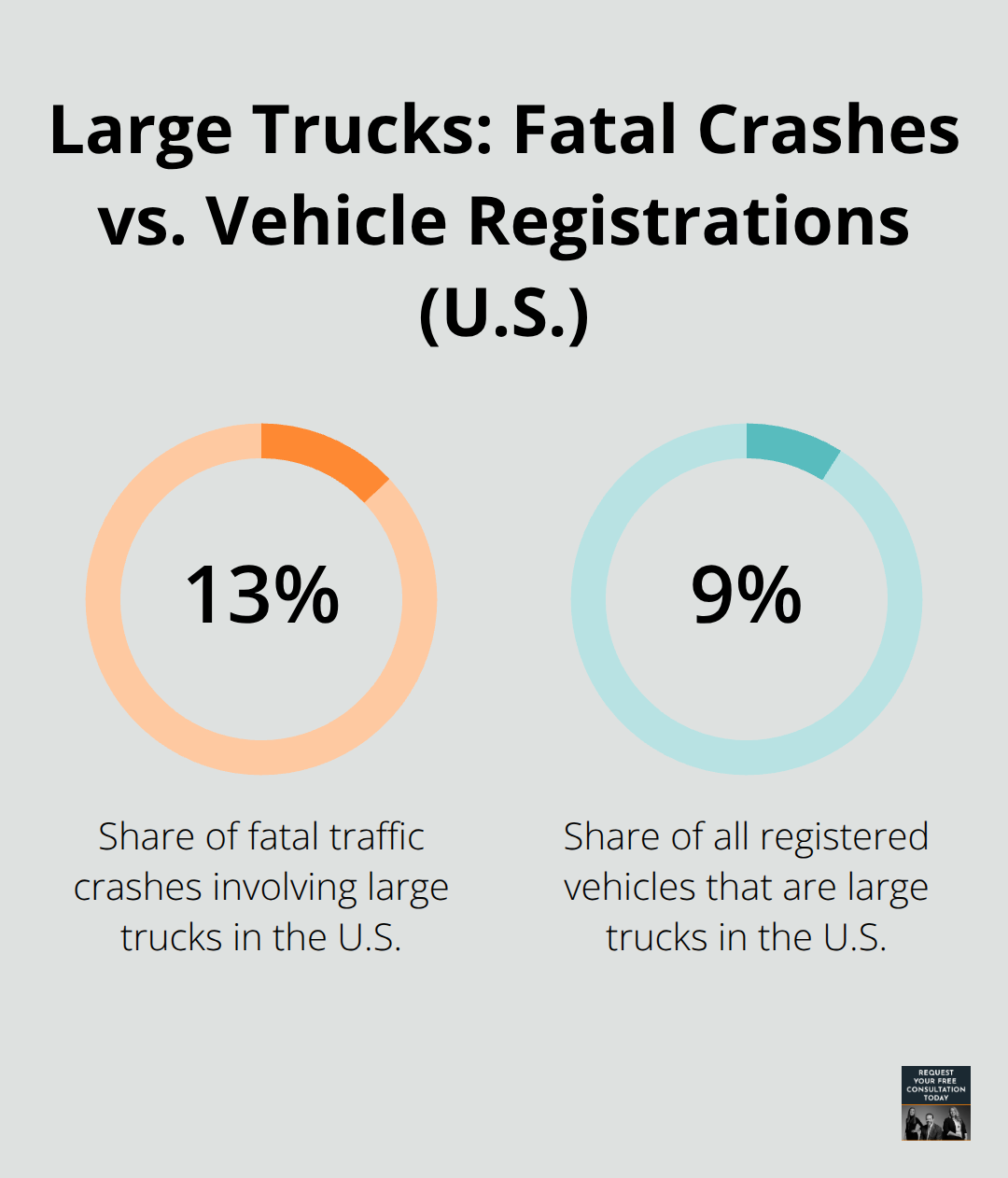
Truck accidents demand a different legal approach than car crashes because the stakes are exponentially higher and the regulations are far more complex. A fully loaded commercial truck weighing up to 80,000 pounds creates catastrophic injuries that a passenger vehicle simply cannot. According to the National Highway Traffic Safety Administration, large trucks are involved in about 13% of fatal traffic crashes despite representing only 9% of registered vehicles. Trucking companies operate under Federal Motor Carrier Safety Regulations that do not apply to regular drivers, and understanding these rules is essential to your case.
Multiple parties can be liable in ways that car accidents rarely allow
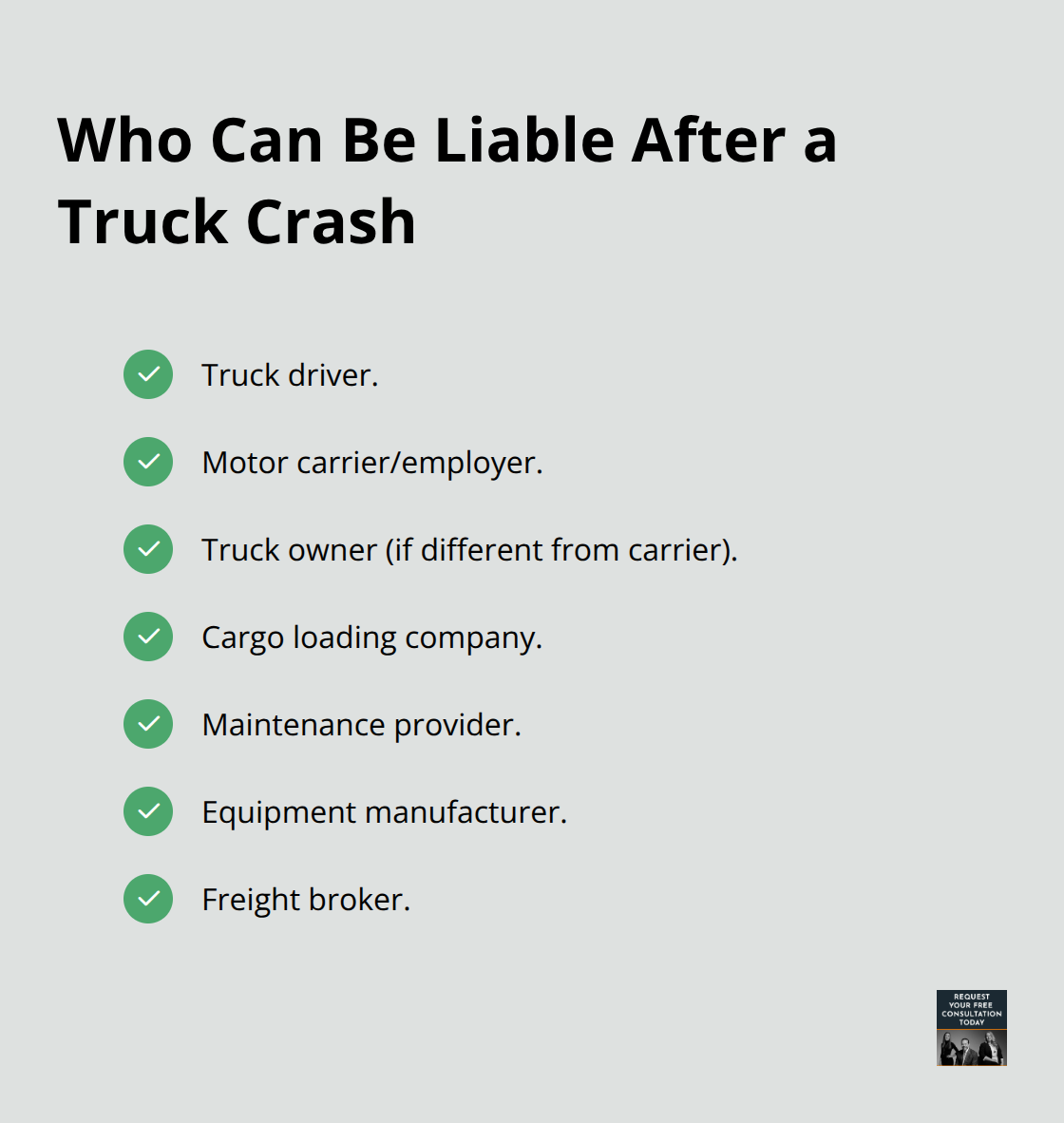
A truck crash case is not just about the driver. You can pursue claims against the truck driver, the motor carrier that employs them, the truck owner if different from the carrier, the company that loaded the cargo, maintenance providers, equipment manufacturers, and freight brokers. This matters because if one defendant cannot pay a judgment, California’s joint and several liability rules allow you to recover from the others.
Trucking companies face automatic liability for their drivers’ on-duty actions under vicarious liability, which increases your chances of meaningful recovery. You can also establish direct liability against the company itself for negligent hiring, inadequate maintenance, poor training, unsafe safety policies, or dangerous scheduling that fatigues drivers. Federal FMCSA violations commonly underpin these claims, including violations for excessive hours of service, improper cargo loading, and failure to maintain vehicles to safety standards.
Evidence preservation is critical and time-sensitive
The moment a truck crash happens, critical evidence begins disappearing. You need a preservation letter sent immediately to prevent the trucking company from destroying the truck’s electronic control module data, Electronic Logging Device records, GPS data, dashcam footage, maintenance records, and dispatch communications. This evidence is objective and powerful. An ECM black box records speed, braking patterns, and acceleration data that proves what actually happened. ELD records show whether the driver violated hours-of-service regulations that cause fatigue-related crashes. Dashcam footage provides irrefutable visual evidence. Post-accident drug and alcohol tests, weigh-station records, and maintenance histories reveal negligence patterns. Without immediate preservation, trucking companies routinely destroy this evidence, making your case significantly weaker.
Acting fast protects your recovery
The investigation phase of truck crash claims typically takes three to six months, so acting fast protects your ability to recover. Delays allow memories to fade, witnesses to become unavailable, and critical documentation to vanish. The sooner you contact an attorney, the sooner preservation letters reach the trucking company and the sooner investigators can collect evidence while it remains fresh. This early action also allows medical professionals to document your injuries thoroughly, which strengthens your claim for both economic and non-economic damages.
What You Can Actually Recover After a Truck Crash
Economic Damages Cover All Your Financial Losses
Truck crash compensation in California covers both economic and non-economic damages, and the amounts are far higher than most accident victims realize. Economic damages include all measurable financial losses: medical bills, surgical procedures, rehabilitation costs, future medical care, lost wages, property damage to your vehicle, and rental car expenses while your truck is being repaired or replaced. California law places no general cap on these damages, which means your recovery is limited only by what you can prove. Collect every medical bill, wage stub showing lost income, and receipt for expenses related to your recovery. Insurance adjusters aggressively challenge every damage claim, so thorough documentation matters.
Non-Economic Damages Reflect Your Pain and Suffering
Non-economic damages cover pain and suffering, loss of enjoyment of life, emotional distress, and permanent disfigurement or disability. Start a pain and suffering journal immediately after the crash, recording daily pain levels, activities you cannot perform, and how the injury affects your life. This documentation strengthens your claim significantly. In severe cases involving catastrophic injuries or death, punitive damages may also apply if the trucking company engaged in extreme misconduct such as knowingly operating defective trucks or falsifying safety records.
California’s Two-Year Deadline Controls Your Rights
California gives you two years from the crash date to file a lawsuit, but this deadline is far more aggressive than most people understand. If you miss it, courts will dismiss your case automatically and you lose all rights to compensation. The statute exists to prevent frivolous lawsuits and protect evidence from degrading, but it works against you if you delay. A separate six-month deadline applies if the at-fault driver works for a government agency. If you were a minor at the time of the crash, the two-year clock does not start until you turn eighteen. Discovering a previously unknown injury caused by the accident can extend the deadline in limited circumstances, but relying on these exceptions is risky.
Acting Within Weeks Protects Your Evidence and Recovery
The practical reality is that you should contact an attorney within weeks of the crash, not months. Early action allows your lawyer to send preservation letters before evidence vanishes, file administrative claims if government vehicles are involved, and begin building your case while witnesses and documentation remain accessible. Insurance adjusters use these deadlines strategically to pressure you into accepting low settlements before you fully understand your injuries. An attorney levels that playing field and protects your rights throughout the claims process. The investigation phase of truck crash claims typically takes three to six months, so acting fast protects your ability to recover. Delays allow memories to fade, witnesses to become unavailable, and critical documentation to vanish. The sooner you contact an attorney, the sooner preservation letters reach the trucking company and the sooner investigators can collect evidence while it remains fresh.
Understanding what you can recover is only half the battle-building a strong claim requires gathering the right evidence and working with professionals who understand truck accident complexities.
How to Gather and Preserve Evidence That Wins Your Case
Photograph and Document the Crash Scene Immediately
The evidence you collect in the first hours after a truck crash determines whether you recover full compensation or accept a fraction of what you deserve. Photograph everything from multiple angles: the truck’s position, your vehicle’s damage, road conditions, skid marks, traffic signals, and any visible truck defects like bald tires or broken lights. Collect the truck driver’s license, license plate, vehicle identification number, insurance information, and contact details from every witness present. California requires reporting crashes with injuries or property damage exceeding $1,000, so file a police report and obtain the report number immediately. Do not provide recorded statements to trucking company adjusters-they work for the company, not you. Instead, write down your own account while details are fresh, noting exactly what you remember about how the crash occurred, road conditions, weather, and the truck’s behavior before impact.
Send Preservation Letters Before Evidence Vanishes
The moment you leave the crash scene, send preservation letters to the trucking company and any other defendants to prevent destruction of critical evidence. These letters demand preservation of the truck’s electronic control module data, Electronic Logging Device records, GPS tracking data, dashcam footage, maintenance records, fuel logs, dispatch communications, and the driver’s personnel file. The ECM black box records speed, braking patterns, and acceleration with precision that no witness can match-this data proves liability. ELD records show whether the driver violated hours-of-service regulations that cause fatigue-related crashes, a common violation the Federal Motor Carrier Safety Administration tracks.
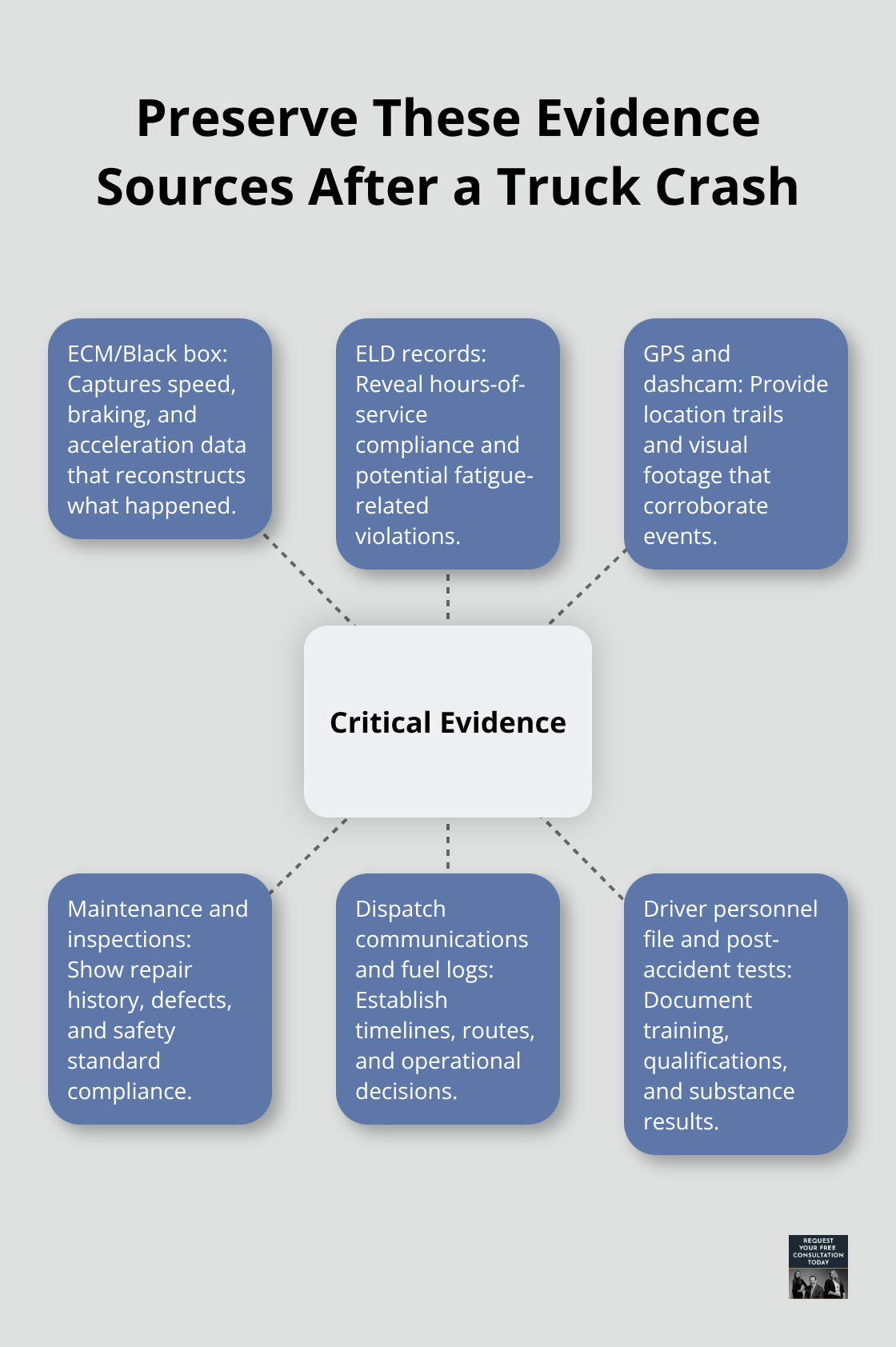
Dashcam footage from the truck’s cabin and exterior cameras provides irrefutable visual evidence of what happened. Post-accident drug and alcohol test results, weigh-station inspection records, and maintenance histories reveal patterns of negligence. Without immediate preservation, trucking companies routinely destroy this evidence within days.
Build Your Medical Record From Day One
Medical documentation must start immediately after the crash. Seek medical attention even if injuries seem minor-some truck crash injuries like traumatic brain injury or spinal damage worsen over weeks. Obtain copies of all medical records, test results, imaging studies, and treatment notes. Start a pain and suffering journal on day one, recording daily pain levels on a scale of one to ten, activities you cannot perform, sleep disruption, and emotional impacts. This documentation is worth thousands in your claim because insurance adjusters dismiss vague pain descriptions but struggle to dispute detailed daily entries.
Request Official Reports and Verify Accuracy
Request accident reports from the California Highway Patrol or local police department within ten days of the crash to avoid complications. These official reports contain the investigating officer’s observations about fault, vehicle damage severity, and contributing factors. Compare the official report to your own documentation and correct any errors immediately, as insurers rely heavily on police findings.
Final Thoughts
Truck crash lawsuit rights in California protect your ability to recover full compensation, but only if you act decisively within weeks of the crash. Trucking companies have substantial resources and aggressive legal teams working to minimize what you receive, so understanding your rights means knowing that you can pursue multiple defendants, that evidence preservation happens immediately, and that California’s two-year deadline is absolute. Economic damages cover every financial loss from medical bills to lost wages, while non-economic damages reflect the pain and suffering that money alone cannot repair.
Legal representation transforms your recovery because truck accident cases involve federal regulations, complex liability rules, and evidence that requires professional analysis. Insurance adjusters are trained to challenge every claim and use deadlines strategically to pressure you into accepting inadequate settlements before your injuries fully manifest. An attorney levels that playing field by sending preservation letters immediately, collecting evidence while it remains accessible, and handling all communications with insurers so you can focus on healing.
We at Schaar & Silva LLP understand the intricacies of truck crash claims and help clients throughout Santa Cruz County, Sacramento, and Oakland recover what they deserve. Contact Schaar & Silva LLP now to discuss your truck crash lawsuit rights and start your recovery today-the sooner you begin, the sooner preservation letters protect evidence and your case builds strength.
