

Truck accidents in California often result in serious injuries and complex legal battles. The truck accident litigation steps can feel overwhelming when you’re recovering from injuries and facing mounting medical bills.
We at Schaar & Silva LLP have guided countless clients through this process in Santa Cruz County, Sacramento, and Oakland. This roadmap breaks down exactly what happens from the moment of impact through settlement or trial.
What to Do Immediately After a Truck Accident
Protect Evidence at the Scene
The first hours after a truck accident determine whether you’ll have strong evidence for your claim. Move to a safe location immediately and call 911 if anyone is injured. While waiting for emergency responders, photograph the truck, your vehicle, license plates, skid marks, road conditions, and the surrounding area from multiple angles. Write down the truck carrier name, USDOT number, and trailer numbers if visible. Collect names, phone numbers, insurance information, and driver’s license details from the truck driver. Get contact information from any witnesses at the scene.
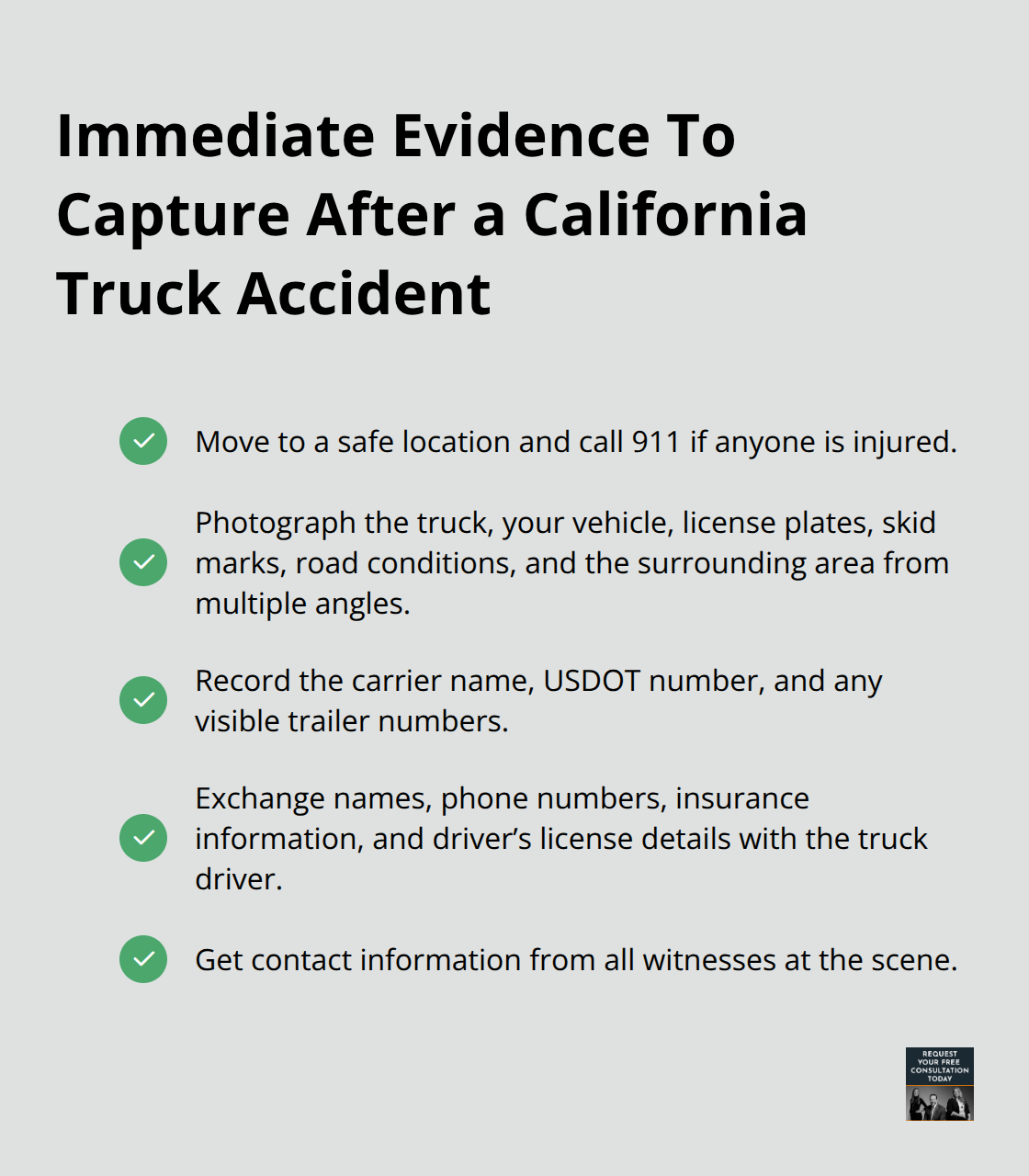
According to the Judicial Council of California, the statute of limitations for personal injury claims is two years from the accident date, but evidence deteriorates fast. Truck black boxes record speed, braking, and throttle data and can be overwritten in as little as 30 days. Dashcam footage loops and deletes automatically when storage fills. This means waiting weeks to gather evidence costs you critical data that proves what happened.
Document Your Medical Condition
Seek medical attention immediately, even if you feel fine. Injuries from truck accidents often appear hours or days later, and medical records establish the connection between the crash and your injuries. Keep every receipt, bill, and appointment record. File a police report and obtain the report number for your records.
Notify the Right Parties
Notify your insurance company promptly with factual information only, avoiding any admission of fault. Do not accept a settlement offer before consulting with a lawyer. Contact a California truck accident attorney right away so they can send a preservation letter to the trucking company, legally requiring them to protect all evidence (including the truck itself, electronic data, maintenance records, and driver logs). The California Government Code requires carriers to retain electronic logging device records and supporting documents for six months, but companies often move or repair trucks quickly. Acting within days, not weeks, protects your ability to recover damages and prevents the other side from destroying or altering critical evidence.
Understanding what liability means in truck accidents and how courts calculate damages shapes your entire claim strategy.
Understanding Liability and Damages in Truck Accidents
Multiple Parties Share Responsibility
Truck accidents differ fundamentally from car crashes because multiple parties may share liability. The truck driver could be negligent, but the trucking company may also be responsible under vicarious liability laws, meaning they’re legally accountable for their driver’s actions. California courts also examine whether the carrier failed to hire qualified drivers, provided inadequate training, or neglected vehicle maintenance. Owner-operators and leasing arrangements add complexity because responsibility shifts depending on who controls the vehicle and operations.
When you file a claim, identifying every liable party matters because each one represents a potential source of recovery. The Judicial Council of California recognizes that truck accident claims often involve multiple defendants, and missing even one reduces your total compensation. We at Schaar & Silva LLP investigate all angles to build a complete liability picture.
Common Causes Point to Negligence
Common causes in California include driver fatigue, inadequate braking systems, improper load securement, and violations of Federal Motor Carrier Safety Administration regulations. Speed, following distance, and blind spot awareness play major roles too. Establishing that the defendant violated FMCSA rules strengthens your position because regulatory violations often prove negligence directly.
Dashcam footage and black box data showing excessive speed or sudden braking provide objective proof courts respect far more than witness statements alone. This evidence transforms your claim from “he said, she said” into documented fact that judges and juries cannot ignore.
Economic Damages Cover Quantifiable Losses
Economic damages cover medical bills, lost wages, property damage, and future medical costs, and these are straightforward to calculate with receipts and medical records. Property damage claims require documenting the vehicle’s condition before the crash, repair estimates, and the actual repair costs. If your vehicle is a total loss, the settlement covers fair market value.
Preserve all medical bills and receipts immediately because underestimating damages early locks you into a lower settlement when you could have claimed significantly more. Courts award these damages based on hard numbers, so thorough documentation directly increases your recovery.
Non-Economic and Punitive Damages Compensate Broader Harm
Non-economic damages compensate for pain, suffering, emotional distress, and reduced quality of life. California courts allow substantial awards for permanent injuries like spinal cord damage or traumatic brain injury. Punitive damages apply when the defendant’s conduct was reckless or grossly negligent, such as knowingly allowing an unsafe truck on the road. Courts award these to punish bad behavior and deter similar actions, and the amount depends on the defendant’s financial resources and the severity of misconduct.
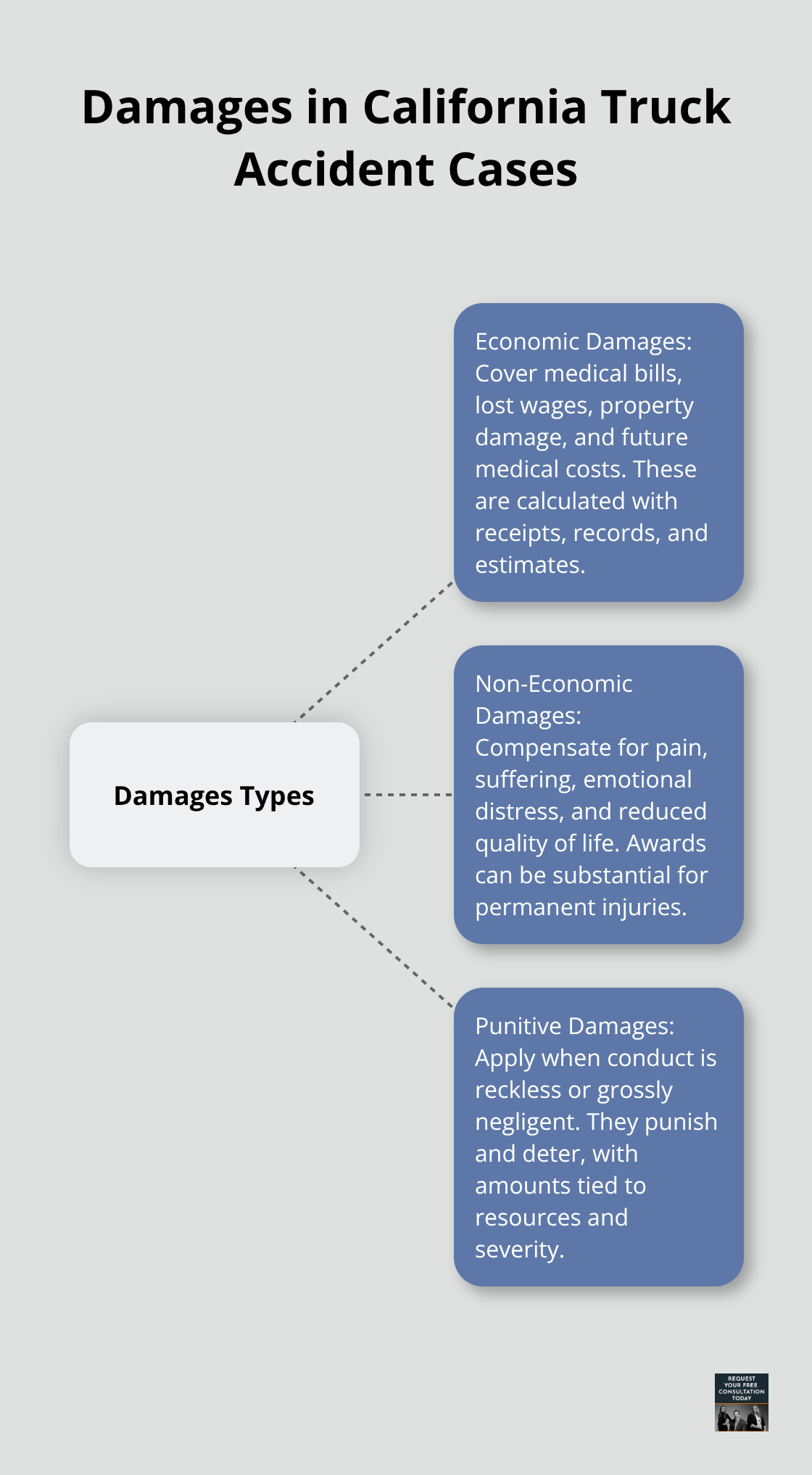
Truck accident cases regularly produce multi-million-dollar verdicts because the injuries are severe and the negligence is often egregious. The combination of economic losses, permanent disability, and punitive exposure means that comprehensive damage claims yield substantially higher settlements than victims initially expect. Understanding what you can recover shapes how aggressively you should pursue your case and what settlement offers you should accept or reject.
The Discovery and Settlement Process
Exchange of Evidence and Information
After liability is established and damages are documented, your case enters the discovery and settlement phase where both sides exchange evidence and negotiate resolution. Discovery involves formal requests for documents, written questions called interrogatories, and depositions where witnesses and parties answer questions under oath. The trucking company’s attorney will request your medical records, employment history, and any communications about the accident. Targeted discovery requests obtain the truck’s maintenance records, driver qualification files, electronic logging device data, dashcam footage, and dispatch communications that prove negligence. This phase typically lasts three to six months, and the strength of your evidence directly determines settlement value. A trucking company facing dashcam footage showing their driver exceeded the speed limit, combined with black box data confirming inadequate braking and maintenance records showing failed brake inspections, will offer substantially more than one facing only witness statements.
Settlement Negotiations and Counteroffers
Settlement negotiations usually begin once both sides have exchanged key evidence and understand the case’s strength. Insurance adjusters representing the trucking company often open with lowball offers-sometimes 20 to 40 percent below what the case is actually worth. Your attorney counters with a demand letter backed by medical evidence, economic calculations, and liability proof.
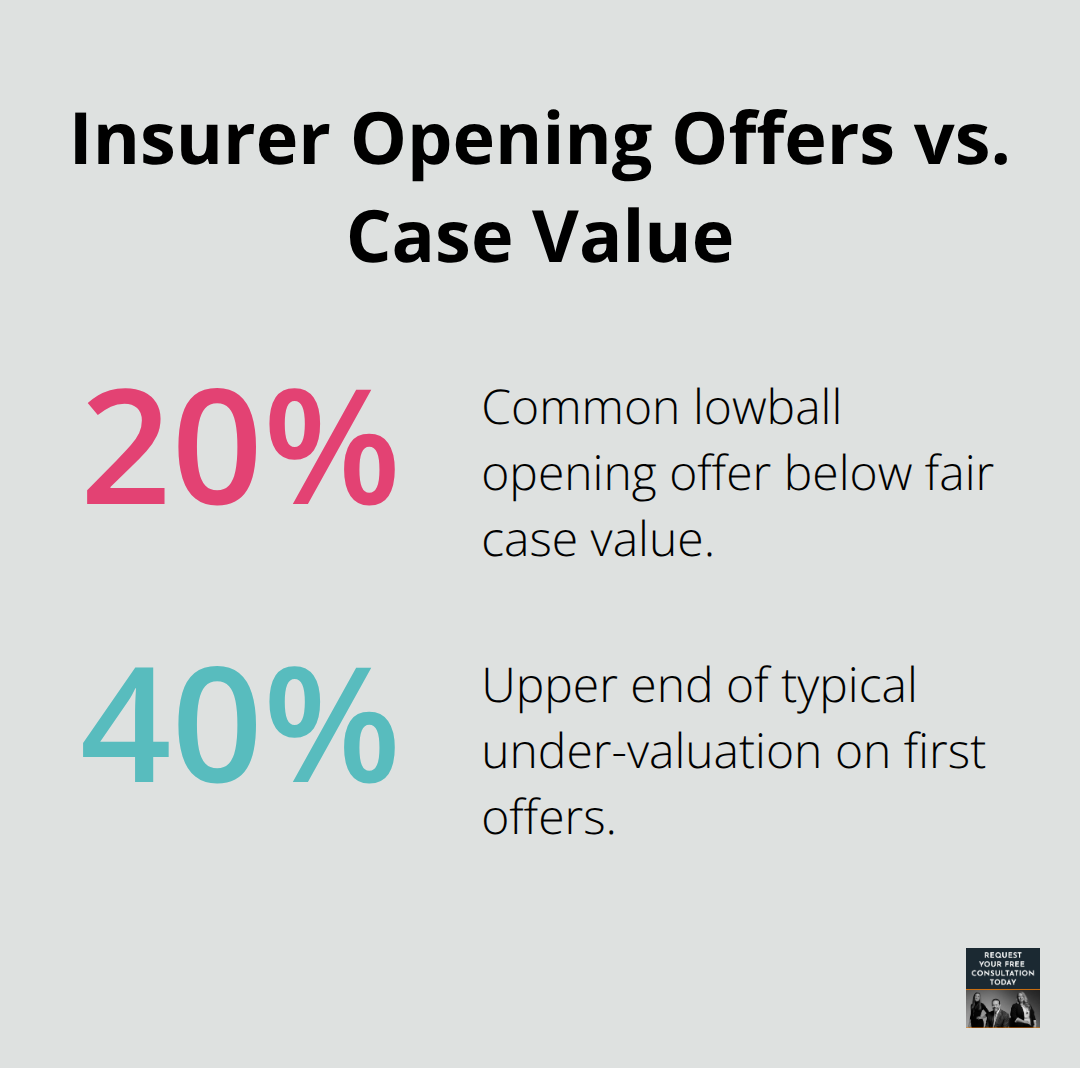
Most truck accident claims settle during this phase because both sides want to avoid trial costs and uncertainty. Accepting the first offer rarely serves your interests; negotiation typically takes weeks or months, with multiple counteroffers before reaching fair value.
Expert Witnesses and Trial Preparation
If settlement negotiations stall, your case moves toward trial preparation, which involves significantly increased costs and attorney time. Expert witnesses become critical at this stage: accident reconstructionists analyze black box and dashcam data to demonstrate how the crash occurred, medical experts testify about your injuries and prognosis, and economic experts calculate lifetime medical costs and lost earning capacity. Depositions of the truck driver and company representatives create sworn testimony that can be used at trial if their story changes. Discovery disputes sometimes arise when the trucking company refuses to produce evidence or claims documents are lost, which is why that early preservation letter matters so much-it creates a legal record showing the company was ordered to protect evidence.
Trial Costs and Settlement Pressure
Trial preparation costs money, so insurance companies are more willing to negotiate seriously once they realize you’re ready for court. If your case reaches trial, a judge or jury hears evidence over several days, and the verdict becomes final unless appealed. California courts have awarded substantial verdicts in truck accident cases involving catastrophic injuries, with documented cases resulting in multi-million-dollar judgments. However, trials are unpredictable, and settlement offers near the end of discovery often represent the company’s best attempt to resolve the case before risking a jury verdict.
Final Thoughts
Truck accident litigation steps follow a clear path from immediate evidence preservation through settlement or trial, but the process demands speed and precision at every stage. The first hours after a crash determine whether critical evidence survives, the discovery phase reveals liability and damages, and settlement negotiations test whether the trucking company will pay fair value. Missing deadlines, failing to preserve evidence, or accepting lowball offers early locks you into inadequate compensation when you could have recovered substantially more.
The statute of limitations gives you two years for personal injury claims in California, but that clock starts the moment the crash happens. Black box data vanishes in 30 days, dashcam footage loops and deletes, and trucking companies move or repair vehicles quickly. Waiting weeks to act costs you the strongest evidence that proves negligence and liability, so contact a California truck accident attorney right away to protect your claim.
Legal representation matters because truck accident cases are fundamentally different from typical car crashes. Multiple parties may share liability, federal regulations govern carrier conduct, and damages calculations require medical experts and accident reconstructionists. Insurance companies deploy aggressive defense strategies and open with settlement offers far below actual case value, so we at Schaar & Silva LLP move fast to recover substantially more than victims handle alone.
