

Truck crashes in Santa Cruz County often result in serious injuries and substantial financial losses. The path to fair compensation starts with understanding how damages are calculated and what factors influence your claim’s value.
We at Schaar & Silva LLP have seen too many accident victims accept inadequate settlements because they didn’t know what their case was actually worth. This guide walks you through the real numbers behind truck crash valuation.
What Makes Up Your Truck Crash Damages
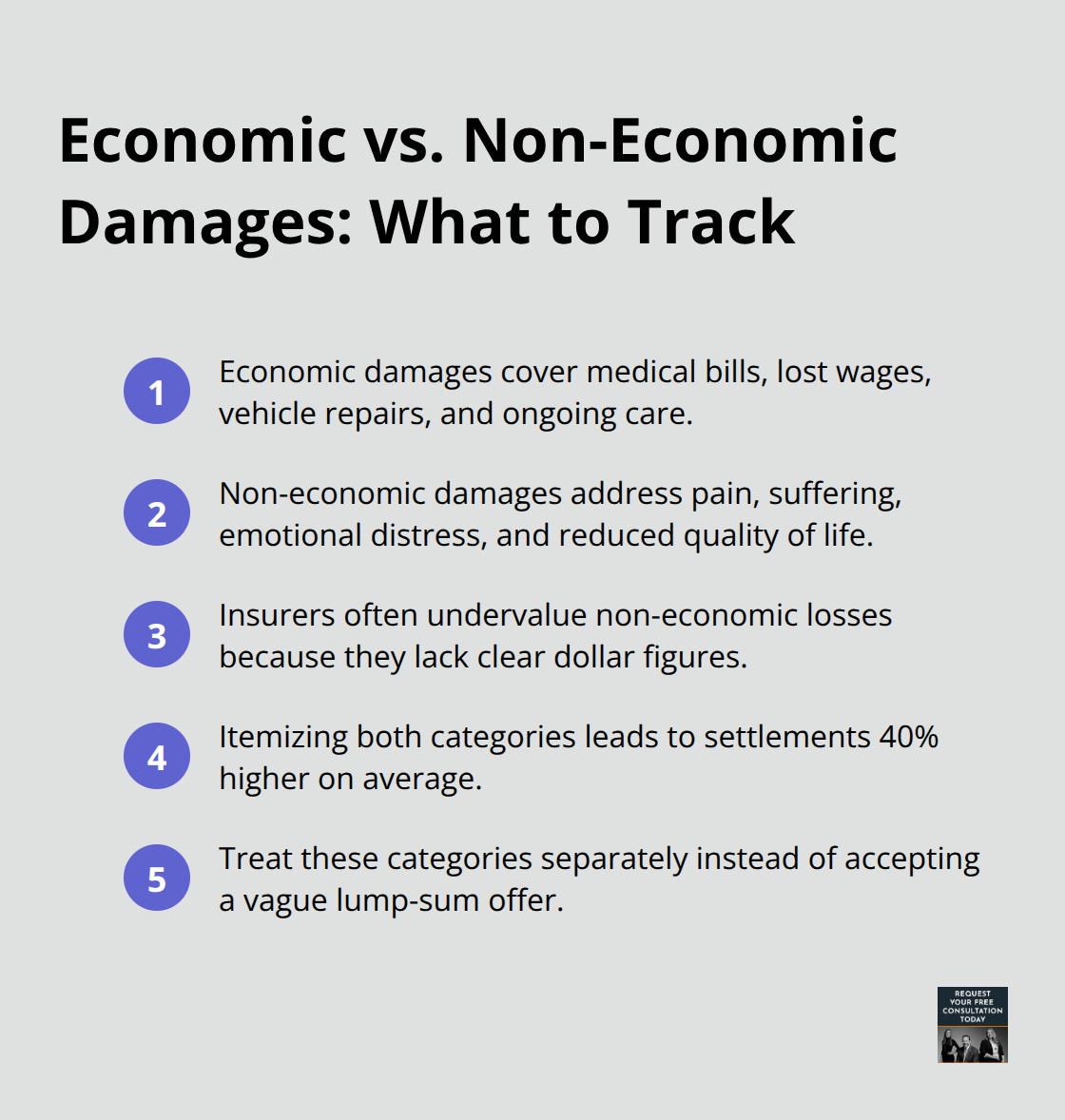
Truck crashes produce two distinct categories of damages, and understanding the difference between them determines how much compensation you should pursue. Economic damages cover tangible, measurable losses: medical bills, lost wages, vehicle repair costs, and ongoing treatment expenses. Non-economic damages compensate for pain, suffering, emotional distress, and reduced quality of life. Insurance adjusters often undervalue non-economic damages because they lack a clear dollar figure, but they represent real harm. A study by the American Association for Justice found that accident victims who itemize both categories receive settlements 40% higher on average than those who only document medical expenses. The key is treating these categories separately during valuation rather than accepting a vague settlement offer.
Medical Expenses Add Up Fast
Medical costs in truck crashes escalate quickly. Emergency room visits in California average $1,500 to $3,000, according to the California Hospital Association, and that’s before imaging, surgery, or specialist consultations. You must gather every receipt, bill, and statement from hospitals, clinics, physical therapists, and prescription pharmacies. Many victims stop documenting once they feel better, but that’s a mistake. Delayed injuries from truck crashes surface weeks or months later, and your claim should reflect anticipated future medical care.
Lost Wages Require Solid Documentation
Lost wages require your employer’s verification of hours missed and your hourly rate or salary. If you’re self-employed, tax returns and business income records become critical. Don’t estimate these figures; adjusters cross-check them, and inaccurate numbers weaken your position. The more precise your documentation, the stronger your claim stands against settlement pressure.
Pain and Suffering Lacks a Fixed Formula
Pain and suffering calculations have no fixed formula, which makes them vulnerable to lowball offers. Insurance companies often apply a multiplier to your economic damages (typically 1.5 to 5 times your medical expenses), but this method undervalues serious injuries. A better approach documents the impact on your daily life: lost sleep, inability to work, missed family activities, and psychological effects. Keep a journal after your accident noting pain levels, limitations, and emotional struggles. Medical records from therapists or psychologists strengthen these claims significantly. In Santa Cruz County, truck crashes involving permanent injury or chronic pain justify higher multipliers because the long-term quality-of-life impact is substantial and measurable through treatment records and expert testimony. Understanding what your damages truly represent sets the foundation for recognizing which factors will push your valuation higher or lower.
Factors That Influence Damage Valuations
Injury Severity Determines Settlement Range
Injury severity determines everything in a truck crash claim, and Santa Cruz County courts recognize this reality. A soft tissue injury from a low-speed collision produces vastly different damages than a spinal cord injury or traumatic brain injury. Medical records documenting the initial diagnosis, imaging results, surgical interventions, and ongoing rehabilitation translate directly to higher valuations. The California Medical Association reports that truck crash victims with documented spinal injuries receive settlements averaging 3 to 5 times higher than those with minor contusions.
Long-term impact matters more than initial treatment cost. If your injury requires ongoing physical therapy, prescription medication, or lifestyle modifications, your claim value increases substantially. Insurance adjusters scrutinize medical records closely, so gaps in treatment weaken your position significantly. Consistent treatment with measurable progress or setbacks strengthens your valuation considerably. Permanent injuries carry the highest multipliers because they reflect lifetime consequences rather than temporary discomfort.
Liability and Fault Assessment Shape Recovery
Liability determination shapes whether you recover anything at all, making fault assessment the second critical factor. California’s comparative negligence rule means that even if you’re partially at fault, you can still recover damages reduced by your percentage of responsibility. Truck crash liability often involves multiple parties: the truck driver, the trucking company, the vehicle manufacturer, or maintenance contractors.
A clear liability finding dramatically increases settlement offers because insurers know they face litigation risk. Conversely, disputed liability situations result in lower initial offers while your attorney negotiates fault percentages. Police reports, witness statements, electronic logging device data, and maintenance records all contribute to establishing who bears responsibility.
Insurance Policy Limits Create Your Recovery Ceiling
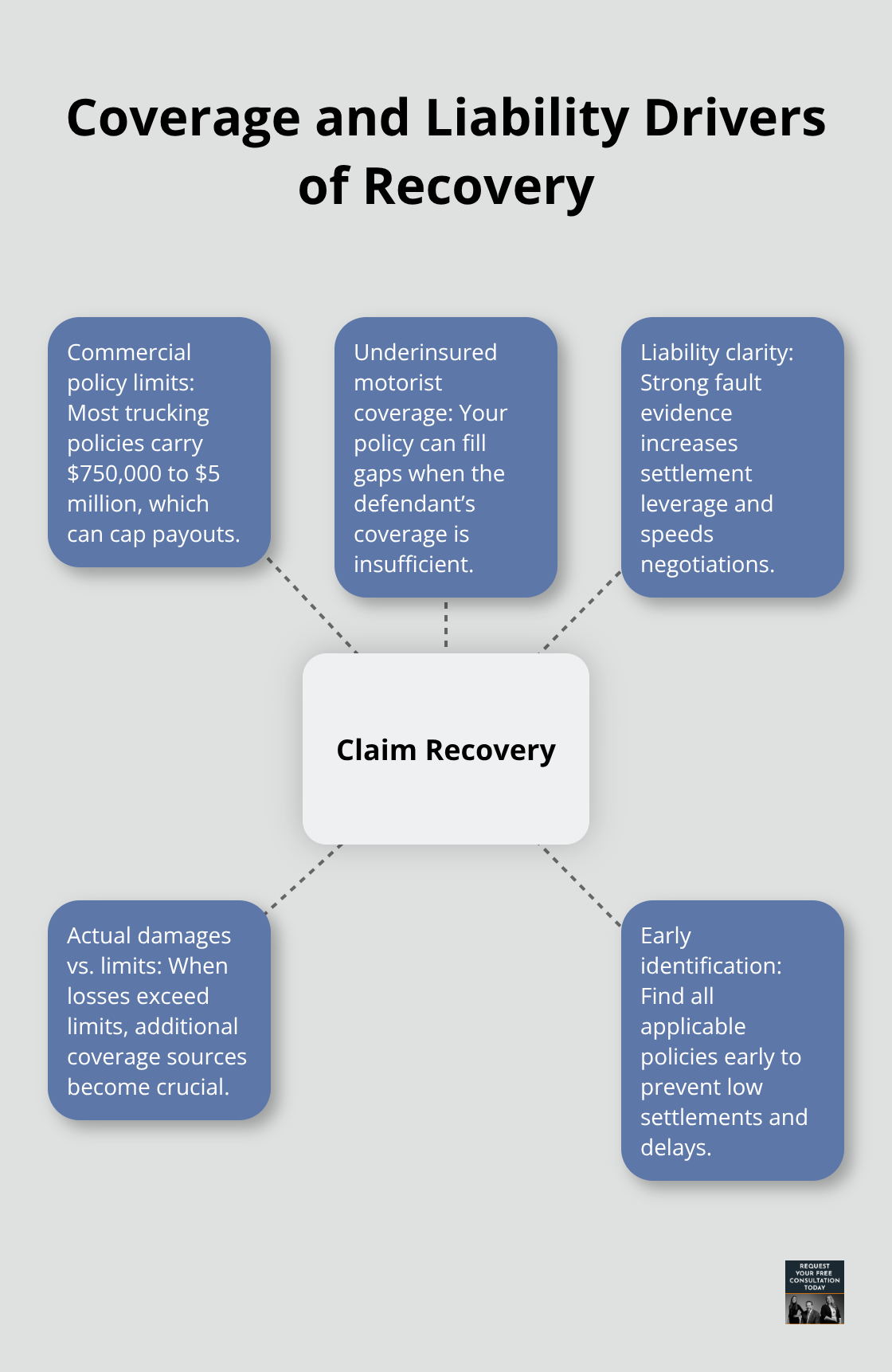
Insurance policy limits create the ceiling on your recovery. Most commercial trucking policies carry between $750,000 and $5 million in coverage, according to the Federal Motor Carrier Safety Administration, but your actual damages might exceed these limits. Understanding the defendant’s policy limits prevents wasting time pursuing unrecoverable amounts.
Underinsured motorist coverage on your own policy becomes critical when truck damage exceeds the defendant’s coverage, filling the gap between their policy limit and your actual losses. This coverage protects you when the at-fault party lacks sufficient insurance to cover your full claim. Identifying all available coverage sources early in your case maximizes your recovery potential and prevents settlement offers that fall short of your actual damages. The interaction between liability findings, injury severity, and available insurance determines what compensation you can realistically pursue and recover.
How Settlement Offers and Documentation Mistakes Undervalue Your Truck Crash Claim
The First Offer Is Never Your Final Number
The first settlement offer from an insurance company arrives fast, often within weeks of your accident. This speed is intentional. Adjusters know that accident victims facing medical bills and lost income feel pressure to accept anything immediately. That initial offer typically represents 30 to 50 percent of what your claim is actually worth, according to data from the Insurance Research Council.

Rejecting this offer isn’t stubborn; it’s strategic. Your job is to build a stronger case by documenting every aspect of your damages before negotiating. Insurance companies count on victims accepting lowball offers out of desperation, so their first number reflects what they hope you’ll take, not what they believe your case deserves.
The adjustment process takes months, not weeks, and rushing into settlement before your medical treatment stabilizes and your full damages are clear costs you significantly. Waiting allows your medical records to show the true scope of your injuries and their long-term impact on your life.
Medical Documentation Gaps Destroy Claim Value
Medical documentation gaps destroy claim value faster than almost anything else. Insurance adjusters cross-reference your medical bills against your testimony about pain levels, limitations, and impact on daily life. Missing treatment records, inconsistent appointment schedules, or months without follow-up care signal to adjusters that your injuries weren’t serious enough to require ongoing attention. This perception directly reduces settlement offers.
If you stop seeing your physical therapist because you feel better temporarily, that gap becomes ammunition for settlement negotiations. Your medical file needs to show consistent, appropriate treatment for your diagnosed injuries through resolution. Adjusters scrutinize these patterns closely, and they use gaps to argue that your condition improved faster than you claim. Maintain regular appointments and keep every receipt, bill, and medical record organized and accessible.
Social Media Activity Contradicts Your Injury Claims
Social media activity compounds documentation problems dramatically. Posting photos of activities, travel, or social events after your accident gives adjusters visual evidence contradicting your pain and suffering claims. Insurance companies employ investigators who monitor accident victims’ social media accounts specifically for this reason. One photo of you at a restaurant or hiking contradicts your claim about being unable to work or enjoy life.
Santa Cruz County residents should understand that adjusters treat social media evidence as factual documentation of your actual condition, regardless of context. You don’t need to announce your accident online, share updates about your recovery, or post about your case. The safest approach is complete silence on social media until your claim resolves. Protecting your claim value means controlling the narrative through official medical records and legal documentation, not through platforms where context disappears and images speak louder than explanations.
Final Thoughts
Truck crash valuation depends on three foundational principles: you must document every economic loss with receipts and records, you must understand that non-economic damages reflect real harm to your life, and you must recognize that your first settlement offer undervalues what you’ve actually lost. The severity of your injuries, the clarity of liability, and available insurance coverage determine your recovery ceiling. Most importantly, gaps in medical treatment or careless social media posts hand ammunition to adjusters who profit from lowball settlements.
Your damages represent months or years of pain, lost income, medical treatment, and disrupted life. Insurance companies count on victims accepting inadequate offers because they lack guidance on what their case is truly worth. The difference between accepting a first offer and building a documented case often amounts to tens of thousands of dollars-a gap that proper truck crash valuation analysis eliminates.
Truck crashes create immediate financial pressure and physical suffering that demand attention. Contact Schaar & Silva LLP to discuss what your truck crash claim is actually worth, and don’t let settlement pressure force you into accepting less than you deserve.
