
After a car accident in Santa Cruz, the decisions you make in the first hours and days can determine whether your claim succeeds or fails. We at Schaar & Silva LLP have seen countless cases where proper Santa Cruz injury documentation made the difference between recovering fair compensation and walking away empty-handed.
This guide walks you through exactly what to document, when to document it, and how to organize everything so your evidence speaks for itself.
What to Document at the Accident Scene
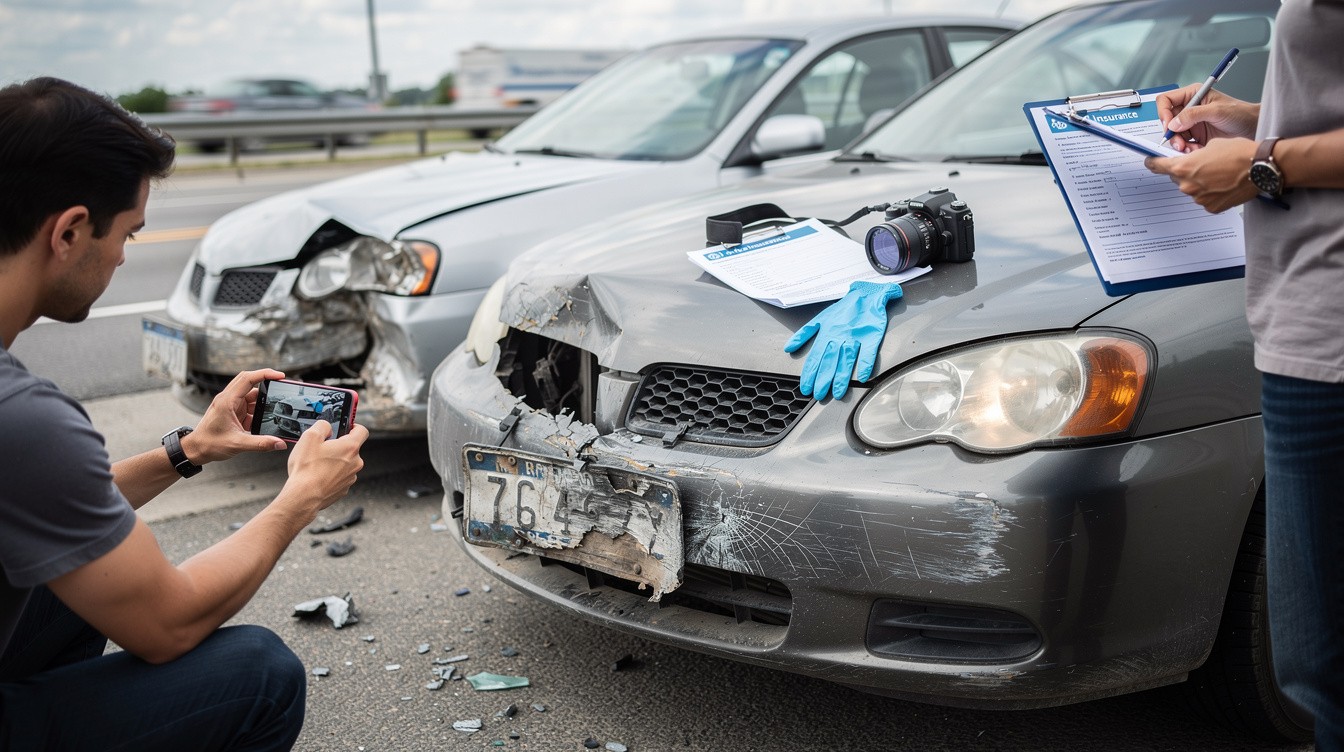
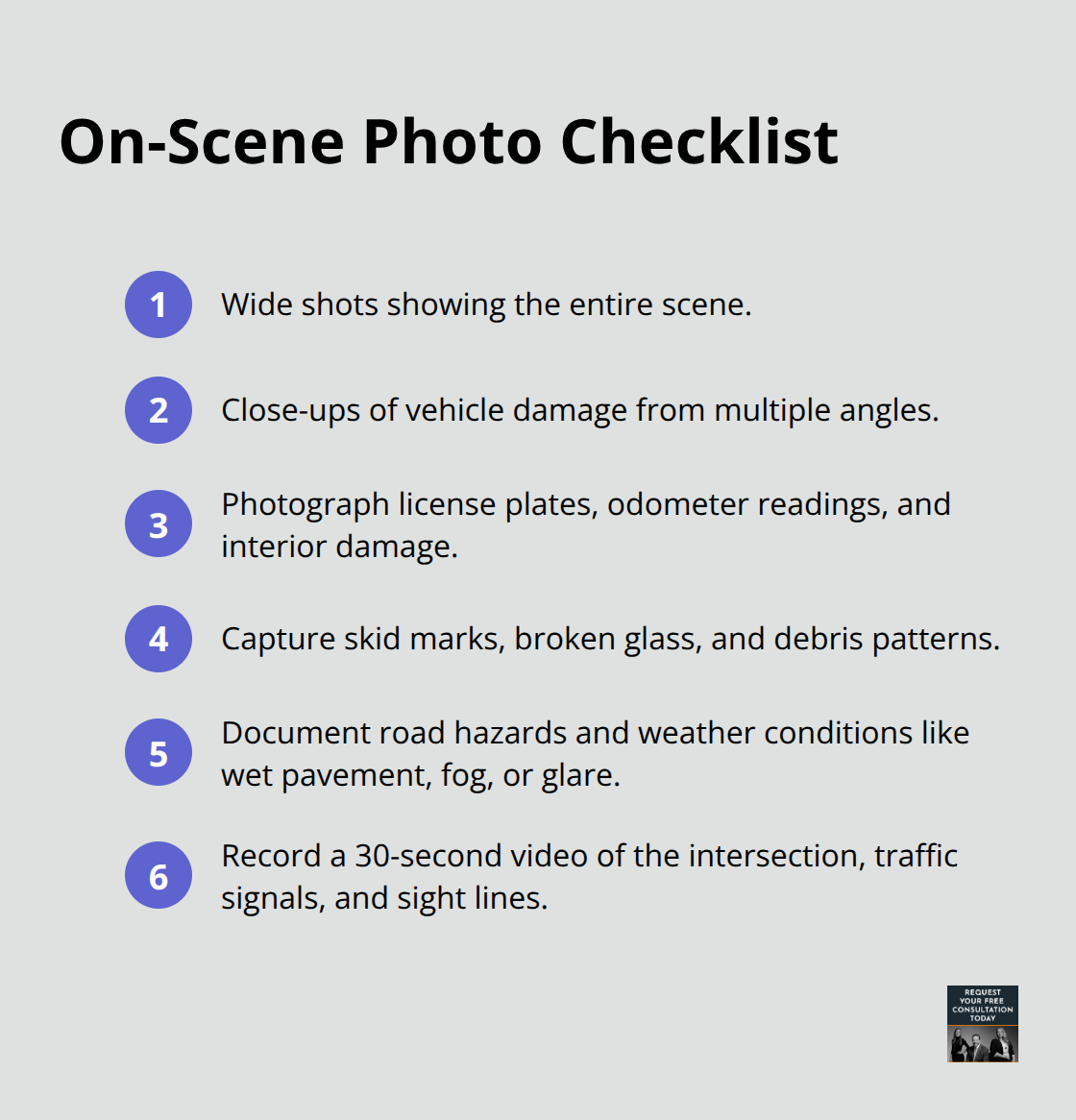
The first moments after a crash are chaotic, but what you capture in those minutes directly impacts your ability to recover compensation. Start photographing immediately, before vehicles are moved or debris is cleared. Take wide shots showing the overall scene, then close-ups of all vehicle damage from multiple angles. Include the license plates, odometer readings, and the interior damage. Photograph skid marks, broken glass, debris patterns, and any road hazards that contributed to the accident. If weather conditions played a role, document those too-wet pavement, fog, or glare matter. Video is equally important; a 30-second clip showing the intersection, traffic signals, and sight lines provides context that still photos cannot. Many people hesitate to take photos because they feel shaken or worried about appearing callous. This hesitation is a mistake. Photographs fade from memory, but images last forever and form the foundation of your case.
Securing Witness Information Before They Leave
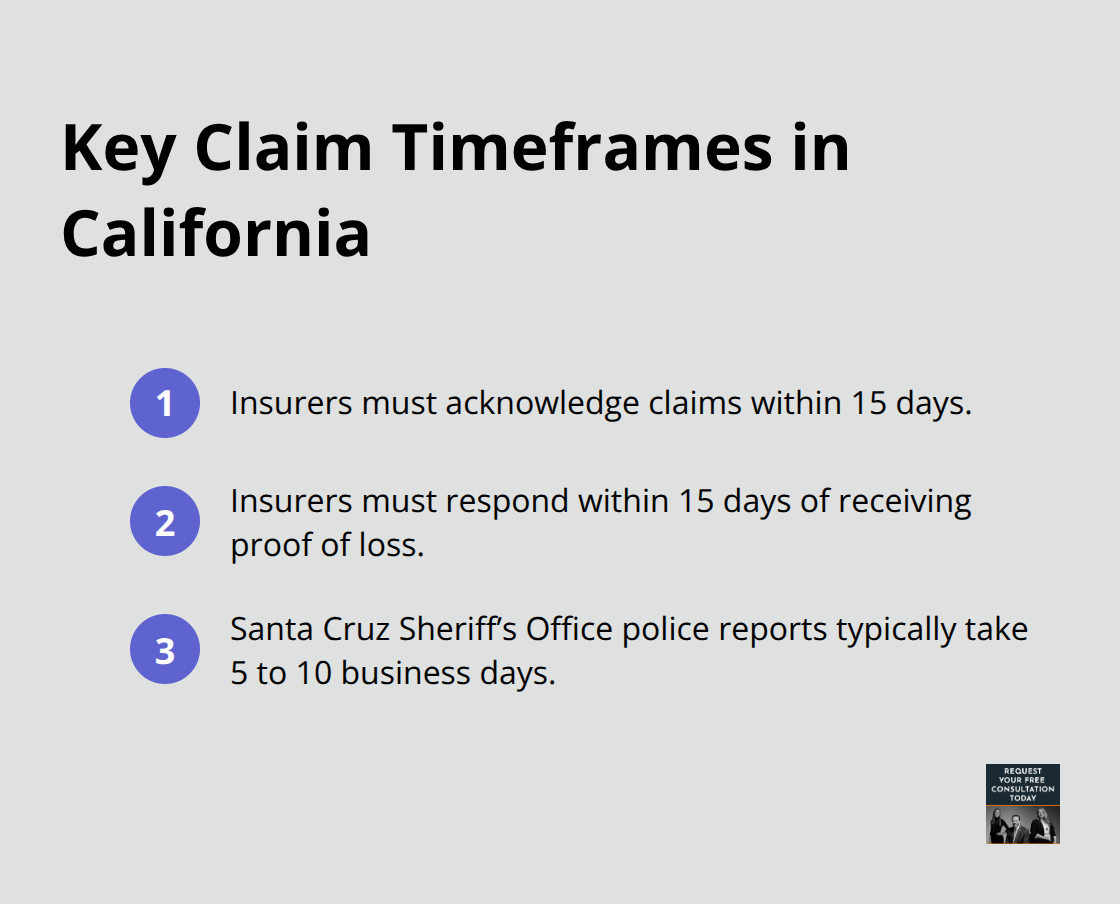
Witnesses disappear. They leave the scene, forget details, or become difficult to locate weeks later when your case needs their statement. Approach anyone who saw the accident and ask for their name, phone number, address, and email. Law enforcement focuses on immediate safety and citation details, not comprehensive witness documentation. Write down what each person saw-their location when the accident occurred, which vehicle had the light, whether anyone was speeding. If someone is unwilling to provide contact information, at least note their appearance and vehicle description so investigators can track them down later. In Santa Cruz County accidents, witness statements often prove decisive when the other driver disputes fault. The California Fair Claims Settlement Practices Regulations require insurers to respond within 15 days of a claim, but early witness documentation prevents the other party from claiming witnesses don’t exist or can’t be found.
Road Conditions and Infrastructure Details
The road itself is evidence. Document whether the traffic signal was functioning, the color it displayed when the accident occurred, and whether any signs were obscured or missing. Note the road surface condition, any potholes or debris, street lighting, and whether the intersection had adequate sight distance. Photograph speed limit signs, yield signs, and any warning signs in the area. If the accident occurred near a business, note the business name and address-their security cameras may have recorded the crash. Road design flaws and poor visibility significantly influence fault determination, and insurance companies count on injured people to forget these details. Take measurements if possible, or note landmarks that allow investigators to calculate distances later. This information separates strong cases from weak ones.
Why Medical Documentation Starts Now
The evidence you gather at the scene connects directly to your medical records. Photographs of vehicle damage, road conditions, and impact points help medical professionals understand the force and direction of the collision. This context strengthens your medical documentation later (which we cover in the next section). Insurance adjusters scrutinize the relationship between accident severity and injury claims. Strong scene documentation prevents them from dismissing your injuries as minor or unrelated to the crash.
Medical Records Build Your Injury Claim
Your medical records prove your injuries are real and directly caused by the accident. Insurance adjusters scrutinize the connection between the crash and your treatment, so how you document your recovery matters as much as the treatment itself.
Organize Every Medical Document
Keep every medical bill, receipt, and explanation of benefits in a single folder, either physical or digital. The California Fair Claims Settlement Practices Regulations require insurers to respond to claims within specific timeframes, but disorganized medical records delay settlements and give adjusters reasons to dispute your injury claims. Create a spreadsheet listing each provider visit with the date, provider name, type of treatment, cost, and what was treated. This simple system prevents you from forgetting visits or losing track of expenses that should be reimbursed.
Include emergency room visits, urgent care appointments, physical therapy sessions, mental health counseling, imaging studies like MRIs or X-rays, and prescription medications. Many people skip documenting mental health treatment because they worry insurers will minimize their case, but psychological trauma from serious accidents is legitimate and compensable. If you received treatment before consulting with an attorney, photograph or scan every document now while memories are fresh.
Create a Timeline That Connects Accident to Injury
The gap between your accident date and your first medical visit matters to insurers. If you wait weeks to seek treatment, adjusters argue your injuries weren’t severe or weren’t caused by the crash. Conversely, immediate medical attention creates a clear timeline connecting the accident to your injuries. Document your pain levels daily for at least the first month after the accident using a simple 1-to-10 scale, noting what activities triggered pain and what medications or treatments provided relief.
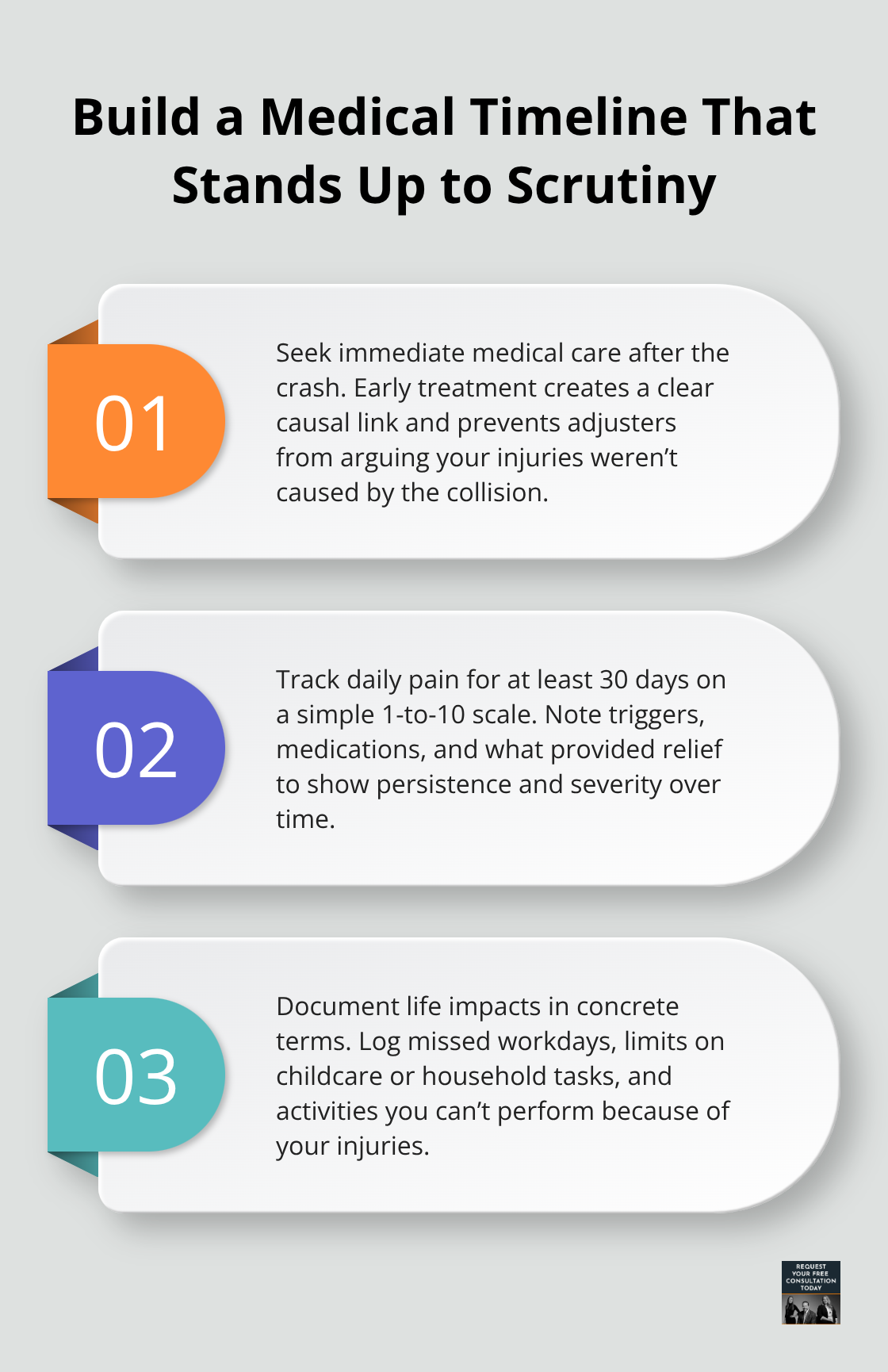
Write specific details about how injuries affected your daily life: if a back injury prevented you from working, note the dates you missed. If a shoulder injury stopped you from caring for children or performing household tasks, document those impacts. Insurance companies calculate pain and suffering damages partly on medical expenses but heavily on how injuries disrupted your life.
Build Your Recovery Journal
A detailed recovery journal showing you couldn’t sleep, couldn’t work, or couldn’t exercise strengthens your claim far more than a medical record alone. Preserve all communication with medical providers, including emails requesting appointments, texts about treatment progress, and notes from doctors about your condition. These communications show your commitment to recovery and create a documentary trail of your medical journey that adjusters cannot dismiss as incomplete or fabricated.
The evidence you gathered at the accident scene-photographs of vehicle damage, road conditions, and impact points-now connects to your medical documentation. This context helps medical professionals understand the force and direction of the collision, and it strengthens your case when adjusters evaluate whether your injuries match the accident severity. Strong scene documentation prevents them from dismissing your injuries as minor or unrelated to the crash. As your medical records accumulate, the next step involves organizing all your evidence into a comprehensive claim package that tells your complete story.
How to Organize Your Evidence Into a Winning Case
Your medical records, accident scene photos, witness statements, and insurance communications only matter if you organize them into a coherent narrative that proves your claim. Disorganized evidence invites insurers to deny or minimize your damages. Insurance companies rely on injured people to lose documents, forget details, or fail to connect the pieces of their case together. Strong claims weaken simply because evidence scatters across emails, photos, and filing cabinets instead of compiling into a clear, chronological package.
Create a Master Evidence Document
Start a master document immediately after your accident that lists every piece of evidence you possess: the date and time of the crash, police report number, names and contact information for all witnesses, the date of your first medical visit, provider names, treatment dates, and amounts paid. Add your accident scene photographs with captions describing what each image shows and why it matters to your case. Include the police report, any citations issued, and the other driver’s insurance information. This master document becomes your reference guide and prevents important information from slipping away as weeks pass. Digital organization works better than paper because you can search, backup, and share files instantly with medical providers or legal counsel.
Submit a Comprehensive Claim Package
Insurance companies process thousands of claims annually and count on claimants to provide incomplete information that justifies quick denials. When you submit your claim, include a cover letter that walks the adjuster through your evidence chronologically: the accident occurred on [date], you sought immediate medical treatment on [date], you incurred [amount] in medical expenses, and your injuries prevented you from working for [number] of days. Attach copies of your police report, medical bills, treatment receipts, and a brief summary of how your injuries affected your daily life. The California Department of Insurance requires insurers to acknowledge claims within 15 days and respond to them within 15 days of receiving proof of loss, but organized evidence speeds this process dramatically.
Preserve All Insurance Communications
Preserve all written communication with insurance adjusters, including emails, letters, and claim decisions. Do not delete text messages or voicemails from adjusters, even if they frustrate you. These communications create a record of what the insurance company knew and when they knew it, and they protect you if disputes arise later about settlement offers or claim denials (this documentation becomes invaluable if you need to challenge a denial or low offer).
Obtain Your Police Report
Request the police report directly from the Santa Cruz Sheriff’s Office using their public records request process, which typically takes 5 to 10 business days. Your police report contains the officer’s observations about fault, road conditions, and vehicle damage, all of which support your claim narrative. The report also documents the other driver’s statements and any citations issued, which strengthen your position when the other party disputes liability.
Final Thoughts
The documentation you collect in the first hours after your accident determines whether you recover fair compensation or accept a lowball settlement. Santa Cruz injury documentation is not busywork-it is the foundation of your entire claim, and every photograph, witness statement, and medical record you preserve becomes evidence that insurers cannot ignore. Strong documentation prevents adjusters from dismissing your injuries as minor or unrelated to the crash, and when you present organized, chronological evidence showing accident severity, immediate medical treatment, and how injuries disrupted your life, insurance companies must take your claim seriously.
The practical steps outlined in this guide-photographing the scene, collecting witness information, organizing medical records, and preserving all communications-create a narrative that speaks for itself. You do not need to convince anyone of anything; your evidence does the convincing. Disorganized claimants lose thousands in compensation simply because they failed to connect the pieces of their case together, but you now have the roadmap to avoid that mistake.
If you have been injured in a car or truck accident in Santa Cruz County, the team at Schaar & Silva LLP can guide you through this process and protect your legal rights. We offer a free case review and respond within 24 hours, and our experience handling personal injury claims means we know exactly what documentation insurers scrutinize and how to present your evidence for maximum compensation.
