

A car accident can turn your life upside down in seconds. Medical bills pile up, your vehicle needs repairs, and you’re left wondering how to move forward.
At Schaar & Silva LLP, we’ve helped countless people in Santa Cruz County, Sacramento, and Oakland navigate car accident claims and recover what they deserve. This guide walks you through the concrete steps that strengthen your case from the moment the accident happens.
What Should You Do Right After the Crash
The first hour after a car accident determines whether your claim succeeds or fails. Your actions at the scene create the foundation for everything that follows, so move deliberately and document everything. Call 911 immediately if anyone is injured or if there’s significant property damage. Once emergency responders arrive and the scene is safe, start gathering evidence before anyone leaves.
Photograph and Video Evidence
Take photographs from multiple angles of vehicle damage, the accident location, road conditions, traffic signals, debris, and license plates. If you have a dashcam, retrieve that footage right away because it’s nearly impossible to overstate how valuable video evidence is in proving what actually happened. Many dashcams overwrite old footage within days, so this isn’t something you can do later.
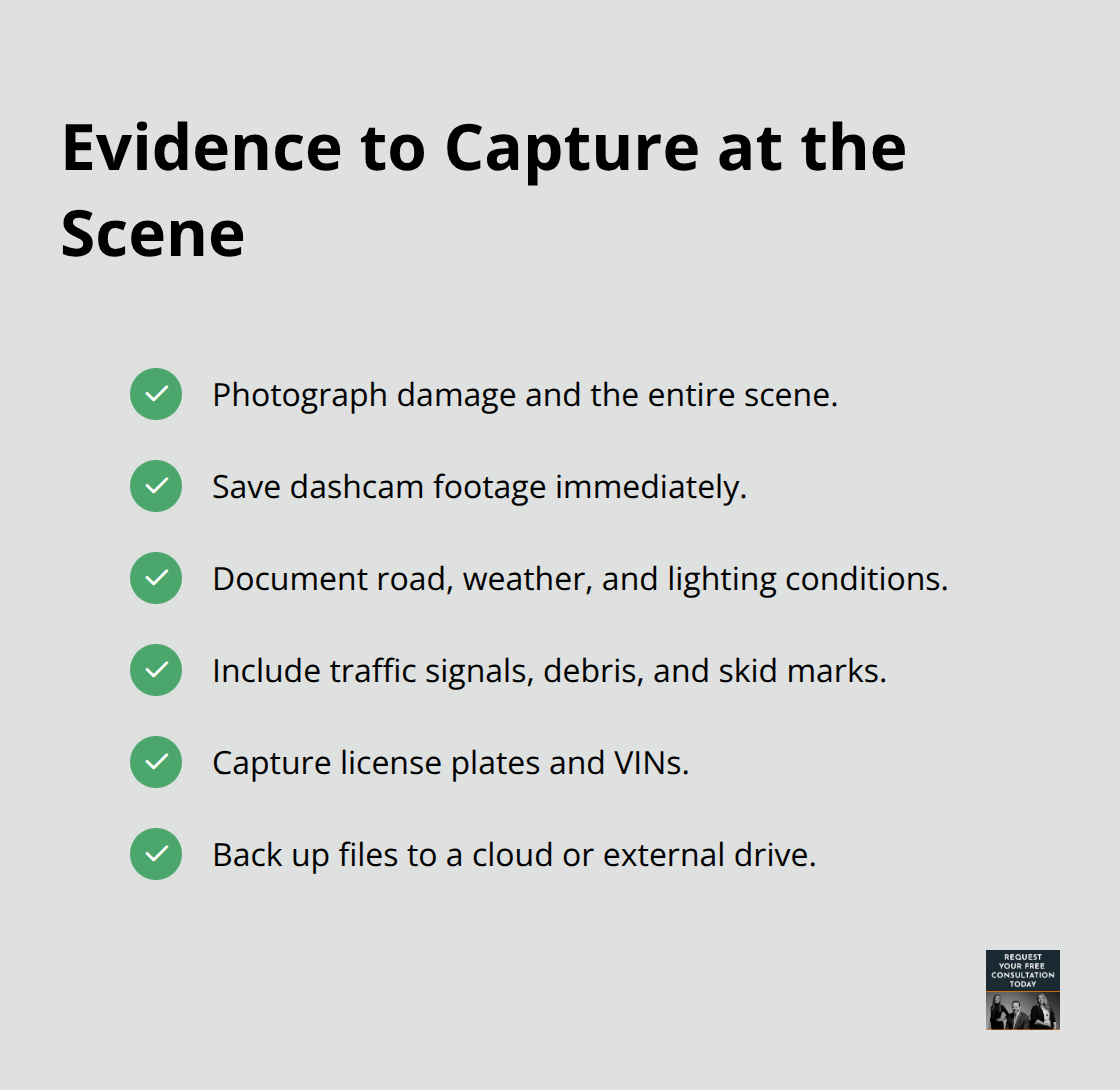
This visual documentation becomes the backbone of your claim and often carries more weight than witness statements alone.
Collect Information from Witnesses and Drivers
Collect the names, phone numbers, addresses, and insurance information from the other driver, but don’t discuss fault or accept blame. If witnesses are present, get their contact information immediately and ask them to write down what they saw while their memory is fresh. Independent witnesses carry significant weight because they have no stake in the outcome. The National Highway Traffic Safety Administration reports that California experiences more than 255,000 crashes annually, which means insurers see thousands of claims and they’re trained to minimize payouts.
Medical Documentation Starts Now
Seek medical attention promptly, even if you feel fine. Some injuries like traumatic brain injury or internal bleeding don’t show symptoms immediately, and delayed medical care weakens your claim because insurers will argue the accident didn’t cause your injuries. Keep every medical record, prescription receipt, therapy bill, and imaging result. Document everything you experience: pain levels, sleep disruption, difficulty concentrating, anxiety, or mood changes. If you develop PTSD or psychological symptoms, include those in your medical records because mental health impacts damages and settlement values significantly.
Track Your Recovery and Losses
Maintain a personal injury journal tracking your daily symptoms and how the accident affects your life. This journal becomes powerful evidence of your damages when negotiations begin. Your organized medical documentation is your strongest counter to insurer tactics. Record lost wages, missed work days, and any expenses related to your recovery (transportation to appointments, medication costs, home care assistance). This detailed record transforms abstract pain into concrete financial losses that insurers must address when they evaluate your claim.
How Fault Works in California Car Accidents
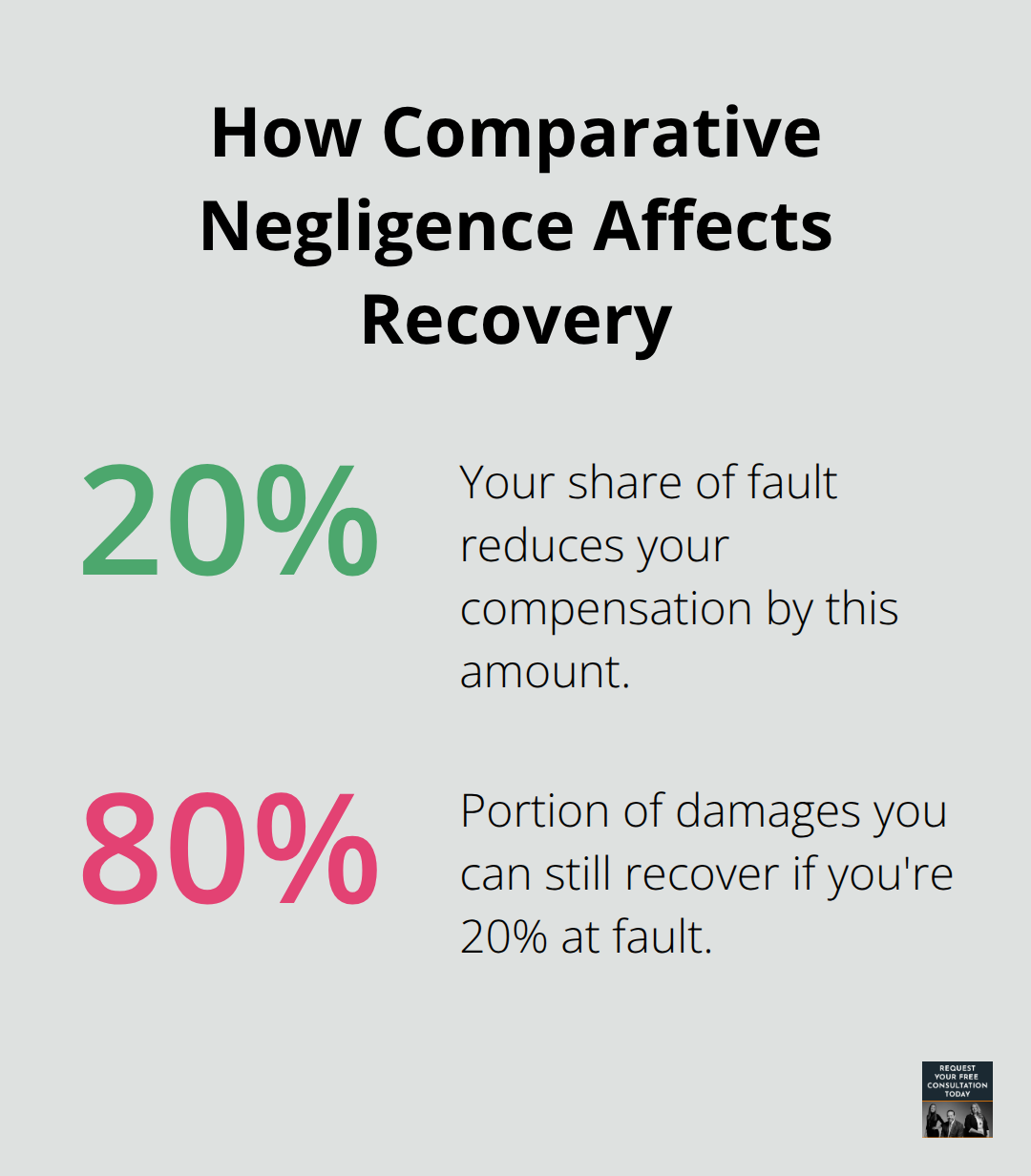
California’s comparative negligence law allows you to recover compensation even if you share responsibility for the crash, but your percentage of fault directly reduces your payout. Under California law, if you bear 20% of the fault, you recover 80% of your damages. This differs fundamentally from states that bar recovery entirely if you share any fault, so determining exactly how much responsibility the other driver carries becomes your primary leverage in negotiations.
The Five Elements of Negligence
Proving fault requires you to establish five core elements. The other driver owed you a duty of care (which all drivers have on the road). They breached that duty through negligent or reckless behavior. That breach directly caused the crash. The crash was foreseeable. You suffered actual damages as a result. Police reports document traffic violations and contributing factors, but they don’t bind liability-they serve as a starting point. Medical records form your strongest evidence linking your injuries directly to the accident because they create a timeline showing treatment began immediately after the crash.
Evidence That Proves What Happened
Photographs of vehicle damage, road conditions, and debris patterns support your narrative about what happened. If you have dashcam footage or security video from nearby businesses, that evidence often outweighs conflicting stories because video doesn’t lie or misremember. Witness statements from independent observers carry significant weight because they have no stake in the outcome. The National Highway Traffic Safety Administration reports that California experiences more than 255,000 crashes annually, which means insurers see thousands of claims and they’re trained to minimize payouts.
Building Your Damages Calculation
Your damages include medical bills, lost wages, vehicle repair costs, and pain and suffering, but many people fail to capture the full scope of losses. Organize every hospital bill, therapy receipt, prescription cost, and transportation expense related to your recovery. If you missed work, obtain written statements from your employer confirming dates and lost income. Calculate lost earning capacity if your injuries prevent you from returning to your previous job-vocational economists quantify this by analyzing your age, skills, education, and post-injury earning potential.
For catastrophic brain or spinal injuries, life-care plans project every medical service, therapy, equipment, and life adjustment needed over your lifetime, often totaling millions of dollars. Insurance companies deliberately undervalue claims by disputing fault or claiming injuries aren’t severe enough, so your organized documentation counters these tactics directly. The stronger your evidence linking the accident to specific financial losses, the higher your settlement because insurers know a jury would award similar amounts.
Countering Insurer Tactics
Insurance companies use several strategies to reduce what they pay you. They dispute fault by claiming shared responsibility. They minimize injury severity by questioning whether symptoms truly stem from the accident. They delay processing to pressure you into accepting lower offers. Your organized documentation-medical records, wage-loss statements, repair estimates, and photographic evidence-directly counters each tactic. When you present a comprehensive damages package, insurers recognize that proceeding to trial would cost them more than settling fairly.
Now that you understand how to calculate and prove your damages, the next step involves presenting this evidence strategically to insurance companies and knowing when legal representation becomes necessary to protect your interests.
Insurance Claims and When to Hire an Attorney
File Your Claim Immediately
Contact the insurance company within days of the accident. Most insurers impose strict deadlines, and delayed notification gives them grounds to deny your claim entirely. When you call, stick to factual information: date, time, location, vehicles involved, and that you’re gathering medical documentation. Do not admit fault, do not speculate about what happened, and do not accept any settlement offer during this initial call. Insurance adjusters are trained to extract statements that minimize your payout, so every word matters.
Protect Your Evidence Before Submitting It
Provide your organized evidence package only after an attorney reviews it, because anything you submit becomes part of the official record and can be used against you later. The American Bar Association notes that social media discovery is increasingly common in litigation, so tighten your privacy settings immediately and avoid posting anything about the accident, your injuries, or your recovery. Your documentation-medical records, wage statements, repair estimates, and photographs-represents your leverage in negotiations, so control when and how you release it.
Evaluate Settlement Offers Carefully
When the insurance company makes a settlement offer, your instinct will be to accept it and move forward. Resist that urge. Initial offers typically fall 40 to 60 percent below what your claim is actually worth because insurers count on you accepting quickly while you’re stressed and overwhelmed. Request a detailed breakdown showing how they calculated medical damages, lost wages, pain and suffering, and future medical costs.
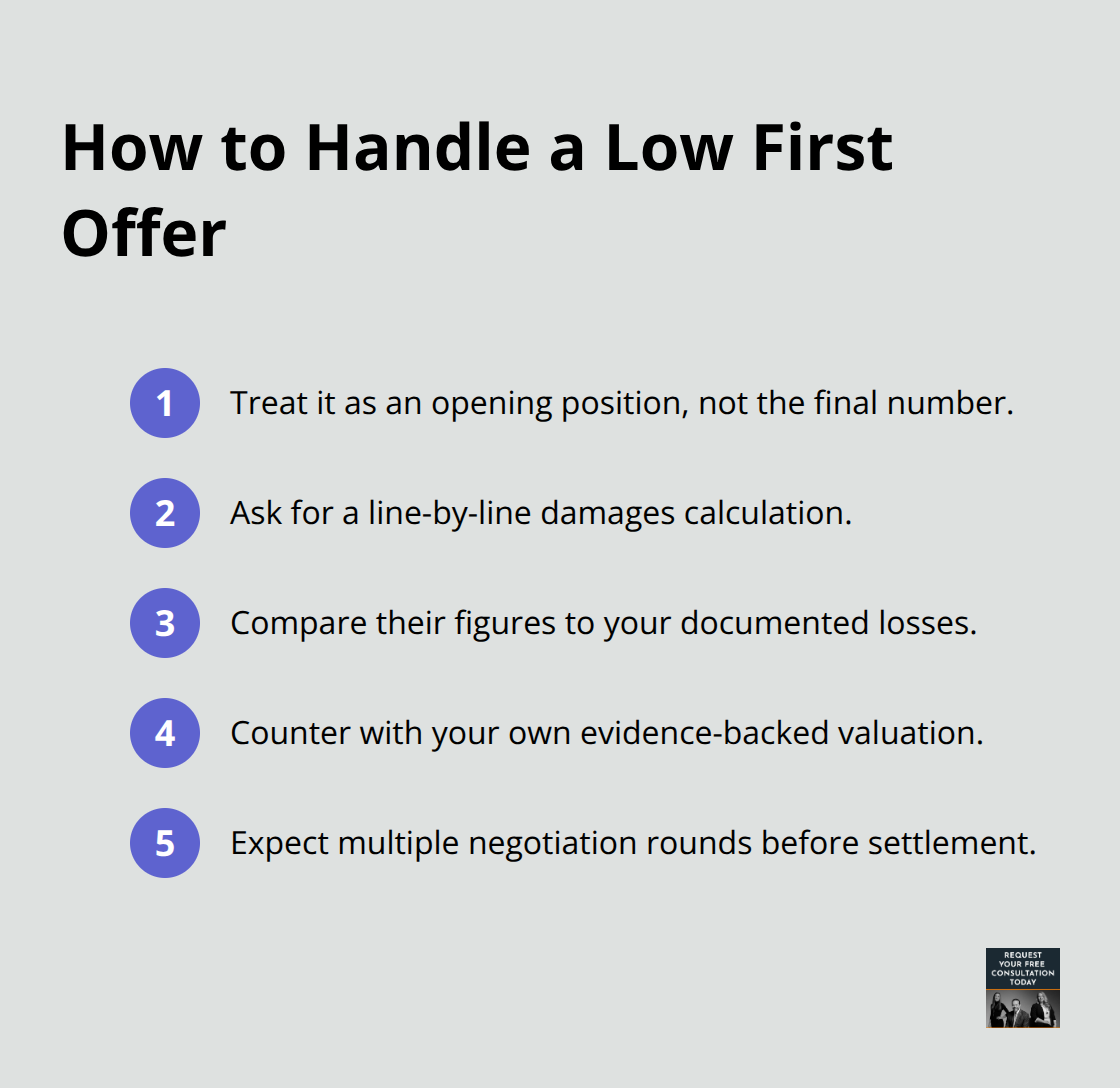
If their numbers don’t match your documented losses, reject the offer and provide your own calculation backed by medical records, wage statements, and repair estimates.
Most claims settle after multiple rounds of negotiation, so treat the first offer as an opening position, not a final number. If the adjuster refuses to budge or continues disputing fault despite your evidence, this is the moment to contact an attorney. An attorney sends a demand letter that signals you’re serious about pursuing your claim, and insurers often increase their offers substantially once they know litigation is possible.
Know When Legal Action Becomes Necessary
If settlement negotiations stall after 60 to 90 days or the insurance company denies your claim outright, a lawsuit becomes your only path to recovery. California’s statute of limitations gives you two years from the accident date to file a personal injury lawsuit, but waiting that long destroys evidence and witness memories, so acting within months of the accident is critical. An attorney handles filing deadlines, court procedures, and coordination with medical professionals while you focus on healing. At Schaar & Silva LLP, we work on contingency, meaning you pay nothing unless we recover compensation for you, so the financial barrier to legal representation disappears.
Final Thoughts
Building a strong car accident claim requires immediate action, thorough documentation, and strategic decision-making at every stage. The evidence you collect at the scene-photographs, witness information, and medical records-forms the foundation that determines whether insurers take your claim seriously or attempt to minimize your payout. Your organized documentation of medical treatment, lost wages, and recovery expenses transforms abstract injuries into concrete financial losses that insurers cannot ignore during settlement negotiations.
California’s comparative negligence law works in your favor because you recover compensation even if you share partial fault, but only if you prove the other driver’s responsibility through solid evidence. Police reports, dashcam footage, medical records, and witness statements combine to create a persuasive narrative about what happened and who caused the crash. When you present this evidence strategically, insurers recognize that proceeding to trial would cost them more than settling fairly, which shifts the negotiation balance in your direction.
The insurance company’s initial settlement offer will almost certainly fall short of what your car accident claim is worth, so resist the pressure to accept quickly. If negotiations stall or the insurer denies your claim, legal action becomes your path forward, and California’s two-year statute of limitations means you have time to act but not unlimited time. Contact us for a free consultation to discuss your specific situation and learn how we at Schaar & Silva LLP can help you recover the compensation you deserve.
