

A Santa Cruz car accident can turn your life upside down in seconds. Medical bills pile up, insurance companies demand answers, and you’re left wondering what comes next.
We at Schaar & Silva LLP have helped countless accident victims in Santa Cruz County navigate recovery and secure the compensation they deserve. This guide walks you through exactly what to do right now.
What to Do Right Now After Your Accident
Stop Safely and Call for Help
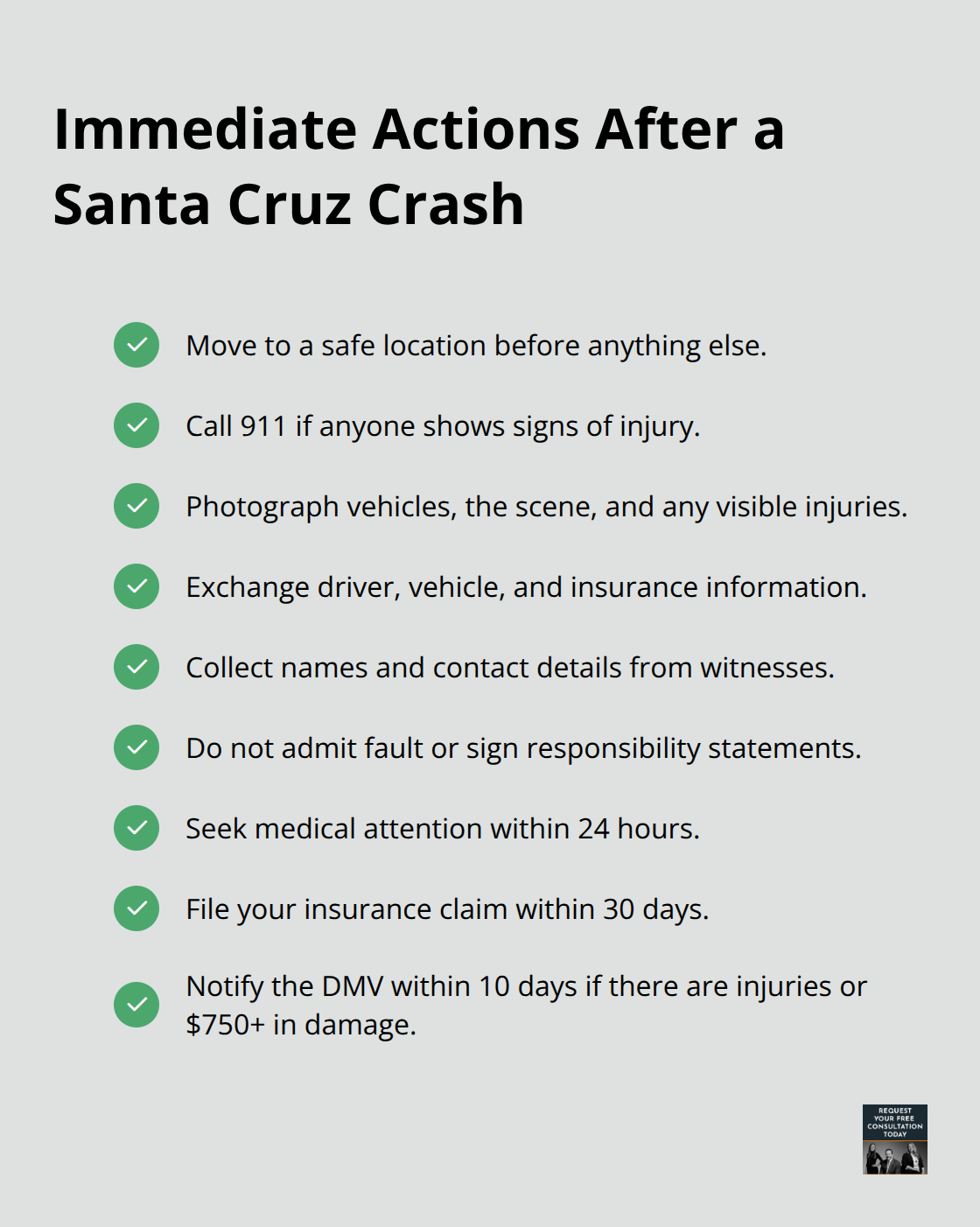
The first minutes after a Santa Cruz car accident determine how strong your recovery claim becomes. Stop in a safe location immediately-move to the shoulder or a parking lot if possible and it’s safe to do so. Call 911 if anyone shows signs of injury, no matter how minor. The Santa Cruz Police Department responds to accidents with injuries or property damage exceeding $750, and that police report becomes critical evidence later.
Document Everything at the Scene
While waiting for police, take photos from multiple angles of vehicle positions, road conditions, traffic signals, weather, and visible damage to all vehicles. Photograph any visible injuries on yourself or passengers. Get the other driver’s name, address, driver’s license number, license plate number, vehicle make and model, and insurance information. Ask passengers and bystanders for contact information-witness statements often tip the scales when fault remains disputed.
Protect Your Legal Position
Do not admit fault at the scene; California’s comparative negligence law means fault determination comes later through investigation, not your words in the moment. Avoid signing anything except the police report, and never sign statements admitting responsibility or promising payment.
Seek Medical Care and File Your Claim
Seek medical attention within 24 hours, even if you feel fine. Delayed medical records weaken settlement offers because insurance companies question whether injuries truly connect to the accident. Document everything from your first visit forward-keep receipts for all treatment, prescriptions, and therapy sessions. File your insurance claim within 30 days of the crash to speed processing and reduce memory gaps that damage settlement negotiations. Notify the California Department of Motor Vehicles within 10 days if there’s injury or property damage over $750, or your license faces suspension.
Organize Your Documentation
Gather repair estimates from at least two body shops and request itemized invoices identifying whether parts are original equipment manufacturer, aftermarket, rebuilt, or reconditioned. California law allows you to choose any auto body shop; insurers may recommend one only if you request it. Start a file with police reports, medical records, photos, witness statements, repair estimates, and all insurance correspondence. Digital backups protect against loss. Understanding how insurance claims work in your area requires knowledge of what compensation you can actually claim and how California’s fault rules affect your recovery.
What You Can Actually Recover After a Santa Cruz Accident
Three Categories of Damages You Can Claim
California law entitles you to recover three distinct categories of damages after a car accident, and understanding each one prevents you from accepting lowball settlement offers. Medical expenses cover every reasonable and necessary treatment cost connected to your crash-emergency room visits, hospital stays, surgery, physical therapy, and ongoing care including future treatment you’ll need. Lost wages compensate you for income you missed during recovery, and if your injuries cause permanent earning capacity loss, you can claim that too. Property damage covers the lesser of your repair costs or your vehicle’s actual cash value accounting for depreciation.
Non-Economic Damages Often Get Overlooked
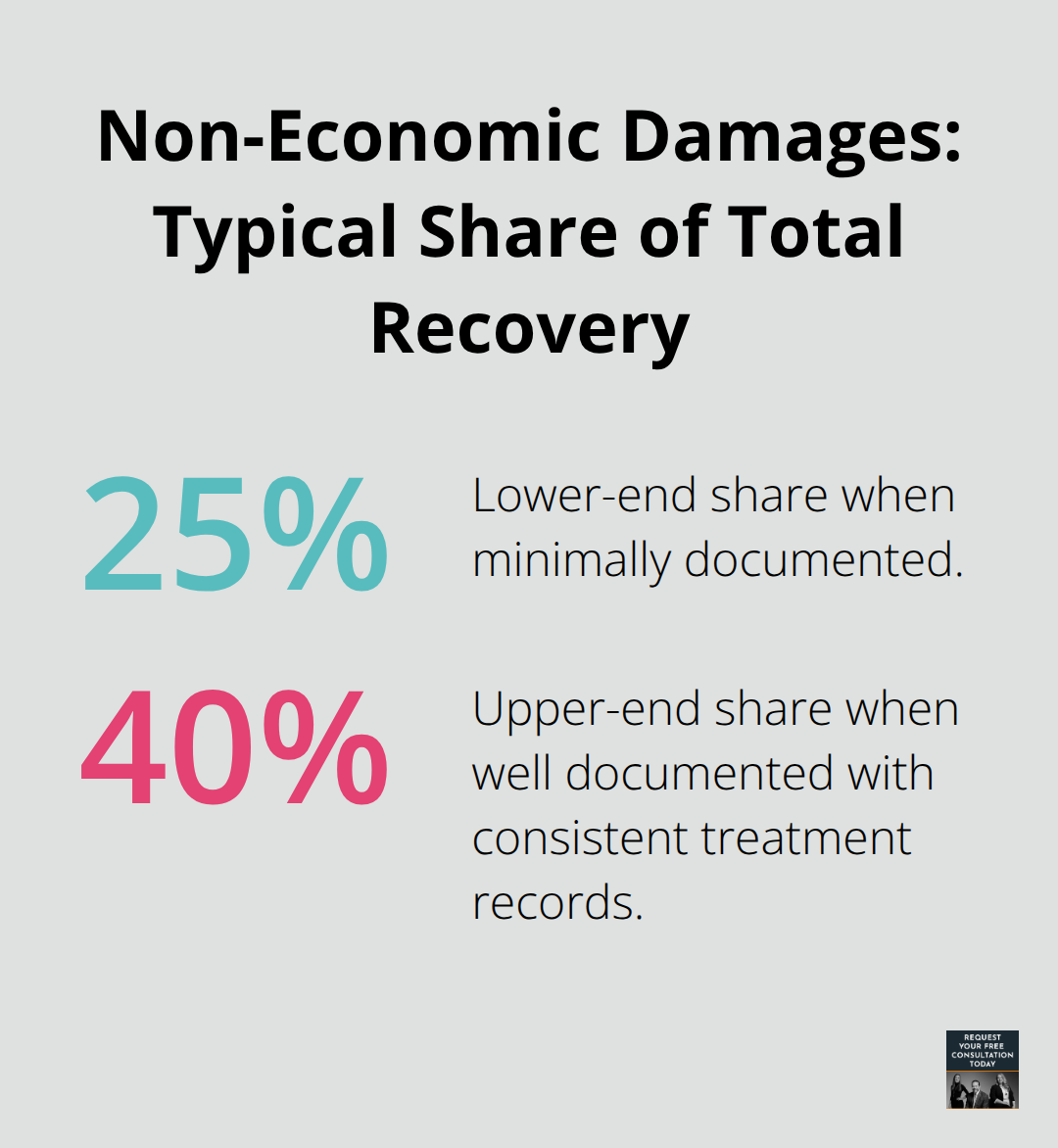
Many accident victims overlook non-economic damages like pain and suffering, sleep disturbance, and reduced quality of life. These damages often represent 25 to 40 percent of your total recovery when properly documented with medical records showing treatment frequency and duration. Request itemized repair estimates from at least two body shops and challenge any undervaluation using market data for your vehicle’s condition and age. If your insurer’s total-loss valuation seems unfair, your policy likely includes an appraisal provision where two appraisers and a neutral umpire determine a binding value-this mechanism exists specifically to resolve disputes without litigation.
How Partial Fault Affects Your Recovery
California’s comparative negligence system fundamentally changes how much you recover if you share partial fault for the crash. You can recover damages even if you’re 50 percent or less at fault, but your recovery reduces in proportion to your assigned fault percentage. If you’re 30 percent at fault and total damages equal $10,000, you receive $7,000. Santa Cruz intersections show specific fault patterns worth knowing-the Highway 1 and Highway 9 intersection recorded 11 crashes over five years, while Pacific Avenue and Beach Street logged 8 crashes, making rear-end collisions and failure-to-yield violations common in these high-risk zones.
Fault Determination and Insurance Investigation
California law presumes the trailing vehicle in a rear-end crash failed to maintain safe following distance, which affects fault conclusions heavily. The initial police report influences fault assessment but isn’t final-insurance companies conduct their own investigations and may reach different conclusions based on additional evidence you provide. Fair Claims Settlement Regulations require your insurer to acknowledge your claim within 15 days, begin investigation within 15 days, and accept or deny your claim within 40 days after you submit proof. This timeline matters because delays reduce your negotiating leverage and can cost you recovery.
Stay Organized Throughout the Process
Document everything systematically: keep copies of all correspondence with adjusters, use calendar reminders for deadlines, and maintain digital backups of medical records, photos, and repair estimates. How you present this evidence directly influences settlement negotiations and determines whether you’ll need to pursue a lawsuit to recover what you actually deserve.
Moving Your Claim Forward Without Delay
Notify Your Insurer Immediately
Contact your insurance company within 24 to 48 hours of your accident. California’s Fair Claims Settlement Regulations require insurers to acknowledge your claim within 15 days and begin investigation immediately, but delays on your end create friction later. Call your agent with accident details, your police report number, and preliminary damage information.
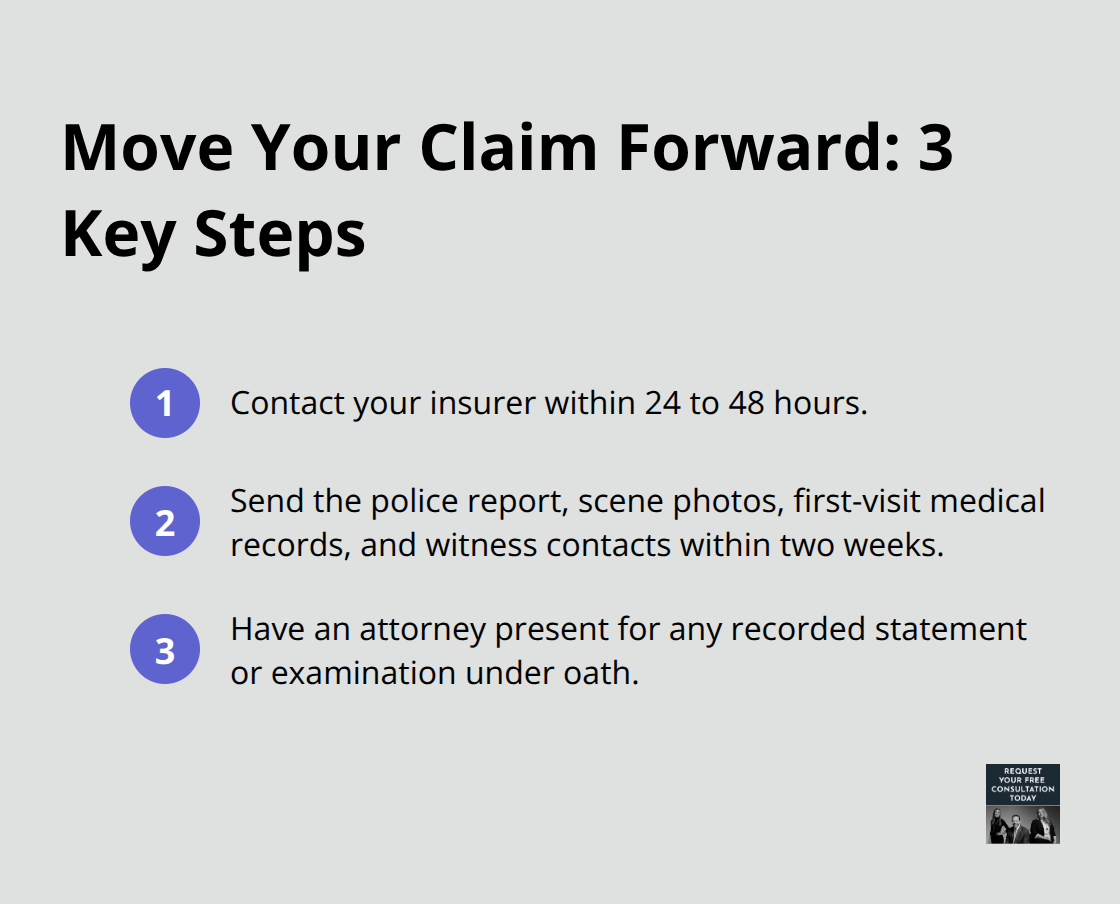
Provide your insurer with copies of the police report, photos from the scene, medical records from your first visit, and witness contact information within the first two weeks. This speed prevents your insurer from claiming insufficient information to process your claim-a tactic they sometimes use to extend settlements or reduce offers. If your insurer requests a recorded statement or examination under oath, you have the right to have an attorney present, and many insurers expect this in serious injury cases.
Compile Medical Documentation Systematically
Medical records require systematic organization from day one, not months later when memories fade and documents scatter. Request itemized statements from every healthcare provider involved in your treatment: emergency rooms, hospitals, physical therapy clinics, and doctors’ offices. These statements must show the date of service, specific treatment provided, and cost.
Your insurer will scrutinize gaps in treatment as evidence that injuries weren’t serious, so consistency matters tremendously. Medical attention within 24 hours of your accident creates the strongest foundation for your claim, so if you miss appointments or delay seeking care, settlement offers drop accordingly. Compile a separate spreadsheet tracking all lost wages with pay stubs, employer verification letters, and calculations of any reduced earning capacity from your injuries.
Build Your Demand Letter With Evidence
When you’re ready to settle or file a lawsuit, draft a demand letter that itemizes every economic damage with supporting documentation. Propose a total demand 25 to 40 percent above your economic losses to account for non-economic damages like pain and suffering. Set a 30-day response deadline in your letter.
Expect multiple rounds of negotiation before reaching agreement. If initial offers fall short of your documented losses, you have the right to proceed with a lawsuit, though most Santa Cruz cases settle during negotiation or early discovery phases. A California-licensed personal injury attorney in Santa Cruz protects your rights during this process and often results in substantially higher settlements than you’d secure alone.
Final Thoughts
A Santa Cruz car accident creates immediate pressure to make decisions that affect your entire recovery. You now understand what happens in those critical first moments, how to document evidence that strengthens your claim, and what compensation categories California law actually protects. Medical expenses, lost wages, property damage, and non-economic damages like pain and suffering all factor into what you deserve, and California’s comparative negligence system means even partial fault doesn’t eliminate your right to recover.
The path forward requires organization and persistence throughout your claim. Your insurer must acknowledge your claim within 15 days and complete investigation within 15 days, but you control how quickly you provide documentation, medical records, and repair estimates. Multiple rounds of negotiation are normal before reaching settlement, and many cases resolve without ever reaching trial.
Local legal support in Santa Cruz County matters because accident law intersects with local court procedures, specific intersection risk patterns, and regional insurance practices. We at Schaar & Silva LLP provide property damage valuation, medical lien services, and support connecting you with resources during your recovery-contact us for a consultation to discuss your specific situation and understand how local legal guidance protects your rights.
