

Seat belts save lives, but they can also cause serious injuries during high-impact collisions. A seat belt injury after car accident can affect your chest, abdomen, neck, and spine.
These injuries often require extensive medical treatment and can lead to significant financial burdens. We at Schaar & Silva LLP understand the complex legal issues surrounding these cases and help Santa Cruz County residents navigate their recovery options.
What Seat Belt Injuries Should You Expect?
Chest and Rib Damage From Shoulder Straps
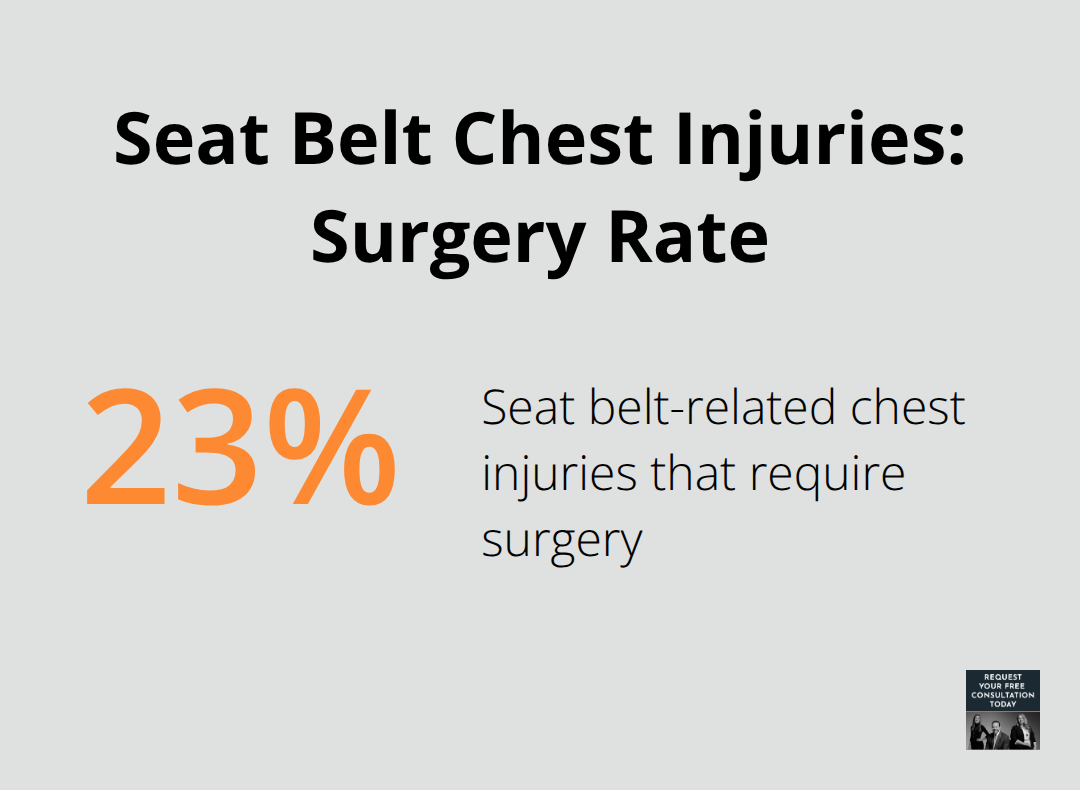
The shoulder strap creates the most severe seat belt injuries during crashes. Your chest absorbs tremendous force when the belt locks, which often fractures ribs and causes internal bleeding. Medical data shows that chest injuries from seat belts require surgery in 23% of cases, with recovery times that extend 8-12 weeks for fractured ribs alone.
Bruising across your chest indicates potential internal damage that emergency rooms frequently miss during initial examinations. Broken ribs can puncture lungs or damage your heart, which creates life-threatening complications hours after the accident. The force from shoulder straps also tears chest muscles and damages the sternum, which requires specialized orthopedic treatment.
Abdominal Trauma From Lap Belt Forces
Lap belts cause devastating abdominal injuries when positioned incorrectly or during severe impacts. The belt cuts into your abdomen and ruptures internal organs (including the liver, spleen, and intestines). These injuries often require immediate emergency surgery and can result in permanent digestive complications.
Internal bleeding from lap belt injuries kills accident victims who appear stable initially. Your abdomen swells and becomes tender, but these symptoms develop gradually and make diagnosis challenging. Bowel perforations from lap belt pressure lead to infections that extend hospital stays and increase medical costs significantly.
Spinal and Neck Injuries From Sudden Restraint
Seat belts create whiplash injuries that damage cervical vertebrae and spinal discs. The sudden stop motion while your body continues forward places extreme stress on your neck and spine. Herniated discs from seat belt injuries often require surgical intervention and months of physical therapy (with some cases never fully recovering).
Spinal compression fractures occur when the belt restrains your torso while your head snaps forward violently. These fractures can cause permanent nerve damage and chronic pain that affects your ability to work. Neck injuries from seat belts also damage soft tissues and create headaches and mobility issues that persist long after the accident.
The severity of these injuries makes immediate medical attention essential, even when you feel fine after the crash.
How Should You Handle Medical Care After Your Accident?
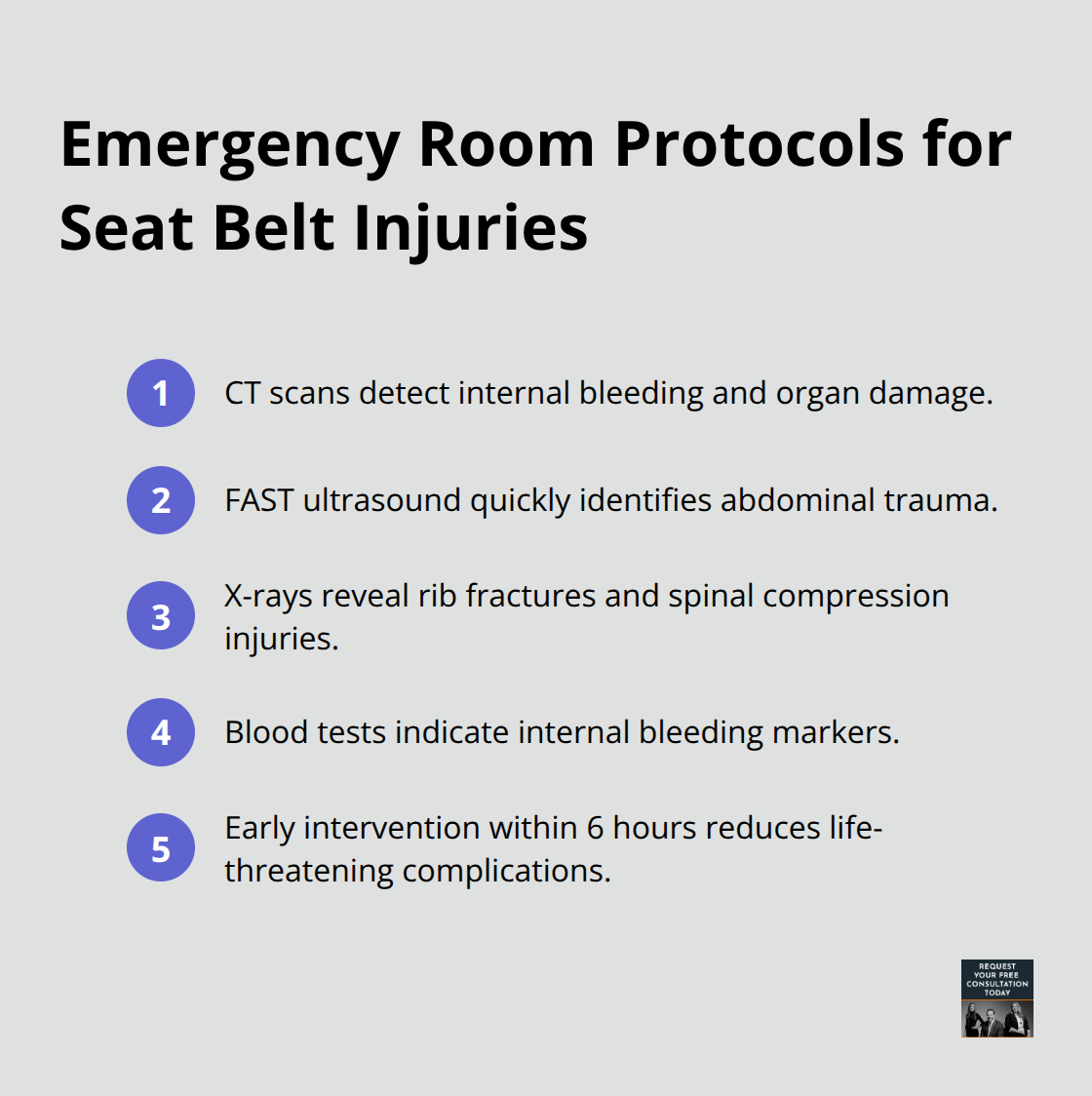
You must visit an emergency room within 24 hours of your accident, even when you feel fine. Seat belt injuries create internal damage that symptoms don’t reveal immediately, and delayed treatment increases complications by 340% according to trauma surgery data. Emergency physicians use CT scans and ultrasounds to detect internal bleeding, organ ruptures, and spinal fractures that physical examinations miss. Blood tests reveal internal bleeding markers, while X-rays identify rib fractures and spinal compression injuries that worsen without prompt intervention.
Emergency Room Protocols Save Lives
Emergency departments follow specific trauma protocols for seat belt injuries that include comprehensive imaging studies. Doctors check for signs of internal bleeding through blood pressure monitoring and abdominal examination techniques that detect organ damage. The first 6 hours after your accident are when life-threatening complications develop, which makes immediate medical attention your top priority. Emergency physicians order specialized tests (including focused assessment with sonography for trauma scans) that identify internal bleeding within minutes.
Treatment Varies Based on Injury Location
Chest injuries from shoulder straps require different treatment approaches than abdominal trauma from lap belts. Fractured ribs need pain management protocols that prevent pneumonia while they allow proper breathing, with recovery times that average 6-8 weeks for simple fractures. Abdominal injuries often require emergency surgery within hours, particularly when internal organs rupture or bleed internally. Spinal injuries demand immediate immobilization and specialized neurosurgical evaluation to prevent permanent nerve damage.
Physical Therapy Extends Recovery Success
Physical therapy starts within 2-3 weeks for most seat belt injuries and continues for 12-16 weeks on average. Chest injury rehabilitation focuses on breathing exercises and gradual mobility restoration, while spinal injury therapy emphasizes core strengthening and flexibility training. Insurance companies cover medically necessary physical therapy, but documentation from your treating physician is required for continued coverage approval (which can affect your treatment timeline significantly).
Your medical treatment creates substantial costs and documentation that become important factors when you pursue compensation for your injuries.
What Compensation Can You Claim for Seat Belt Injuries
Medical Expenses and Lost Wage Recovery
Your medical treatment costs and lost wages from seat belt injuries create substantial financial damages that insurance companies must cover. California law requires compensation for all medical expenses, which include emergency room visits, surgery, physical therapy, and treatment costs that average $47,000 for serious seat belt injuries according to Insurance Research Council data. Lost wage compensation covers your full salary during recovery periods (which typically last 8-16 weeks for chest and abdominal injuries). Pain and distress damages often exceed medical costs by 200-300% in seat belt injury cases, particularly when injuries cause permanent disabilities or chronic pain conditions.
Insurance Company Tactics Against Valid Claims
Insurance adjusters routinely deny or minimize seat belt injury claims by contending that your injuries existed before the accident or that you caused additional damage by improper belt use. They demand medical records from years before your accident to find pre-existing conditions that they can blame for your current injuries. California Insurance Code requires insurers to investigate claims fairly, but they frequently delay payments for months while they request unnecessary documentation.
Legal Representation Forces Fair Settlements
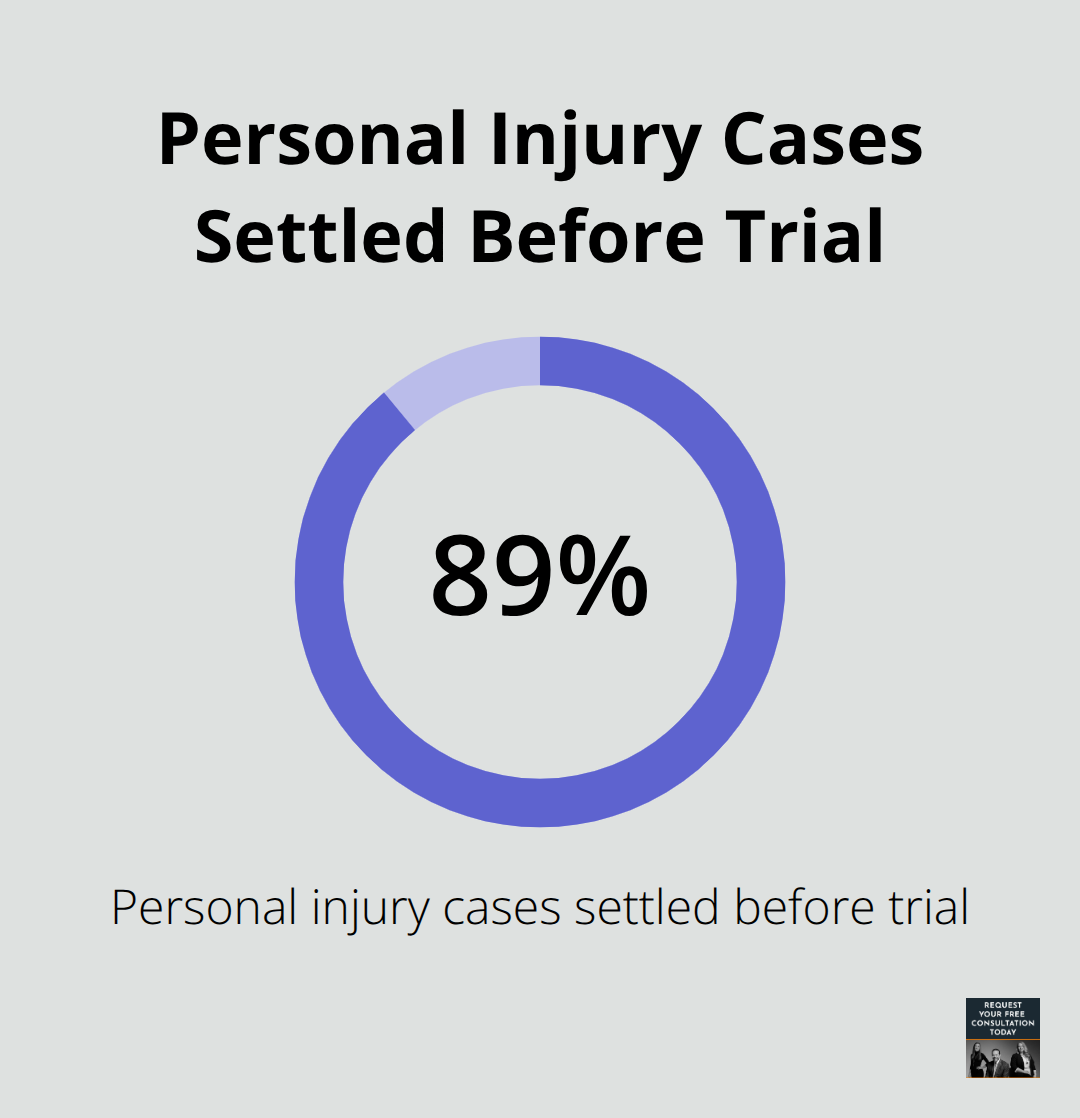
Strong legal representation demonstrates liability clearly and forces insurance companies to pay full compensation through comprehensive medical evidence and expert testimony that proves your injuries directly result from the accident. Insurance companies settle 89% of personal injury cases before trial, but only when they face attorneys who present compelling evidence of their responsibility.
Medical Lien Arrangements Protect Treatment Access
Medical lien agreements allow you to receive necessary treatment while your case resolves, which prevents insurance companies from denial of care to pressure you into quick settlements. These agreements guarantee payment to your doctors from your final settlement, which means you get proper medical care without upfront costs. Physical therapy providers and orthopedic surgeons commonly accept lien arrangements for seat belt injury cases because they understand the high success rates for these claims.
Final Thoughts
Seat belt injury after car accident cases demand immediate medical attention and strong legal representation to protect your rights. Medical costs, lost wages, and pain from these injuries create financial hardships that insurance companies often minimize through delay tactics and claim denials. We at Schaar & Silva LLP understand the complex medical and legal issues that surround seat belt injuries in Santa Cruz County.
Our team provides medical bill assistance through lien services that allow you to receive treatment while your case resolves. We handle property damage claims and connect you with psychological support when emotional trauma affects your recovery. These services help you focus on recovery while we manage the legal complexities of your case.
Schedule a medical evaluation if you haven’t already done so, even if symptoms seem minor. Document all medical treatment and keep records of missed work days and expenses (this documentation becomes vital evidence for your claim). Contact Schaar & Silva LLP to discuss your case and learn how we can help you recover full compensation for your injuries.
