

A car accident in Santa Cruz County can leave you facing medical bills, lost wages, and vehicle damage. Understanding Santa Cruz auto compensation is the first step toward protecting your financial recovery.
At Schaar & Silva LLP, we’ve seen how quickly settlement offers can fall short of actual losses. This guide walks you through the compensation process, common pitfalls, and when you need legal representation.
What Damages Can You Actually Recover
Three Categories of Damages in California
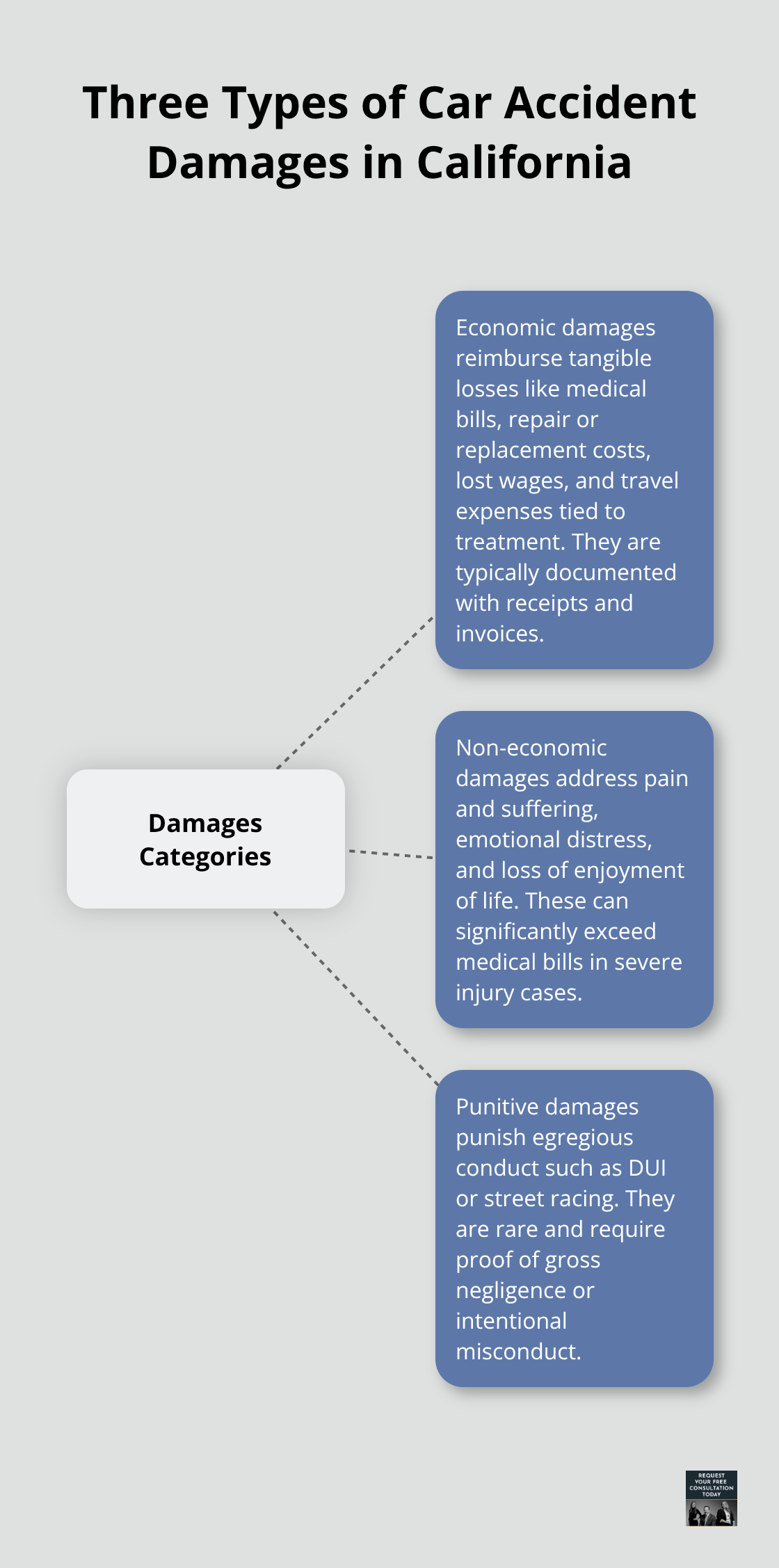
California law recognizes three main categories of damages after a car accident, and understanding the difference between them directly affects how much you can recover. Economic damages cover your tangible losses: medical bills, vehicle repair or replacement costs, lost wages, and transportation expenses while your car is being fixed. These are straightforward to calculate because they have receipts and documentation. Non-economic damages compensate for pain and suffering, emotional distress, and loss of enjoyment of life. California courts don’t cap these damages in most cases, which means they can significantly exceed your medical bills if your injury was severe. The third category, punitive damages, applies only in rare situations where the at-fault driver acted with gross negligence or intentional misconduct, such as driving under the influence or street racing.
How Comparative Negligence Reduces Your Recovery
California’s comparative negligence rule changes everything about how much you receive. Under California Code of Civil Procedure Section 1431.2, you can recover damages even if you were partially at fault for the accident, as long as you were less than 50% responsible. However, your recovery gets reduced by your percentage of fault. If you were 20% at fault and your total damages equal $100,000, you’d recover $80,000. This rule applies whether you settle with insurance or go to court, so establishing that the other driver bears primary responsibility matters enormously. Insurance companies count on drivers not understanding this rule, which is why they often pressure you to accept inflated blame.
Insurance Coverage Limits Cap Your Recovery
Insurance coverage limits also cap what you can recover from the at-fault driver’s policy. California requires minimum liability coverage of $15,000 per person and $30,000 per accident for bodily injury, plus $5,000 for property damage. Many drivers carry only these minimums, which means your recovery could be capped regardless of your actual losses. If the at-fault driver is underinsured or uninsured, your own uninsured motorist coverage becomes critical. You should verify your coverage limits immediately after an accident because waiting weeks or months leaves you vulnerable to low settlement offers based on the other driver’s minimal policy limits.
The next step involves reporting your accident to insurance and gathering the documentation that supports your claim.
How to Report and Document Your Accident Properly
Report Your Accident Immediately and Strategically
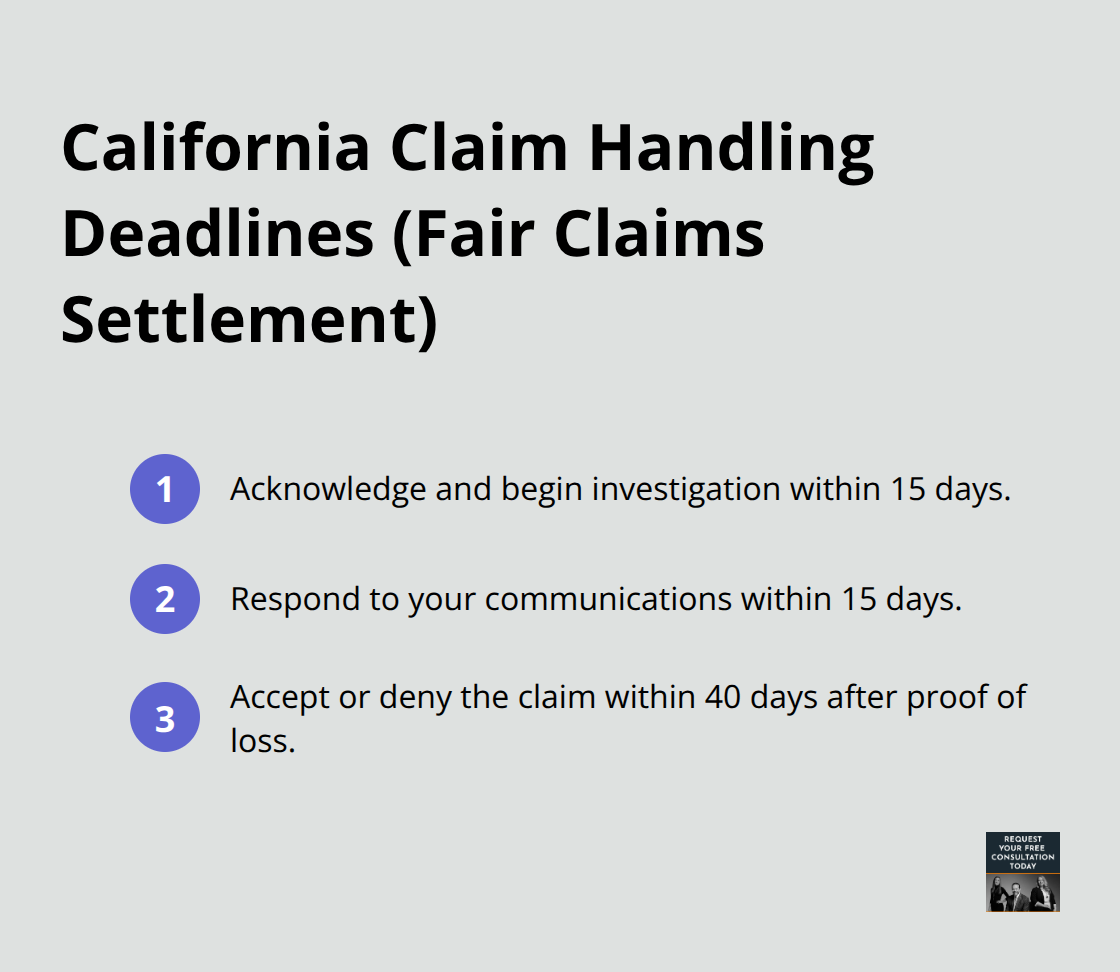
Contact your insurance company within the first few days after seeking medical attention. Provide factual information about what happened without admitting fault or speculating about causes. The Fair Claims Settlement Practices Regulations require insurers to acknowledge your claim and begin investigation within 15 days, then respond to your communications within 15 days and make a decision within 40 days after you submit proof of loss.
Insurance adjusters will ask detailed questions, and your answers become part of the official record. Do not agree to a recorded statement without understanding that adjusters use these statements to find reasons to deny or reduce your claim. If the adjuster requests a recorded statement, you can decline or request written questions instead, which gives you time to think carefully about your answers. Many drivers cooperate too freely at this stage, not realizing that casual comments about feeling fine or not needing medical care will be used against them months later when they file for pain and suffering damages.
Gather Evidence at the Scene and Beyond
Documentation determines whether your claim succeeds or fails, and the evidence you collect in the first week after your accident carries far more weight than anything you gather later. Photograph the accident scene from multiple angles, including vehicle damage, road conditions, traffic signals, and street signs. Obtain the police report number and request a copy from the Santa Cruz County Sheriff or local police department, as this official document establishes facts that insurance companies cannot easily dispute.
Gather witness contact information at the scene, and follow up with written statements from anyone who saw the accident happen. Request your complete medical file from each provider and review it for accuracy before submitting it to insurance, since errors in medical records can undermine your credibility.
Build Your Medical Timeline and Personal Record
Begin treatment promptly and keep every receipt, bill, prescription, and medical note related to your injuries. Insurance adjusters pay close attention to the timeline between your accident and first medical visit, so delays in treatment weaken your claim significantly. Maintain a daily journal documenting your pain levels, limitations, missed work days, and how the injury affects your daily activities (sleeping, working, exercising), because this personal record demonstrates the real impact of your injuries beyond what medical bills alone can show.
The next step involves understanding how insurance adjusters evaluate your claim and what negotiation tactics actually work in your favor.
Mistakes That Cost You Money
Why Initial Settlement Offers Fall Short
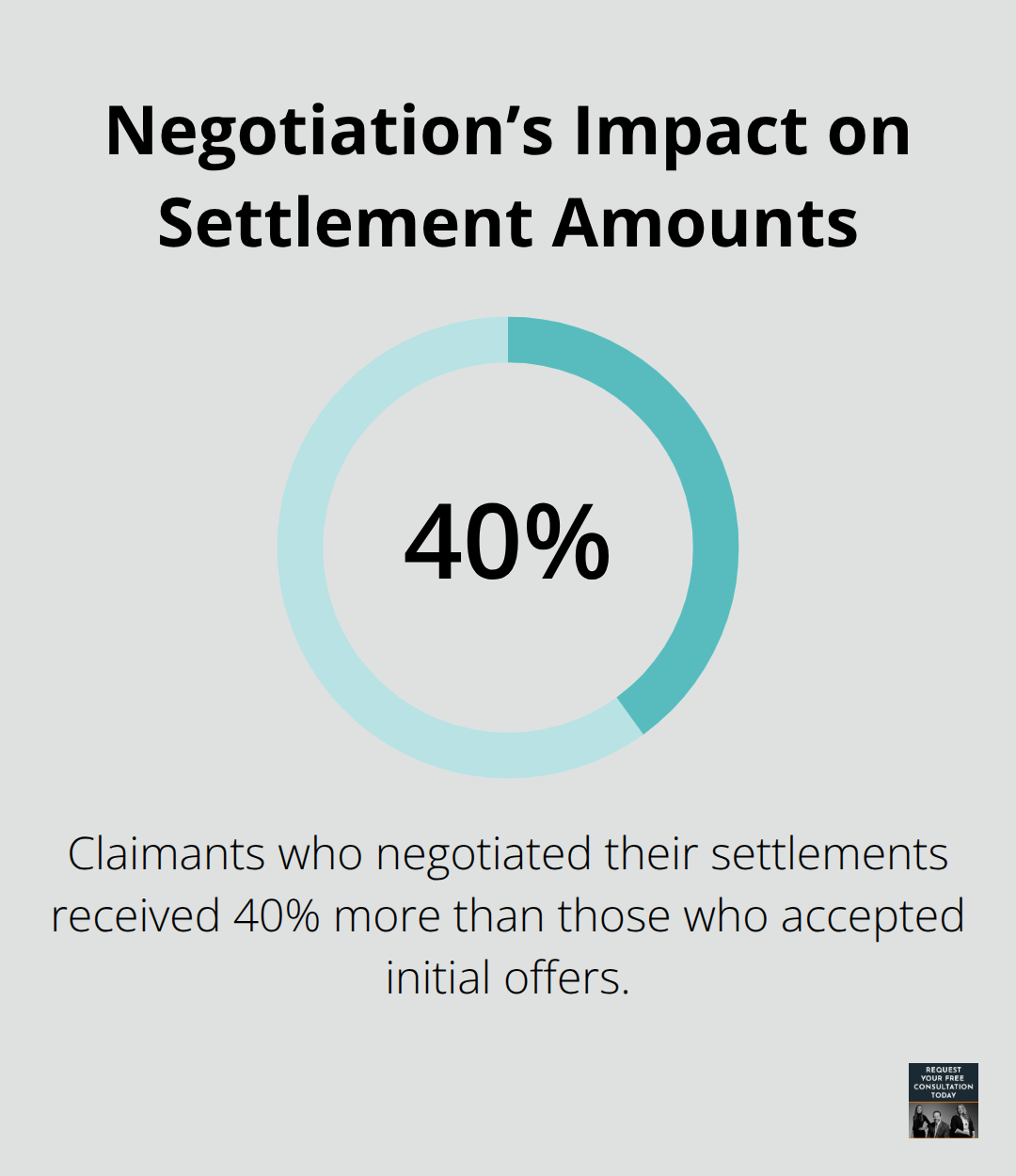
Insurance adjusters count on your impatience and lack of knowledge to minimize what you receive. The first settlement offer from an insurance company is almost never their best offer, yet most people accept it within weeks of an accident. A study by the Insurance Information Institute found that claimants who negotiated their settlements received 40% more than those who accepted initial offers without pushback. The adjuster’s opening number is deliberately low because they know many accident victims need money quickly for medical bills and car repairs.
If you accept that first offer, you forfeit any ability to recover more later, even if you discover additional injuries or complications months down the road.
Recorded Statements: The Trap You Don’t See Coming
Insurance companies use recorded statements as weapons against you. When an adjuster calls and asks you to describe what happened on tape, they’re building a record they can use against you later. Anything you say casually-even if technically accurate-gets weaponized in settlement negotiations. You might mention that you felt okay the day after the accident, and the adjuster will cite that statement to argue your injuries weren’t serious. You have the right to refuse recorded statements and request written questions instead, which gives you time to think through your answers carefully before responding.
Medical Treatment Delays Destroy Your Claim
The third mistake destroys more claims than any other: waiting too long to seek medical treatment or failing to document your injuries comprehensively. The California Department of Insurance emphasizes that gaps between your accident date and your first medical visit signal to adjusters that your injuries may not be genuine. If you waited three weeks to see a doctor, the adjuster will argue your injuries developed from something else, not the accident. Beyond initial treatment, many people stop attending follow-up appointments or physical therapy because they feel better or can’t afford copays. This decision guarantees your settlement will be lower because medical records create the factual foundation for your entire claim.
Documentation Transforms Your Claim Into Evidence
Keep every receipt, bill, and note from every provider you visit. Maintain a written journal that documents your pain, limitations, and how injuries affect your work and daily life. This personal record transforms generic medical notes into a compelling narrative about your actual suffering. The insurance adjuster only knows what’s documented, so incomplete records mean lower settlements. We at Schaar & Silva LLP have observed how settlement mistakes cost accident victims tens of thousands of dollars because they skipped appointments or failed to keep organized records. The difference between a strong claim and a weak one often comes down to whether you maintained thorough documentation throughout your recovery.
Final Thoughts
Your Santa Cruz auto compensation claim succeeds or fails based on decisions you make in the first weeks after your accident. Report your accident immediately without admitting fault, document everything meticulously, and never accept the first settlement offer. Insurance adjusters rely on your impatience and incomplete records to justify low settlements, so your organized approach to evidence gathering and medical treatment directly translates into thousands of dollars in additional recovery.
California gives you two years to file a personal injury lawsuit after a car accident, but waiting that long weakens your claim significantly. Medical records fade, witness memories blur, and the accident scene changes. Your strongest position exists within the first three to six months when evidence is fresh and your injuries are clearly documented, so act now rather than later.
We at Schaar & Silva LLP understand that Santa Cruz accident victims often feel overwhelmed by medical bills, insurance paperwork, and pressure to settle quickly. Contact us to discuss your claim and learn whether legal representation makes sense for your situation.
