

After a car accident in Santa Cruz County, figuring out what your case is worth feels overwhelming. Insurance companies use specific methods to calculate settlements, and knowing these methods helps you avoid costly mistakes.
We at Schaar & Silva LLP have helped accident victims understand their car accident compensation options. This guide walks you through the factors that determine your settlement value and shows you how to protect your claim.
What Damages Can You Actually Recover
Economic Damages: The Measurable Costs
Your Santa Cruz car accident settlement includes two main categories of damages: economic and non-economic. Economic damages are straightforward-they represent the actual money you spent or will spend. Medical bills from emergency care, hospital stays, doctor visits, medications, and rehabilitation all count as recoverable expenses. If you needed physical therapy after a collision, those costs are included. Property damage matters too, whether it involves your vehicle repair or replacement costs. Lost wages during your recovery period are recoverable, and if your injury affects your long-term earning ability, that future income loss can be calculated and claimed.
Non-Economic Damages: Pain, Suffering, and Quality of Life
Non-economic damages cover pain and suffering, emotional distress, loss of enjoyment of life, and the impact on your relationships. Insurance companies typically value these using the multiplier method, applying a factor of 1.5 to 5 times your economic damages depending on injury severity. A minor soft tissue injury might use a 1.5 multiplier, while a permanent disability could justify a 4 or 5 multiplier. Some cases use the per diem method instead, assigning a daily dollar value to your suffering and multiplying by recovery days (for example, 120 days at $150 per day equals $18,000 in non-economic damages).
How Injury Severity Affects Your Settlement
Long-term or permanent injuries significantly increase settlement value because they affect your quality of life indefinitely. Documentation matters enormously here-medical records showing ongoing treatment, therapy notes, and evidence of lifestyle changes strengthen your claim. Santa Cruz County experienced 147 fatal and injury crash victims in 2021, with alcohol involvement in 18 cases and speed-related factors in 19 collisions. These circumstances often result in more severe injuries and higher economic damages.
Building Your Damage Claim
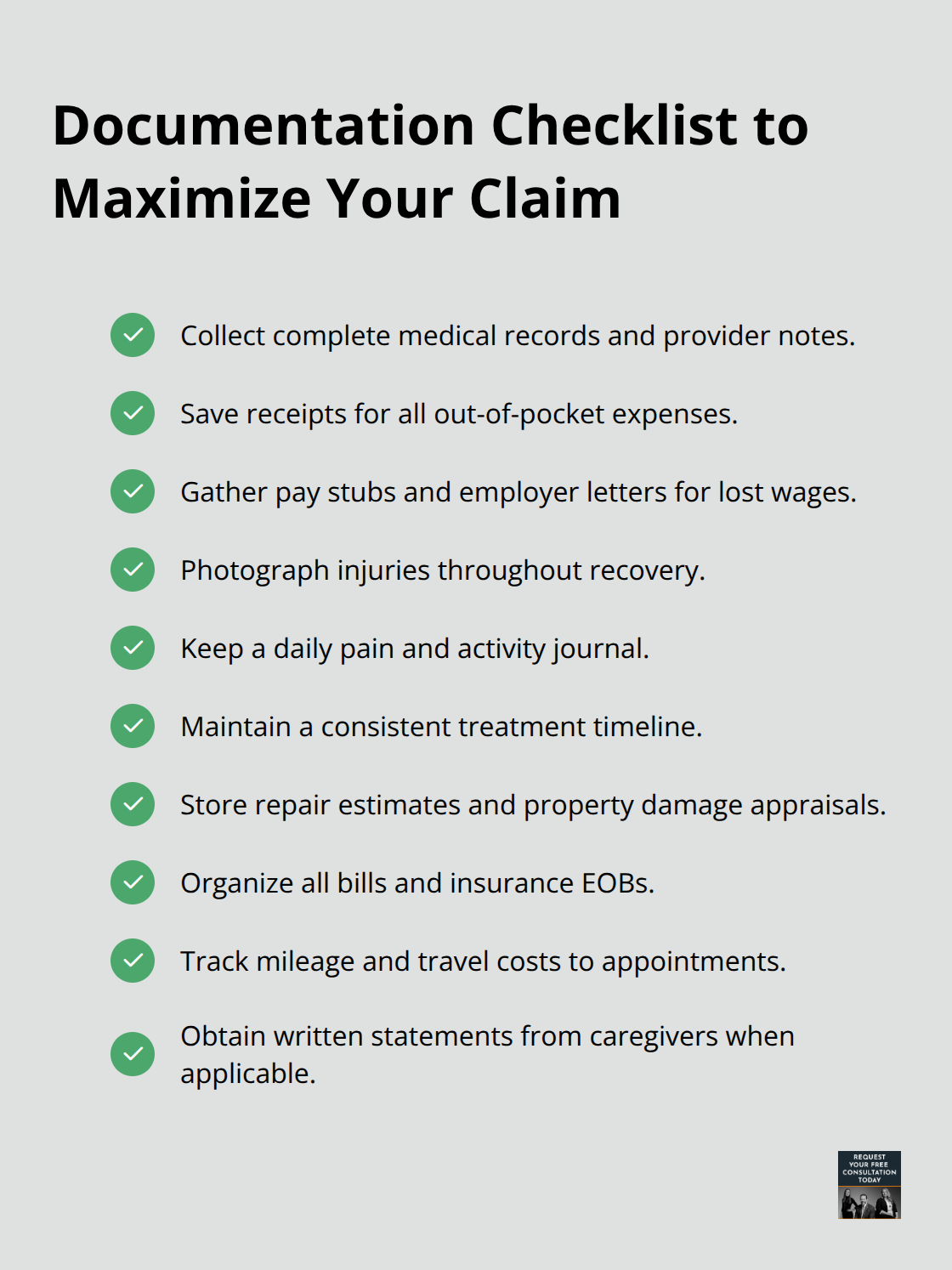
Medical records, receipts for out-of-pocket expenses, and proof of lost wages form the foundation of your damage calculation. Photographs of your injuries at different recovery stages and written accounts of how the accident affected your daily activities provide powerful support. Insurance adjusters review this documentation carefully when determining multipliers for non-economic damages. The strength of your evidence directly influences whether your case settles at the lower or higher end of the range.
What Comes Next in Your Claim
Understanding your damages is only the first step. Insurance companies use specific methods to evaluate these damages and calculate their settlement offers, and knowing how they work helps you recognize whether their initial offer reflects your actual losses.
How Insurance Companies Value Your Claim
The Police Report Sets the Foundation
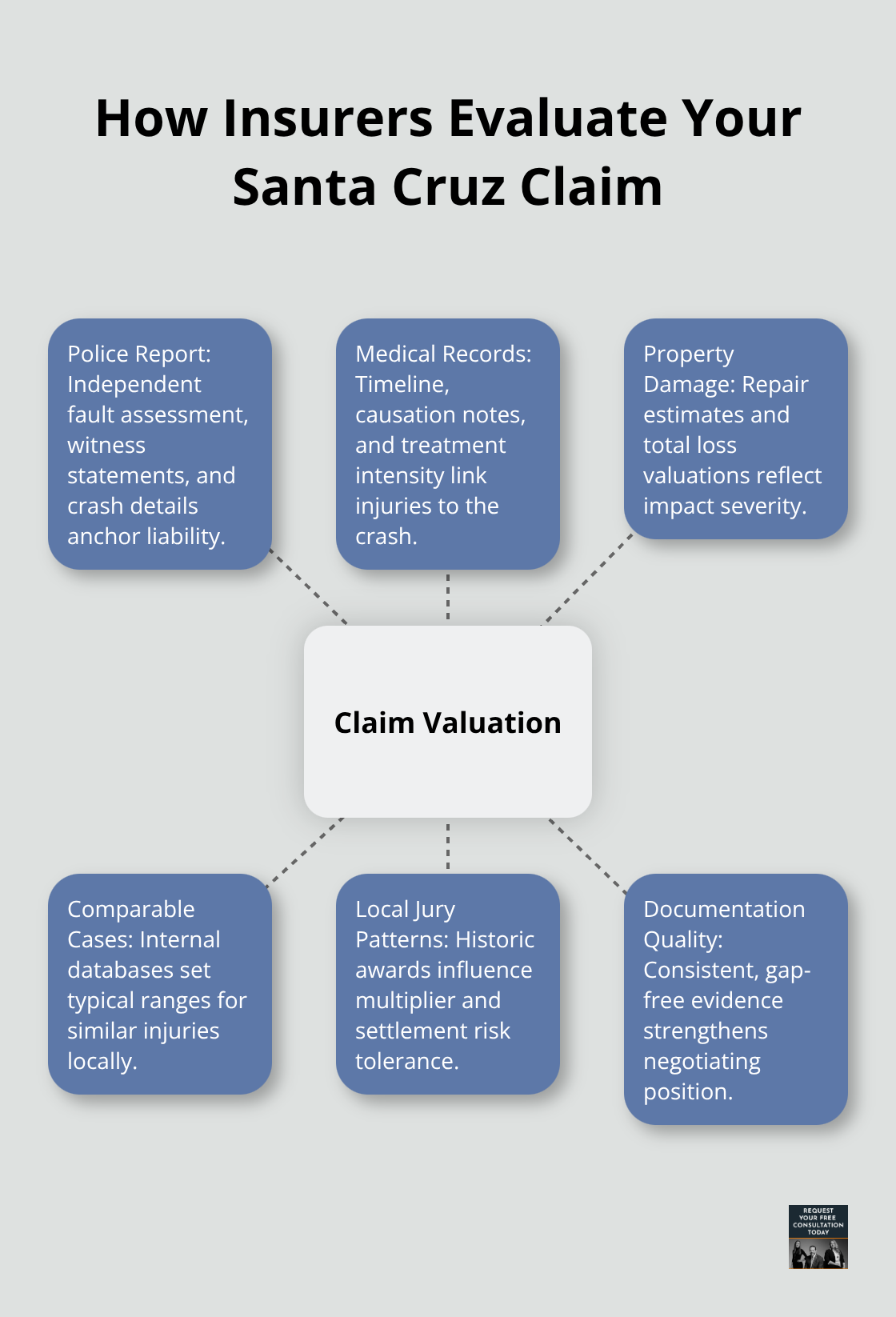
Insurance adjusters follow a structured process when calculating your settlement, and understanding each step helps you recognize whether their offer reflects your actual losses. They obtain the police report from the accident scene first, which documents the officer’s initial fault assessment, witness statements, and crash details. This report carries significant weight because it provides an independent perspective on liability. In Santa Cruz County, where 13 of the 147 fatal and injury crashes in 2021 involved hit-and-run circumstances according to California Office of Traffic Safety data, documentation becomes even more critical because liability disputes are common.
Medical Records Connect Your Injuries to the Accident
Adjusters review medical records to establish the connection between the accident and your injuries. They examine treatment timelines, the types of care you received, and whether your medical providers documented the accident as the cause of your condition. Adjusters pay close attention to gaps in treatment because they interpret time away from doctors as a sign that your injuries weren’t serious. If you waited weeks before seeking medical attention, they use that delay to argue your damages should be lower.
Property Damage Assessment Follows Clear Standards
Property damage assessment follows a similar path: adjusters obtain repair estimates for your vehicle and compare them to the cost of replacement if the vehicle is totaled. Speed-related crashes in Santa Cruz County ranked 71 out of 105 counties in severity, and alcohol involvement appeared in 18 of the 147 victims in 2021, suggesting these factors typically drive higher settlements due to increased injury severity.
Comparable Cases Determine Your Settlement Range
Once adjusters establish your economic damages, they apply their settlement formula by comparing your case to similar accidents in Santa Cruz County. They consider injury type, recovery duration, and whether permanent disability resulted from the collision. A whiplash case with three months of treatment might receive a 1.5 multiplier on economic damages, while a case involving long-term physical therapy could justify a 3 or 4 multiplier. Insurance companies maintain internal databases of settled cases in your area, which means they know the typical range for your injury type. This is where many victims accept inadequate offers because they lack access to comparable data.
Local Jury Patterns Influence Settlement Offers
Adjusters also factor in your jurisdiction because Santa Cruz juries have established patterns in awarding damages. If local juries tend to award higher multipliers for soft tissue injuries, adjusters adjust their settlement offers upward to avoid trial risk. The strength of your documentation throughout this entire process directly determines where your settlement falls within the range for your injury category. Knowing how adjusters value comparable cases puts you in a stronger position to evaluate their initial offer, but recognizing common mistakes that victims make during the claims process can mean the difference between an adequate settlement and one that leaves you short.
Mistakes That Tank Your Settlement
The First Offer Is Never Your Final Number
Insurance adjusters count on accident victims accepting their initial settlement offers without question. The first offer typically ranges 30 to 50 percent below what your case is actually worth, yet many victims take it immediately because they lack confidence in their valuation. Adjusters know this pattern repeats constantly, which is why they intentionally lowball their opening numbers.
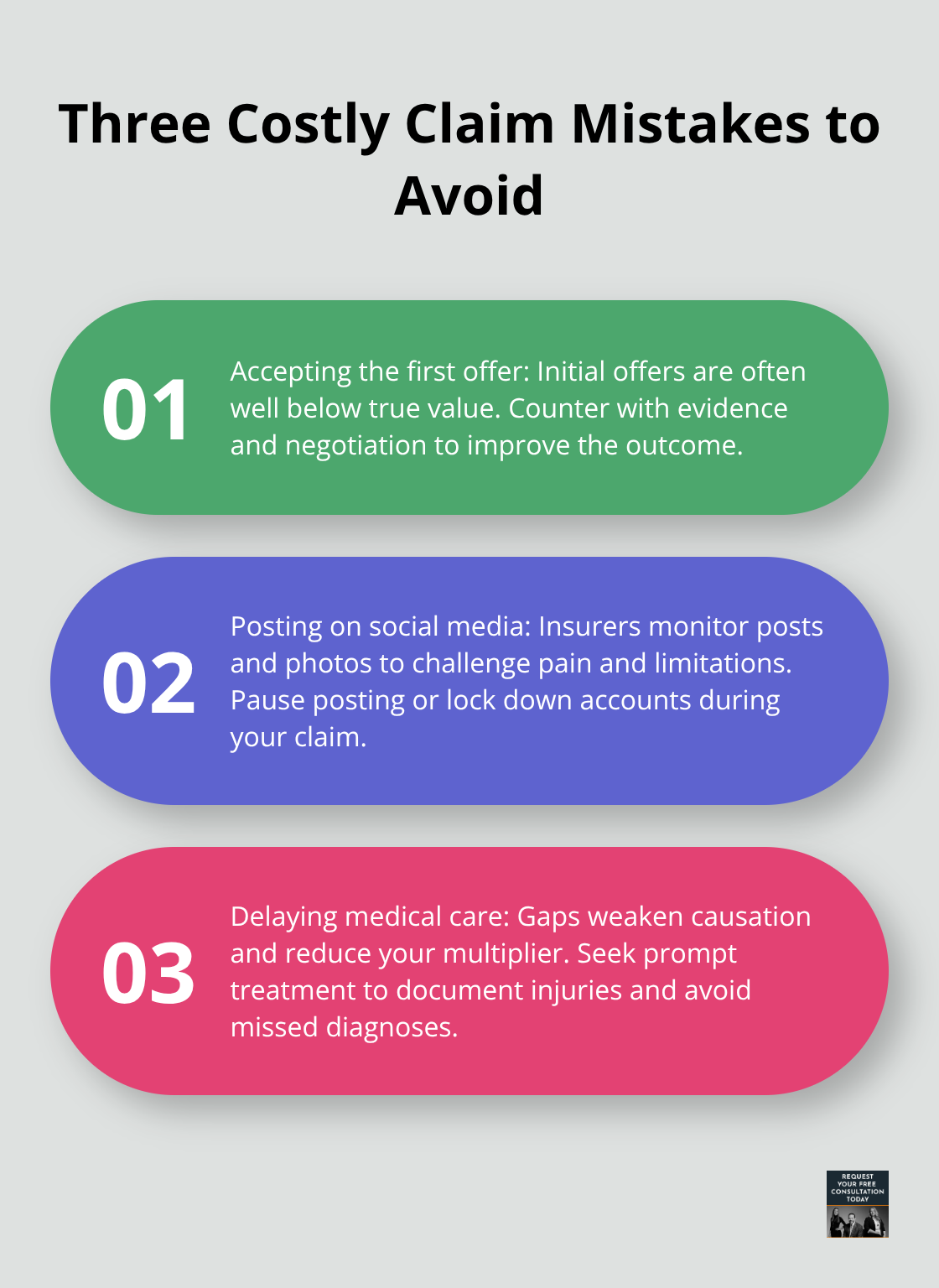
When you accept without negotiation, you leave substantial money on the table. The adjustment process exists for a reason: your counteroffer backed by medical evidence, repair estimates, and documentation forces adjusters to justify their numbers and increase their offers noticeably.
Social Media Posts Destroy Your Credibility
Another critical mistake involves posting accident details or injury updates on social media. Insurance companies monitor social media accounts belonging to claimants, and photos showing you at social events or participating in activities contradict claims of pain and suffering or mobility limitations. A single image of you at a Santa Cruz beach two months after your accident can devastate your non-economic damages claim, even if you were managing mild activity that day. Adjusters use this material to argue your injuries weren’t as serious as your medical records suggest, and they reduce multipliers accordingly.
Delayed Medical Treatment Weakens Your Entire Claim
Failing to seek immediate medical attention after your accident creates a documentation gap that adjusters exploit ruthlessly. If you waited two weeks before seeing a doctor, adjusters argue the accident wasn’t serious enough to warrant immediate care, and they reduce your settlement offer accordingly. Medical records establish the causal connection between the accident and your injuries, and delays weaken that connection in adjusters’ eyes. Additionally, some injuries like whiplash or internal injuries don’t manifest immediately, meaning delayed treatment can actually miss the window for proper diagnosis.
Documentation Determines Your Multiplier
Documentation of expenses and injuries must be thorough and timely to support your claim. Keep receipts for every medical visit, medication, or related expense. Track lost wages with pay stubs showing the dates you missed work. Photograph visible injuries at different stages of recovery, and maintain a written record of how the accident affected your daily activities, sleep, work performance, and relationships. This documentation directly influences whether adjusters apply a 1.5 multiplier or a 4 multiplier to your economic damages. Without it, they choose the lower figure.
What Strong Documentation Accomplishes
The strength of your evidence throughout the claims process determines where your settlement falls within the range for your injury category. Medical records, repair estimates, and detailed expense tracking transform vague injury claims into concrete financial demands that adjusters must address. When you present this material, settlement amounts increase noticeably because adjusters can no longer argue your damages lack support. We at Schaar & Silva LLP help clients understand how to build this documentation from the start, protecting settlement value throughout the claims process.
Final Thoughts
Your Santa Cruz car accident compensation depends on how thoroughly you document damages, avoid common mistakes, and understand how insurance companies calculate settlements. Economic damages like medical bills and lost wages form the foundation, while non-economic damages for pain and suffering multiply based on injury severity. The multiplier method, comparable cases in your county, and the strength of your evidence determine where your settlement falls within the realistic range for your injury type.
Most victims leave money on the table by accepting first offers, posting on social media, or failing to gather proper documentation. Insurance adjusters count on these mistakes because they know accident victims often lack confidence in their valuations. Your initial offer typically falls 30 to 50 percent below what your case actually warrants, which is why negotiation backed by solid evidence matters enormously.
We at Schaar & Silva LLP help Santa Cruz County residents navigate this process from start to finish. Contact Schaar & Silva LLP for a free case evaluation and learn what your Santa Cruz accident case is actually worth. The sooner you start building your documentation and understanding your claim value, the stronger your position becomes when negotiating with insurance companies.
