

A car crash can turn your life upside down in seconds. Medical bills pile up, lost wages add stress, and dealing with insurance companies feels overwhelming.
We at Schaar & Silva LLP help people in Santa Cruz County navigate car crash personal injury claims every day. This guide walks you through exactly what to do next, from the accident scene to getting fair compensation.
What to Do Right After Your Car Crash
Prioritize Safety and Medical Care
The first hour after a crash determines how strong your claim becomes. Your actions at the scene directly impact whether you recover full compensation or accept a lowball settlement months later. Address safety and medical needs immediately. If anyone is injured, call 911 without hesitation. California Highway Patrol or local police will document the crash officially, creating a record that insurers cannot ignore. Once you confirm everyone is safe, move vehicles out of traffic if possible to prevent additional collisions. Seek medical evaluation immediately even if you feel fine, as adrenaline can mask injury symptoms for hours or days after impact.
Avoid Statements That Hurt Your Claim
Never admit fault at the scene, even if you think the crash was your fault. Insurance adjusters will use any statement against you later, and fault determination involves complex California comparative negligence rules that require investigation. When you contact your insurance company, provide factual details about what happened but avoid speculation about who caused the crash. Insurance adjusters evaluate fault using evidence, not your statement.
Document Everything with Photos
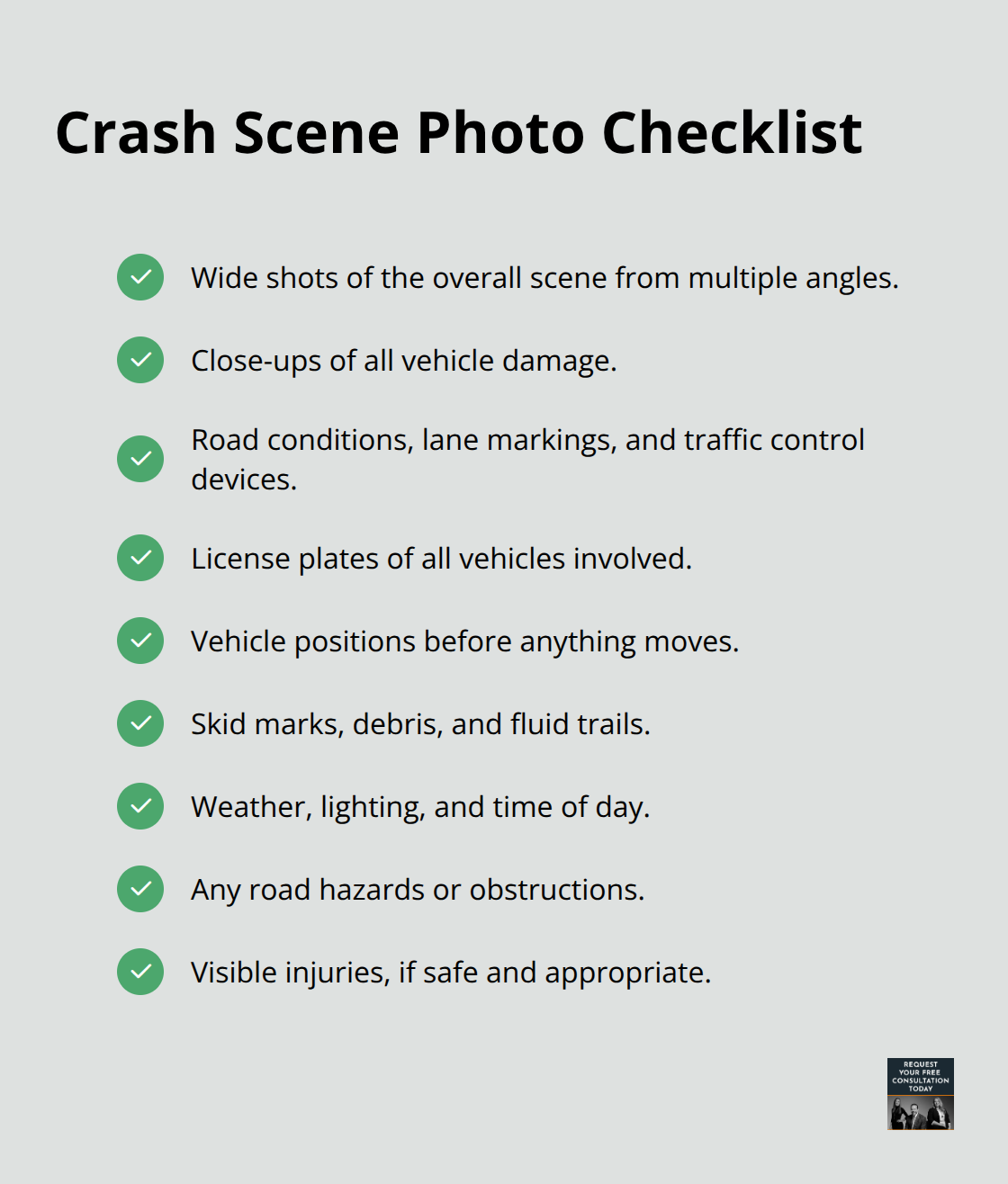
Photograph everything at the scene using your smartphone. Take wide shots showing the overall accident location, close-ups of all vehicle damage, road conditions, traffic signs, weather, and time of day. Capture license plates and vehicle positions before anything moves. Document skid marks, debris, and road hazards that contributed to the crash. These images serve as objective evidence that no adjuster can dispute later.
Collect Critical Information
Collect names, phone numbers, and addresses from every other driver and passenger, plus their insurance information and driver license numbers. Get contact details from witnesses who saw the crash happen. Request the police report number and the officer’s name before leaving the scene. Within 30 days, request the official California Highway Patrol crash report online through the Crash Portal or in person at your nearest CHP Area office by submitting form CHP 190. The crash report includes objective details about road conditions, weather, and officer observations that strengthen your claim.
Organize Your Documentation
Keep copies of all documentation organized in one folder because you will need these materials throughout your claim. This organized file becomes your foundation for negotiating with insurance companies and, if necessary, pursuing legal action. With your evidence secured and your initial steps completed, you’re ready to understand what damages you can actually recover.
What Damages Can You Actually Recover
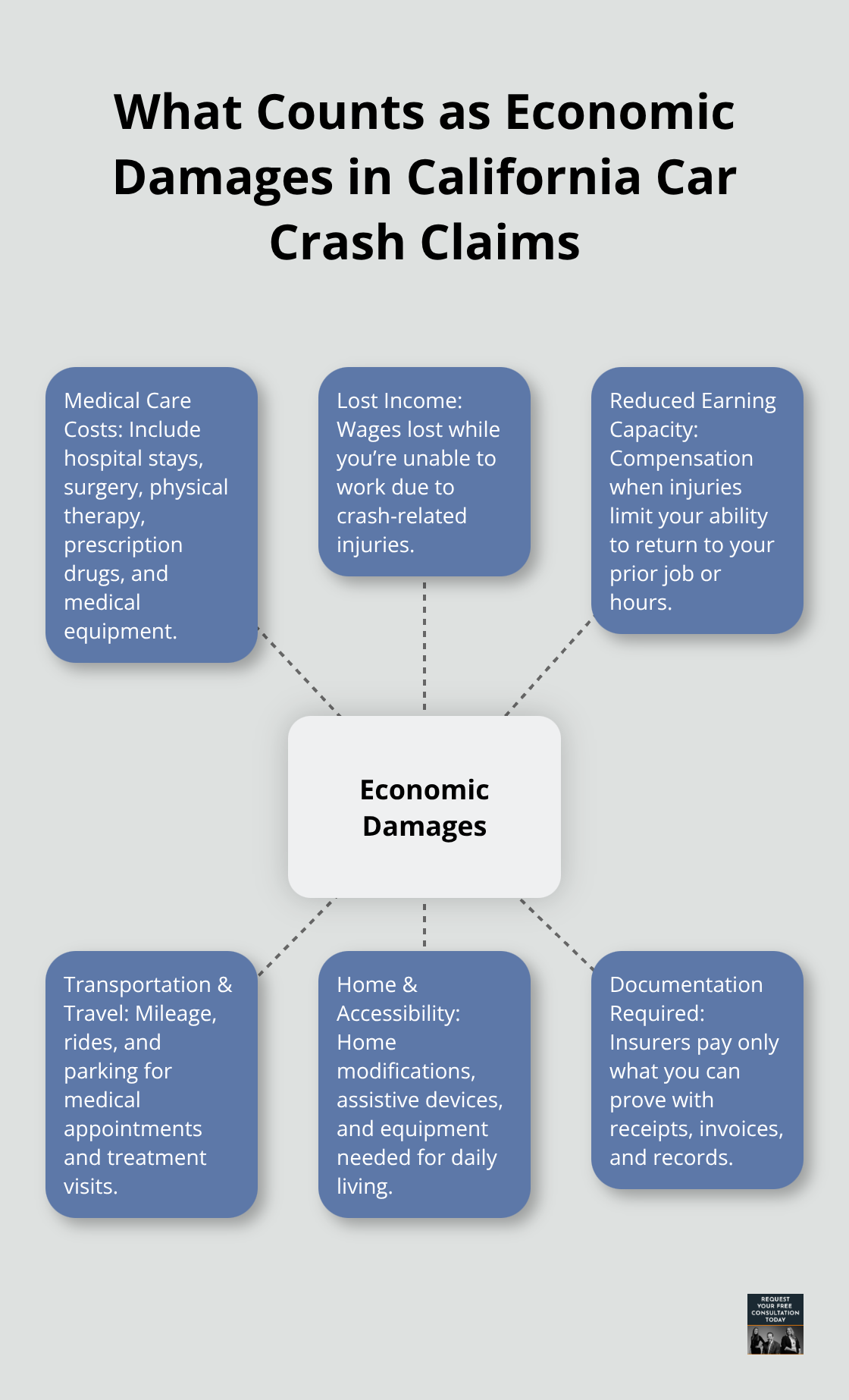
California law recognizes two main categories of damages in car crash claims: economic and non-economic. Economic damages are straightforward to calculate because they represent actual money you spent. Medical bills, hospital stays, surgery costs, physical therapy, prescription medications, and medical equipment all count. Lost wages from time away from work are included, along with reduced earning capacity if your injuries prevent you from returning to your previous job. Transportation costs to medical appointments, home modifications for accessibility, and assistive devices belong in your claim. Insurance adjusters will only pay what you can document with evidence.
Documenting Economic Damages
Keep receipts and invoices for everything related to your crash recovery. Your documentation file should contain medical statements, pharmacy records, and invoices from medical equipment suppliers. Track every dollar spent on treatment, transportation, and recovery-related expenses. Insurance companies scrutinize economic damages more carefully than any other claim category, so thorough documentation protects your recovery. When you organize these materials chronologically, adjusters cannot dispute the amounts you claim.
Understanding Non-Economic Damages
Non-economic damages compensate for pain and suffering, emotional distress, loss of enjoyment of life, and permanent scarring or disfigurement. These damages are harder to quantify, which is exactly why insurance companies fight them aggressively. A California court allows you to claim non-economic damages when you can show the severity of your injuries through medical records and testimony from your doctors about how the crash affected your daily life. Keep a detailed diary documenting how your injuries impact your ability to work, exercise, sleep, and spend time with family. Medical opinions linking your injuries directly to the crash are essential because adjusters need professional documentation to justify higher settlements. If your injuries are permanent, your non-economic damages claim increases significantly since you will experience ongoing pain for years.
Determining Who Bears Legal Responsibility
California follows comparative negligence rules, meaning fault is not always black and white. If you are found partially at fault for the crash, your compensation gets reduced by your percentage of fault. For example, if you were 20 percent at fault and entitled to $100,000 in damages, you would receive $80,000. This is why the investigation phase matters so much. The at-fault driver must have owed you a duty of care, breached that duty through negligent driving, caused the crash, and resulted in your injuries. A police report documents facts like traffic violations, unsafe speeds, and road conditions that support liability findings. Insurance adjusters use police reports, photos, witness statements, and vehicle damage patterns to determine who violated traffic laws and caused the collision.
Multiple parties might share liability in a single crash. The at-fault driver is the obvious target, but the vehicle owner could be liable if they allowed an incompetent driver to operate their car. An employer might bear responsibility if their employee caused the crash while working. A government agency could be liable if road hazards or poor maintenance contributed to the accident. Identifying all potentially responsible parties expands your recovery options because you can pursue claims against multiple insurance policies. This is critical in Santa Cruz County where some crashes involve commercial vehicles or delivery drivers whose employers carry substantial coverage.
Why Medical Records Prove Your Claim
Your medical documentation is the foundation of your entire claim because it proves injury causation, severity, and ongoing impact. Insurance adjusters scrutinize the gap between your crash date and your first medical visit because they argue that delays suggest minor injuries. Seek medical evaluation immediately after the crash, even if you feel fine, since many injuries like whiplash, concussions, and internal injuries develop over hours or days. Maintain continuous treatment with your doctor throughout your recovery because gaps in treatment signal to adjusters that your injuries resolved quickly. Keep detailed records of every appointment, every test result, every prescription, and every treatment plan modification.
Your medical records must connect your specific injuries directly to the crash impact. Doctors should document the mechanism of injury, noting how the collision caused your particular injuries. If you had pre-existing conditions that the crash worsened, your medical records should clearly separate the pre-existing baseline from the crash-related deterioration. Insurance companies love arguing that your injuries existed before the crash, so medical documentation showing how the crash exacerbated your condition protects your claim. Request copies of all medical records from every provider involved in your treatment and organize them chronologically. These records become your evidence that you suffered real, documented injuries requiring real medical intervention. With your damages identified and your medical evidence organized, you now face the most challenging phase: communicating with insurance adjusters who actively work to minimize what they pay you.
How Insurance Adjusters Try to Minimize Your Payout
Insurance adjusters are trained to settle claims for the lowest possible amount, and they use predictable tactics that work against unprepared claimants. The adjuster assigned to your case has one job: reduce what the insurance company pays. This is not personal-it is their performance metric. Understanding their playbook protects your recovery.
Recognizing Common Adjuster Tactics
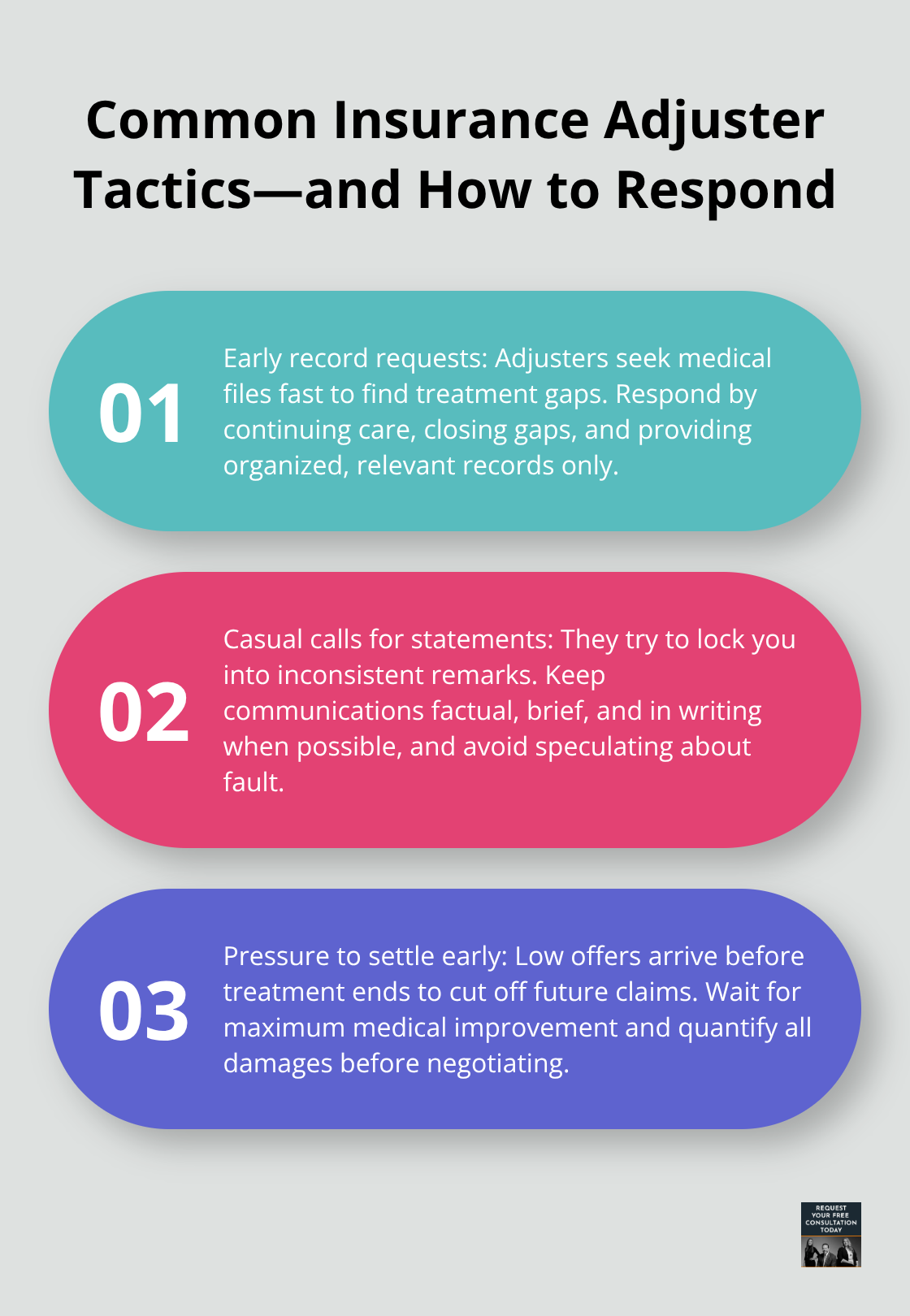
Adjusters often request medical records early, hoping to find treatment gaps that suggest minor injuries. They may call you directly before you have organized your evidence, asking casual questions designed to lock you into statements that contradict your claim later. They sometimes suggest that injuries from previous accidents caused your current pain, not the crash. They pressure you to accept initial settlement offers before your medical treatment concludes, knowing that accepting early means you cannot claim additional damages when your condition worsens.
One common tactic involves setting a low reserve account. A reserve is the insurance company’s internal estimate of what your claim is worth. If they set a $15,000 reserve and your actual damages reach $40,000, the adjuster faces pressure from supervisors to close the file quickly at a lower number rather than admit the reserve was inadequate. You counteract this by keeping the adjuster informed about your injuries, treatment progression, and any complications that arise. When your condition worsens or new injuries emerge, notify the adjuster in writing so they increase the reserve account, signaling that your claim has genuine value.
Never Settle While Still in Treatment
Never settle your claim while you are still undergoing medical treatment. This is non-negotiable. Signing a settlement release ends your claim permanently, and you cannot recover additional compensation if your injuries prove more serious than initially thought. Many people discover months later that they needed surgery, ongoing physical therapy, or mental health treatment that their initial settlement did not cover. California gives you two years from your injury date to file a lawsuit, so there is no rush to accept the first offer. Insurance adjusters count on your financial desperation and medical stress to force an early settlement.
Instead, stay under your doctor’s care until your doctor releases you or indicates your condition has stabilized. Your doctor’s release signals that your medical treatment is complete, allowing you to calculate your total damages accurately. This approach prevents the costly mistake of accepting inadequate compensation before knowing your full recovery needs.
Document Your Injury Impact Daily
Document your treatment in a detailed diary noting daily pain levels, mobility limitations, emotional impacts, and how injuries affect your work and personal life. This diary becomes powerful evidence when negotiating because it shows ongoing impact rather than isolated incidents. Request that your doctor provide a written statement about your prognosis, whether your injuries are permanent, and what future treatment you may need.
Present a comprehensive settlement demand package that includes your accident narrative, all medical records organized chronologically, detailed financial documentation of every expense, your treatment diary, and your doctor’s statements about injury severity and permanence. Insurance adjusters evaluate demand packages that look thoroughly prepared differently than hastily assembled claims. A well-organized package signals that you understand your claim’s value and will not accept lowball offers.
When to Reject Low Offers and Pursue Legal Action
If the adjuster’s settlement offer falls significantly below your documented damages, reject it and indicate your willingness to pursue litigation. Many Santa Cruz County claimants find that legal representation shifts the entire negotiation because insurance companies take attorney-led claims more seriously and increase settlement offers accordingly. The legal team at Schaar & Silva LLP can evaluate whether a settlement offer reflects your actual damages and guide you through the decision to accept or reject.
Final Thoughts
Your car crash personal injury claim succeeds when you act immediately after the crash, document everything thoroughly, and refuse inadequate settlements from insurance adjusters. The steps in this guide protect your recovery from the accident scene through final settlement negotiations. Stay under your doctor’s care until treatment concludes, maintain detailed records of every expense and injury impact, and communicate strategically with adjusters who work to minimize what they pay you.
Insurance companies take attorney-led claims more seriously than unrepresented claims because they know you will pursue litigation if necessary. We at Schaar & Silva LLP bring years of experience handling car crash personal injury cases in Santa Cruz County, managing legal complexities while you focus on recovery. Contact Schaar & Silva LLP for a consultation about your claim and learn whether your current settlement offer reflects your actual damages.
Do not let insurance adjusters determine your compensation alone. Reach out today and take control of your car crash claim.
