

A non-incapacitating injury crash might seem minor on the surface, but the injuries and legal implications can be significant. Many people in Santa Cruz County underestimate these accidents and fail to take proper steps afterward.
We at Schaar & Silva LLP have helped countless clients navigate the aftermath of these crashes and secure fair compensation. This guide walks you through what you need to know and do.
What Counts as a Non-Incapacitating Injury
Understanding Non-Incapacitating Injuries
A non-incapacitating injury crash is one where you suffer physical harm but can still perform your daily activities without complete interruption. This doesn’t mean you’re fine-it means you weren’t knocked unconscious, didn’t break bones, and didn’t suffer spinal cord or brain injuries. In California, law enforcement distinguishes non-incapacitating injuries from more severe crashes to categorize accident reports, but this legal classification often masks the real financial and physical toll these injuries inflict.
Common Types of Non-Incapacitating Injuries
Minor lacerations, soft tissue injuries like whiplash, neck strains, and even internal injuries that seem manageable at first fall into this category. The critical mistake most people make is treating the word “minor” as equivalent to harmless. A soft tissue injury from a collision can trigger chronic pain that persists for months or years. Swelling, localized pain, dizziness, and limited mobility are red flags that demand immediate medical evaluation, not dismissal.
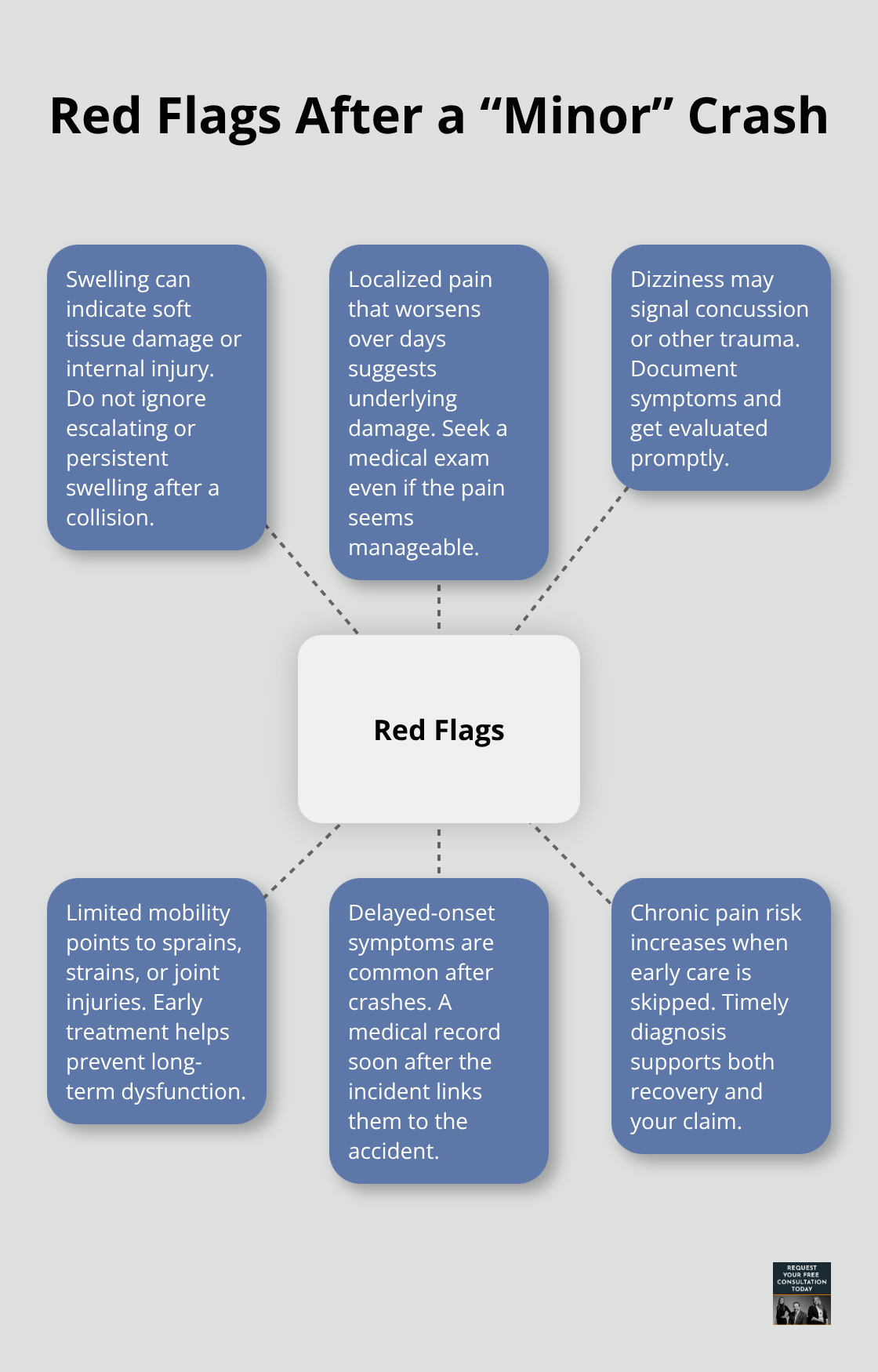
Many victims discover weeks later that their initial symptoms concealed underlying damage that worsens without proper treatment.
How Non-Incapacitating Injuries Differ from Catastrophic Ones
What separates non-incapacitating injuries from catastrophic ones isn’t whether they’ll disrupt your life-it’s the severity of that disruption. A spinal cord injury or traumatic brain injury causes permanent disability; a non-incapacitating injury might not permanently disable you, but it can still generate substantial medical bills, lost wages, and chronic pain that compounds over time.
Taking Action Within California’s Legal Timeline
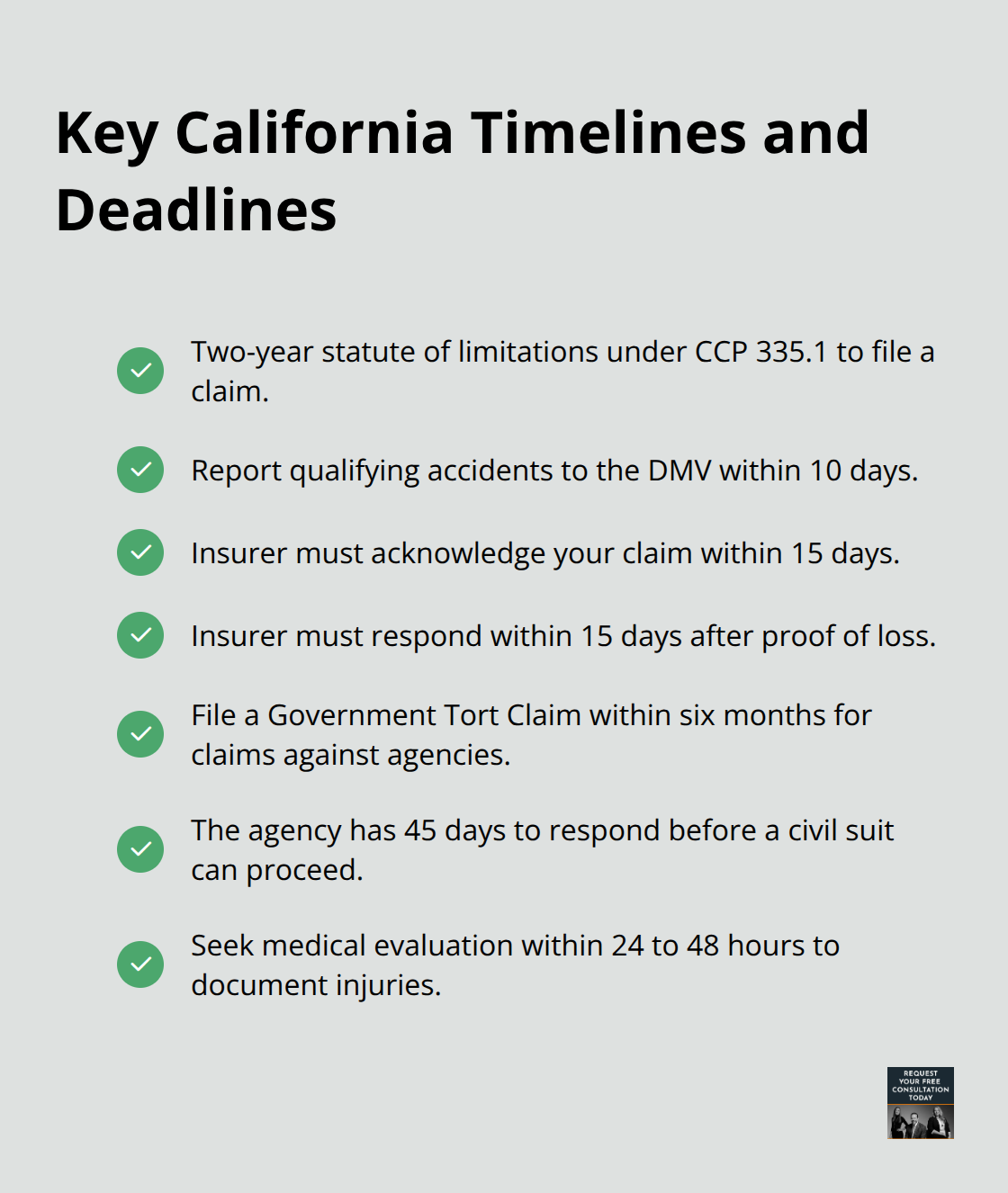
California’s two-year statute of limitations under California Code of Civil Procedure Section 335.1 gives you a window to file a claim for these injuries, but early documentation is essential because symptoms that seem manageable can evolve into long-term complications if untreated. The moment after your crash, you need to photograph the scene, obtain the police report from the Santa Cruz Police Department or the relevant agency in your area, and seek medical attention even if you feel mostly okay. This isn’t overcautious-it’s the foundation for any legitimate claim, and it protects your health simultaneously. What you do in the first hours and days after your accident directly shapes your ability to recover both physically and financially, which is why the next steps matter so much.
What to Do Right After Your Crash
Secure the Scene and Gather Critical Information
The first hours after a non-incapacitating injury crash determine whether you’ll have a strong claim later. Most people in Santa Cruz County make critical mistakes during this window because they feel relatively okay and assume documentation can wait. Call 911 if anyone is injured or if vehicle damage exceeds $750, as California law requires reporting these accidents to the DMV within 10 days to avoid license suspension.
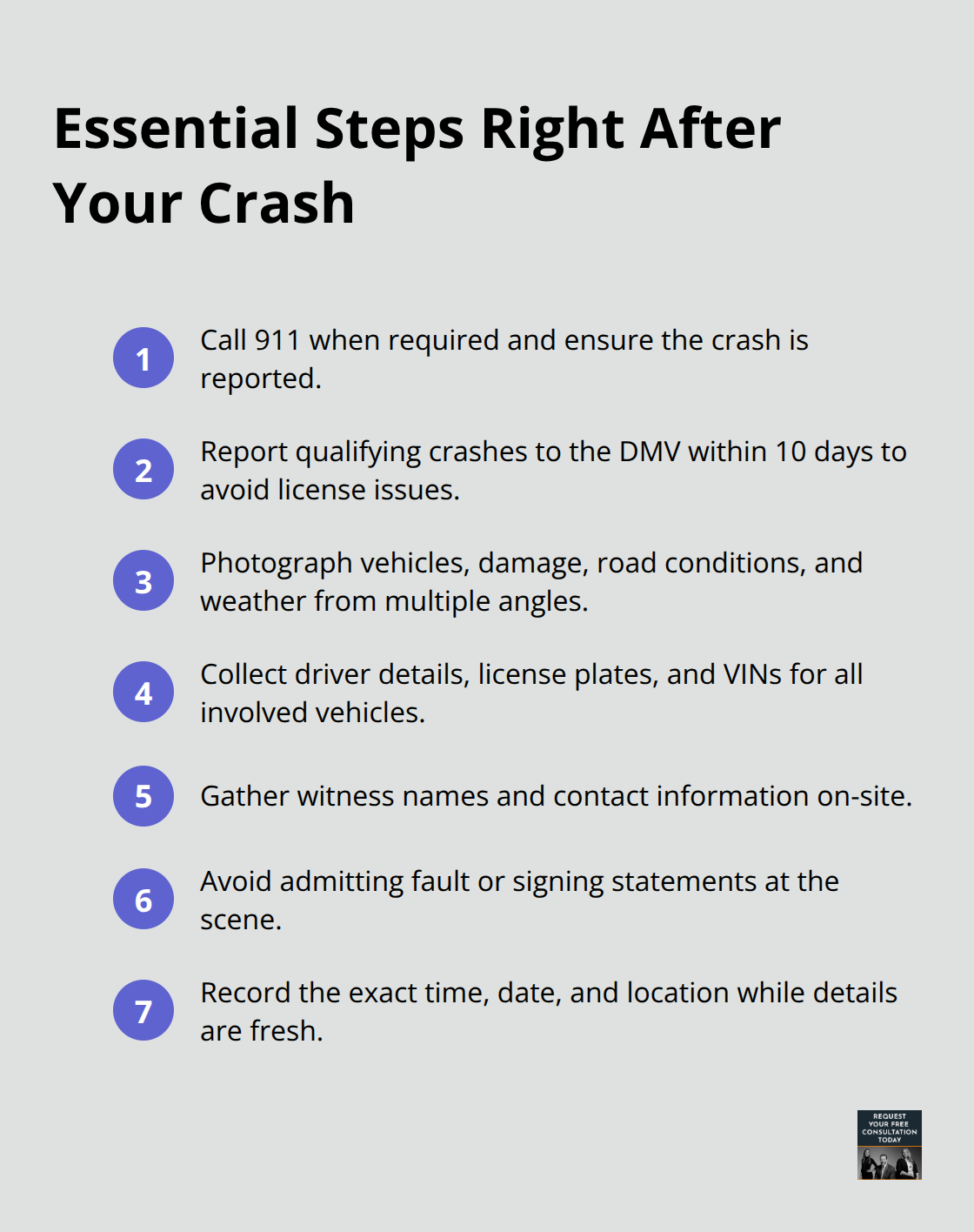
While waiting for police, photograph the accident scene from multiple angles-capture vehicle positions, damage, road conditions, and weather. Collect the names, addresses, phone numbers, driver’s license numbers, license plate numbers, and vehicle identification numbers from all drivers involved. Get contact information from witnesses who saw the crash, as their statements often prove decisive when determining fault. Photograph any visible injuries on yourself or passengers, even minor ones like red marks or swelling. Write down the exact time, date, and location of the crash while details are fresh. Do not admit fault or sign any statements at the scene, as these admissions can destroy your claim later.
Seek Medical Evaluation Immediately
Your next priority is medical evaluation within 24 to 48 hours, even if you feel fine. Soft tissue injuries like whiplash, neck strains, and internal injuries often don’t show symptoms immediately; waiting weeks to see a doctor creates a gap that insurers will exploit to argue your injuries weren’t serious. Request medical records from your visit and keep copies organized. A doctor’s assessment establishes the connection between the crash and your injuries, which forms the backbone of any compensation claim.
Report to Police and Insurance Without Delay
After receiving the police report from the Santa Cruz Police Department Records Section, report the accident to your insurance company immediately, providing the report number and all documentation you’ve gathered. California’s Fair Claims Settlement Practices Regulations require insurers to acknowledge your claim within 15 days and respond within 15 days after receiving proof of loss. Document every medical visit, therapy session, lost wage, and daily disruption in a detailed log with dates and descriptions. Photograph any ongoing symptoms like swelling or bruising. This comprehensive documentation proves that non-incapacitating doesn’t mean inconsequential, and it forms the foundation for maximum compensation when your case is evaluated. Understanding what damages you can actually claim requires knowledge of California law and how insurers calculate settlements.
What You Can Actually Recover
Establishing Fault Through Evidence
Fault in a non-incapacitating injury crash hinges on comparative negligence under California law, which means your recovery can be reduced if you’re partially at fault. The evidence you collected at the scene matters enormously. The police report, witness statements, photographs of vehicle positions and damage, and road conditions all work together to establish who caused the crash. If the at-fault party is an individual driver, their insurance covers your claim up to policy limits. If it’s a company vehicle, commercial insurance typically provides higher limits. Government entities require a different process entirely-you must file a Government Tort Claim within six months of the accident, and the agency has 45 days to respond before you can pursue a civil lawsuit. Missing the six-month deadline eliminates your right to sue the government for that accident.
Economic Damages: Medical Bills and Lost Wages
Economic damages are straightforward to calculate and often substantial in non-incapacitating injury cases. Your medical bills, lost wages from time away from work, and property damage to your vehicle all qualify. If your vehicle damage exceeds the actual cash value at the time of loss, you can invoke an appraisal provision where two appraisers select a neutral umpire whose valuation becomes binding. Lost wages extend beyond the days you missed work immediately after the crash; if you need ongoing physical therapy or medical appointments for months, those lost hours count as compensable time. These economic losses accumulate quickly and form the foundation of your claim’s value.
Non-Economic Damages: Pain, Suffering, and Quality of Life
Non-economic damages-pain and suffering, emotional distress, reduced quality of life-are harder to quantify but often represent the largest portion of settlements. A neck strain that causes chronic pain affects your sleep, work performance, and ability to exercise, and this has real financial value under California law. Courts and insurance adjusters calculate these damages based on the severity of injury, duration of treatment, impact on daily activities, and medical evidence supporting long-term effects. Many victims in Santa Cruz County settle too quickly because they don’t understand that persistent symptoms justify higher compensation. If you experience localized pain, swelling, dizziness, or limited mobility that continues beyond initial treatment, your claim is worth significantly more than initial settlement offers suggest.
Getting Fair Valuation for Your Claim
We at Schaar & Silva LLP assist in evaluating the extent of your damages and help you receive fair valuation for both economic and non-economic losses. Our team can connect you with medical specialists and psychological support when needed to strengthen your case. We also help direct you to medical lien services that facilitate payment of your bills until your case is resolved, relieving the financial burden while your claim proceeds.
Final Thoughts
A non-incapacitating injury crash leaves you with real financial and physical consequences that extend far beyond the initial impact. The injuries may not be catastrophic, but medical bills, lost wages, chronic pain, and emotional toll accumulate quickly. What matters most is how you respond in those critical first hours and days after the accident-documenting the scene, seeking immediate medical evaluation, reporting to police and insurance, and maintaining detailed records of your symptoms and treatment create the foundation for fair compensation.
California’s two-year statute of limitations gives you time, but early action protects both your health and your legal rights. Symptoms that seem minor can evolve into long-term complications without proper treatment, and gaps in documentation give insurers reasons to undervalue your claim. The evidence you gather at the scene, combined with medical records and witness statements, directly determines how much compensation you receive.
We at Schaar & Silva LLP help Santa Cruz County residents navigate this process from start to finish. Contact us to discuss your case and understand what your non-incapacitating injury claim is actually worth.
