

Car accidents can turn your life upside down in seconds. Medical bills pile up while you’re unable to work, creating financial stress on top of physical pain.
Getting compensation for car accident injuries requires understanding your rights and taking the right steps quickly. We at Schaar & Silva LLP have seen how proper action in those first critical days can make the difference between a fair settlement and financial hardship.
What Compensation Can You Claim
California operates under a fault-based insurance system, which means the at-fault driver’s insurance company pays for your damages. This system works in your favor because you can pursue full compensation from the responsible party, unlike no-fault states where your own insurance handles initial costs regardless of who caused the accident. The fault-based approach allows you to seek both economic and non-economic damages without arbitrary caps on most claims.
Economic Damages You Can Recover
Economic damages cover your measurable financial losses. Medical expenses form the largest category, including emergency room visits, surgeries, physical therapy, prescription medications, and future medical care related to your injuries. Lost wages compensation includes your regular salary, overtime, bonuses, and benefits you missed while you recover. Property damage covers vehicle repairs or replacement value, plus personal items damaged in the crash (like electronics, clothing, or eyeglasses). The California Department of Insurance reports that average medical costs for serious car accident injuries range from $57,000 to $123,000, which makes proper documentation vital for your claim.
Non-Economic Damages and Pain Compensation
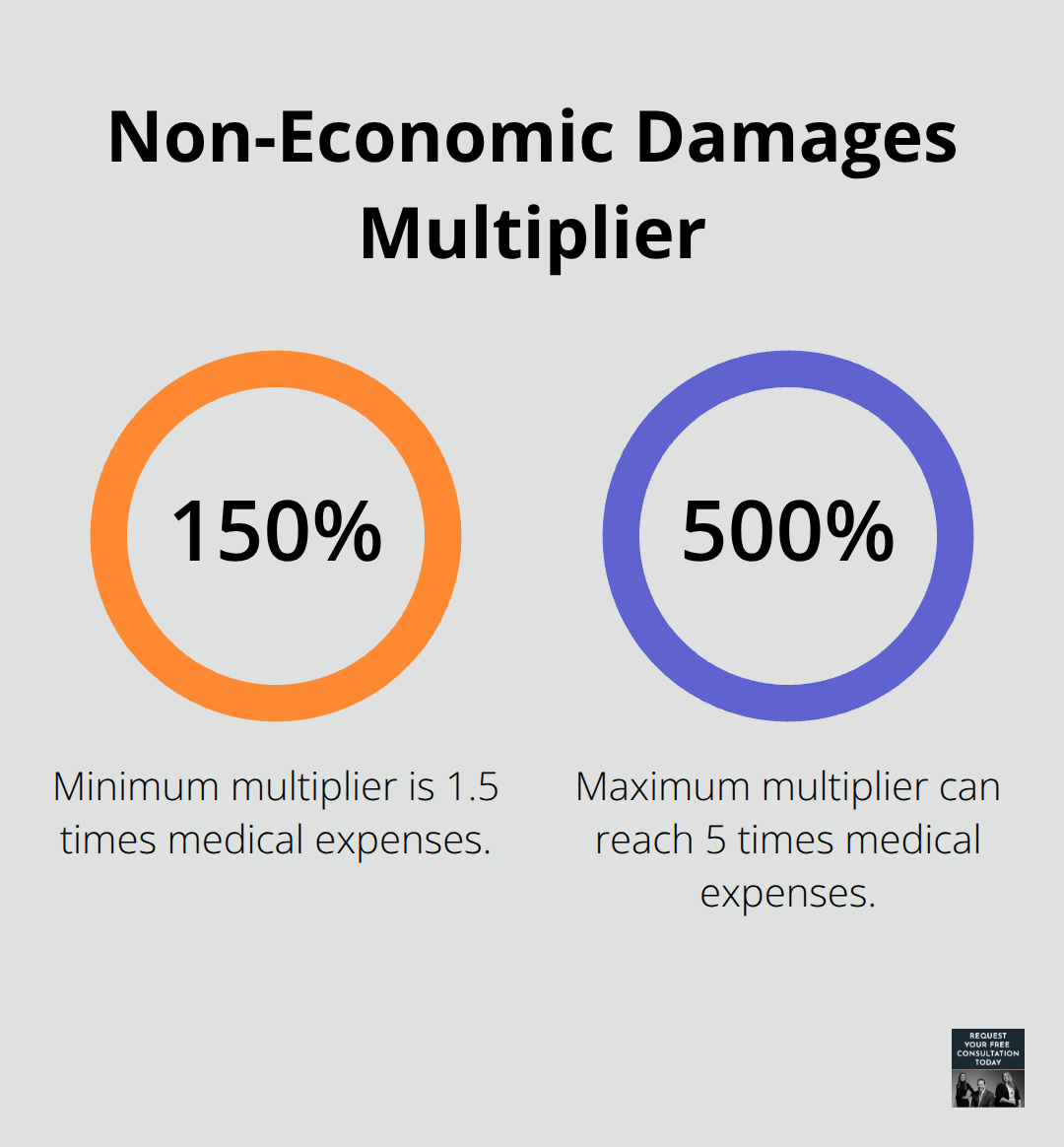
Non-economic damages compensate for pain and suffering, emotional distress, and loss of life enjoyment. California courts often use a multiplier method and calculate these damages as 1.5 to 5 times your medical expenses (the exact multiplier depends on injury severity). These damages acknowledge that your injuries affect more than just your bank account. Physical pain, sleepless nights, and the inability to enjoy activities you once loved all deserve compensation under California law.
Time Limits That Protect Your Rights
You have exactly two years from the accident date to file a personal injury lawsuit in California, or three years for property damage claims only. Government vehicle accidents have stricter deadlines: six months for injury claims and one year for property damage. Missing these deadlines means you lose your right to compensation permanently, so immediate action protects your financial future. The next step involves taking the right actions immediately after your accident to preserve your claim.
What Should You Do Right After the Crash
The moments after a car accident determine whether you’ll receive fair compensation or struggle with denied claims. Police reports show that 40% of accident victims fail to gather proper evidence at the scene, which insurance companies use to reduce or deny their claims.
Document Everything with Your Phone
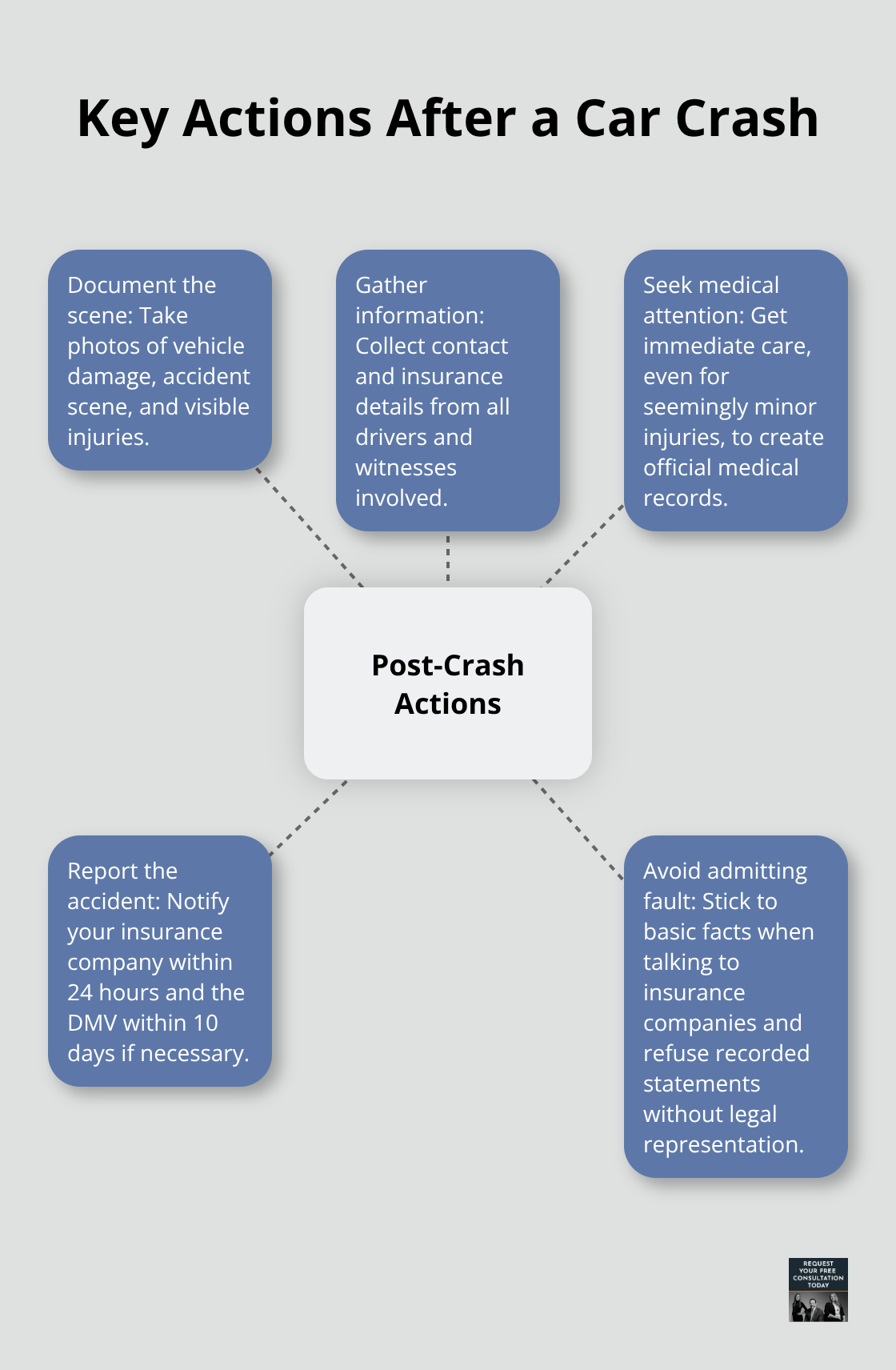
Your phone becomes your most powerful tool for protection. Take photos of vehicle damage from multiple angles, the accident scene with skid marks and debris, all license plates, and any visible injuries. The California Highway Patrol states that accident scenes get cleared within 30 minutes on average, so you must act fast.
Get contact information and insurance details from all drivers involved, plus names and phone numbers of witnesses. Insurance companies pay 18% more on average when independent witnesses support your version of events. Write down the exact time, weather conditions, and traffic signals or signs near the crash site.
Get Medical Care to Build Your Case
Seek medical attention immediately, even if you feel fine. The Insurance Institute for Highway Safety reports that 15% of car accident injuries don’t show symptoms until 24-72 hours later (particularly whiplash and soft tissue damage). Emergency room visits create official medical records that insurance companies can’t dispute.
Tell medical staff you were in a car accident and describe all discomfort, no matter how minor it seems. Keep every medical document, bill, and prescription related to your injuries. Request copies of your medical records and diagnostic images like X-rays or MRIs. This documentation becomes the backbone of your compensation claim.
Report the Accident Strategically
Contact your insurance company within 24 hours to report the accident, but stick to basic facts without fault admission or speculation about causes. California law requires you to report accidents with injuries or property damage over $1,000 to the DMV within 10 days.
When the at-fault driver’s insurance company calls, provide only your name, contact information, and confirmation that an accident occurred. Refuse to give recorded statements or sign medical record releases without legal representation. Insurance adjusters receive bonuses for claim reduction, so their friendly demeanor masks their true purpose of payment minimization.
These immediate actions set the foundation for your claim, but insurance companies will use sophisticated tactics to reduce your compensation once the formal process begins.
How Do Insurance Companies Try to Reduce Your Payout
Insurance companies use proven tactics to minimize payouts, and you must recognize these strategies to protect your financial recovery. Adjusters receive training to settle claims for 60-70% less than their actual value according to industry studies, which means every conversation becomes a negotiation where they hold the advantage. They contact you within hours of your accident with urgent settlement offers that sound generous but represent a fraction of your true damages. These quick settlement tactics work because 73% of accident victims accept the first offer without understanding their full compensation rights.
The Delay and Deny Strategy
Insurance companies deliberately delay claim processing to pressure you into lower settlements as your bills accumulate. They request excessive documentation, schedule multiple medical examinations with their chosen doctors, and question every aspect of your treatment plan. The National Association of Insurance Commissioners found that delayed claims cost victims an average of $23,000 in additional financial stress. When delays don’t work, they deny valid claims with technical reasons like missed deadlines or insufficient evidence. They know most people won’t fight these denials without legal representation, so they save millions through systematic claim rejection.
When Legal Representation Becomes Necessary
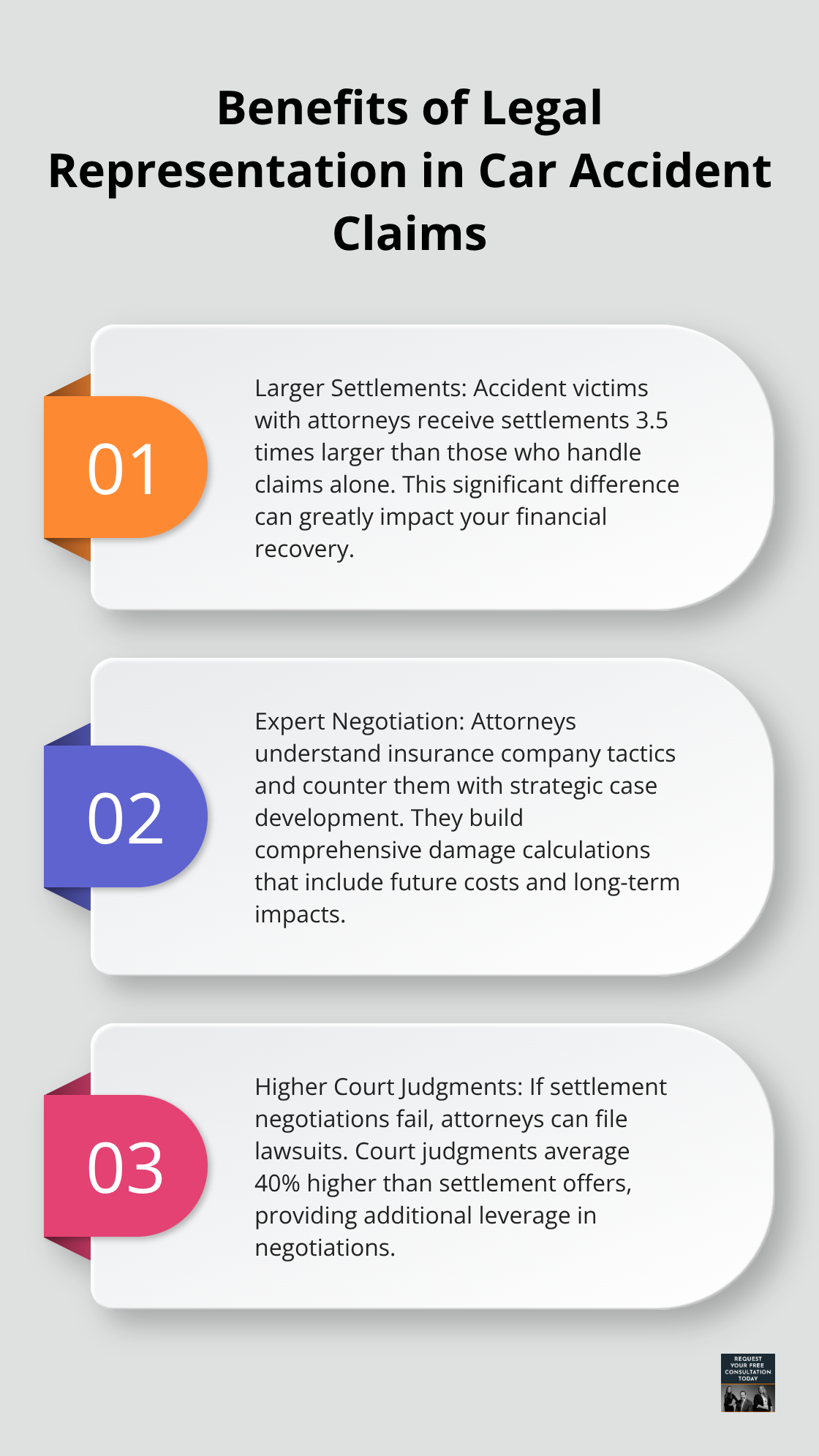
You should hire an attorney immediately if your injuries require hospitalization, surgery, or extended medical treatment beyond basic first aid. Cases with permanent disabilities, brain injuries, or deaths always need legal representation because insurance companies assign their toughest negotiators to high-value claims. The Insurance Research Council reports that accident victims with attorneys receive settlements 3.5 times larger than those who handle claims alone. This difference appears daily in Santa Cruz County cases where represented clients receive full compensation while unrepresented victims settle for medical bills only. Legal representation becomes essential when insurance companies dispute fault, claim pre-existing conditions caused your injuries, or offer settlements below your medical expenses.
How Professional Advocacy Maximizes Your Settlement
Attorneys understand insurance company tactics and counter them with strategic case development that forces fair compensation. They investigate accidents thoroughly, hire accident reconstruction professionals when needed, and build comprehensive damage calculations that include future medical costs and long-term disability impacts (often overlooked by victims). Legal representation changes the entire dynamic because insurance companies know attorneys will file lawsuits if settlement negotiations fail, and court judgments average 40% higher than settlement offers. Professional legal advocacy also handles all communication with insurance companies, which prevents you from making statements that could damage your claim while you focus on medical recovery.
Final Thoughts
Car accident victims must act fast to protect their rights and secure fair compensation. Document everything at the scene, seek medical care immediately, and reject the first insurance offer. California’s two-year statute of limitations means delays cost you thousands in lost compensation for car accident injuries.
Insurance companies deploy every tactic to reduce your payout, from quick settlement offers to deliberate claim delays. They know most victims don’t understand their full rights, which explains why represented clients receive settlements 3.5 times larger than those who handle claims alone. These companies count on your lack of legal knowledge to save money at your expense.
Recovery from serious injuries takes time, and you shouldn’t face this challenge without proper support. We at Schaar & Silva LLP handle the legal complexities while you focus on recovery. Our team works to maximize your settlement and connects you with the resources you need during this difficult time (including medical and psychological support when necessary).
