
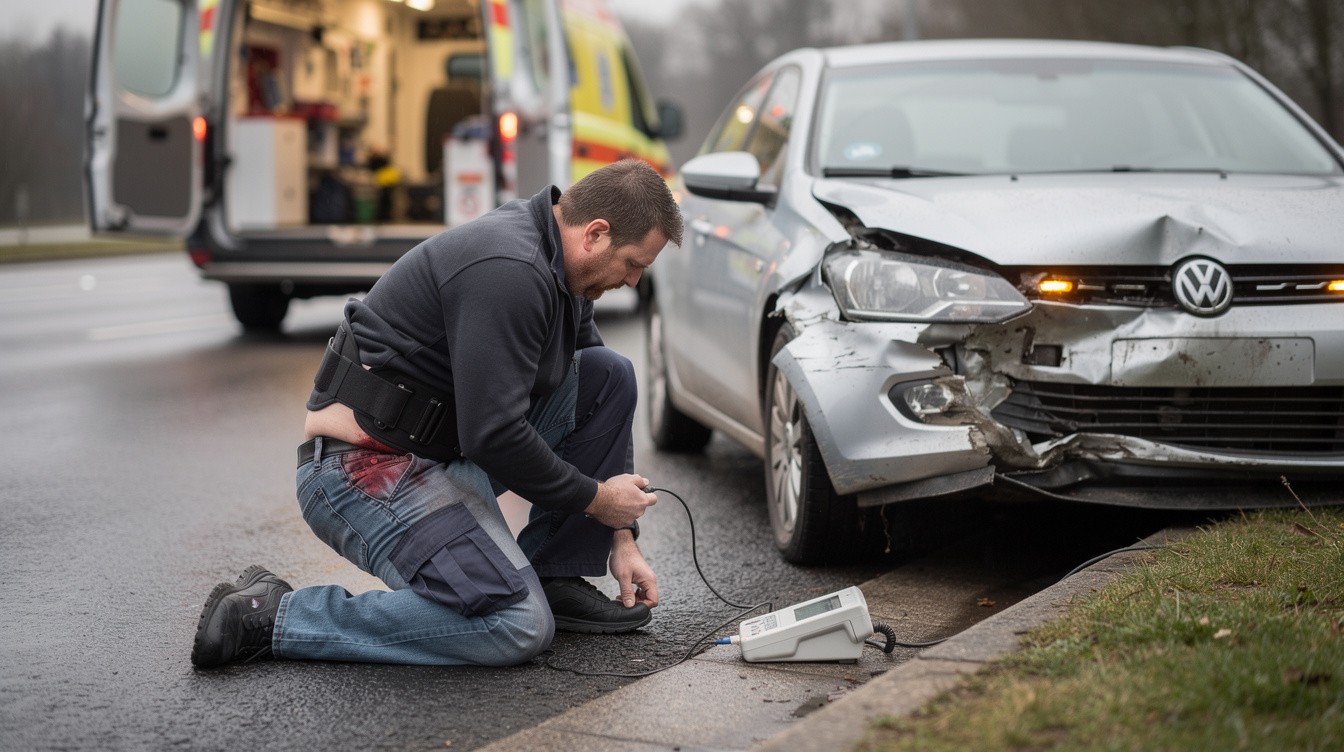
A hip injury after a crash can change your life in seconds. Pain, mobility loss, and mounting medical bills create stress that extends far beyond the accident itself.
At Schaar & Silva LLP, we help California auto accident victims understand their injuries and fight for fair compensation. This guide covers the types of hip injuries you might face, treatment options, and the legal steps to protect your rights.
Types of Hip Injuries from Auto Accidents
Femoral Neck, Intertrochanteric, and Subtrochanteric Fractures
Hip injuries from auto accidents fall into three distinct categories, and understanding which type you’ve sustained matters for treatment decisions and settlement value. Femoral neck fractures sit at the top of the femur where it connects to the pelvis, while intertrochanteric fractures occur between the femur’s two bony projections below the neck. Subtrochanteric fractures happen further down the femur shaft. Non-displaced fractures, where bone pieces stay aligned, may heal with screws alone. Displaced fractures almost always require surgery-either hemiarthroplasty, where surgeons replace the femoral head, or total hip arthroplasty, a complete joint replacement. The choice depends on your age, bone quality, and the fracture’s location.
Settlement Ranges by Age and Injury Severity
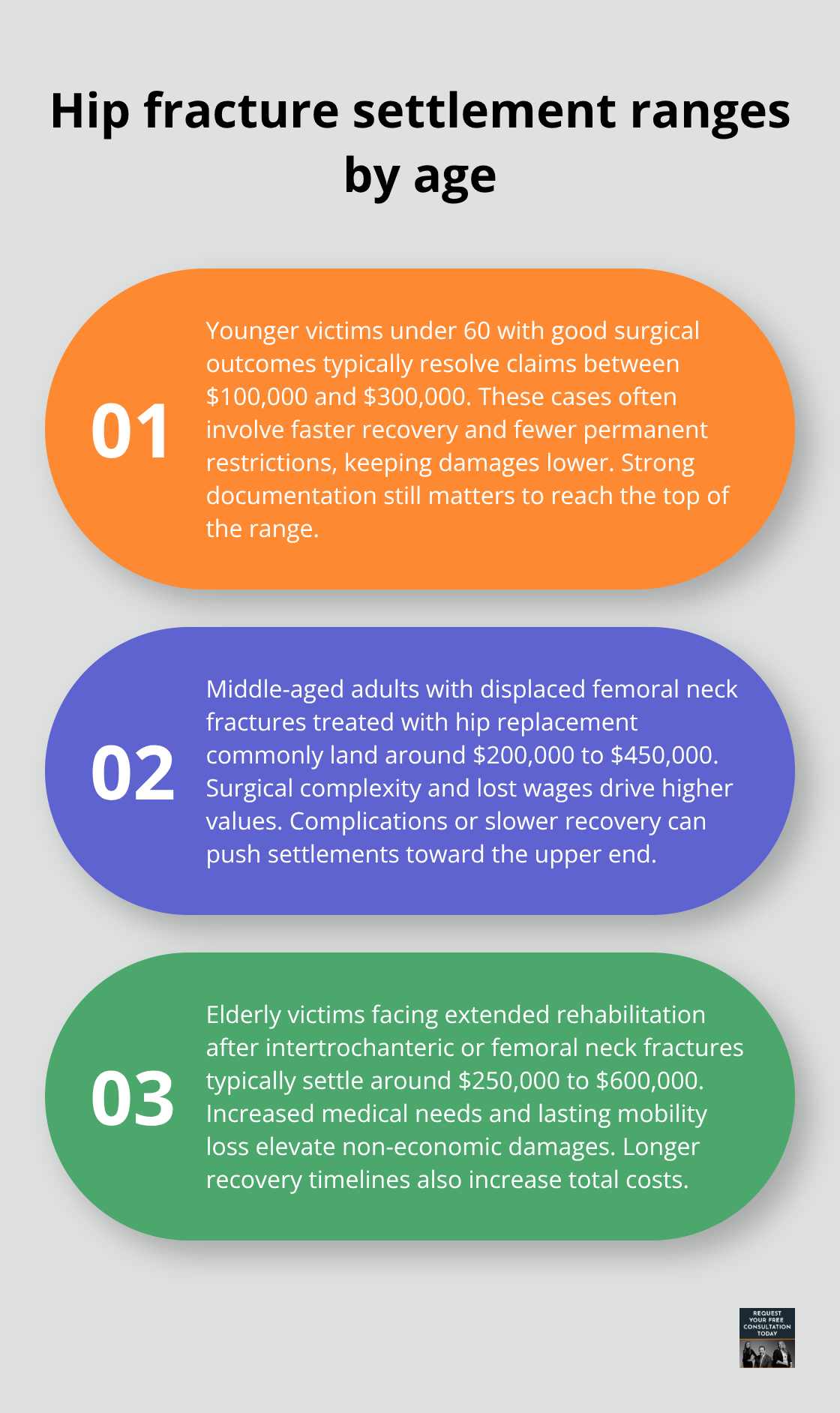
Younger victims under 60 with good surgical outcomes typically settle between $100,000 and $300,000. Middle-aged adults with displaced femoral neck fractures treated with hip replacement commonly see settlements around $200,000 to $450,000. Elderly victims facing extended rehabilitation after intertrochanteric or femoral neck fractures typically settle around $250,000 to $600,000. These ranges reflect the medical costs, lost wages, and permanent mobility loss that accompany each injury level.
Hip Dislocations and Soft Tissue Damage
Hip dislocations occur when the femoral head slides out of its socket, usually from high-impact crashes where your hip absorbs tremendous force. This injury demands immediate reduction-putting the bone back in place-and imaging to rule out fractures or cartilage damage. Soft tissue injuries including labral tears, where the cartilage ring around the hip socket tears, create chronic pain and instability that may not appear on initial X-rays. MRI imaging catches these tears, but many victims miss diagnosis initially because standard radiographs show nothing wrong. Labral tears often require arthroscopic surgery to repair, and recovery typically spans 4 to 6 months of physical therapy.
Surgical Complications and Long-Term Consequences
Surgical complications including infection, hardware failure, blood clots (DVT/PE), and anesthesia risks significantly increase damages claims and can add hundreds of thousands to settlement value. Among California adults aged 65 and older, one in three dies within one year of a hip fracture, and survivors frequently fail to regain their pre-fracture mobility. This permanent impairment becomes a critical damages factor in your case. Understanding your specific injury type and its complications helps you and your legal team build a stronger claim for fair compensation. The medical treatment path you follow directly influences both your recovery timeline and the damages you can pursue.
Medical Treatment and Recovery Timeline
Immediate Care in the First 48 Hours
The first 24 to 48 hours after your crash determine whether your hip injury receives proper care or spirals into complications. Call 911 if you cannot move your leg, experience severe pain, or suspect a fracture. Emergency room doctors will order X-rays to identify fractures and dislocations, then MRI imaging if soft tissue damage like labral tears requires confirmation. Do not leave the ER without imaging results and a written report, because gaps in your medical record later weaken your settlement position.
Treatment Options: Conservative vs. Surgical
Non-displaced fractures may start with conservative treatment: rest, ice, compression, and elevation combined with physical therapy over 8 to 12 weeks. Displaced fractures demand surgery within days to prevent permanent damage. Hemiarthroplasty surgery, where surgeons replace only the femoral head, typically takes 1 to 2 hours and costs between $35,000 and $50,000 in California hospitals. Total hip arthroplasty, a complete joint replacement, costs $40,000 to $70,000 and requires similar operative time. Your surgeon’s choice depends on your age and bone quality, not insurance coverage, so push back if cost becomes a factor in medical decision-making.
Complications That Increase Claim Value
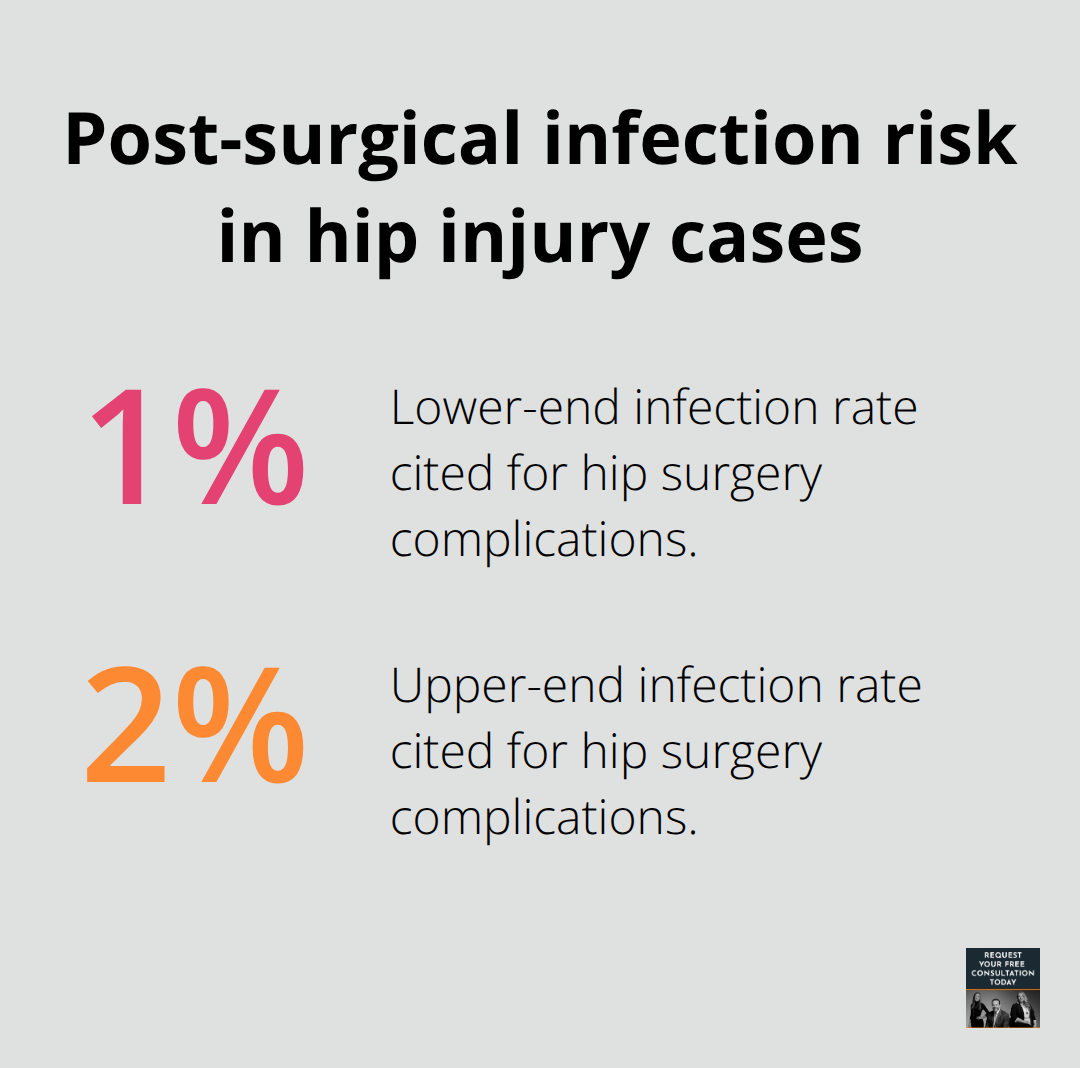
Surgical complications including infection rates of 1 to 2 percent, blood clots, and hardware failure add $50,000 to $200,000 in additional medical costs and proportionally increase your damages claim. These complications extend your recovery timeline and create lasting physical limitations that settlement calculations must address.
Physical Therapy and Functional Recovery
Recovery from hip replacement surgery spans 6 to 18 months before you reach maximum medical improvement, the point where your condition stabilizes and settlement negotiations actually accelerate. Physical therapy begins within days of surgery, starting with gentle range-of-motion exercises in your hospital bed and progressing to weight-bearing activities by week 4 or 5. You will attend 2 to 3 therapy sessions weekly for 12 to 16 weeks minimum. Many victims plateau at 70 to 80 percent of pre-injury function, meaning permanent restrictions on stairs, prolonged standing, and high-impact activities persist indefinitely.
Documentation and Permanent Impairment
Document every therapy session, every pain flare-up, and every activity you cannot perform because this evidence directly translates to non-economic damages at settlement time. Permanent mobility loss cuts your lifetime earning capacity and increases your claim value substantially, especially if you worked in physically demanding jobs before the crash. This permanent impairment becomes the foundation for calculating your compensation in the next phase of your recovery and legal process.
What Your Hip Injury Claim Is Actually Worth
How Age and Injury Type Shape Settlement Value
Your hip injury claim value rests on three concrete factors: your age and pre-injury function, the specific fracture or soft tissue damage you sustained, and the total insurance coverage available. Younger victims under 60 with good surgical outcomes typically recover between $100,000 and $300,000, while middle-aged adults with displaced femoral neck fractures treated with hip replacement commonly settle around $200,000 to $450,000. Elderly victims requiring extended rehabilitation after intertrochanteric or femoral neck fractures typically settle between $250,000 and $600,000. These ranges exist because damages fall into two categories: economic damages (medical bills, lost wages, future care costs) and non-economic damages (pain, suffering, permanent mobility loss).
Complications That Multiply Your Damages
Surgical complications including infection, hardware failure, blood clots, and anesthesia risks add $50,000 to $200,000 to your claim by themselves. These complications extend your recovery timeline and create lasting physical limitations that settlement calculations must address. The critical mistake most victims make is accepting an early settlement offer before reaching maximum medical improvement around 6 to 18 months post-surgery, when your actual permanent impairment becomes clear. California’s pure comparative fault law means even if you share partial fault for the crash, you still recover your proportional damages minus your fault percentage, so liability strength matters enormously to your final award.
Insurance Coverage Limits Control Your Recovery Ceiling
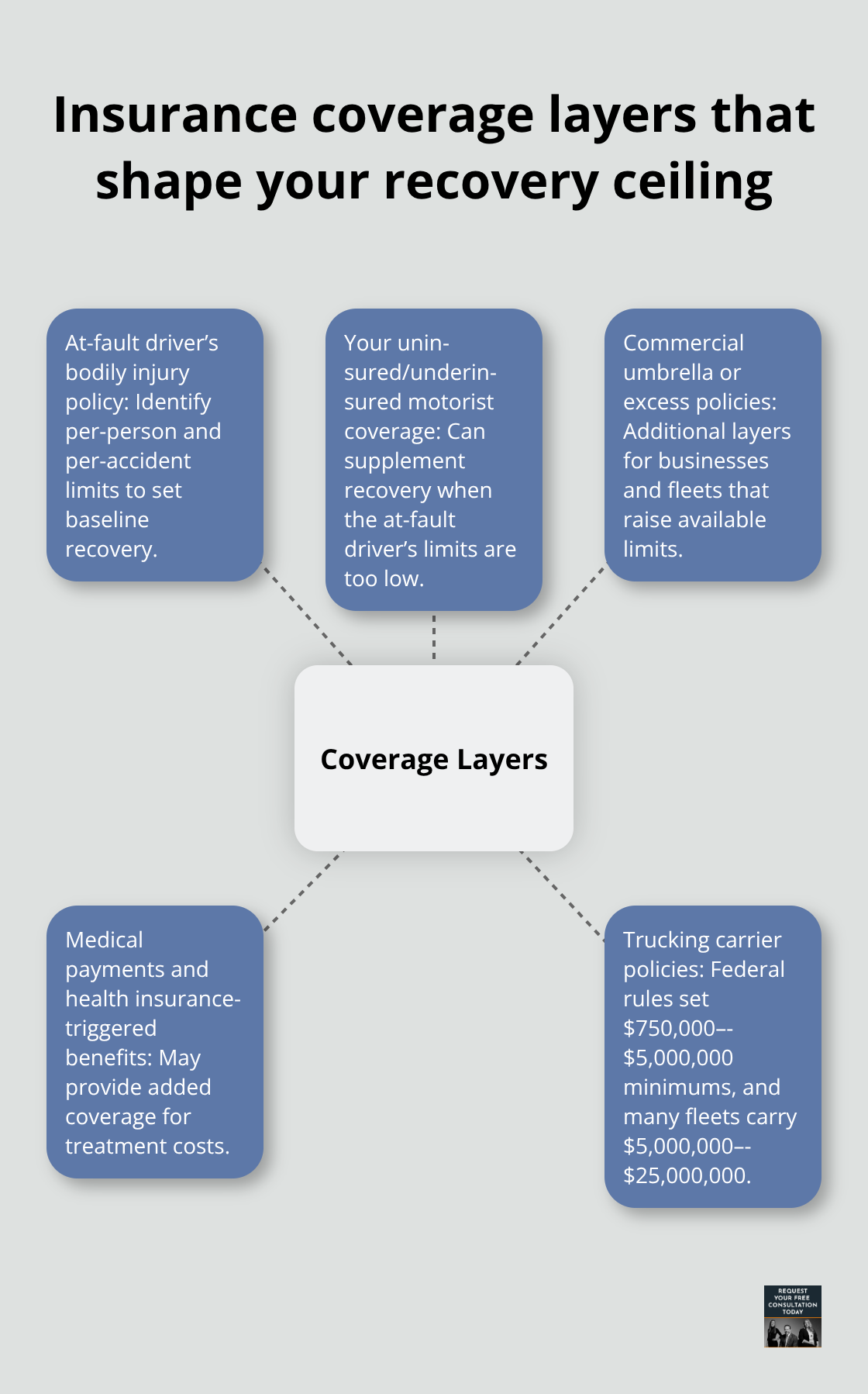
Insurance coverage limits control the ceiling on your recovery far more than the strength of your case. Standard auto policies carry $15,000 to $30,000 in bodily injury coverage, which disappears instantly with a serious hip injury requiring surgery and months of therapy. Truck accidents typically involve much higher limits because federal law requires interstate carriers to carry $750,000 to $5,000,000 in coverage, and many fleets carry $5,000,000 to $25,000,000 in primary and umbrella policies. You must identify every layer of available coverage including your own uninsured motorist protection, the at-fault driver’s policy, commercial umbrella policies, and any medical payments coverage your health insurance might trigger.
Evidence Preservation and Life-Care Planning
Send preservation letters immediately after your crash to lock down evidence including electronic logging device data, dashcam footage, maintenance records, and witness statements, because this evidence directly supports both liability and damages arguments. Life-care planning becomes essential if your hip injury creates permanent restrictions on stairs, prolonged standing, or high-impact activities, as these plans quantify future medical costs and adaptive equipment needs that significantly increase claim value. Settlement typically accelerates at three pressure points: after you reach maximum medical improvement when your permanent impairment becomes measurable, after key depositions when liability becomes clearer, and during mediation when both sides face realistic cost calculations. Waiting for these natural settlement windows rather than accepting early offers typically increases recovery by 30 to 50 percent based on settlement patterns observed in California hip injury cases.
Final Thoughts
A hip injury after a crash demands immediate action on two fronts: medical treatment and legal protection. The settlement ranges we discussed-from $100,000 for younger victims with good outcomes to $600,000 or more for elderly patients requiring extended rehabilitation-reflect real compensation that California courts and insurers award when liability is clear and damages are documented. Your recovery timeline matters because settlements accelerate once you reach maximum medical improvement, typically 6 to 18 months after surgery, when permanent impairment becomes measurable and negotiable.
Start protecting your rights the moment the crash happens by photographing hazards at the scene, filing incident reports, collecting witness contact information, and requesting surveillance footage if available. Send preservation letters to lock down electronic logging device data, dashcam footage, and maintenance records before they disappear. Do not accept early settlement offers before your medical condition stabilizes, because accepting too quickly costs you tens of thousands in compensation you would otherwise recover.
Document every physical therapy session, every pain flare-up, and every activity you cannot perform because this evidence directly translates to damages at settlement time. If your hip injury creates permanent restrictions on stairs, prolonged standing, or high-impact activities, request a life-care plan early to quantify future medical costs and adaptive equipment needs. We at Schaar & Silva LLP help California auto accident victims navigate hip injuries and fight for fair compensation-contact us for a free consultation to understand your specific case value and the realistic settlement range for your injury.
