

A hip injury after a crash can derail your life for months or even years. The pain, limited mobility, and mounting medical bills create stress that extends far beyond the physical recovery.
At Schaar & Silva LLP, we’ve helped countless accident victims in Santa Cruz County navigate the complex path from injury to compensation. This guide walks you through treatment options, recovery timelines, and the legal steps needed to protect your rights.
Hip Injury Types from Car Crashes
Fractures, Tears, and Soft Tissue Damage
Hip injuries from car accidents vary widely in severity and type, depending on the crash’s force and direction. Fractures and breaks occur when the femur or pelvis experiences direct impact, and these injuries require imaging like X-rays or CT scans to confirm. A fractured hip often demands surgery, extended immobilization, and months of physical therapy before you walk normally again. Labral tears and cartilage damage happen when soft tissue inside the hip joint gets pinched or torn during the collision, causing pain that worsens with movement and can persist for years without proper treatment. These injuries frustrate patients because they may not show up on standard X-rays, requiring MRI imaging to diagnose accurately. Soft tissue injuries and inflammation include muscle strains, ligament sprains, and bursitis around the hip, which can develop immediately after the crash or emerge days later as swelling increases. Insurance adjusters often underestimate soft tissue injuries, even though they cause significant pain and limit your ability to work and perform daily activities.
Multiple Injuries Complicate Recovery
Hip injuries rarely occur in isolation after a crash. According to Go Safe California’s 2021 research, 51.9% of California drivers have been hit or nearly hit by distracted drivers, and high-energy collisions that cause hip injuries frequently involve other serious injuries like concussions, whiplash, spinal damage, and fractures. This matters for your recovery because multiple injuries complicate treatment timelines and increase total medical costs substantially.

You need immediate medical evaluation after any crash, even if hip pain isn’t severe initially, because some hip injuries worsen without prompt diagnosis and treatment.
Documentation Strengthens Your Claim
When you document your injuries with imaging and medical notes early, you create a stronger record for insurance claims and legal action. The California DMV requires drivers to file a Traffic Accident Report within 10 days if injuries occurred, so meeting this deadline protects your rights while you focus on healing. Proper medical documentation (including imaging reports, treatment records, and specialist notes) establishes the connection between the crash and your hip injury, which insurers scrutinize carefully. This evidence becomes critical when you pursue compensation for medical expenses, lost wages, and pain and suffering.
The path from injury diagnosis to treatment begins with understanding what happened to your hip and what recovery will require. Your next step involves exploring the medical options available to you and the realistic timeline for returning to your normal activities.
Medical Treatment and Recovery Timeline
Seek Immediate Medical Evaluation
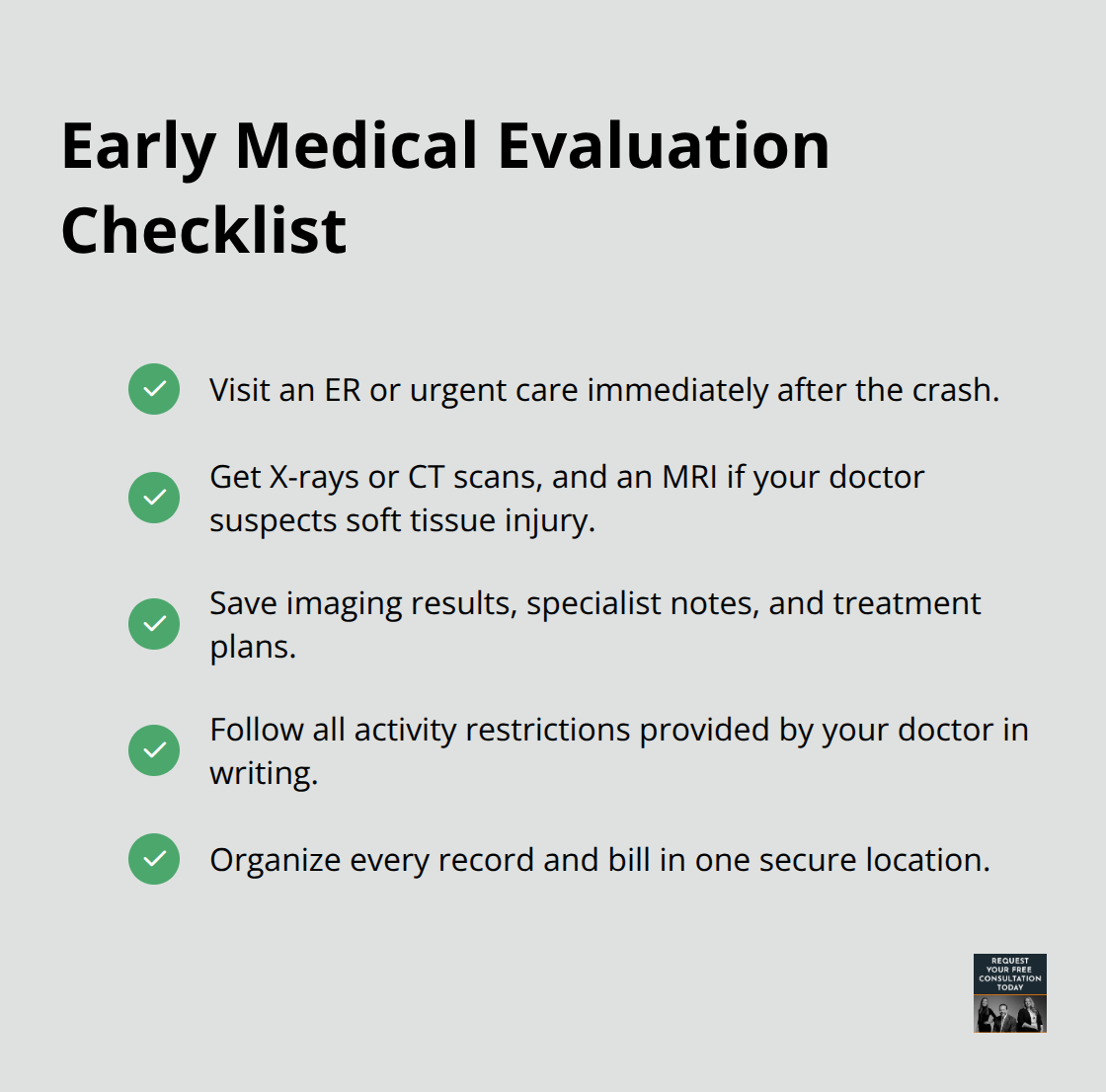
The first hours after a crash determine your recovery trajectory more than most people realize. Hip pain that seems mild at the scene often worsens without prompt diagnosis, and some damage only becomes apparent days later as swelling increases. Visit an emergency room or urgent care facility immediately after your accident, even if you feel uncertain about the severity of your injury.
Doctors will order X-rays to check for fractures and CT scans if they suspect complex breaks involving the pelvis or femur. An MRI may follow if your doctor suspects labral tears or cartilage damage, since these soft tissue injuries don’t show up on standard X-rays but cause significant long-term problems if left untreated. Document everything during this initial phase: imaging reports, specialist recommendations, treatment plans, and any restrictions your doctor places on your activities. This documentation becomes your foundation for insurance claims and legal recovery, so keep copies of all medical records in one organized location.
Non-Surgical Treatment for Mild to Moderate Injuries
Non-surgical options like physical therapy, anti-inflammatory medications, and activity modification work for soft tissue injuries, labral tears without displacement, and minor fractures. Most patients recover within 6 to 12 weeks of consistent therapy before they return to normal function. Your doctor will guide you through rest periods, ice application, and gradual movement increases as your hip heals.
Insurance companies often push back on therapy duration, but your medical provider’s recommendations should drive your treatment schedule, not your insurer’s cost concerns. Track your therapy progress with notes on pain levels, mobility improvements, and functional gains, because this data supports your compensation claim by demonstrating the real impact of your injury on your daily life and work capacity.
Surgical Intervention for Severe Injuries
Surgical intervention becomes necessary for displaced fractures, severe labral tears, or cartilage damage that conservative treatment cannot resolve. Hip surgery demands extended recovery periods ranging from 3 to 6 months before full weight-bearing and normal movement return. Your surgeon will explain the specific procedure, recovery milestones, and when you can resume work and daily activities.
Physical therapy after surgery is non-negotiable for real recovery. A licensed physical therapist will guide you through progressive exercises that restore hip strength, flexibility, and stability, starting with gentle range-of-motion work and advancing to weight-bearing exercises as healing progresses. Most people require 2 to 3 therapy sessions weekly for 8 to 12 weeks minimum, though complex cases extend longer.
Building Your Recovery Record
The medical records you accumulate during treatment form the backbone of your compensation claim. Each therapy session, imaging report, and specialist note creates evidence that connects your crash to your hip injury and documents the treatment you required. Insurance adjusters scrutinize these records carefully, so completeness matters significantly when you pursue damages for medical expenses, lost wages, and pain and suffering.
As your physical recovery progresses, the financial and legal aspects of your case demand equal attention. Understanding how to calculate your total damages and present your claim effectively determines whether you receive fair compensation for all costs your injury created.
Filing a Claim for Hip Injury Damages
Collect and Organize Your Medical Documentation
Start by collecting every medical record from your crash onward: emergency room reports, imaging results, surgeon’s notes, physical therapy records, and invoices for all treatments. Insurance companies scrutinize incomplete documentation, so gaps in your medical timeline weaken your claim significantly. Create a spreadsheet tracking all expenses-current medical bills, anticipated future surgery or therapy costs, lost wages from missed work, and any modifications you made to your home or vehicle due to your injury. This organized approach prevents you from overlooking costs that deserve compensation.
Meet California’s Filing Deadline
California law requires you to file a claim within three years of your crash, so acting quickly protects your right to recover while medical records remain fresh and witness memories stay sharp. The California Department of Insurance’s Fair Claims Settlement Regulations mandate that insurers acknowledge your claim within 15 days, begin investigation within 15 days, and respond to your demand within 40 days after you submit proof of loss. If your insurer misses these deadlines, that signals they are not handling your case fairly.

Calculate Pain and Suffering Damages
Calculating pain and suffering damages differs fundamentally from calculating medical expenses because no receipt exists for your suffering. California courts recognize non-economic damages including pain, emotional distress, and disability-and critically, California has no damage cap for car accident injuries, meaning there’s no legal ceiling on what you can recover for these losses. Insurance adjusters typically use a multiplier method, multiplying your medical expenses by a factor between 1.5 and 5 depending on injury severity, but this formula often undervalues serious hip injuries that require surgery and extended recovery. Hip injuries that require surgical intervention, cause permanent mobility limitations, or prevent you from working in your profession deserve higher multipliers.
Document the Real Impact of Your Injury
Document the emotional and functional impact of your injury: how pain affects your sleep, relationships, work performance, and daily activities. Photographs showing mobility aids, home modifications, or activity restrictions strengthen your claim by making abstract suffering concrete. If the insurance company’s settlement offer fails to account for your future medical needs-ongoing physical therapy, potential revision surgery, or long-term pain management-reject it and pursue legal action rather than accepting inadequate compensation that leaves you covering future costs personally.
Evaluate Settlement Offers Carefully
Accepting a low initial offer often means waiving your right to pursue additional compensation later, so the first settlement discussion is not the time to settle quickly. At Schaar & Silva LLP, we help clients in Santa Cruz County understand that your claim’s true value extends beyond immediate medical bills. We can help direct you to medical lien services that facilitate payment of your bills until your case resolves, and we assist in evaluating all damages including future costs that extend years beyond your accident.
Final Thoughts
Your hip injury after a crash demands immediate medical attention, thorough documentation, and strategic legal action to recover fair compensation. California’s two-year filing deadline means you must act quickly, but rushing into settlement negotiations before understanding your injury’s full scope costs you thousands in lost compensation. Many accident victims in Santa Cruz County settle too quickly with insurance companies, accepting offers that fail to cover long-term rehabilitation, potential revision surgery, or ongoing pain management.
The legal process protecting your rights runs parallel to your medical recovery. We at Schaar & Silva LLP help clients in Santa Cruz County navigate this complex intersection of medical recovery and legal claims, directing you to medical lien services that cover your bills while your case resolves and connecting you with specialists for emotional support. Our team handles the legal intricacies so you can focus entirely on healing.
Moving forward after your accident means refusing to accept inadequate settlement offers and pursuing the compensation your hip injury truly deserves. Contact Schaar & Silva LLP to discuss your case and understand the full value of your claim.
