

A concussion from a car accident can leave you with medical bills, lost income, and ongoing pain. Getting fair compensation requires understanding what your claim is worth and how to present it to insurance companies.
At Schaar & Silva LLP, we help Santa Cruz County residents navigate the settlement process after head injuries. This guide walks you through the steps that strengthen your case.
Medical Documentation Strengthens Your Settlement
The first 24 to 48 hours after your accident are critical for your settlement claim. During this window, your brain injury is most visible on imaging and easiest to diagnose. The CDC reports that more than 214,000 Americans are hospitalized for traumatic brain injuries annually, yet many concussions go undiagnosed because people skip medical evaluation or wait days before seeking care. If you hit your head in a Santa Cruz County car accident, visit a hospital or urgent care facility immediately, even if you feel fine. Symptoms like headaches, dizziness, memory problems, and mood changes often appear hours or days later, and delaying diagnosis weakens your legal position. The ER visit creates a timestamp linking your injury directly to the accident. Request copies of all imaging reports, CT scans, and initial assessments before you leave. These documents form the foundation of your claim.
Follow-Up Care Proves Long-Term Impact
After the ER visit, follow up with a neurologist or concussion clinic within one to two weeks. A 2014 study in Archives of Physical Medicine and Rehabilitation found that most patients with mild traumatic brain injuries from motor vehicle collisions experienced multiple lingering symptoms lasting through a full year. This long-tail recovery pattern means you need ongoing medical records to prove your injury persists and requires continued treatment. Insurance companies scrutinize gaps in your medical timeline, so schedule appointments consistently and attend every one.
Document Symptoms and Daily Effects
Your medical records must document specific symptoms and how they affect your work, family life, and daily routines. Write down when headaches occur, how they feel, what triggers them, and what activities you cannot do anymore. Include details about sleep disruption, concentration problems at work, or difficulty driving. If you miss work days, ask your employer for documentation of absences and lost hours.

Insurance adjusters calculate settlement value partly on medical expenses and partly on lost income, so precise records matter. The National Highway Traffic Safety Administration data suggests about 1 in 61 car occupants in tow-away crashes sustains a mild traumatic brain injury, with actual rates possibly closer to 1 in 26 due to underdiagnosis. This underdiagnosis problem means your medical documentation must be thorough and specific to stand out.
Neuropsychological Testing Provides Objective Evidence
Neuropsychological testing strengthens your claim significantly. These tests measure memory, attention, processing speed, and executive function, providing objective evidence of cognitive changes caused by the accident. Some clinics accept medical liens, meaning they bill your settlement proceeds rather than asking you to pay upfront, so explore this option if finances are tight during recovery.
Organize Records Before Settlement Talks Begin
Create a single folder or digital file containing every medical record, receipt, and treatment note related to your injury. Include the police report, photographs of vehicle damage, hospital discharge papers, follow-up visit summaries, imaging results, and bills from all providers. This organized dossier becomes your negotiating tool when settlement discussions begin. Insurance companies often deny claims by arguing no injury occurred or attributing your symptoms to other causes. Strong documentation counters these tactics directly. If you receive unsolicited settlement offers early in your treatment, reject them. Settling before completing medical care leads to pennies-on-the-dollar outcomes because future costs remain unknown. Wait until your treatment plan is documented and you understand your prognosis before negotiating. Once your medical foundation is solid, calculating what your claim is actually worth becomes the next critical step.
What Your Concussion Claim Actually Worth
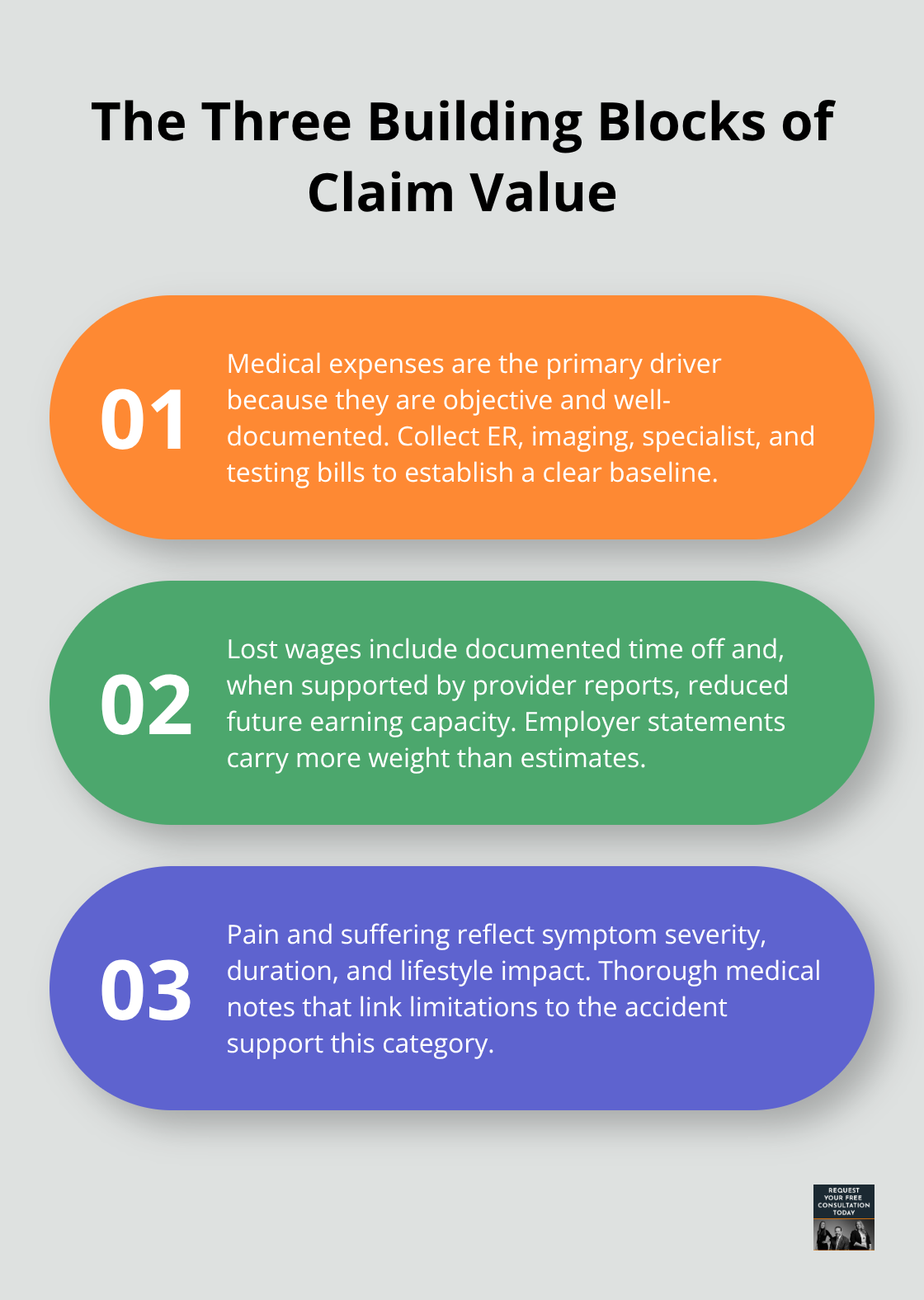
Your settlement value rests on three concrete components: medical expenses, lost wages, and pain and suffering damages. Medical costs form the biggest driver of settlement size, so start there because these figures are easiest to document. Gather every bill from the emergency room visit, follow-up appointments, neuropsychological testing, imaging scans, and any specialized concussion treatment. Insurance Services Office data shows that average auto accident liability payouts sit around $18,417, but concussion settlements vary dramatically based on injury severity and medical costs.
Medical Expenses Set Your Baseline
A mild concussion claim typically ranges from $20,000 to $100,000 according to Mayo Clinic estimates, while moderate traumatic brain injuries settle between $100,000 and $500,000. Severe cases with permanent effects can exceed $1,000,000. The difference between these ranges comes down to documented medical expenses. If you spent $15,000 on emergency care, specialist visits, and imaging, that becomes your baseline. Add costs for any ongoing treatment, prescription medications, or rehabilitation programs. Some clinics accept medical liens, meaning they defer payment until your settlement arrives, so you can continue treatment without waiting for insurance payouts.
Lost Wages Strengthen Your Claim
Lost wages form the second major component of your claim value. Request written documentation from your employer showing the exact dates you missed work and your hourly rate or salary. If your concussion symptoms prevent you from returning to your previous job duties or reduce your earning capacity long-term, that lost future income counts too. A neuropsychologist’s report stating you cannot perform certain work functions strengthens this argument significantly. Insurance adjusters respect wage documentation backed by employer records over vague estimates about time away from work.
Pain and Suffering Reflects Your Experience
Pain and suffering damages compensate you for the non-financial impact of your injury. Insurance companies and courts consider the severity of your symptoms, how long recovery takes, and how much your daily life changed. Someone who experienced a mild concussion with symptoms lasting six weeks receives lower pain and suffering compensation than someone with persistent cognitive problems affecting work performance for two years. Document this impact thoroughly in your medical records by noting specific limitations and how they affected your routines.
Present Your Complete Damages Picture
When negotiating, present your complete damages dossier organized by category: medical expenses with receipts, wage loss documentation from your employer, and a timeline showing symptom severity and recovery progression. Insurance adjusters respect organized, specific evidence over vague claims about pain. Reject early settlement offers that don’t account for your full documented expenses and realistic recovery timeline. Waiting until your medical treatment concludes and your prognosis becomes clear prevents settling for far less than your claim deserves. Once you understand your claim’s true value, the next step involves presenting this evidence effectively to insurance companies and knowing when to push back against inadequate offers.
Negotiating with Insurance Companies
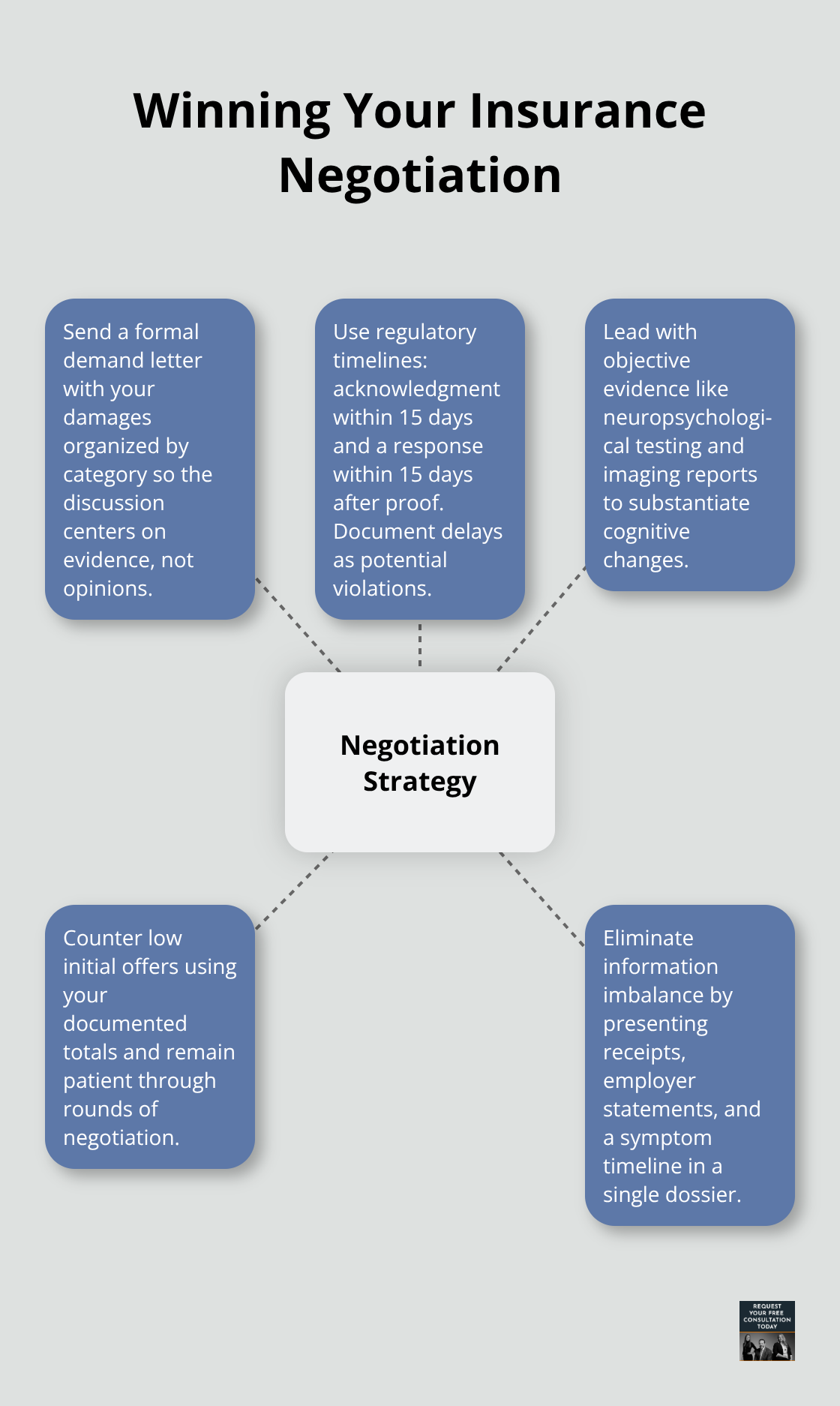
Insurance companies train their adjusters to minimize payouts, so you need a strategy that counters their tactics directly. Start by sending a formal demand letter that includes your complete damages documentation organized by category: medical expenses with itemized receipts, wage loss statements from your employer, and a detailed timeline showing symptom progression from the accident date forward. The Fair Claims Settlement Practices Regulations require insurers to acknowledge your claim within 15 days, start an investigation, and respond within 15 days of receiving proof. If your adjuster delays beyond these windows, document the delays because they violate state law and strengthen your negotiating position.
Lead with Objective Medical Evidence
When presenting medical evidence, lead with neuropsychological testing results and imaging reports rather than subjective symptom descriptions. Insurance adjusters respect objective test data that proves cognitive changes caused by the accident. If you obtained neuropsychological testing showing memory or attention deficits, that objective evidence carries far more weight than your statement about feeling foggy. Include your neurologist’s written assessment linking your symptoms specifically to the accident and their prognosis for recovery. Insurance companies often deny claims by arguing your symptoms stem from pre-existing conditions or stress rather than the crash, so your medical records must establish a clear timeline showing you had no symptoms before the accident and developed them immediately after. Photographs of vehicle damage help prove collision force and strengthen your argument that impact caused injury.
Counter Low Initial Offers with Documentation
Insurance adjusters will make low initial offers designed to tempt quick settlement before you fully understand your case value. Reject these offers outright and counter with your documented damages figure. Negotiating an auto insurance settlement requires patience and a willingness to push back against initial lowball offers. Stand firm on your documented losses rather than accepting vague settlement ranges. If the insurer claims your concussion is mild and worth only $25,000 when your medical expenses total $18,000 plus lost wages of $8,000 and reasonable pain and suffering damages, your counter should reflect these concrete numbers.
Eliminate Information Imbalance
Insurance adjusters negotiate from positions of information imbalance, assuming you lack documentation or legal guidance. Your organized damages dossier and formal presentation eliminate that advantage. Present your complete damages picture organized by category with receipts, employer statements, and symptom timelines. This approach transforms settlement talks from vague discussions into fact-based negotiations where your numbers speak louder than the adjuster’s assumptions.
Know When Legal Representation Becomes Necessary
If settlement discussions stall and the insurer’s offer remains substantially below your documented claim value, legal representation becomes necessary. We at Schaar & Silva LLP help Santa Cruz County residents evaluate whether pursuing litigation makes financial sense given your case facts and the insurer’s position.
Final Thoughts
Your concussion auto accident settlement depends on three concrete actions: gathering complete medical documentation immediately after your crash, calculating your claim value based on documented expenses and lost wages, and presenting this evidence strategically to insurance companies. The first 24 to 48 hours matter most because early diagnosis creates the medical foundation that insurers respect. Follow up consistently with treatment providers, document symptom changes in writing, and organize every receipt and medical record into a single damages dossier before settlement talks begin.
When insurance adjusters make lowball offers or deny your claim outright, legal representation becomes the logical next step. We at Schaar & Silva LLP help Santa Cruz County residents evaluate whether pursuing litigation makes financial sense for your specific situation. Our team can direct you to medical lien services that cover treatment costs while your case resolves and connect you with psychological support if emotional trauma accompanies your injury.
Contact Schaar & Silva LLP to discuss your concussion auto accident settlement claim and determine whether litigation strengthens your position against an uncooperative insurer. Your recovery matters most, and fair compensation supports that healing process by removing financial stress during your treatment.
