

A car crash can shake you to your core, leaving invisible wounds that hurt just as much as physical injuries. Many people in Santa Cruz County, Sacramento, and Oakland experience anxiety, nightmares, and depression long after the accident ends.
At Schaar & Silva LLP, we understand that emotional trauma recovery requires both healing support and legal action to hold responsible parties accountable. This guide walks you through the steps to reclaim your life and pursue the compensation you deserve.
What Happens to Your Brain and Body After a Car Crash
Your body reacts to a car crash with immediate intensity. Within seconds of impact, the National Institute of Mental Health documents that adrenaline and cortisol surge through your system, triggering your nervous system’s fight-or-flight response. This neurochemical flood explains why you might feel shaky, disoriented, or oddly numb right after the accident. Within the first week, about 46 percent of crash survivors experience panic attacks, according to the American Psychological Association. These aren’t signs of weakness-they’re your brain’s protective mechanism activating under extreme stress.
The First Month and Beyond
Within the first month, up to 70 percent of survivors report nightmares or sleep disruption. Around six months post-crash, the numbers become more concerning: roughly 39.2 percent develop anxiety disorders, 17.4 percent develop depression, and 32.3 percent experience post-traumatic stress disorder. Women face roughly 2.5 times higher PTSD risk than men. About 70 percent of those with depression struggle with concentration problems, making work and daily tasks feel overwhelming.
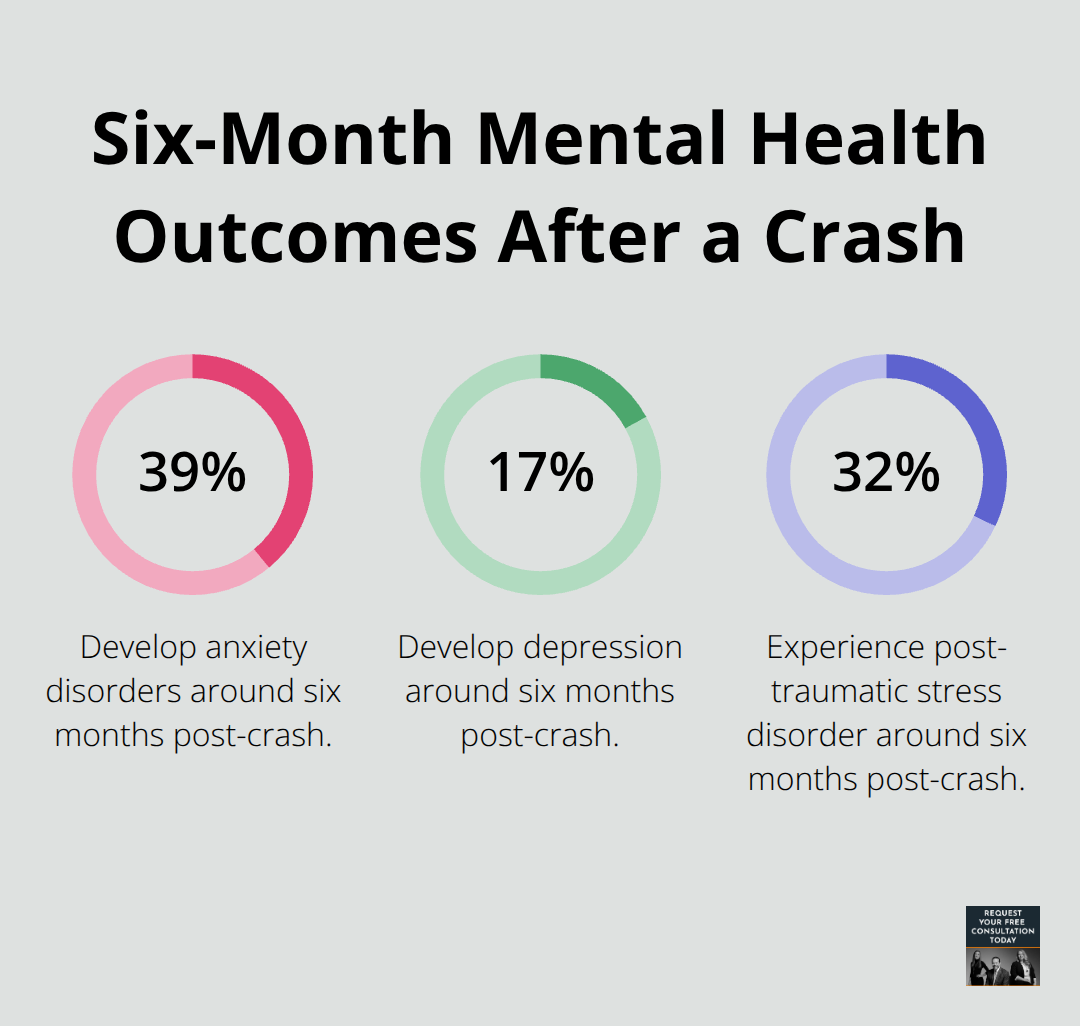
Avoidance behaviors also emerge in about 39.2 percent of survivors within six months-avoiding certain routes, refusing to drive, or staying away from situations that remind them of the crash.
Physical Pain as a Warning Sign
Persistent physical pain six to eight weeks after the crash predicts deeper depression about two months later. Hospital stays longer than seven days correlate with higher depression rates around the two-month mark. If you had anxiety or depression before the crash, the accident typically amplifies those conditions. This is why getting evaluated at a Traumatic Brain Injury Clinic or Concussion Clinic matters-emotional symptoms often accompany brain injuries that aren’t immediately obvious.
Evidence-Based Therapies That Work
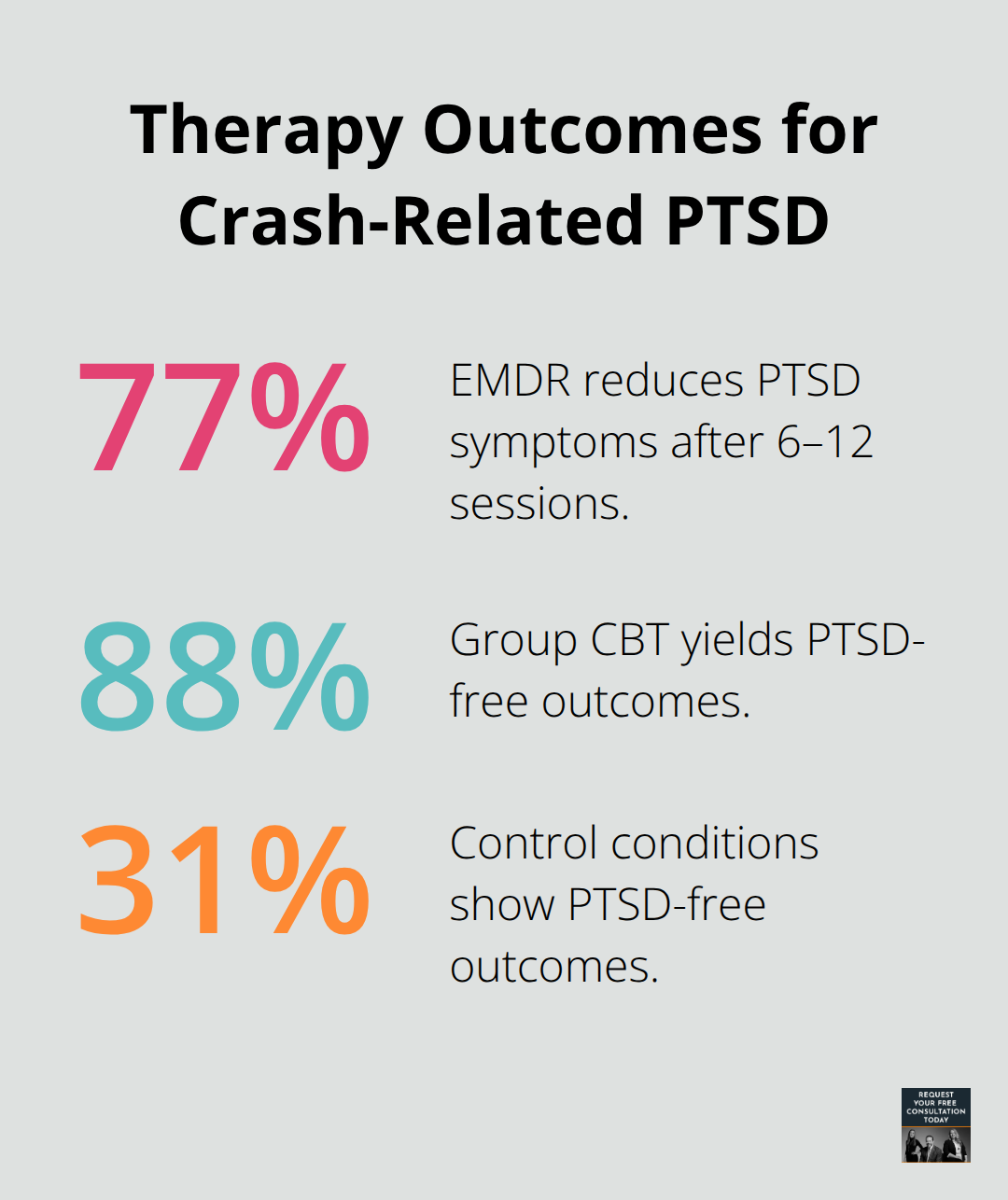
Early evidence-based therapy delivers measurable results. Cognitive-behavioral therapy with gradual exposure addresses fear-related symptoms effectively, while EMDR therapy reduces PTSD symptoms in about 77 percent of accident survivors after six to twelve sessions. Group CBT for accident-related PTSD yields about 88 percent PTSD-free outcomes compared to roughly 31 percent in control conditions.
A trauma-informed therapist holding credentials like LMFT, PsyD, PhD, or LCSW ensures you receive treatment approaches backed by research. At Schaar & Silva LLP, we connect you with specialists who can offer the psychological support you may require while we manage the legal side of your recovery. Your emotional healing and legal protection work hand in hand-addressing one without the other leaves you vulnerable to both ongoing suffering and uncompensated losses.
How to Start Your Recovery Right Now
Get Evaluated Early at a Specialized Clinic
Head to a Traumatic Brain Injury Clinic or Concussion Clinic in Santa Cruz County, Sacramento, or Oakland within the first weeks after your crash. These facilities assess emotional symptoms alongside physical injuries, catching trauma that standard emergency room visits often miss. During your evaluation, describe your sleep patterns, anxiety levels, concentration problems, and any panic attacks you’ve experienced. Bring a list of medications you’re taking, as some can interact with trauma symptoms or therapy.
This medical record becomes vital later when you document psychological injuries for a compensation claim. The Journal of Clinical Medicine shows that early intervention-especially within the first month-substantially reduces your risk of developing full PTSD compared to delayed treatment. If you can’t access a specialized clinic immediately, start with your primary care doctor, who can refer you to a trauma-informed therapist holding credentials like LMFT, PsyD, PhD, or LCSW.
Find the Right Therapist for Your Needs
Psychology Today’s therapist finder lets you filter by credentials, location, and insurance accepted in your area (Aetna, Cigna, Anthem, UnitedHealthcare, Blue Shield, and Medi-Cal). Don’t delay this step thinking you need to be “bad enough” to warrant help; 39.2 percent of survivors develop anxiety disorders within six months, and early evidence-based therapy prevents that escalation. Cognitive-behavioral therapy with gradual exposure and EMDR therapy both deliver proven results-EMDR reduces PTSD symptoms in about 77 percent of accident survivors after six to twelve sessions, while group CBT yields 88 percent PTSD-free outcomes compared to 31 percent in control conditions.
Build Your Support Network
Your support network accelerates recovery far more effectively than isolation does. Tell family and close friends what you need-whether that’s someone to drive you to appointments, help organizing medical records, or simply sitting with you during difficult moments. Hospital-backed programs like those at Kaiser Permanente and community groups such as Mothers Against Drunk Driving offer group settings where you connect with others facing similar trauma, reducing isolation and improving treatment adherence.
Document Your Symptoms and Reach Out for Crisis Help
Start documenting your emotional symptoms in a journal now, noting what triggers anxiety, when nightmares occur, and how symptoms affect your work and relationships. This documentation strengthens both your healing process and any future claim for emotional injury compensation. If suicidal thoughts emerge, call 988 for the Suicide and Crisis Lifeline immediately-it’s confidential, free, and available 24/7.
As you move forward with treatment and build your recovery plan, the legal side of your case requires equal attention. Coordinating your medical care with proper documentation sets the foundation for pursuing compensation that reflects the full scope of your emotional injuries.
Building Your Claim for Emotional Injury Compensation
Your emotional trauma from the car crash is as real and compensable as a broken bone. California law recognizes that psychological injuries deserve financial recovery, and courts regularly award damages for anxiety, depression, PTSD, and loss of quality of life. The difference between receiving payment for your trauma and walking away with nothing lies in how thoroughly you document what happened to you and how it damaged your life.
Start Your Documentation Now
Record symptoms within 24 hours of your accident by writing down the date and time of panic attacks, describing what triggered them, noting how many hours you lost to insomnia, and capturing moments when fear prevented you from driving or leaving your home. This journal becomes evidence that strengthens your claim significantly. Medical records from your therapist or psychiatrist carry even more weight than personal notes, so prioritize getting evaluated at a Traumatic Brain Injury Clinic or working with a trauma-informed therapist holding credentials like LMFT, PsyD, PhD, or LCSW.
Gather Financial and Medical Evidence
Collect receipts for therapy sessions, medication costs, and any other treatment expenses related to your emotional recovery. Organize your medical bills, funeral costs if applicable, lost wages from time off work due to anxiety or depression, and documentation of benefits you lost. The stronger your evidence trail, the higher your potential compensation.
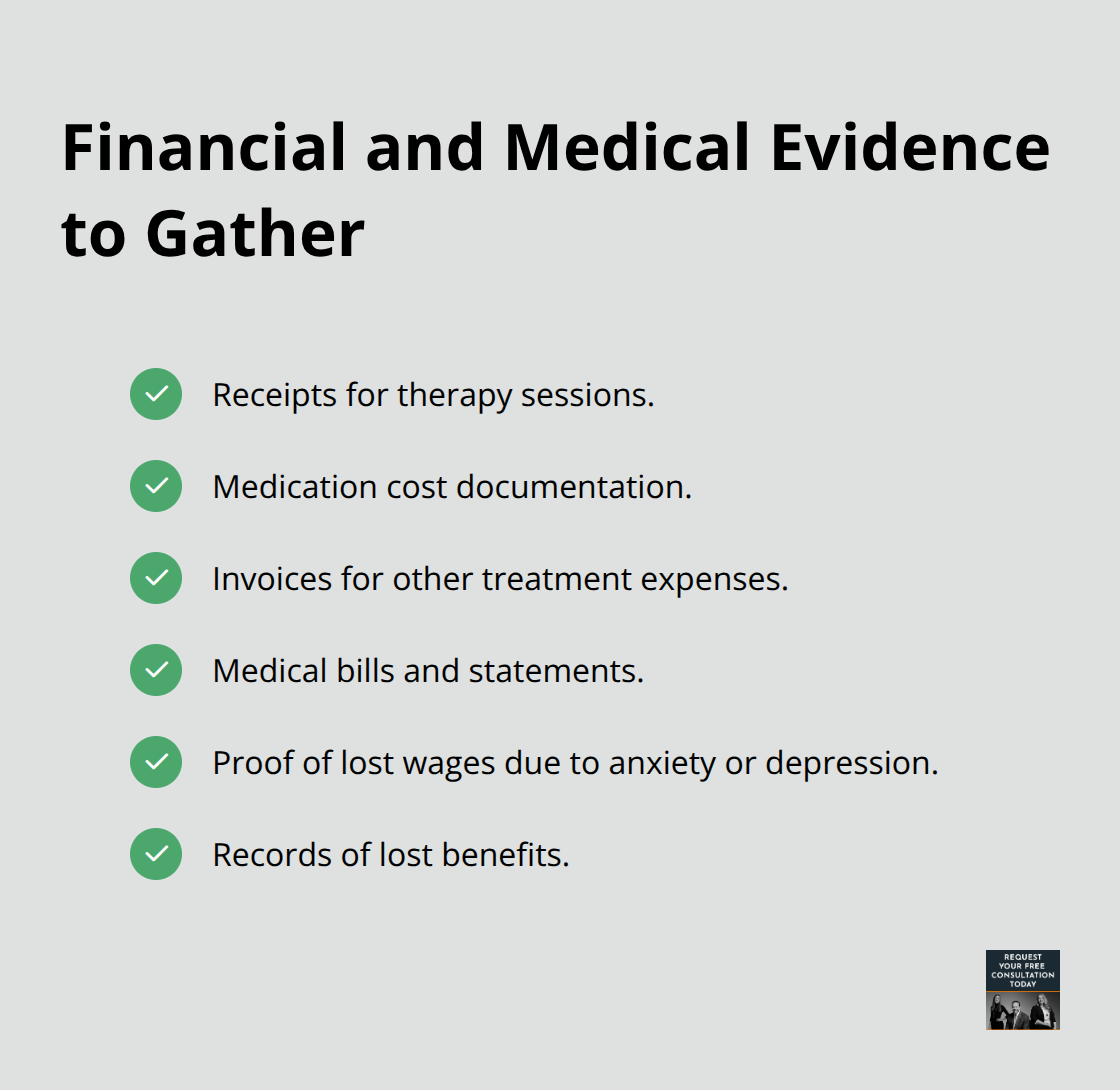
Each piece of documentation reinforces your claim and demonstrates the real financial impact of your emotional injuries.
Understand Damage Categories Under California Law
California law under Code of Civil Procedure section 377.60 allows surviving family members to recover both economic damages like medical expenses and lost income, and non-economic damages for loss of companionship, emotional distress, and loss of consortium. Your claim likely includes multiple damage categories, and each requires different proof strategies. Present compelling evidence of your psychological trauma through narrative evidence: testimony from family about how your personality changed, statements from your employer about reduced productivity, and detailed descriptions from your therapist about how trauma altered your functioning.
Consider Punitive Damages in Severe Cases
If the defendant’s actions showed extreme negligence or intentional harm, punitive damages may apply, though these are awarded less frequently. The statute of limitations gives you two years from the crash date to file, so time matters. This two-year window requires immediate action to preserve your right to pursue compensation and ensure all evidence remains fresh and accessible.
Coordinate Your Recovery with Legal Strategy
We at Schaar & Silva LLP help you coordinate medical treatment with legal strategy, ensuring your therapy notes and medical records support both your healing and your compensation claim. This coordination prevents gaps in documentation and strengthens your position when negotiating with insurance adjusters or presenting evidence to a jury.
Moving Forward With Your Recovery and Justice
Emotional trauma recovery after a car crash takes time, but you don’t have to navigate it alone. The steps outlined in this guide-seeking medical evaluation, building your support network, engaging in evidence-based therapy, and documenting your injuries-create a foundation for both healing and legal action. Your emotional wounds are real, and California law recognizes that you deserve compensation for the psychological damage you’ve suffered.
Legal action and medical recovery work together, not separately. When you document your symptoms, attend therapy sessions, and organize your medical records, you simultaneously build evidence for your claim. We at Schaar & Silva LLP understand this connection deeply and help you coordinate your healing with your legal strategy while we handle the complex legal work of pursuing fair compensation.
The two-year statute of limitations means action now protects your rights later. Contact Schaar & Silva LLP today for a consultation about your case, and take the first step toward reclaiming your life.
