

A car crash leaves more than physical scars. The emotional distress that follows can be just as debilitating as broken bones or whiplash, affecting your sleep, work, and relationships for months or years.
California law recognizes this reality. You can pursue compensation for psychological injuries caused by someone else’s negligence, just as you would for physical harm. At Schaar & Silva LLP, we help accident victims in Santa Cruz County, Oakland, and Sacramento document and claim the mental health damages they deserve.
What Emotional Trauma Actually Looks Like After a Crash
PTSD and Immediate Psychological Reactions
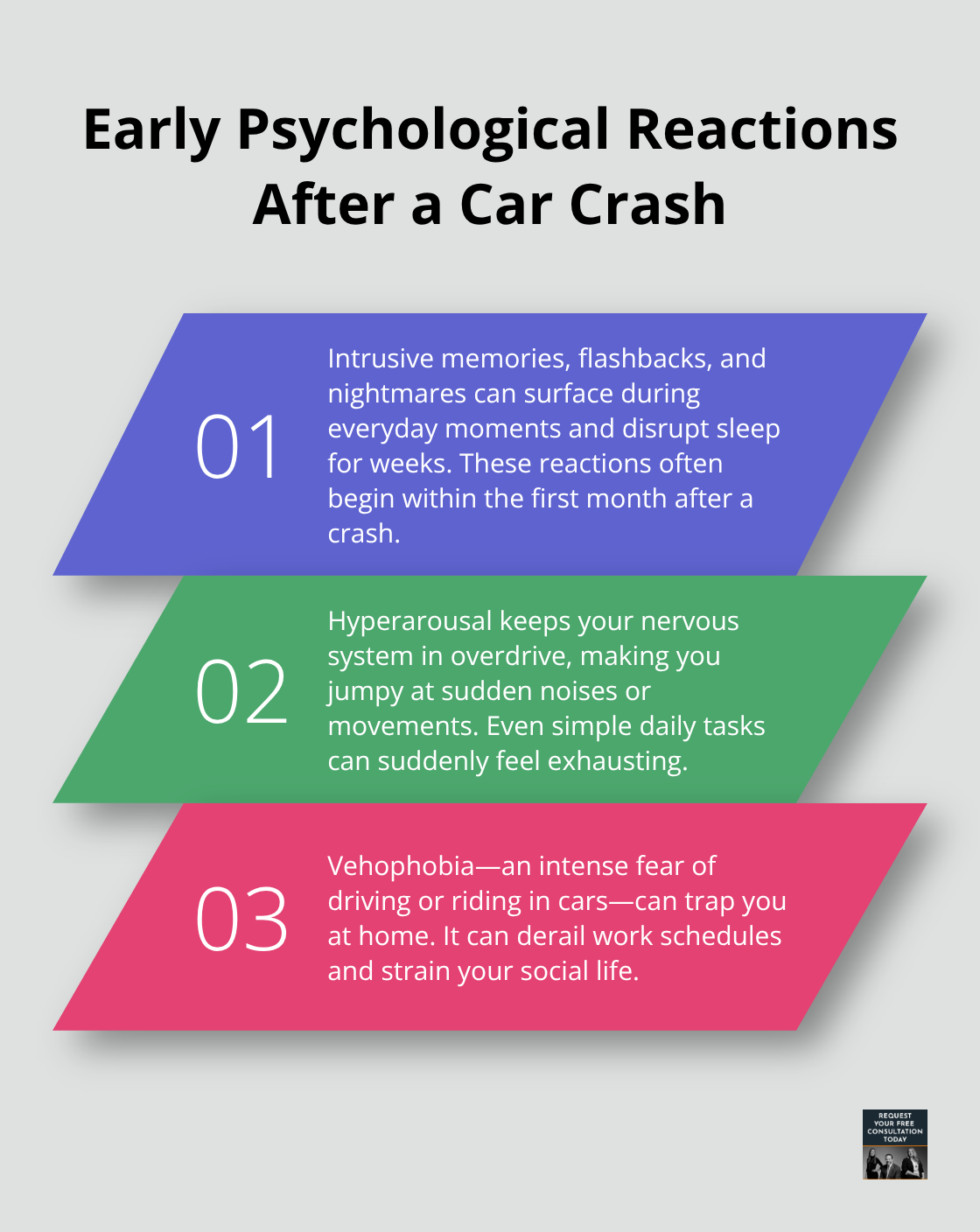
The first weeks after a car crash are when emotional distress hits hardest. PTSD symptoms often appear within the first month, according to clinical research on accident survivors. You might experience intrusive memories of the collision, flashbacks during everyday moments like sitting in traffic, or nightmares that disrupt your sleep for weeks. Hyperarousal is common too-your nervous system stays in overdrive, making you jumpy at sudden noises or movements. Some people develop vehophobia, an intense fear of driving or riding in cars, which can trap them at home and derail their work and social life.
Anxiety, Depression, and Mood Changes
Anxiety after a crash manifests as persistent worry, racing thoughts, and physical symptoms like a pounding heart or muscle tension that won’t ease. Depression often follows, showing up as ongoing sadness, loss of interest in activities you once enjoyed, low energy, and irritability. Mood swings are frequent-you might feel tearful one moment and angry the next. Sleep disturbances range from insomnia to nightmares, creating a cycle where poor sleep worsens anxiety and depression.
Why These Injuries Remain Invisible
The reality is that these conditions are not weakness or overreaction; they are measurable psychological injuries caused by trauma. Many accident survivors also experience guilt (especially if others were hurt) or shame about their emotional response. What makes these injuries particularly challenging is that they are invisible. Unlike a broken arm visible in an X-ray, emotional distress doesn’t show on scans, which is why documenting it early becomes essential for both your recovery and your legal claim.
Start Tracking Symptoms Immediately
Track your symptoms immediately, even before seeing a mental health professional. Write down when nightmares occur, what triggers your anxiety, how many hours you actually sleep, and how your mood affects your ability to work or maintain relationships. This journal becomes powerful evidence later. Seek evaluation from a mental health professional within the first few weeks if possible. A primary care physician can document initial symptoms, but a licensed therapist or psychiatrist carries more weight in legal proceedings.
Professional Documentation Protects Your Claim
Treatment records from mental health professionals become the backbone of your emotional distress claim. Medical records showing diagnosis, treatment plans, therapy notes, and prescription histories demonstrate that your distress is genuine and severe, not imagined or exaggerated. Insurance companies scrutinize emotional distress claims heavily, so professional documentation shields you from dismissal. The longer you wait to seek help, the harder it becomes to prove the crash caused your condition rather than pre-existing issues. When you connect this psychological treatment to your legal compensation, your medical records tell the full story of your injury and recovery needs-a connection that strengthens your case significantly.
What Qualifies as Compensable Emotional Distress
California law allows you to recover damages for emotional distress caused by someone else’s negligence, but the law distinguishes between two types of claims. Negligent infliction of emotional distress arises when another person’s negligent conduct causes you psychological harm. Intentional infliction of emotional distress applies when someone acts with outrageous or extreme conduct intended to cause distress or with reckless disregard for the consequences. To win either claim, you must prove four elements: the defendant’s conduct was outrageous or negligent, they intended to cause distress or acted with reckless disregard, you suffered severe emotional distress, and the defendant’s actions directly caused your distress.
Establishing the Causation Link
This causation link is critical-insurance adjusters will argue your depression or anxiety stems from pre-existing conditions, financial stress, or personal issues unrelated to the crash. Medical records showing diagnosis and treatment dates matter enormously. If you first sought mental health care weeks or months after the crash, the adjuster will claim the delay proves the crash didn’t cause your condition. Start treatment immediately and document everything from day one.
Evidence That Courts Actually Accept
Courts and juries want objective proof, not your word alone. Eyewitness testimony from people who saw your emotional state immediately after the crash carries weight.
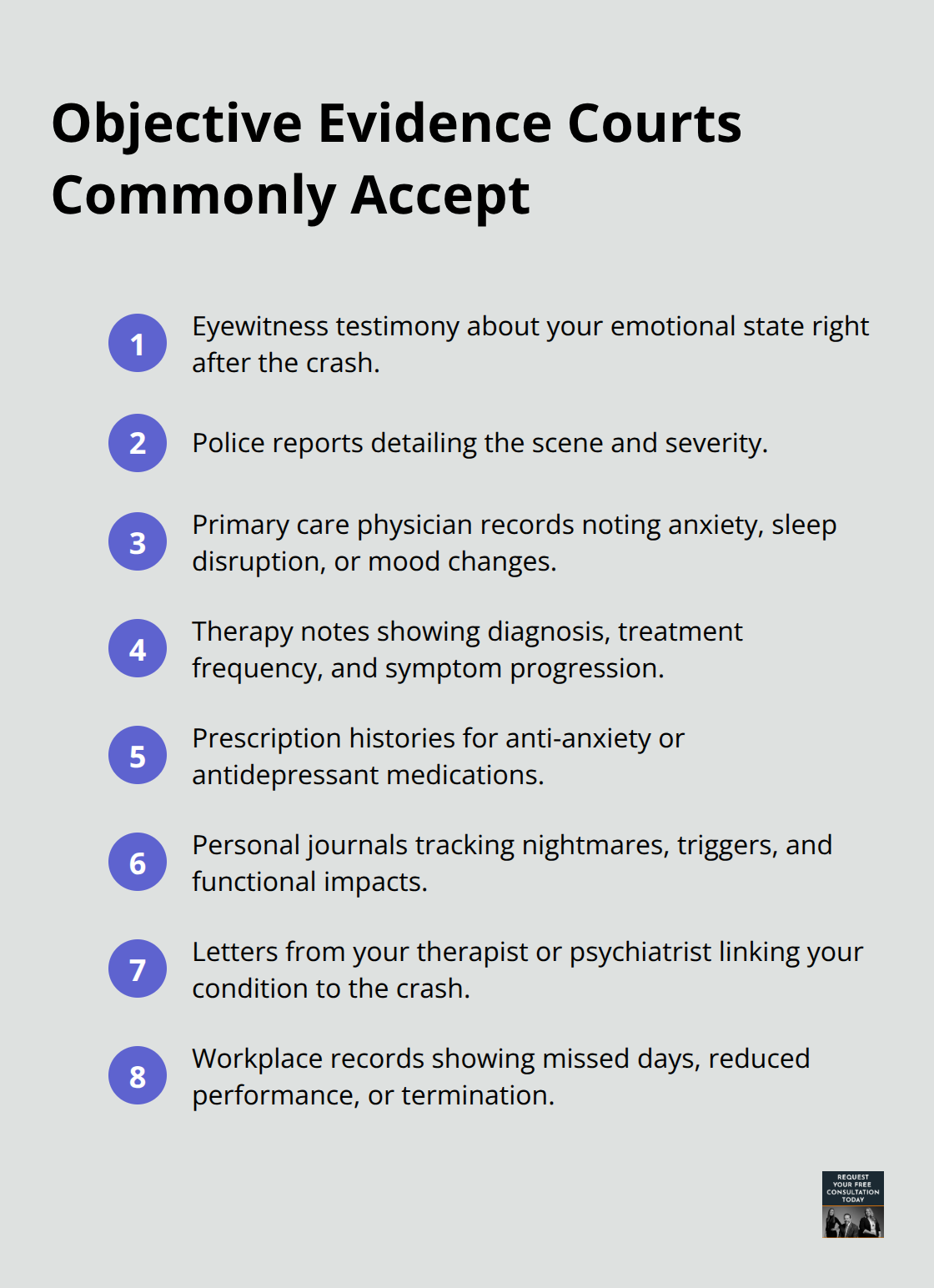
Police reports document the scene and severity of the collision, establishing the trauma’s intensity. Medical records from your primary care physician noting anxiety, sleep disruption, or mood changes within weeks of the crash create a timeline. Therapy notes from licensed therapists or psychiatrists show diagnosis, treatment frequency, and symptom progression to demonstrate severity. Prescription histories for anti-anxiety or antidepressant medications prove you sought professional intervention. Personal journals track nightmares, triggers, and functional impacts to provide a detailed record courts respect. Letters from your therapist or psychiatrist specifically link your psychological condition to the crash and prove invaluable. Workplace records showing missed days, reduced performance, or termination establish how the injury disrupted your life. Courts recognize that severe emotional distress can lead to six or seven figure settlements when supported by qualified mental health professional testimony, reflecting growing acknowledgment of psychological injury’s real impact. Insurance companies undervalue emotional claims constantly, which is why professional documentation and legal representation become non-negotiable.
Physical Injury Requirements and Exceptions
California generally does not require physical injury to recover emotional distress damages, though many cases involve both. You can claim emotional harm even without broken bones or visible injuries. However, this flexibility has limits. If your case involves intentional infliction of emotional distress, outrageous conduct alone may suffice. For negligent infliction claims, courts scrutinize cases lacking physical injury more heavily, demanding stronger psychological evidence and clearer causation. Bystanders who witnessed a loved one’s injury caused by negligence can sometimes recover emotional distress damages, though they face higher evidentiary burdens than direct victims.
Timelines, Damages, and Tax Implications
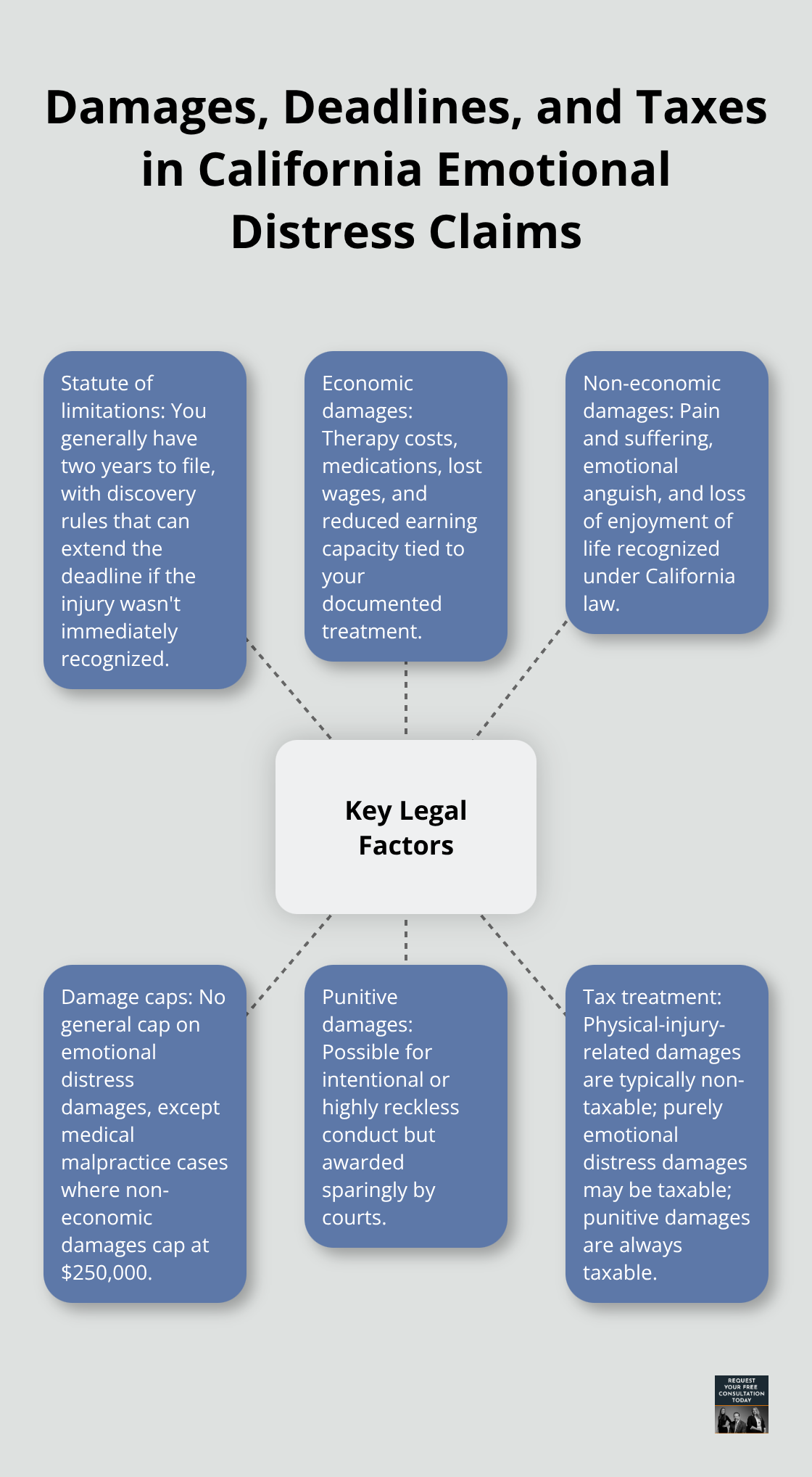
The statute of limitations gives you two years from the accident to file your claim in California, though discovery rules can extend this deadline if your injury wasn’t immediately recognized. Minors and mentally incapacitated individuals have different timeline protections. Damages fall into two categories. Economic damages cover therapy costs, medications, lost wages, and reduced earning capacity. Non-economic damages address pain and suffering, emotional anguish, and loss of enjoyment of life. California imposes no general cap on emotional distress damages except in medical malpractice cases, where non-economic damages cap at $250,000. Punitive damages may be available for intentional or highly reckless conduct, though courts award them sparingly. Tax treatment matters too: damages tied to physical injury are typically non-taxable, while purely emotional distress damages may be taxable, and punitive damages are always taxable.
Understanding these legal standards and requirements positions you to build a strong claim. The next step involves connecting with the right professionals who can document your psychological injuries and support your recovery while your case moves forward.
Building Your Mental Health Case
Finding the Right Mental Health Professionals
Finding qualified mental health professionals in Santa Cruz County, Oakland, and Sacramento requires knowing exactly where to look. Your primary care physician can provide initial referrals, but don’t stop there. Contact your insurance provider directly for their list of in-network therapists and psychiatrists, as this eliminates out-of-pocket costs that already strain accident survivors. For uninsured or underinsured individuals, CAB Victim/Survivor of Crime Services in Santa Cruz County offers free Case Management and System Navigation that connects you to affordable mental health resources. Encompass Community Services delivers trauma-informed counseling with Individual, Family, and Group sessions, plus their MAT Program provides rapid access to Medication-Assisted Treatment if substance use complicates your recovery. Santa Cruz Public Libraries offer Stress Busters programs covering mindfulness and mental healthcare at no cost. In Sacramento and Oakland, your county health department maintains lists of licensed therapists accepting Medi-Cal or low-income patients.
Seek a therapist or psychiatrist, not just a counselor, because licensed mental health professionals carry significantly more legal weight in court proceedings. Your treatment records from these professionals become the foundation of your entire claim, so the initial choice matters enormously. Start appointments within two to four weeks of the accident. Any longer delay gives insurance adjusters ammunition to argue your psychological injuries stem from other causes.
How Medical Records Strengthen Your Claim
Medical records transform your emotional distress claim from subjective complaint into documented injury. Each therapy session note creates a timestamped record showing your symptoms, their severity, and your treatment response. Psychiatrists’ notes carry particular authority because they diagnose conditions using DSM-5 criteria and often prescribe medications, creating multiple layers of documentation. Prescription histories for anti-anxiety medications like sertraline or alprazolam demonstrate you sought professional intervention and reveal medication side effects or dosage changes that show ongoing struggle.
Your therapist’s clinical assessment letter specifically links your psychological condition to the crash accident and becomes essential evidence that courts and juries respect. Keep copies of everything: intake forms, diagnosis summaries, treatment plans, session notes, and correspondence from your provider. Insurance companies scrutinize emotional claims relentlessly, so gaps in your medical record give them legitimate reasons to deny or minimize your damages.
Connecting Treatment to Legal Compensation
Your medical records establish the economic damages component of your claim by documenting therapy costs, medication expenses, and any lost wages from appointments or work absences related to your condition. When you connect psychological treatment to your legal compensation, your medical records tell a compelling story of injury and recovery needs-a connection that strengthens your case significantly. At Schaar & Silva LLP, we help you navigate this process and ensure your treatment records support your claim effectively.
Final Thoughts
Your recovery after an emotional distress car crash requires two parallel paths: healing your mental health and securing the compensation you deserve. Start therapy or counseling within weeks of your accident, not months, and be honest with your therapist about nightmares, anxiety, and how the crash disrupted your work and relationships. Take prescribed medications as directed and attend appointments consistently, because this commitment to your recovery also protects your legal case by creating the documentation that proves your distress is real and severe.
We at Schaar & Silva LLP understand that emotional injuries deserve the same attention and compensation as physical ones. Our team helps accident victims in Santa Cruz County, Oakland, and Sacramento connect psychological treatment with legal recovery, assist with medical bill management through lien services, evaluate your full range of damages including emotional harm, and connect you with mental health professionals who understand trauma from car accidents. You don’t navigate this alone while you focus on healing and we handle the legal complexities of documenting your psychological injuries and negotiating with insurance companies.
Recovery takes time, and some days will feel harder than others. Your symptoms may improve gradually rather than disappearing overnight, and that’s normal. The accident wasn’t your fault, and neither is the emotional distress that followed-you have the right to compensation that covers your therapy costs, lost wages, and the pain and suffering you’ve endured.
