

A car crash leaves more than physical injuries. The emotional trauma that follows can be just as debilitating, affecting your health, your recovery, and your ability to move forward.
At Schaar & Silva LLP, we’ve seen how psychological suffering impacts both healing and legal claims. This guide walks you through documenting emotional damage, understanding what compensation you deserve, and finding the support you need.
How Stress Changes Your Body After a Crash
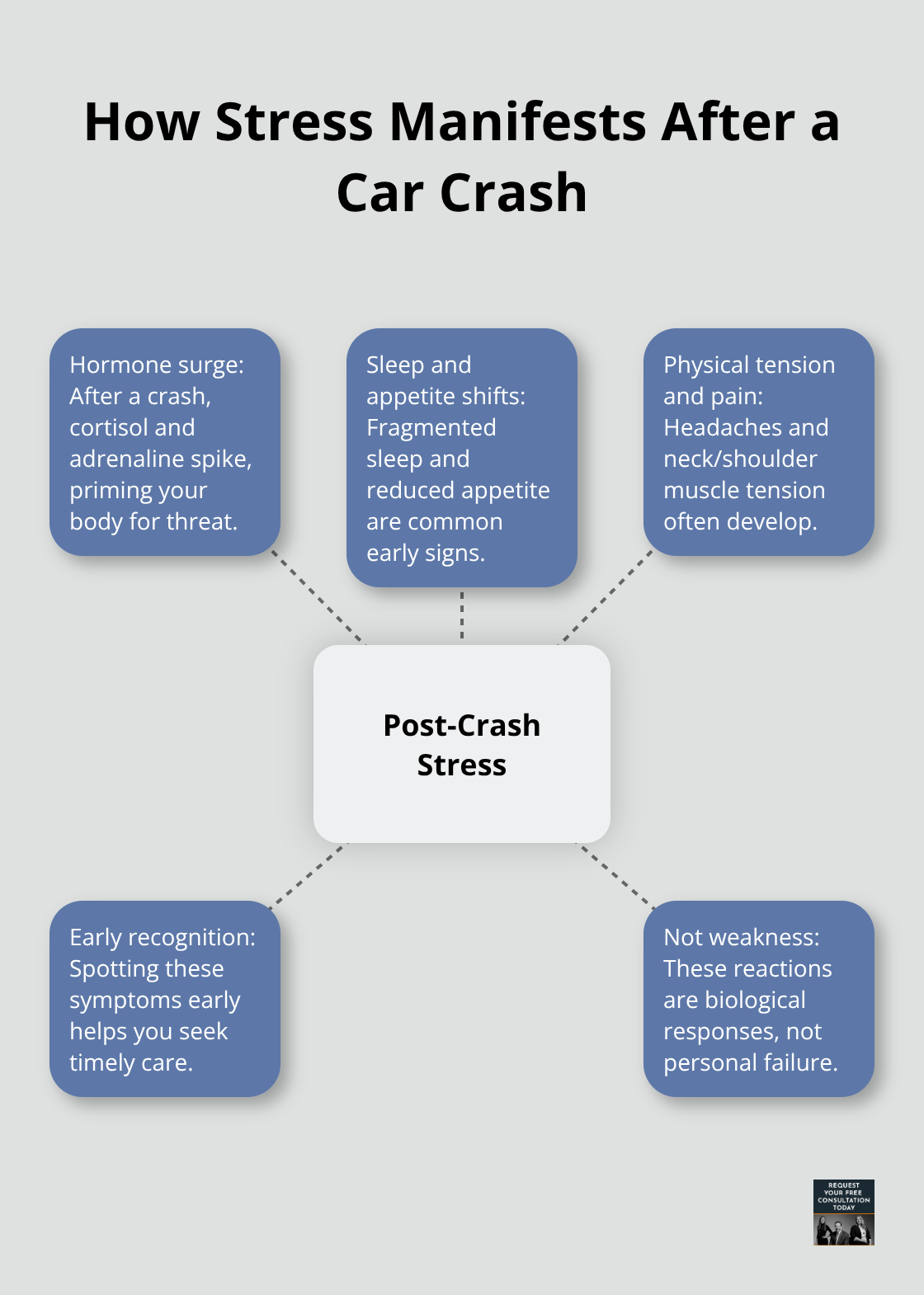
A car crash triggers a cascade of physical and psychological responses that your body isn’t prepared for, flooding your system with stress hormones like cortisol and adrenaline. This isn’t weakness or overreaction-it’s biology. Within hours or days, you may notice your hands trembling, your heart racing at odd moments, or your stomach churning without cause.
Sleep becomes fragmented. Appetite disappears. Headaches and muscle tension settle in, particularly around your neck and shoulders. The American Academy of Family Physicians reports that most people involved in car accidents experience some level of emotional trauma, and these physical symptoms are the body’s way of signaling that something significant has happened.
Recognizing Symptoms Early Matters
What matters is recognizing these symptoms early. Research shows that emotional trauma increases pain sensitivity and disrupts sleep, which means early screening for PTSD, depression, and anxiety within the first weeks after a crash improves chances of recovery by guiding timely treatment. If you experience persistent tension, insomnia, or unexplained pain weeks after your accident, contact your doctor for a referral to a mental health provider.
Stress and trauma actually slow your physical healing by disrupting sleep, appetite, and immune function. This is why addressing mental health matters as much as treating broken bones.
How Untreated Stress Extends Your Recovery
Chronic post-crash stress is linked to higher pain intensity, longer disability, and slower return-to-work timelines according to research from the American Psychological Association and NIMH. Someone managing untreated anxiety or depression after a crash may take months longer to return to work than someone receiving proper support.
The good news: most people show meaningful improvement within three to six months when engaged in evidence-based treatment and supportive care. This timeline is critical for your legal case too, because documentation of your mental health treatment creates a clear record of your suffering and recovery progress.
Building Your Recovery Foundation
Avoid alcohol and sedatives during this period, as these substances worsen sleep and mood problems and impede recovery. Instead, focus on the basics: adequate sleep, good nutrition, and regular physical activity. These aren’t luxuries-they’re active recovery tools that accelerate healing.
Your mental health documentation now becomes essential evidence later. The steps you take to address emotional trauma directly influence both your physical recovery and the strength of your legal claim, which is why understanding what compensation you deserve matters.
Building Your Evidence Trail
Mental Health Records Form Your Foundation
Your mental health records are the backbone of your emotional damage claim, and courts take them seriously. When you seek treatment from a therapist, psychiatrist, or counselor after a crash, every session creates documentation that proves your suffering was real and measurable. This documentation matters for your recovery and your legal case alike.
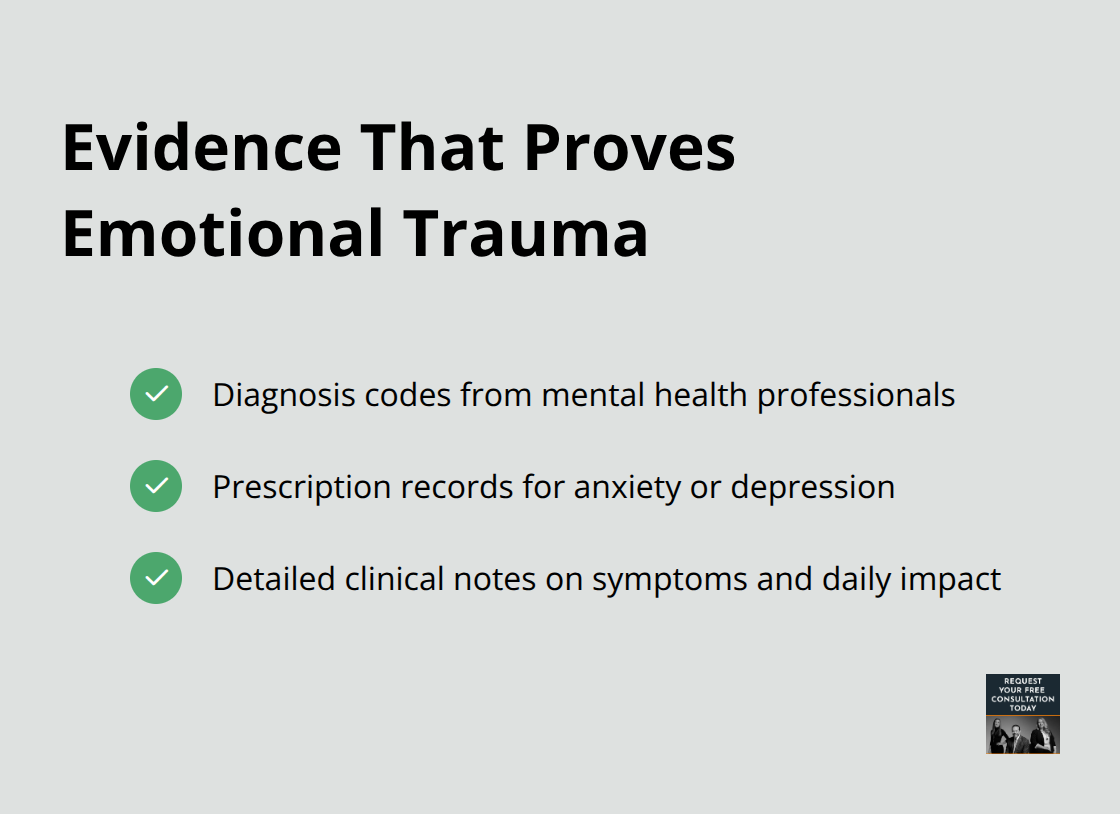
Courts evaluate emotional trauma claims by examining concrete evidence: diagnosis codes from mental health professionals, prescription records showing medication prescribed for anxiety or depression, and detailed clinical notes describing your symptoms and their impact on daily functioning. The Virginia National Center for PTSD found that emotional distress influences legal case outcomes by affecting testimony and perceived credibility, which is why documenting your psychological impact matters as much as proving physical injuries.
Document Your Symptoms and Daily Impact
Start treatment and document everything immediately after your crash. Note when panic attacks occur, how they disrupt your work, whether you can drive, and how sleep disturbances affect your ability to care for yourself. This record becomes powerful evidence later because it shows the real-world consequences of your trauma, not just clinical diagnoses.
Your documentation should capture specific moments: the day you couldn’t attend your child’s school event because of anxiety, the week you missed work due to insomnia, the moment you realized you couldn’t sit in a car without trembling. These concrete details matter far more than general statements about feeling stressed.
Professional Testimony Strengthens Your Claim
Mental health professionals can articulate what you’re experiencing in ways that resonate with insurance adjusters and judges. When your therapist testifies or provides a written statement about your PTSD diagnosis, the severity of your symptoms, and your prognosis for recovery, that professional opinion carries weight in settlement negotiations and court proceedings.
Therapy notes documenting trauma-focused cognitive behavioral therapy or EMDR treatment demonstrate you’re actively addressing your injury and following evidence-based approaches that research shows improve recovery outcomes within three to six months. These notes create a timeline of your healing that courts understand and respect.
Coordinate Your Medical and Legal Records
If you work with a personal injury attorney, they can coordinate with your mental health providers to ensure your medical records paint a complete picture of your suffering and recovery journey. This coordination prevents gaps in documentation and strengthens the connection between your crash and your psychological injuries. At Schaar & Silva LLP, we connect you with mental health professionals who understand how to document trauma in ways that support your legal claim while prioritizing your healing.
Your evidence trail now complete, the next step involves understanding exactly what compensation the law allows for the suffering you’ve endured.
What Compensation Can You Actually Recover for Emotional Suffering
California and Georgia Law Recognize Emotional Injuries
California law recognizes emotional suffering as a legitimate injury worthy of compensation, and courts award damages for psychological harm caused by car crashes regularly. The distinction between what you deserve and what you actually receive hinges on how thoroughly you document your suffering and how persuasively your evidence demonstrates the connection between the crash and your emotional injuries. Georgia law similarly provides for non-economic damages covering pain and suffering, which encompasses psychological trauma alongside physical pain. Your documentation from the previous section transforms into the foundation for calculating what compensation looks like in your specific situation.
How Courts Evaluate Your Emotional Trauma Claim
Courts evaluate emotional trauma claims by examining whether your diagnosis comes from a licensed mental health professional, whether your symptoms align with recognized psychological conditions like PTSD or major depression, and whether your treatment records show ongoing impact on your daily functioning. A therapist’s clinical notes stating you meet diagnostic criteria for PTSD carry far more weight than your own statements about feeling stressed. Insurance companies and judges understand clinical language and measurable outcomes, which is why your mental health records become the currency of your claim. The American Academy of Family Physicians confirms that most car crash victims experience emotional trauma, yet many fail to pursue compensation simply because they don’t understand what damages look like in monetary terms.
Factors That Determine Your Settlement Amount
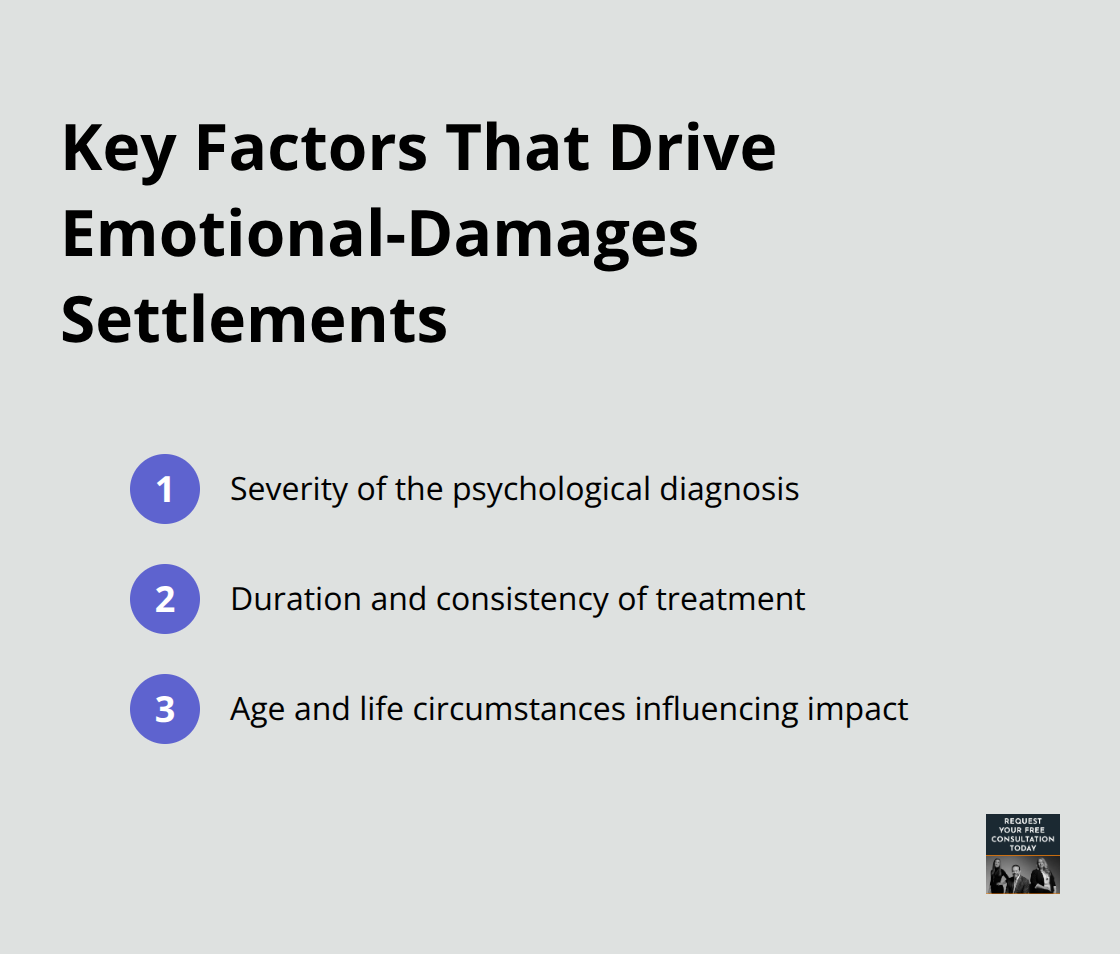
Settlement amounts for emotional suffering vary dramatically based on several concrete factors that courts and adjusters consistently apply. The severity of your psychological diagnosis matters significantly-someone diagnosed with complex PTSD after a severe crash will typically recover more than someone treated for acute stress that resolves within weeks. The duration of your treatment directly influences settlement value; someone in therapy for eighteen months demonstrates more substantial injury than someone who attended three sessions. Your age and life circumstances affect damages too, since emotional trauma disrupts younger workers’ earning potential and career trajectory differently than it affects someone nearing retirement.
How Functional Impact Translates to Dollars
Documentation of how trauma interfered with specific life domains-missing work, failing school, losing relationships, or avoiding driving entirely-translates into concrete damages that adjusters quantify. Research from the National Institute of Mental Health shows that chronic post-crash stress produces longer disability timelines and slower return-to-work outcomes, and these measurable consequences directly increase settlement calculations. The gap between settlements for well-documented emotional injuries and poorly documented ones often reaches hundreds of thousands of dollars, making the quality of your evidence the decisive factor in what you ultimately recover.
Working with Legal Representation on Your Claim
At Schaar & Silva LLP, we connect you with mental health professionals who understand how to document these functional impacts so your settlement reflects the real scope of your suffering rather than a generic calculation. We also assist in evaluating the extent of your emotional injuries and ensure you receive fair compensation for your loss. Our team can help direct you to medical lien services that facilitate payment of your mental health treatment bills until your case is resolved, allowing you to focus on recovery while we handle the legal intricacies of your situation.
Moving Forward
Recovery from emotional trauma after a car crash requires both professional support and practical action. Santa Cruz County residents access mental health resources through Cobb Behavioral Health Crisis Center and Good Samaritan Health Center, which offer sliding scale fees for uninsured or underinsured individuals. Your family doctor provides referrals to licensed therapists who understand trauma recovery, and many communities offer free support groups where crash survivors share experiences and coping strategies.
Return to driving gradually through safe routes and shorter distances as your confidence rebuilds. Maintain consistent therapy appointments even when progress feels slow, since research shows meaningful improvement typically occurs within three to six months of engaged treatment. Track when you return to work, resume social activities, or accomplish milestones like driving on highways again-this documentation strengthens your claim while giving you tangible evidence of your resilience.
At Schaar & Silva LLP, we recognize that healing happens when legal and medical support work together. Contact us for guidance on managing your emotional trauma car crash recovery and legal claim simultaneously. We’ve helped Santa Cruz County residents recover fair compensation while focusing on their healing.
