

A car accident can shake you to your core, leaving emotional wounds that run as deep as physical injuries. Many people experience anxiety, depression, or flashbacks long after the collision ends, yet they don’t realize these psychological injuries are legally compensable.
California law recognizes car accident emotional distress as a valid claim, and you have the right to pursue compensation for your suffering. We at Schaar & Silva LLP help accident victims in Santa Cruz County, Sacramento, and Oakland understand their options and recover what they deserve.
How Car Accidents Affect Your Mental Health
Your Nervous System’s Immediate Response
The aftermath of a car accident extends far beyond the moment of impact. Within hours or days, many accident victims report feeling anxious, hypervigilant, or unable to sleep, even if they suffered no physical injuries. These reactions are not weakness or overreaction-they are your nervous system’s natural response to trauma. Your body treats the collision as a threat and activates your fight-or-flight response, flooding your system with stress hormones that can take weeks to settle.
Common Emotional and Psychological Effects
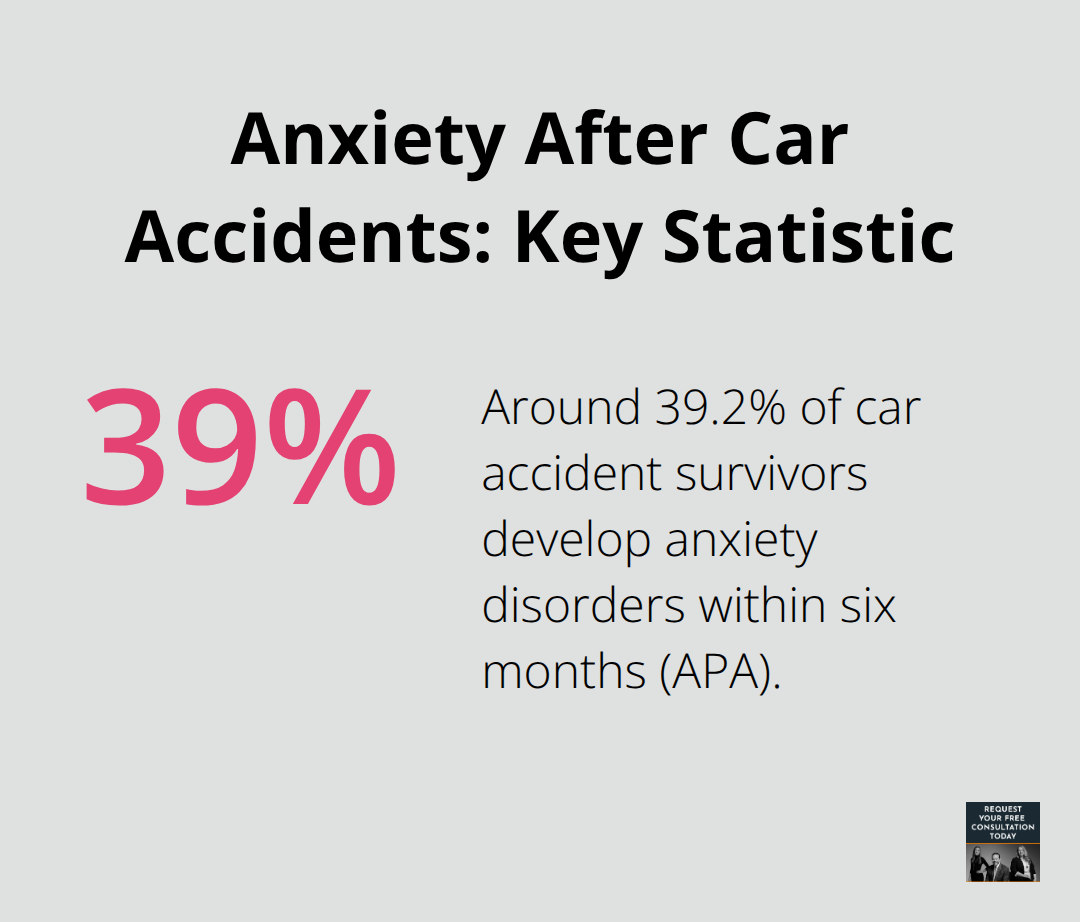
The American Psychological Association notes that around 39.2% of car accident survivors develop anxiety disorders within six months, while many more experience depression, post-traumatic stress disorder, or intrusive memories that disrupt daily life. Some victims describe persistent fear when driving or riding in vehicles, avoiding routes they once traveled regularly. Others experience nightmares, flashbacks triggered by sounds similar to the collision, or panic attacks when reminded of the accident. These psychological injuries are just as real as broken bones, yet many people minimize them or suffer in silence.
Physical Symptoms That Accompany Emotional Trauma
Physical symptoms often accompany these psychological responses: tension headaches, chest tightness, stomach problems, fatigue, or muscle pain that has no clear physical cause. Stress and trauma actually slow your physical healing by disrupting sleep, appetite, and immune function, which is why addressing mental health matters as much as treating visible injuries. You might find yourself withdrawing from social activities, losing interest in hobbies you once enjoyed, or struggling to concentrate at work. These changes can persist for months or years if left unaddressed, affecting your relationships, job performance, and overall quality of life.
Why Documentation Matters Now
The longer emotional distress goes untreated, the deeper it embeds itself into your daily functioning. Medical and therapy records become essential evidence later if you pursue a compensation claim, so seeking professional help now serves two purposes: it supports your healing and builds your legal case simultaneously. If you’ve noticed these patterns in yourself or a family member after an accident, that’s a signal to take your mental health seriously and document what you’re experiencing.
What Qualifies as Emotional Distress in California
California law recognizes two distinct pathways for emotional distress claims: negligent infliction of emotional distress and intentional infliction of emotional distress. Negligent infliction applies when a driver’s careless actions cause you severe psychological harm, which covers most car accident scenarios. Intentional infliction requires proof that the driver acted with deliberate recklessness or intent to cause harm, a higher bar but one that can apply in hit-and-run situations or extreme road rage incidents. The threshold is severity-California courts require that your distress be so substantial that a reasonable person would struggle to cope with it. Anxiety that makes you avoid driving, depression requiring medication, or PTSD with intrusive nightmares all meet this standard. Generic worry or temporary sadness does not.
The Severity Standard That Courts Apply
California courts evaluate emotional distress claims against a specific standard: would a reasonable person find the distress so overwhelming that they cannot function normally? This question shapes everything about your case. If you experience panic attacks when driving, lose sleep for months, or withdraw from work and relationships, you cross this threshold. Courts examine the intensity of your suffering, how long it persists, and whether professional treatment became necessary. The distinction between negligent and intentional infliction matters because it determines what evidence you need and how much compensation you can pursue.
Start Your Documentation Immediately
Documentation gaps weaken your claim considerably, so you must act fast. Therapy notes stand as your strongest evidence because they show professional assessment of your condition, diagnoses, and treatment progression over time. Records from every mental health appointment matter, including psychiatry evaluations that document anxiety or depression diagnoses. When a therapist prescribes medication for anxiety or sleep disturbance, that prescription becomes concrete proof of distress severity.
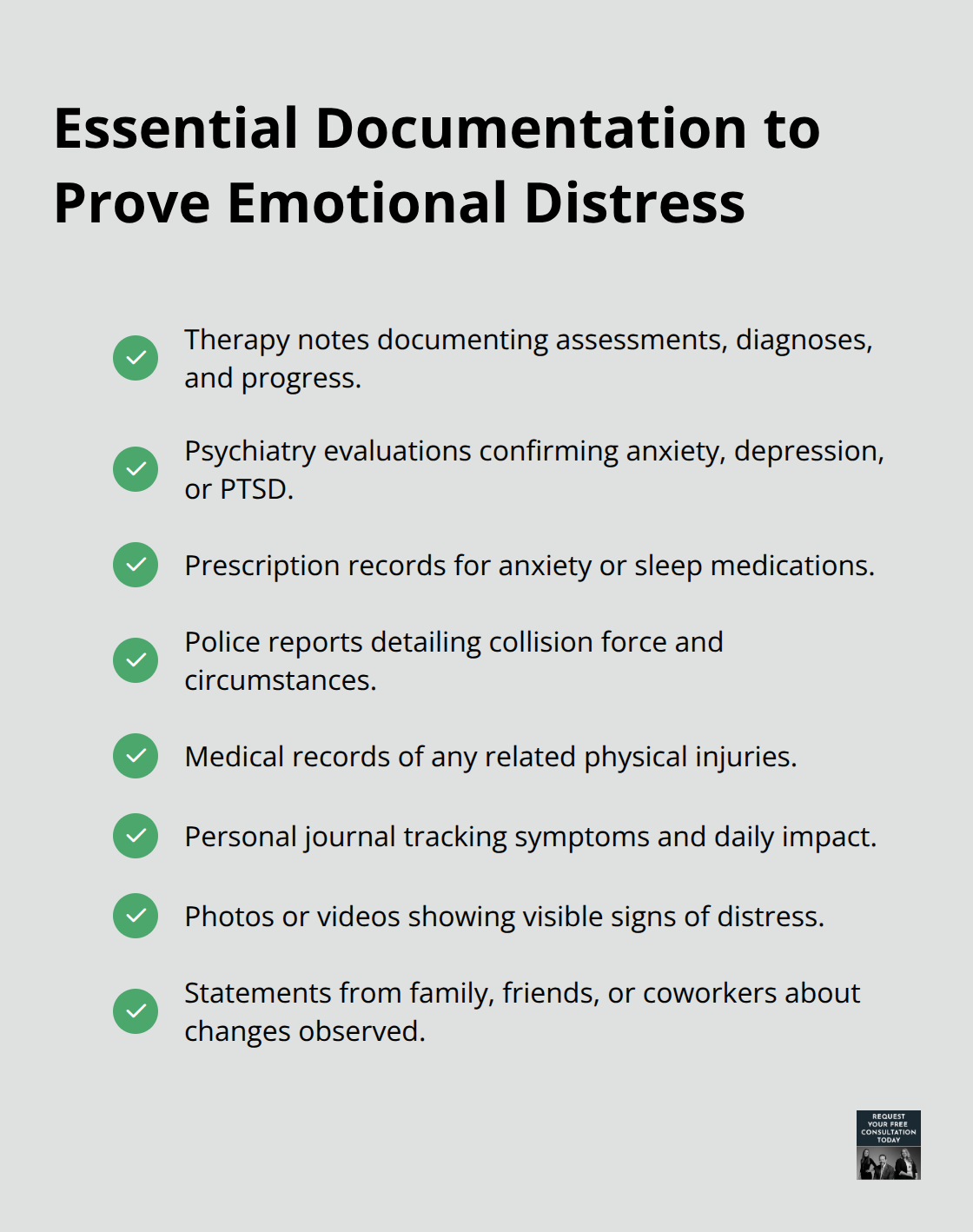
Police reports from the accident scene establish the collision’s force and circumstances, which courts use to evaluate whether emotional distress was a reasonable consequence. Medical records showing physical injuries strengthen your case because California recognizes that emotional trauma often accompanies physical harm (though you can pursue emotional distress claims independently). Maintain a personal journal documenting your symptoms, how they affect your work and relationships, and any behavioral changes like avoiding driving or withdrawing from social activities. Photographs or videos showing visible signs of distress, therapy receipts, and statements from family or coworkers about changes they observed all contribute to proving your suffering was real and measurable.
California’s Two-Year Filing Deadline
You have two years from the accident date to file an emotional distress claim under California Code of Civil Procedure Section 335.1, a deadline that applies to both negligent and intentional infliction cases. This timeline is absolute-missing it means losing your right to compensation entirely, with limited exceptions. The discovery rule can extend this deadline by approximately one year if you didn’t recognize your emotional distress immediately, meaning the clock starts when you discovered or should have discovered the injury. This applies rarely and requires clear evidence that you couldn’t reasonably have known about your psychological condition at the time of the accident.
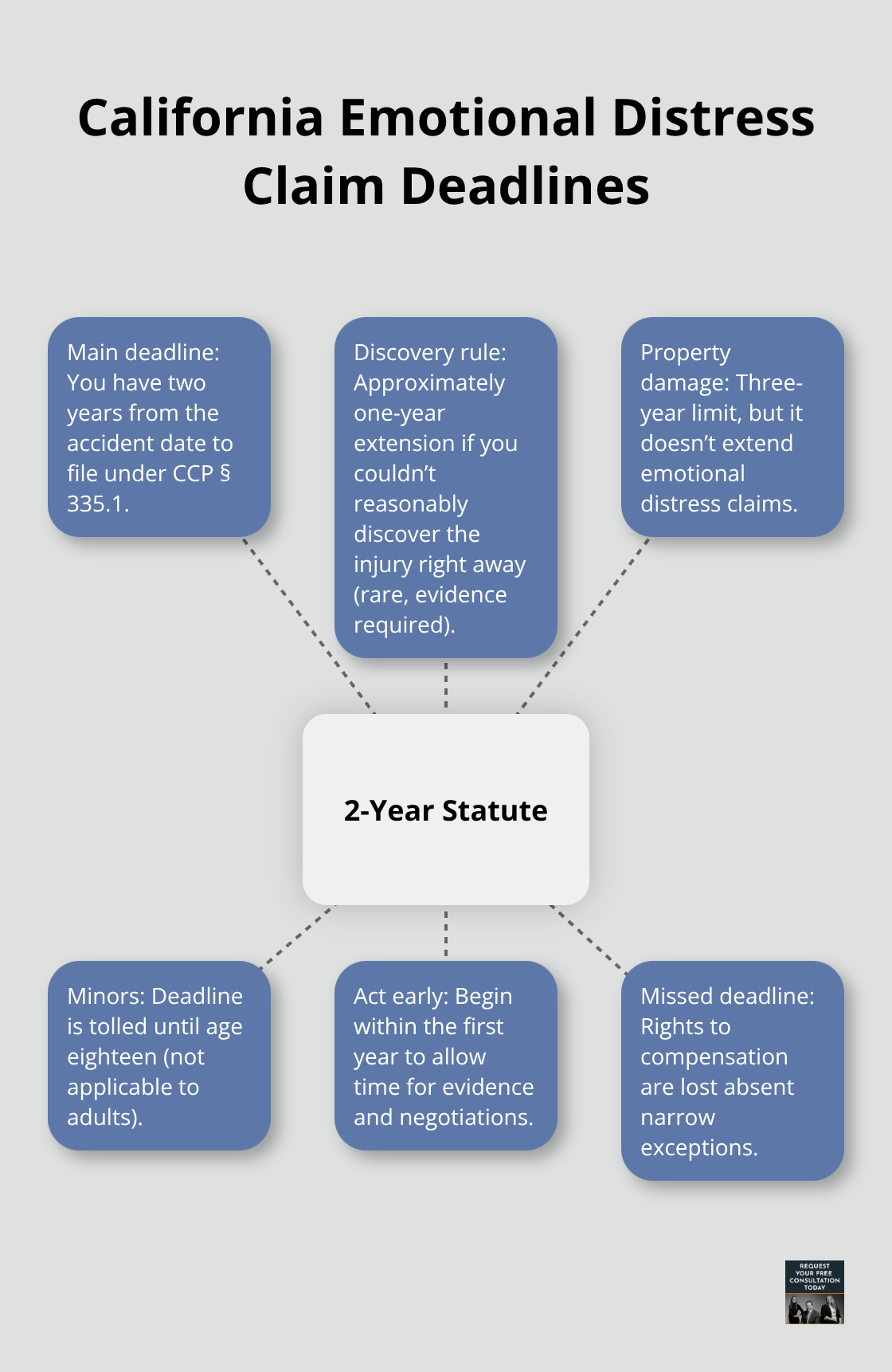
For property damage from the same accident, you have three years, but don’t assume this longer timeline applies to your emotional distress claim. If you were a minor at the time of the accident, the deadline pauses and resumes when you turn eighteen, but this exception doesn’t apply to adults. The safest approach treats the two-year deadline as fixed and begins your claim process within the first year to allow time for evidence gathering and settlement negotiations before time pressure forces inferior decisions.
Why Professional Support Strengthens Your Case
Mental health professionals provide the documentation that transforms your personal experience into legal evidence. A therapist’s diagnosis carries weight in court because it comes from someone trained to assess psychological conditions objectively. Treatment records show the progression of your distress over time, demonstrating that your suffering wasn’t temporary or exaggerated. Psychiatric evaluations that identify PTSD, anxiety disorders, or depression create a clinical foundation for your claim. These professionals also testify about how the accident caused your condition and how it affects your daily functioning. If you live in Santa Cruz County, Schaar & Silva LLP can connect you with mental health professionals who understand how to document your condition in ways that support your legal case. This connection between treatment and legal strategy means your recovery process and your compensation claim work together rather than separately.
Building Your Recovery and Legal Case
Start Mental Health Treatment Within Two Weeks
Schedule an appointment with a mental health professional within the first two weeks after your accident, not months later when memory fades and documentation gaps widen. Therapists, psychiatrists, and counselors who work with trauma survivors understand how to assess your condition in clinical terms that courts recognize. When you call, mention that you were in a car accident and want documentation for a potential legal claim, so they know to maintain detailed notes about your symptoms, diagnoses, and treatment progress. Your initial session should cover what you experienced during and after the collision, how your sleep and appetite have changed, whether you experience panic or flashbacks, and how these symptoms affect your work and relationships. Insurance often covers mental health visits, especially when they follow a documented accident, though some therapists accept payment plans or sliding scale fees if cost becomes a barrier.
The American Psychological Association reports that therapy combined with proper documentation increases settlement values substantially compared to cases without professional mental health records. This isn’t about having a “perfect” therapeutic relationship; it’s about creating a clinical record that proves your suffering was real enough to require professional intervention.
Collect Police Reports and Medical Records Immediately
Request your police report immediately from the Santa Cruz County, Sacramento, or Oakland police department where the collision occurred, as this establishes the accident’s severity and circumstances. Save all medical records from emergency room visits, urgent care, or any physical injuries sustained, because courts recognize that emotional trauma frequently accompanies physical harm. Photograph any visible injuries, vehicle damage, or accident scene details while they remain fresh. These documents form the foundation of your claim by connecting your emotional distress directly to the accident itself.
Document Your Symptoms in a Daily Journal
Create a symptom journal starting today, documenting specific incidents: the date you experienced a panic attack while driving, the night you couldn’t sleep because of nightmares, the work meeting you missed due to anxiety. Include how these symptoms affect your daily functioning, not just that they exist. Gather written statements from family members, friends, or coworkers who noticed changes in your behavior, such as increased irritability, withdrawal from social activities, or fear responses. If your employer accommodated your condition through reduced hours or schedule changes, obtain documentation of this accommodation as evidence of distress severity.
Preserve Financial and Treatment Records
Keep receipts for therapy copays, prescription medications for anxiety or sleep disorders, and any alternative treatments you pursued. These records demonstrate the financial impact of your emotional distress and show that you took your recovery seriously. When you’re ready to pursue compensation, we at Schaar & Silva LLP review all this documentation to identify the strongest evidence and calculate what your claim is worth. We connect you with specialists who can offer the psychological support you require while ensuring their records support your legal position. Our years of experience in personal injury law mean we know exactly which documentation carries weight with insurance companies and courts, so your recovery efforts translate directly into compensation.
Final Thoughts
Your emotional pain after a car accident is real, measurable, and legally recognized in California. The anxiety, depression, nightmares, or fear responses you experience deserve the same attention and compensation as physical injuries. Too many accident victims suffer silently, believing their psychological wounds don’t matter or won’t hold up in court-a misconception that costs them thousands in unrecovered damages.
Car accident emotional distress claims succeed when you document your condition thoroughly and connect with professionals who understand both your recovery and your legal rights. The two-year filing deadline moves faster than you expect, and gaps in documentation weaken your case significantly. Starting mental health treatment immediately serves your healing while building the evidence foundation you need (therapy records, medical documentation, and your personal journal create the clinical proof that transforms your experience into a compensable claim).
We at Schaar & Silva LLP have guided accident victims through this process for years, and we know the path forward. Contact Schaar & Silva LLP for a free case review to understand your rights and recovery options if you live in Santa Cruz County, Sacramento, or Oakland. Your emotional suffering has value, and the law provides a path to compensation that acknowledges your pain and supports your healing.
