

After a car accident in Santa Cruz County, navigating the auto accident settlement process feels overwhelming. Insurance companies move at their own pace, liability gets disputed, and settlement offers often fall short of what you actually need.
We at Schaar & Silva LLP have helped countless accident victims understand exactly what happens at each stage-from that first police report through final payment. This guide walks you through the real timeline, the obstacles you’ll likely face, and how to move forward with confidence.
What Happens Immediately After Your Santa Cruz Accident
The Critical First Hours
The first 24 to 48 hours after an accident determine how smoothly your claim will move forward. Stop at the scene, call 911 if anyone is injured, and wait for police to arrive. The police report becomes your foundation document-insurance companies rely heavily on it, and you’ll reference it throughout your claim. Collect the other driver’s name, license number, vehicle details, and insurance information. Take photos of vehicle damage, road conditions, and the accident scene from multiple angles. Get contact information from any witnesses; their statements often matter more than you’d expect when liability gets disputed later.
Notify your insurance company within 24 hours. California law requires you to report accidents involving injuries or damage over $750 to the DMV within 10 days, according to the California Department of Insurance. Missing this deadline risks license suspension. Write down everything you remember about how the accident happened while it’s fresh-time, weather, traffic patterns, what the other driver said. Keep all receipts, medical records, repair estimates, and correspondence in one place. The California Department of Insurance recommends leaving a note at the scene if you hit an unattended vehicle, then reporting it to police.
How Insurance Companies Process Your Claim
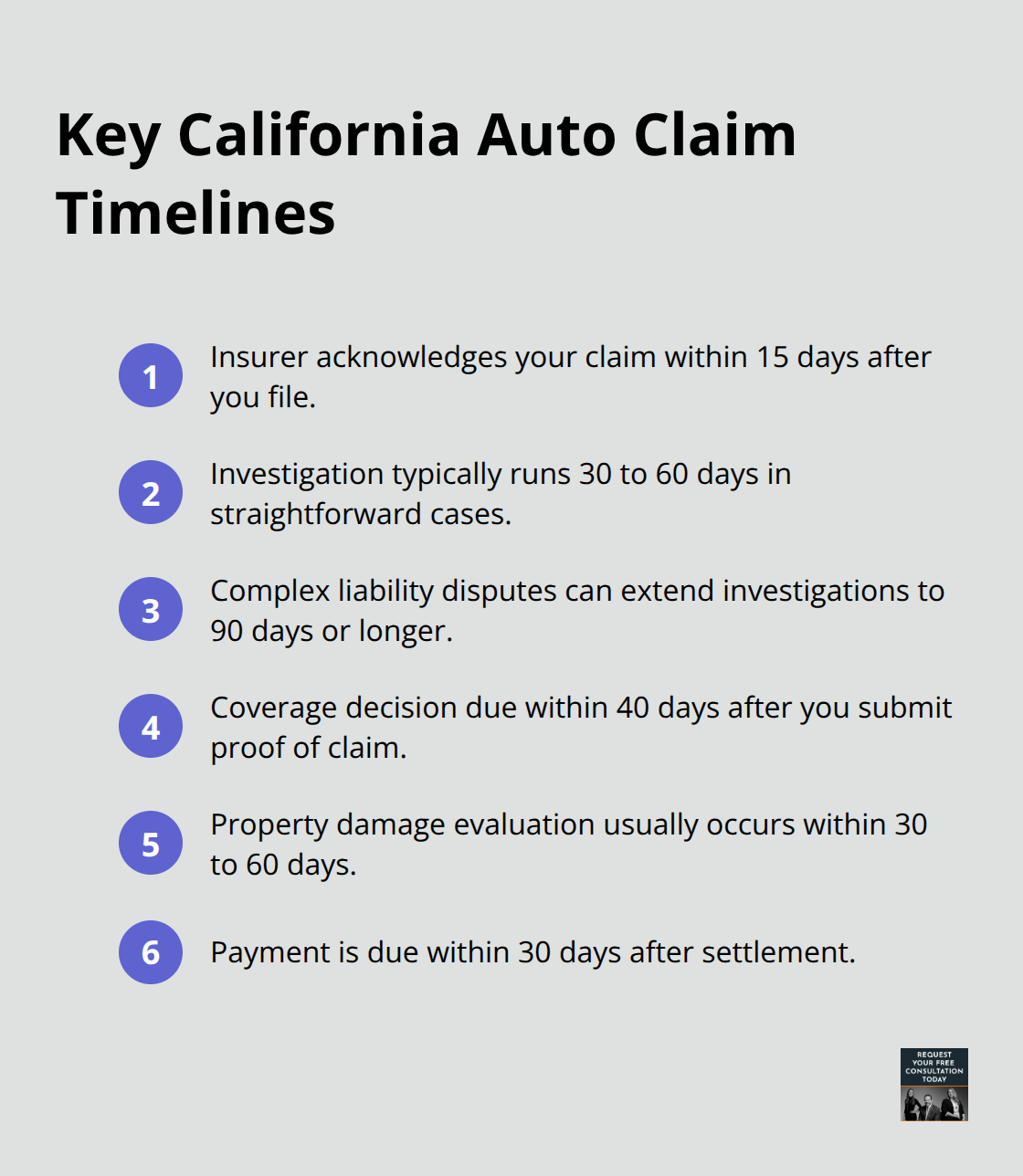
Insurance companies follow a structured process once you file. They’ll contact you within 15 days to acknowledge your claim, then begin their investigation. An adjuster will inspect your vehicle damage and may request additional repair estimates for minor damage. You’ll likely provide a written or recorded statement about what happened; answer factually and stick to what you observed, not assumptions. If you’re claiming medical payments or uninsured motorist coverage, gather your medical documentation immediately.
The insurer will determine liability based on the police report, statements, vehicle damage patterns, and any available dashcam or traffic camera footage. California’s comparative negligence rule means even if you’re partially at fault, you can still recover damages-though your settlement gets reduced by your percentage of fault.
When Liability Becomes Disputed
This is where liability disputes often arise. If the other driver contests fault or their insurance company disputes the police report’s conclusions, settlement timelines stretch significantly. The investigation phase typically takes 30 to 60 days, but complex cases with disputed liability can extend to 90 days or longer. Throughout this period, document everything in writing. Email your adjuster rather than calling; written records protect you if disputes arise later.
The Fair Claims Settlement Practices Regulations require insurers to respond within 15 days to your communications and make a coverage decision within 40 days after you submit proof of claim, so track these deadlines carefully. Understanding these regulatory timelines helps you identify when an insurer falls behind schedule. Once the investigation concludes and liability is established (or disputed), your claim moves into the next phase-where medical treatment and property damage evaluation take center stage in determining your settlement value.
Building Your Settlement Value
Medical Treatment Creates Your Damage Foundation
Medical treatment records form the backbone of your settlement calculation. You must start treatment immediately after the accident, even if injuries feel minor. Insurance companies scrutinize gaps in medical care, interpreting them as evidence that injuries weren’t serious. The California Department of Insurance notes that documented medical treatment directly supports your claim for damages. You should see your doctor within the first week, describe all symptoms accurately, and follow through with prescribed treatment plans. You need to keep every medical receipt, prescription, and bill organized chronologically. If you delay treatment by weeks or months, insurers will argue your injuries resulted from something other than the accident.
Property Damage Evaluation and Valuation
Property damage evaluation typically happens within 30 to 60 days after you file your claim. The insurer’s adjuster will inspect your vehicle and determine whether to repair it or declare it a total loss. California law requires insurers to pay the lesser of repair costs or actual cash value-the vehicle’s fair market value at the time of loss. If the repair estimate exceeds actual cash value by 70 to 80 percent, most insurers will total the vehicle instead. You have the right to choose your own auto body shop under California Insurance Code Section 758.5; insurers must honor your choice and pay reasonable repair costs. You should obtain multiple repair estimates yourself before the adjuster arrives. If you disagree with the insurer’s valuation, you can request an appraisal where each side selects an appraiser, they choose a neutral umpire, and any agreed amount becomes binding. This appraisal process typically adds 60 to 90 days but prevents you from accepting an undervalued offer.
How Insurers Calculate Settlement Offers
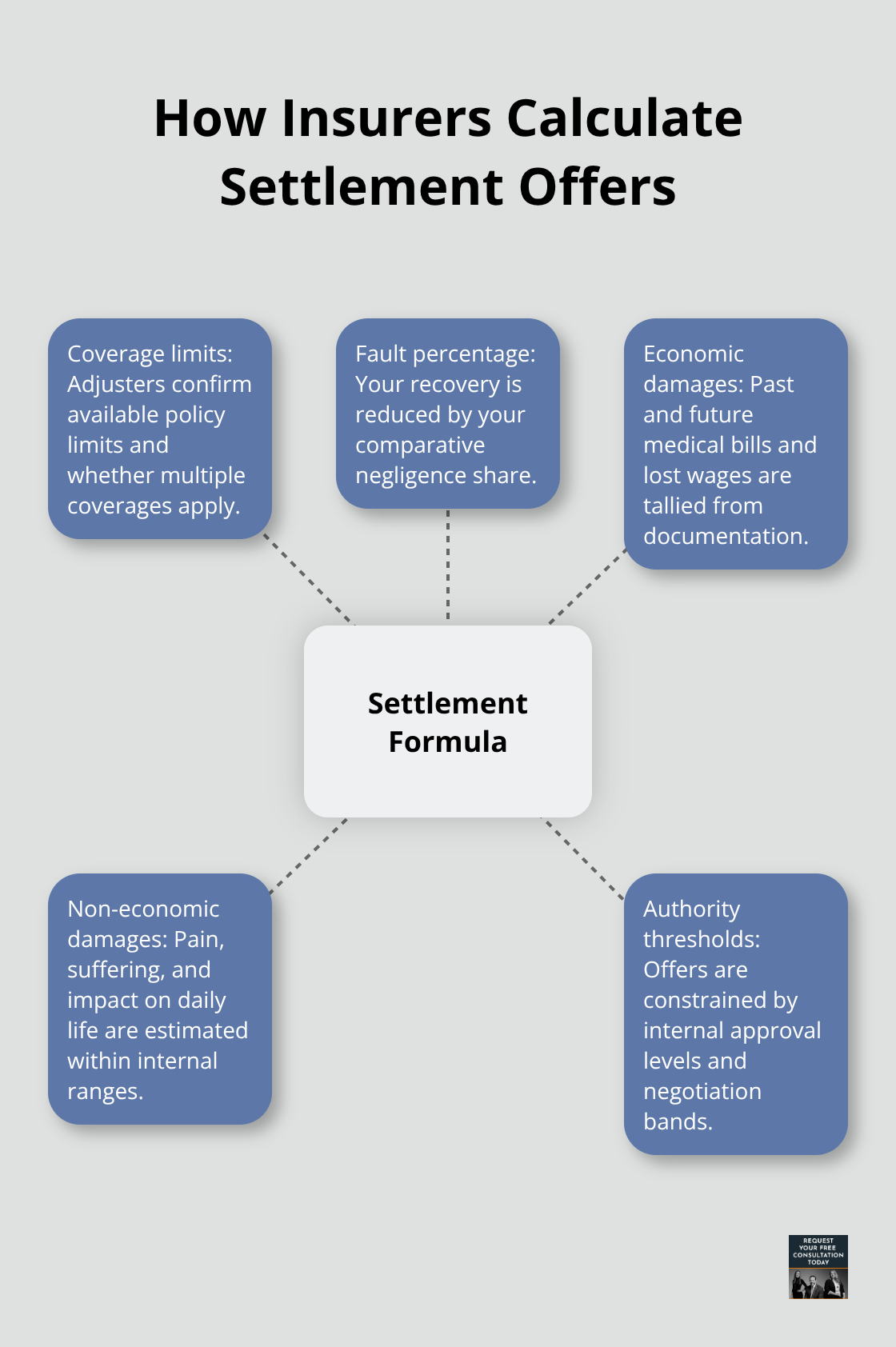
Settlement negotiations usually begin after liability is clear and medical treatment stabilizes. Most cases settle between 12 and 36 months after the accident. Insurance companies calculate settlements using a predictable formula: they verify coverage limits, assess your percentage of fault, compute past and future economic damages, estimate non-economic damages like pain and suffering, and apply internal authority thresholds.
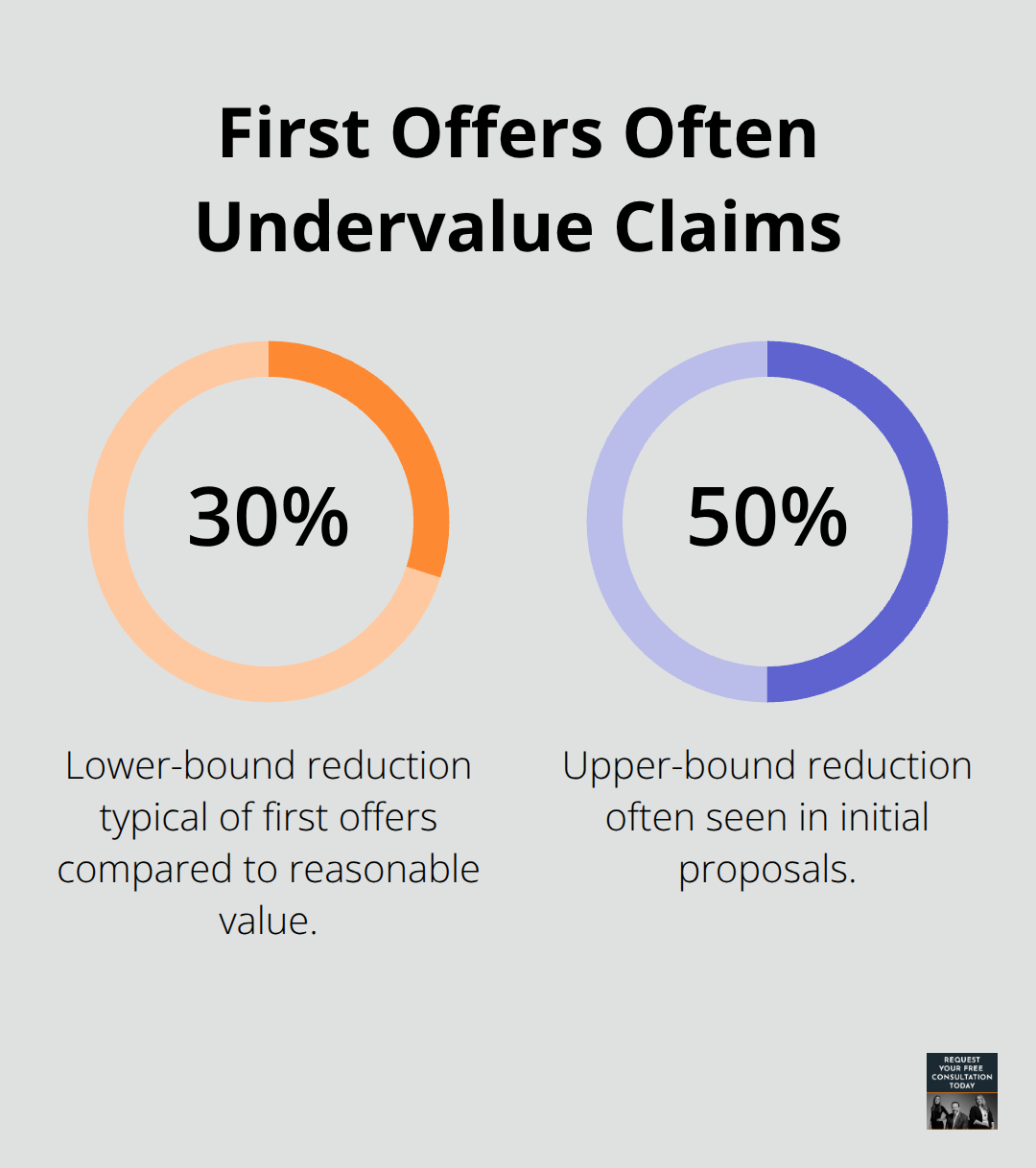
Initial settlement proposals from insurers typically fall 30 to 50 percent below reasonable value. You should never accept the first offer. You need to document all communications in writing through email rather than phone calls. If an insurer refuses a reasonable settlement within policy limits, that refusal can trigger bad faith claims, which often motivate carriers to reconsider their position.
Negotiation Tactics That Protect Your Interests
You should understand that insurers employ standard negotiation tactics designed to minimize payouts. They may request additional medical records, question causation between the accident and your injuries, or propose structured settlements that reduce their immediate payout. You can counter these tactics by maintaining detailed records, obtaining independent medical evaluations, and presenting clear documentation of all damages. The negotiation phase tests your resolve-insurers count on accident victims accepting inadequate offers out of frustration or financial pressure. You should resist this pressure. When disputes arise over settlement amounts or liability, the path forward requires careful strategy and thorough documentation of every interaction with the insurance company.
What Really Delays Your Settlement
Disputed Liability Stops Settlements Cold
Disputed liability ranks as the single biggest settlement killer in Santa Cruz accident cases. When the other driver’s insurance company contests fault, your settlement timeline extends from months into years. The investigation phase typically runs 30 to 60 days, but liability disputes can stretch investigations to 90 days or longer. During this period, insurers request additional evidence: dashcam footage, traffic camera recordings, accident reconstruction reports, and witness statements taken under oath. The Fair Claims Settlement Practices Regulations require insurers to respond within 15 days to your communications and decide within 40 days after you submit proof of claim, yet many carriers deliberately slow-walk investigations when liability remains unclear.
You should document every communication in writing through email rather than phone calls. If an adjuster claims they never received your medical records or repair estimates, written email confirmation protects you. This paper trail becomes invaluable if you later need to prove the insurer violated settlement regulations or acted in bad faith.
Undervalued Settlement Offers Shortchange You
Insurers calculate initial proposals using internal formulas that systematically underestimate non-economic damages like pain and suffering. Initial settlement offers typically fall 30 to 50 percent below reasonable value, according to standard insurance industry practices. The Insurance Research Council found that represented claimants recover approximately 3.5 times more than unrepresented claimants, which explains why insurers count on you accepting inadequate first offers out of frustration or financial pressure.
You should never accept the first proposal. Request detailed justifications for how the insurer calculated each damage component. If they refuse reasonable settlement within your policy limits, that refusal can trigger bad faith claims under California law, which often motivates carriers to reconsider their position. This leverage point shifts negotiation dynamics significantly in your favor.
Insurance Company Tactics Create Artificial Delays
Carriers employ delay tactics specifically designed to exhaust accident victims financially. They may request duplicate medical records you already provided, question causation between the accident and your injuries, propose structured settlements that reduce their immediate payout, or simply ignore your settlement demand for weeks. Some insurers know that unrepresented claimants facing medical bills and lost wages eventually accept lower offers.
They may require independent medical examinations by physicians they select, then dispute the treating doctor’s conclusions. They may declare your vehicle a total loss and offer salvage value calculations that shortchange you significantly. You should recognize these tactics for what they are: negotiation pressure, not legitimate claim evaluation. Insurance companies use these methods because they work on accident victims who lack legal guidance or financial resources to hold firm during extended negotiations.
Final Thoughts
Once you reach a settlement agreement, read every word before signing anything. Your settlement document outlines exactly what the insurer will pay, what claims you release, and any conditions attached to the payment. Verify that all damage components match your calculations: medical expenses, lost wages, property damage, and pain and suffering amounts.
After settlement, you receive payment within 30 days according to California’s Fair Claims Settlement Practices Regulations. If you financed vehicle repairs through a medical lien, those providers get paid from your settlement before you receive your portion (this payment structure prevents surprises when your check arrives smaller than expected). Working with legal representation throughout your auto accident settlement process changes the outcome significantly.
We at Schaar & Silva LLP help Santa Cruz accident victims navigate every stage of the settlement process, from initial claim filing through final payment. Contact Schaar & Silva LLP for guidance on settlement disputes or inadequate offers. The California Department of Insurance provides additional resources through their consumer hotline and online complaint system.
