
After a car accident, the settlement timeline can feel uncertain and overwhelming. We at Schaar & Silva LLP know that people in Santa Cruz County, Sacramento, and Oakland need clear answers about what happens next.
This guide walks you through each phase of the settlement process, from the first hours after the crash to final payment. You’ll learn realistic timeframes and what factors speed up or slow down your case.
What to Do Right After the Crash
Secure the Scene and Report to Authorities
The first hours after a car accident determine how smoothly your settlement process unfolds. Move to safety immediately if the vehicles are drivable and no one is severely injured. If anyone is hurt or the vehicles cannot move safely, call 911 right away. California law requires you to report accidents involving injuries or property damage exceeding $750 to the DMV within 10 days according to California Vehicle Code guidance. Failure to report can result in license suspension, so this deadline matters.
At the scene, collect the other driver’s name, phone number, address, driver’s license number, vehicle make and model, license plate, and insurance company details. Document everything at the scene with photos of vehicle damage, road conditions, traffic signs, and the accident scene from multiple angles. Get names and contact information from any witnesses who saw what happened.
Notify Your Insurance Company Promptly
Call your insurance company within 24 hours and report the accident; most insurers acknowledge claims within 15 days according to California’s Fair Claims Settlement Regulations. Provide factual information about what occurred, but avoid admitting fault or signing anything that acknowledges responsibility. Do not accept offers from the other driver to pay out-of-pocket or agree to settle on the spot.
Document Your Medical Condition
Seek medical attention even if you feel fine, since some injuries like whiplash or internal injuries appear hours or days later. Medical records become the foundation of your settlement value, so document every visit, treatment, and expense. Keep receipts for all medical bills, pharmacy costs, and transportation to appointments. Photograph visible injuries like bruises or cuts.
Report your injuries to your insurance adjuster in writing and maintain a detailed record of how the accident affects your daily life-lost work days, inability to exercise, sleep disruption. This documentation directly impacts your settlement amount. The Insurance Research Council reports that represented claimants recover on average 3.5 times more than unrepresented claimants, even after legal fees.
Protect Your Claim From the Start
An attorney handles communications with adjusters from the start and prevents you from saying something that weakens your claim. Do not give recorded statements or post about the accident on social media, as insurers use these against you during negotiations. With proper documentation and legal guidance in place, you move into the formal claim investigation phase where timelines and settlement value take shape.
How Settlement Timelines Actually Work
The Three Phases of Settlement
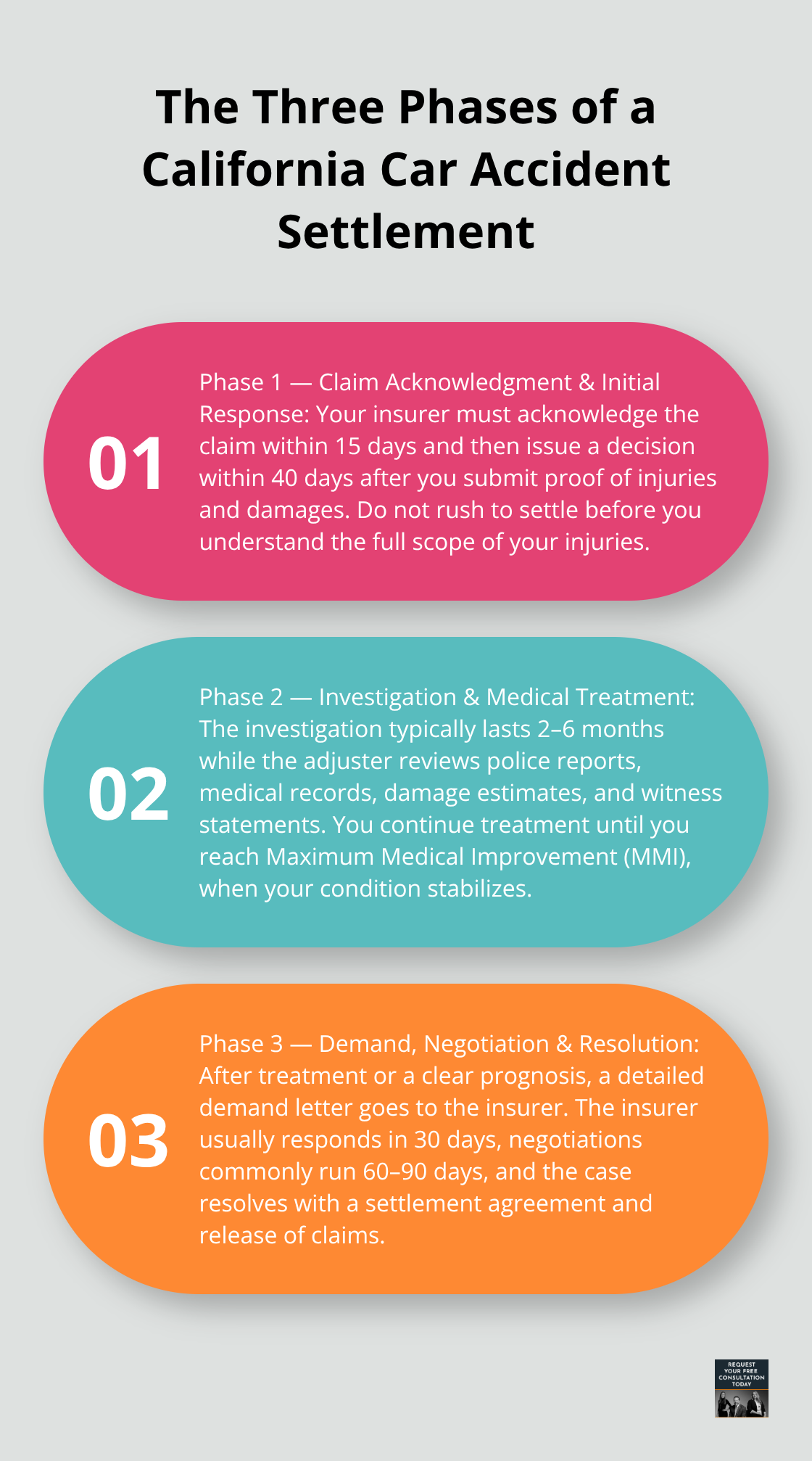
The settlement process moves through three distinct phases, each with realistic timeframes based on injury severity and insurance responsiveness. Once you file a claim, your insurer must acknowledge it within 15 days according to California’s Fair Claims Settlement Regulations, then respond within 40 days after you submit proof of your injuries and damages. The investigation phase typically lasts 2–6 months and involves your adjuster reviewing the police report, medical records, vehicle damage estimates, and witness statements. During this time, you continue medical treatment until you reach Maximum Medical Improvement-the point where your condition stabilizes and further recovery becomes unlikely.
Settling before reaching MMI costs you significantly because you’ll underestimate future medical expenses and lose the ability to claim additional treatment costs later.
Settlement Duration by Injury Type
Most California car accident settlements resolve in 3–9 months for straightforward cases with minor to moderate injuries and clear liability. If your injuries are severe, involve multiple surgeries, or include brain or spinal damage, expect 12–24 months or longer. Disputes over who caused the accident significantly extend timelines; cases with obvious fault like rear-end collisions settle faster than those requiring investigation into multiple parties or conflicting statements.
Demand Letter and Negotiation Phase
After treatment concludes or your doctor provides a clear prognosis, you or your attorney sends a detailed demand letter to the insurer listing medical bills, lost wages, ongoing treatment costs, and pain and suffering with a specific settlement request. The insurer typically responds within 30 days with a counteroffer, and negotiations usually last 60–90 days. Straightforward cases often settle within this window if damages fall within the policy limit.
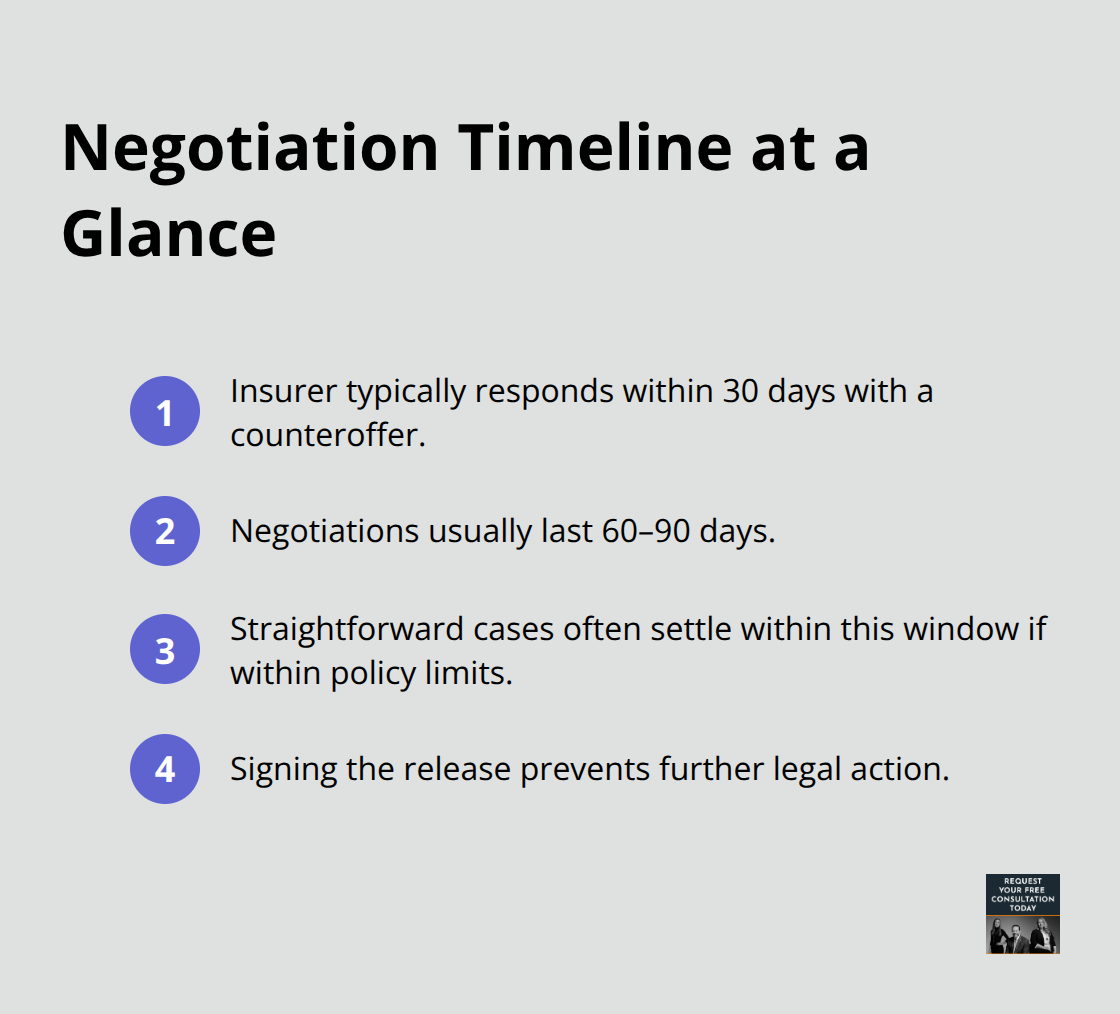
Once both sides agree on an amount, a settlement agreement and release of claims are prepared; signing this release prevents you from pursuing further legal action.
Payment and Distribution
Payment arrives 2–6 weeks after you sign, usually deposited within 10–21 business days into a trust account. Your attorney deducts legal fees and pays medical liens before distributing the remainder to you. The Insurance Research Council reports that represented claimants recover on average 3.5 times more than unrepresented claimants, even after legal fees-a significant advantage when navigating these complex negotiations.
What Slows Down or Accelerates Your Case
Strong evidence like dashcam footage, police reports, and witness statements accelerates resolution by eliminating liability disputes early. Disorganized documentation, repeated requests for the same records, or changes in adjusters restart the review process and add months to your case. If negotiations stall or the insurer’s offer is unreasonably low, filing a lawsuit moves the case to litigation, which extends timelines to 1–3+ years and involves discovery, depositions, and potentially trial. Understanding these variables helps you prepare for what comes next in your specific situation.
What Really Slows Down Your Settlement
How Injury Severity Controls Your Timeline
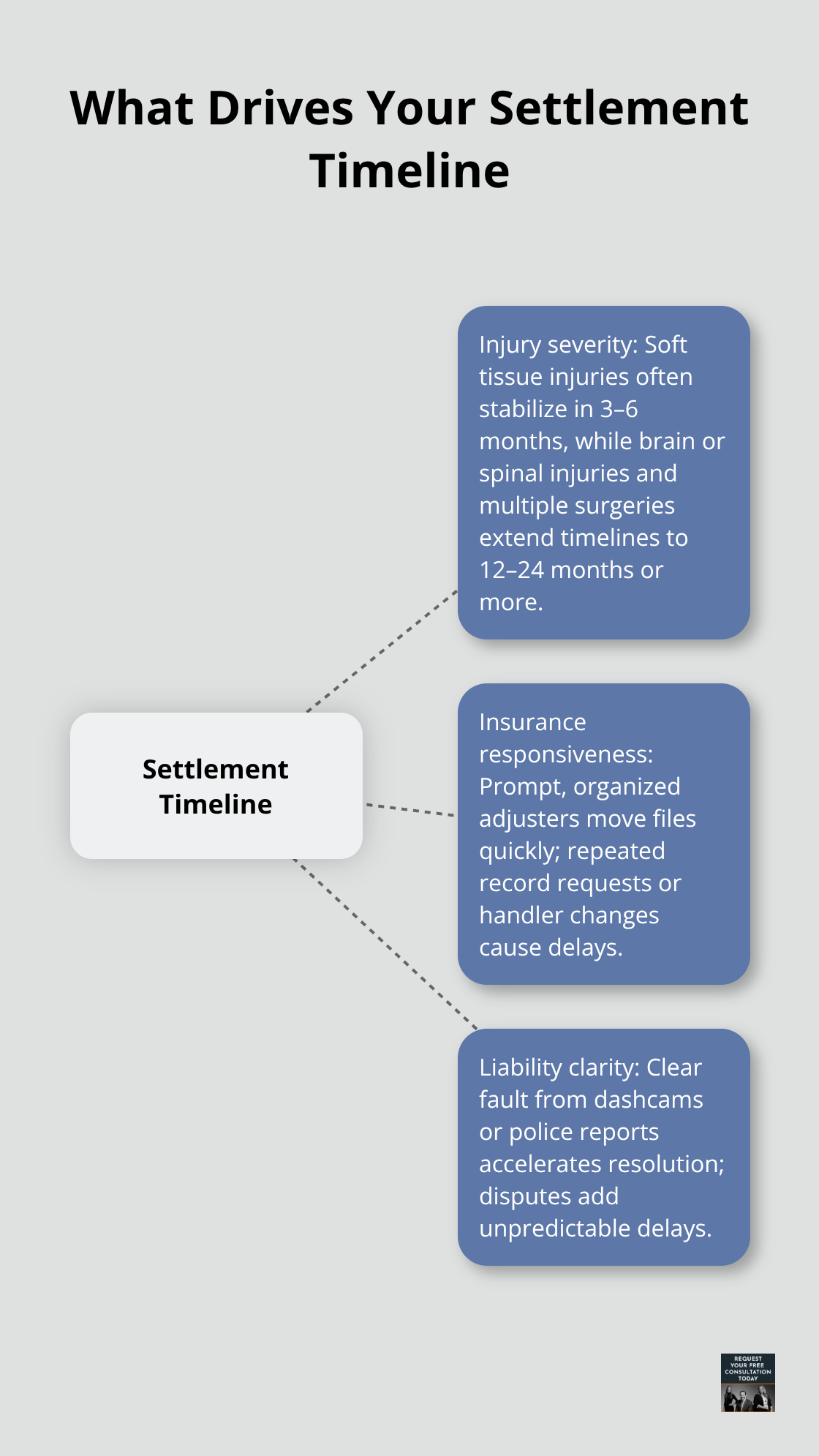
Injury severity determines settlement speed more than any other factor, and the data is clear about timelines. Soft tissue injuries like whiplash stabilize within 3–6 months, allowing settlement to move quickly once you reach Maximum Medical Improvement. Brain injuries, spinal damage, or cases requiring multiple surgeries stretch timelines to 12–24 months or longer because treatment itself takes time and your medical prognosis must be certain before settlement discussions can conclude. If your case involves catastrophic injury or disputed liability, expect 2–4 years or more.
The Insurance Research Council found that represented claimants recover on average 3.5 times more than unrepresented claimants, even after legal fees. This advantage exists partly because attorneys know how to value complex injury cases accurately and refuse lowball offers that would lock you into inadequate compensation before your full medical picture emerges.
Insurance Company Responsiveness Matters More Than You Think
Insurance company responsiveness creates the second major variable in settlement timing. Some adjusters respond to requests within days and move files through their review process efficiently; others request the same medical records repeatedly, change case handlers mid-file, or deliberately delay responses to pressure you into accepting lower offers.
If your adjuster requests documentation you already submitted, ask for written confirmation of what they need and when they need it. This prevents circular requests that add months to your case. Document every communication in writing so you have a clear record of what you’ve provided and when.
Liability Disputes Add Unpredictable Delays
Liability disputes add the most unpredictable delays because they require investigation, expert opinions, or witness depositions before either side commits to a settlement figure. Rear-end collisions and clear red-light violations settle faster because liability is obvious; multi-vehicle accidents, left-turn collisions, or cases with conflicting witness statements require more evidence.
Dashcam footage, police reports identifying fault, and credible witness statements eliminate liability disputes early and accelerate resolution significantly. If liability remains unclear after 3–4 months of investigation, filing a lawsuit often moves the process forward because it forces both sides to commit resources and deadlines rather than allowing indefinite delay.
When to Consider Legal Action
Strong evidence speeds settlement considerably, but weak evidence or disputed fault can trap your case in negotiation limbo. An attorney evaluates whether your case has sufficient evidence to support your claim and advises whether settlement negotiations or litigation serves your interests better. If the insurer’s offer falls far below what your injuries warrant, litigation may be your path to fair compensation, even though it extends your timeline to 1–3+ years.
Final Thoughts
Settlement timeline auto crash cases in Santa Cruz County, Sacramento, and Oakland follow predictable patterns once you understand the variables at play. Most straightforward cases resolve in 3–9 months, while severe injuries or liability disputes extend timelines to 12–24 months or longer. The key is reaching Maximum Medical Improvement before settlement discussions conclude and maintaining organized documentation throughout your recovery.
What you can realistically expect depends on three factors: injury severity, insurance company responsiveness, and liability clarity. Soft tissue injuries settle faster than brain or spinal damage, responsive adjusters move files efficiently while uncooperative ones request duplicate records, and clear liability from dashcam footage or police reports accelerates resolution.
The Insurance Research Council reports that represented claimants recover on average 3.5 times more than unrepresented claimants, even after legal fees (a significant advantage when navigating these complex negotiations).
An attorney prevents you from making statements that weaken your claim, handles all communications with adjusters, values your case accurately, and refuses unreasonable offers. When negotiations stall, your attorney evaluates whether litigation serves your interests better than continued settlement discussions. Contact us for a free consultation to discuss your specific situation and next steps.
