
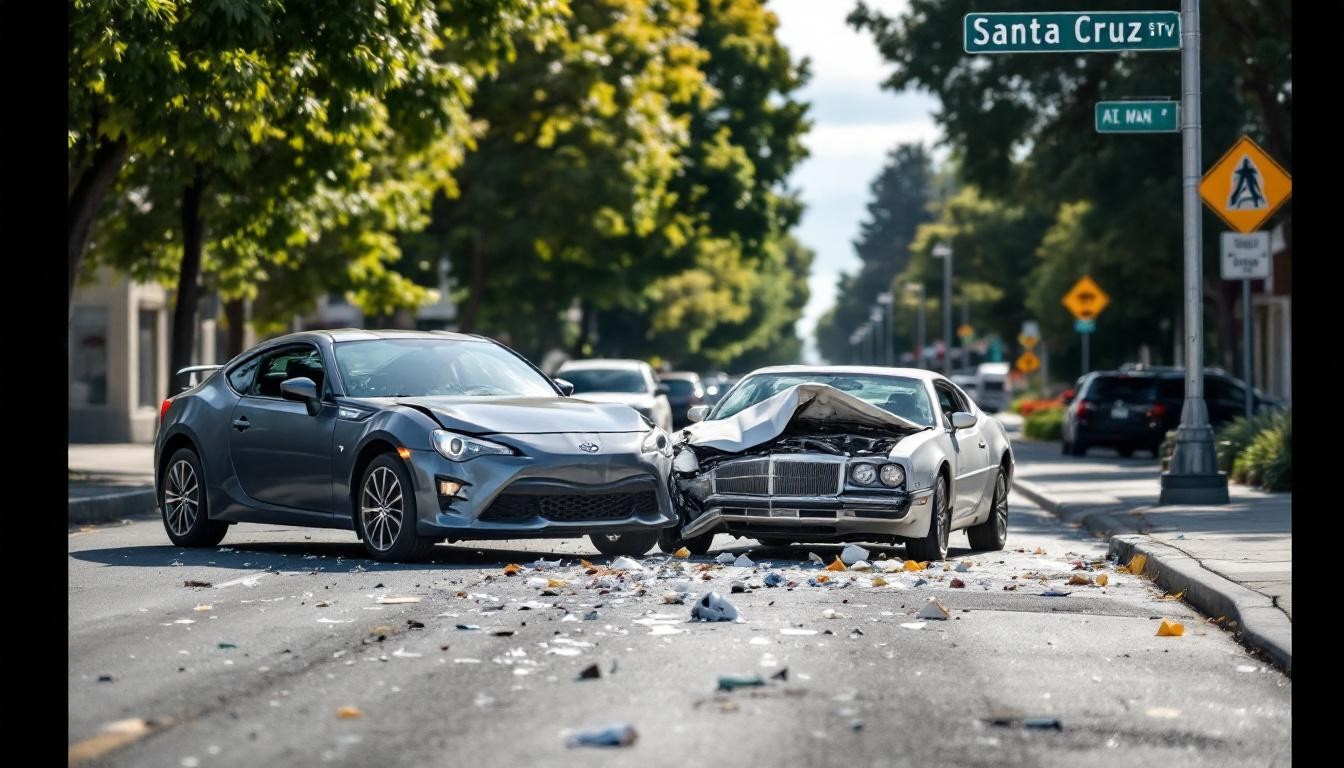
A Santa Cruz auto accident can turn your life upside down in seconds. Medical bills pile up, insurance companies call, and you’re left wondering what to do next.
At Schaar & Silva LLP, we’ve helped countless accident victims in Santa Cruz County navigate this process and recover what they deserve. This guide walks you through the critical steps that protect your rights from the moment the accident happens.
What to Do Immediately After Your Santa Cruz Accident
The first minutes after a crash determine how strong your claim becomes. Most people freeze or panic, which costs them later. Move to safety first-if vehicles are drivable and traffic allows, pull to the shoulder or parking lot away from moving traffic. Turn on hazard lights. Call 911 if anyone is injured, even slightly. Santa Cruz County Sheriff’s Office will dispatch officers to document the scene, and that official report becomes critical evidence. Don’t leave the scene; California law requires you to stay and provide information.
Photograph Everything Before Anyone Moves
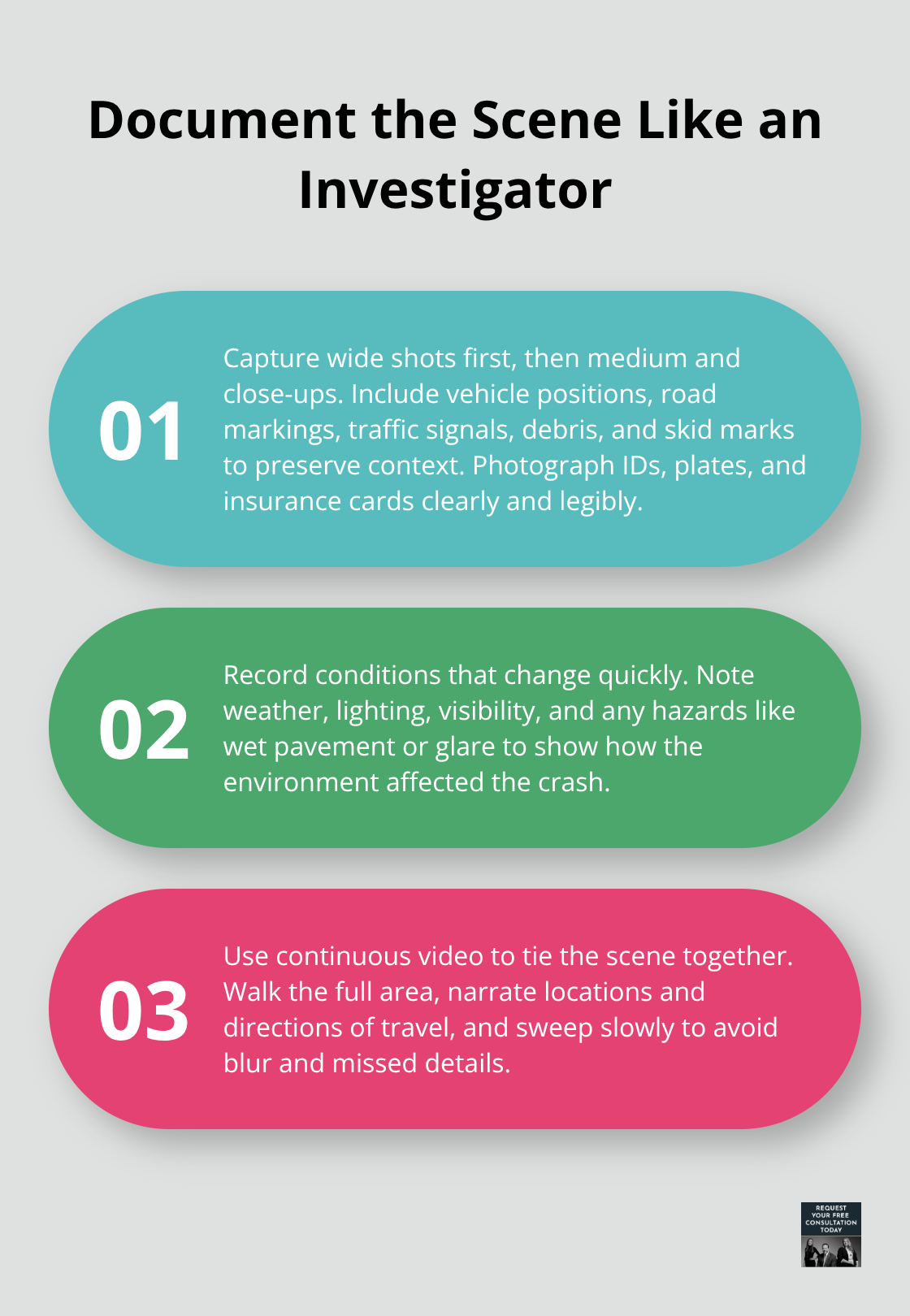
Your phone camera is your most valuable tool. Take photos of vehicle damage from multiple angles, road conditions, traffic signals, lane markings, skid marks, and any visible injuries. Photograph the other driver’s license plate, driver’s license, and insurance card directly. The Santa Cruz County Sheriff’s Office raw accident data shows that detailed scene documentation significantly strengthens claims, yet most victims take no photos at all. Weather conditions matter too-photograph wet roads, glare, or poor visibility if relevant. Don’t wait; insurance adjusters and opposing counsel will visit the scene within days, and conditions change. Videos work better than photos because they show context and movement. Spend two minutes recording a walking tour of the accident scene.
Get Names, Numbers, and Witness Information
Exchange driver’s license numbers, full names, phone numbers, addresses, insurance company names, and policy numbers with the other driver. Write down their vehicle make, model, color, and license plate. Do not discuss fault or apologize-anything you say can be used against you later. If witnesses are present, get their full names and phone numbers immediately. Most witnesses leave within minutes. Ask them to stay until police arrive if possible. The police report will list some witnesses, but having direct contact information helps your case because you can follow up later. Ask witnesses what they saw before, during, and after the collision. Let them describe what happened naturally without coaching.
Report to Police and Your Insurance Company
California requires filing an SR-1 accident report with the Department of Motor Vehicles within 10 days if there is injury, death, or property damage over 1,000 dollars. The Santa Cruz County Sheriff’s Office will typically file this for you if they respond to the scene. Get the case number and report number from the officer. Request a copy of the police report-this document is foundational for any claim. Notify your insurance company the same day, even if you weren’t at fault. Provide only factual information: location, time, vehicles involved, and injuries. Don’t speculate about fault. Your insurer will assign an adjuster, but that person works to minimize payouts, not maximize your recovery. Understanding how fault actually gets determined in California will shape your next moves and help you prepare for what comes ahead.
Understanding Your Legal Rights and Options
California operates under an at-fault system, meaning the driver responsible for causing the accident pays for damages through their insurance or a civil judgment. Fault determination isn’t guesswork-it rests on concrete evidence. Police reports document scene conditions and officer observations, but they don’t assign fault officially. Insurance adjusters review the report, photos, witness statements, and vehicle damage patterns to build their case. The adjuster’s job is to minimize what their company pays, so their fault determination favors their insured driver. This is why you need independent documentation before the adjuster arrives.
Evidence That Determines Fault
Witness statements matter significantly because neutral observers carry more weight than either driver’s account. If you have video footage from a nearby business or dashcam recording, that evidence often settles fault questions immediately. Accident reconstruction specialists analyze vehicle damage, skid marks, and physics to determine impact angles and vehicle positions at collision. These specialists cost between 1,500 and 5,000 dollars but become invaluable when fault is genuinely disputed.
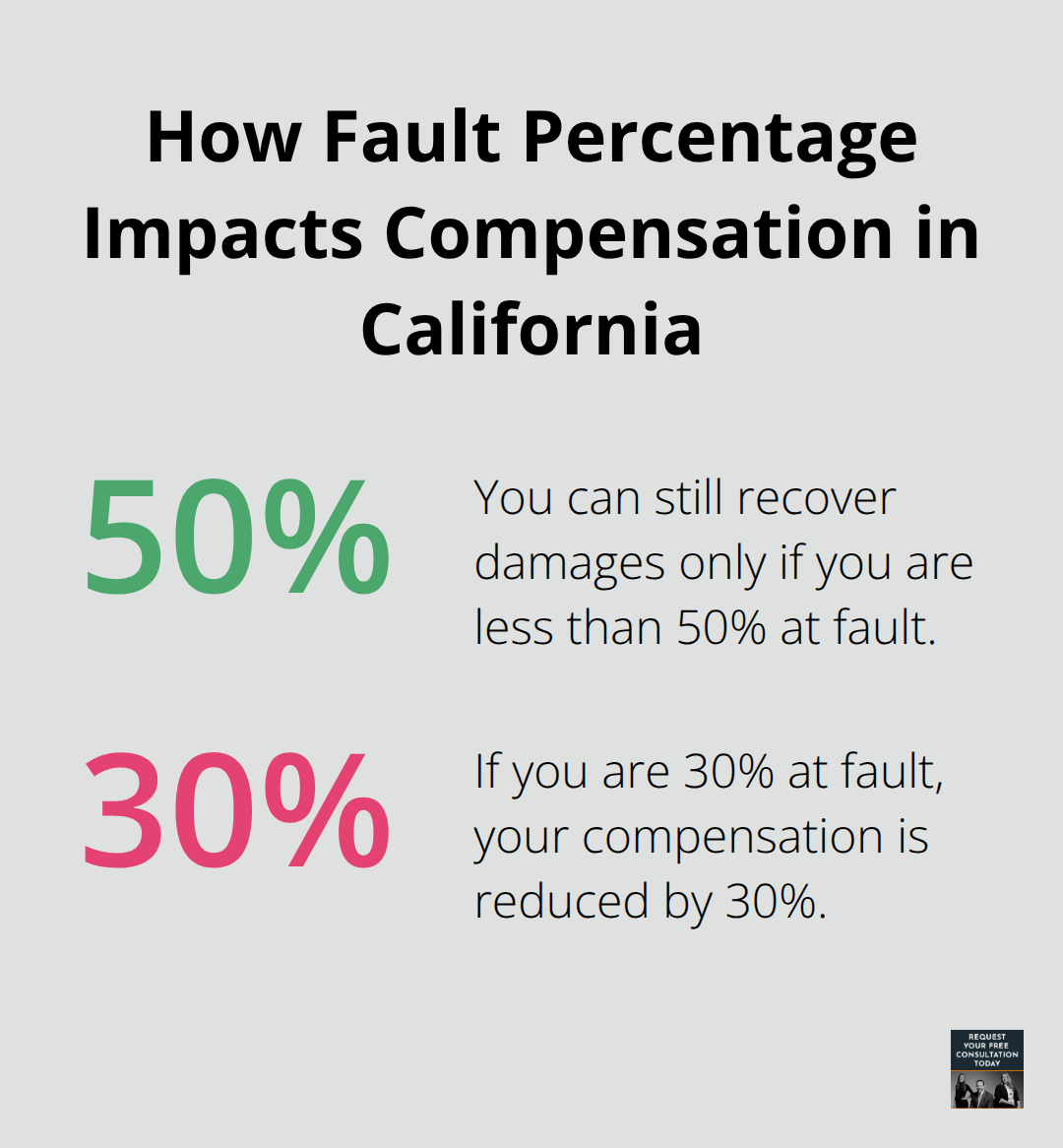
California’s comparative negligence rule allows you to recover damages even if you share some fault, provided you’re less than 50% responsible. If you’re found 30% at fault, your compensation reduces by 30%. This means a 100,000 dollar claim becomes 70,000 dollars.
The burden falls on you to prove the other driver bears primary responsibility.
What Damages Actually Cover
California law allows recovery for medical expenses, lost wages, vehicle repair or replacement, and non-economic damages like pain and suffering. Medical bills include emergency room visits, surgery, physical therapy, and ongoing treatment related to your injuries. Lost wages cover time away from work during recovery and reduced earning capacity if injuries cause permanent disability.
Vehicle damage claims must reflect fair market value or repair costs, whichever is lower. Insurance companies often undervalue property damage by 10 to 20 percent, so obtaining independent repair estimates protects you. Pain and suffering damages are harder to quantify but typically range from 1.5 to 5 times your medical expenses depending on injury severity. A serious injury with 50,000 dollars in medical bills might support 75,000 to 250,000 dollars in pain and suffering claims. Insurance adjusters rarely offer fair pain and suffering amounts without pressure.
The statute of limitations for personal injury claims is two years from the accident date in California, meaning you must file a lawsuit by then or lose your right to sue. Property damage claims have a three-year window. Missing these deadlines eliminates your legal options entirely.
Insurance Claims Versus Taking Legal Action
Your insurance claim is the fastest path to compensation if the other driver’s coverage is adequate. California’s minimum liability coverage is 15,000 dollars per person and 30,000 dollars per incident for bodily injury, plus 5,000 dollars for property damage. These limits are dangerously low. A serious injury with 75,000 dollars in total damages exceeds the per-person minimum by 60,000 dollars.
If the at-fault driver carries only minimum coverage, you’re left pursuing additional recovery through your own uninsured or underinsured motorist coverage if you have it, or through a personal injury lawsuit. Insurance adjusters push for quick settlements because speed favors the insurance company. A settlement offer arriving two weeks after your accident, before you’ve completed medical treatment, is almost always too low. Gather all medical documentation and treatment plans before accepting any settlement.
Personal injury lawsuits take longer-typically 6 months to 2 years-but result in significantly higher awards when injuries are serious. The threat of litigation often motivates insurance companies to increase settlement offers substantially. You don’t need to file a lawsuit immediately; most cases settle during the negotiation phase when both sides understand the strength of evidence and potential jury verdict amounts. Understanding these options positions you to make informed decisions about your claim, which leads directly into recognizing the mistakes that undermine your position.
Common Mistakes People Make After an Accident
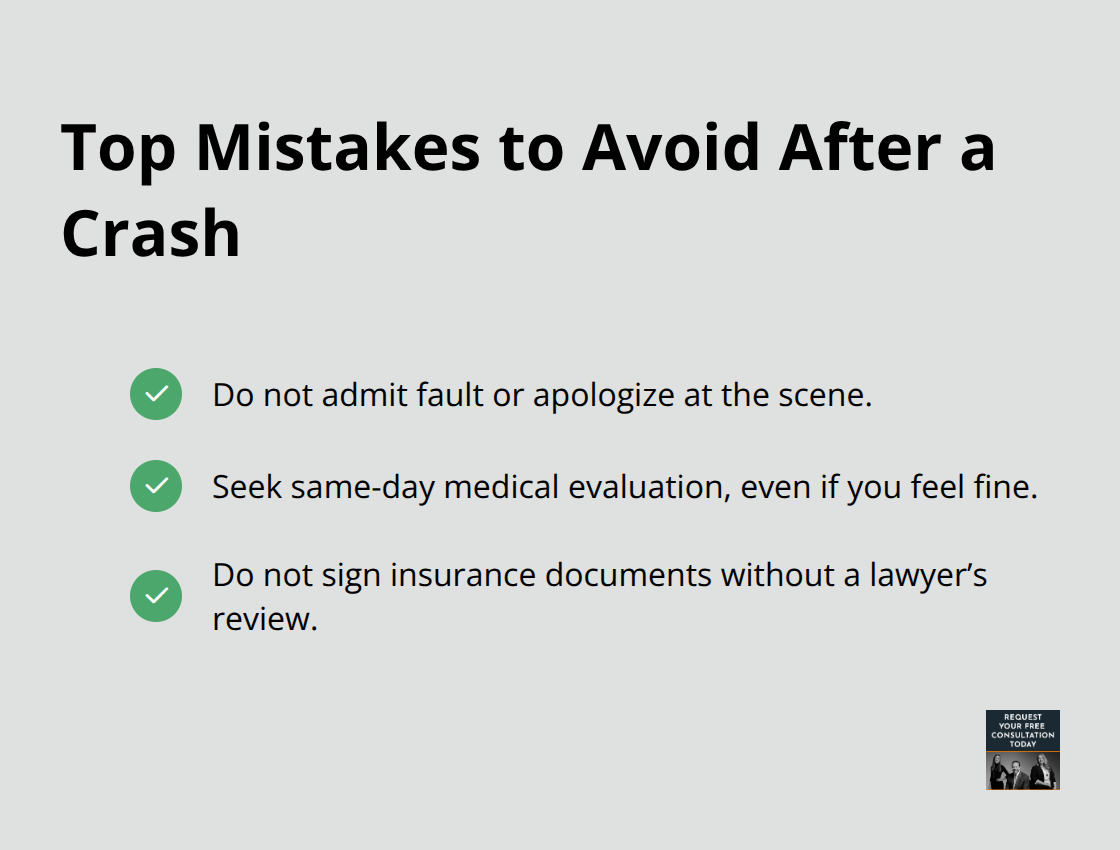
The moments after a crash test your judgment when emotions run high and adrenaline clouds thinking. Insurance companies and opposing counsel count on you making errors that weaken your position. The most damaging mistake happens immediately: admitting fault or apologizing at the scene.
Admitting Fault Costs You Money
Saying sorry, even from compassion, constitutes an admission of liability that adjusters will cite repeatedly. Insurance companies train their adjusters to document every word you speak because casual statements like “I didn’t see you coming” or “I was going too fast” become evidence against you. California law doesn’t require you to apologize or discuss fault at the scene, and doing so directly reduces your settlement value.
One study of insurance claim files showed that drivers who apologized at the scene received settlement offers 15 to 25 percent lower than those who remained silent about fault. Stick to factual statements only: where the vehicles were, what time it happened, and who was involved. Let the evidence speak instead of your words.
Waiting Too Long for Medical Treatment
The second critical error follows closely: waiting for medical attention because you feel fine or want to avoid hospital bills. Adrenaline masks injury symptoms for hours or even days. Whiplash, internal injuries, and traumatic brain injuries don’t always hurt immediately. Insurance adjusters exploit gaps between accident dates and first medical treatment by claiming injuries developed later and weren’t caused by the crash.
If you wait three weeks to see a doctor, the adjuster argues your injuries came from something else entirely. Seek medical evaluation the same day as the accident, even for minor collisions. Emergency room visits create official medical records that link your injuries directly to the crash. Those records become the foundation for your compensation claim. Medical documentation matters because California courts and juries need proof that injuries resulted from the accident, not pre-existing conditions or subsequent events.
Signing Documents Without Legal Review
The third mistake proves equally costly: signing documents without legal review. Insurance adjusters send settlement agreements, medical authorization forms, and liability releases designed to protect their company, not you. A liability release you sign at the scene can prevent you from pursuing additional compensation later if your injuries worsen.
Medical authorization forms grant adjusters access to your entire medical history, not just accident-related treatment, giving them ammunition to claim pre-existing conditions caused your current injuries. Never sign anything an adjuster presents without reading it completely and having a lawyer review it first. Insurance companies count on victims signing quickly because they’re stressed, in pain, or desperate for money.
A release signed under pressure remains legally binding even if you later realize you gave up substantial compensation. The adjustment process moves fast, but your timeline for recovery moves slower. Taking one hour to have a lawyer review documents before signing protects your rights far more effectively than rushing to settle. Insurance adjusters push for quick settlements because speed favors the insurance company-a settlement offer arriving two weeks after your accident, before you’ve completed medical treatment, is almost always too low.
Final Thoughts
After a Santa Cruz auto accident, the decisions you make in the following weeks determine whether you recover fair compensation or accept an inadequate settlement. Insurance adjusters have training, resources, and financial incentives to minimize what they pay you, while you manage recovery and medical decisions simultaneously. This imbalance is why legal representation matters-an attorney investigates the accident independently, handles all communication with insurance companies, and negotiates aggressively on your behalf.
We at Schaar & Silva LLP have helped countless accident victims in Santa Cruz County recover the compensation they deserve. Our team handles the legal complexities while you focus on healing, and we evaluate your case thoroughly to understand your options and potential recovery. The difference between settling alone and having legal support typically ranges from tens of thousands to hundreds of thousands of dollars, depending on injury severity.
Contact us at schaarsilvalaw.com to discuss your case and understand your next steps. We serve clients throughout Santa Cruz County and answer your questions about compensation, timelines, and your rights. Your recovery matters, and you shouldn’t navigate this process alone.
