
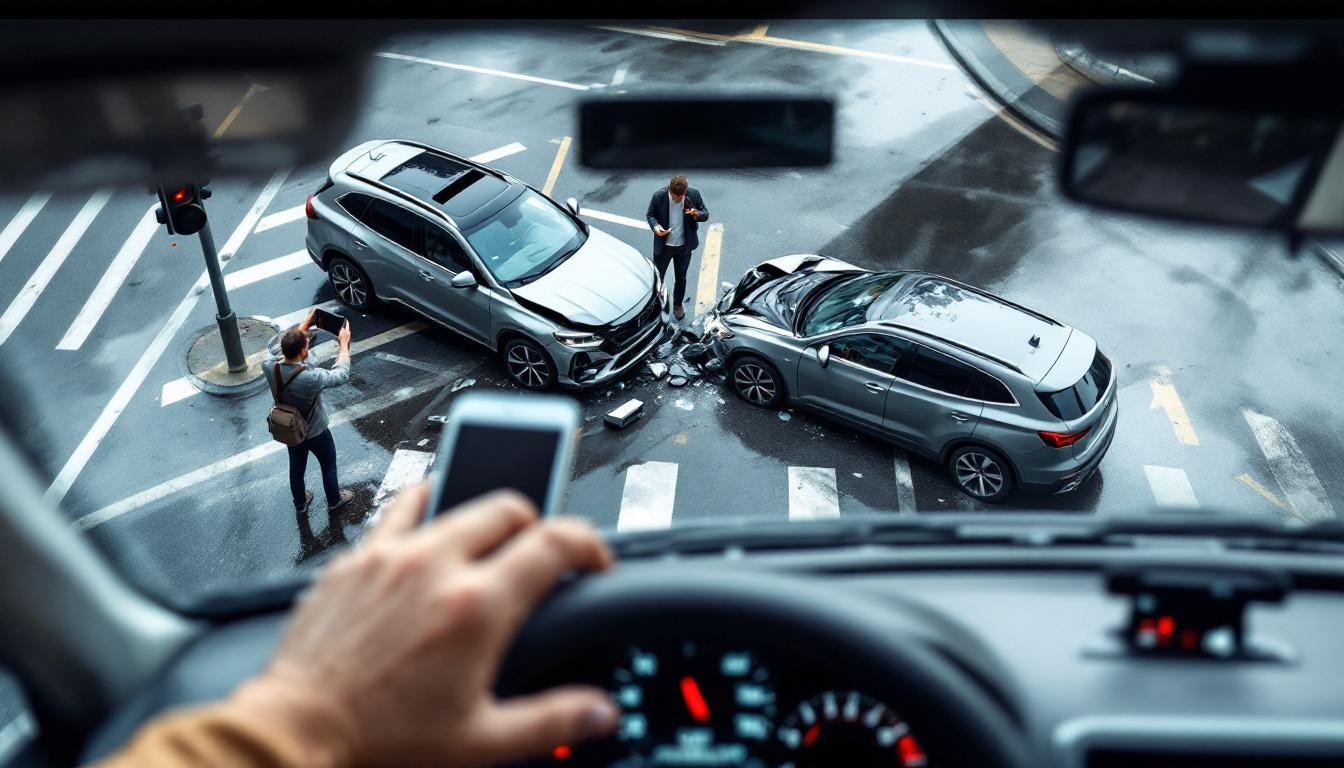
Car accidents happen fast, and the common causes-distracted driving, speeding, and impaired driving-account for the majority of crashes in Santa Cruz County.
When an accident occurs, what you do in those first moments matters. We at Schaar & Silva LLP know that proper documentation and understanding prevention strategies can make the difference between a weak claim and a strong one.
What Causes Most Car Accidents in Santa Cruz County
Distracted Driving Takes Your Eyes Off the Road
Distracted driving stands as the leading cause of crashes in Santa Cruz County, and the numbers back this up. Texting, adjusting your GPS, eating, or glancing at social media takes your eyes off the road for an average of five seconds-at 55 mph, you travel the length of a football field blind. In 2021, Santa Cruz County recorded 147 fatal and injury crashes, and distracted driving remains the top preventable factor across these incidents. Your phone poses more danger than you realize. When you drive with one hand on the wheel while holding your phone, you reduce your reaction time and control immediately. Put your phone in the glove compartment or use a hands-free system before you start driving. Don’t check messages at red lights or adjust settings while moving. Plan your route before you leave, and if you need to make a call, pull over safely.
Speeding and Reckless Driving Amplify Crash Severity
Speeding and reckless driving create the second major problem, and Santa Cruz County experienced 19 speed-related crashes in 2021 alone. Speed doesn’t just increase the chance of a crash-it makes injuries far worse. A collision at 40 mph proves twice as deadly as one at 30 mph. Aggressive driving, tailgating, and unsafe lane changes create a cascade of danger for everyone on the road. Obey posted speed limits and adjust for weather and traffic conditions. Nighttime driving between 9 pm and 3 am carries extra risk (16 nighttime crashes occurred in 2021), so avoid these hours when possible or drive with heightened alertness.
Impaired Driving Impairs Judgment and Reaction Time
Impaired driving from alcohol or drugs dramatically impairs your reaction time and judgment. Santa Cruz County recorded 100 DUI arrests in 2021, and 18 crashes involved alcohol that same year. Six of those crashes involved drivers aged 21 to 34, showing that impairment affects drivers across age groups. The practical action is clear: if you’ve had any alcohol, use a rideshare service or designated driver instead of taking the wheel. This choice protects you and everyone sharing the road. Understanding these three leading causes positions you to make safer decisions behind the wheel-and when accidents do occur despite your best efforts, the evidence you gather at the scene becomes your strongest tool for building a solid claim.
How to Protect Yourself Before an Accident Happens
The three leading causes of Santa Cruz County crashes-distracted driving, speeding, and impaired driving-are all preventable with deliberate action. Taking control of your safety means addressing the factors within your power: your attention on the road, your speed choices, and your vehicle’s condition. Santa Cruz County’s 2021 data from the California Office of Traffic Safety shows that 49 bicyclists and 24 pedestrians were involved in crashes that year, often because drivers failed to maintain safe speeds or attention. Your decisions behind the wheel directly affect not just your safety but everyone sharing the road. The most effective protection starts with three concrete practices that demand immediate implementation, not someday consideration.
Keep a Safe Following Distance and Match Your Speed to Conditions
Maintain at least three seconds of space between your vehicle and the car ahead-at 55 mph, this equals roughly 242 feet. In wet or foggy conditions common to coastal Santa Cruz County, increase this to five seconds. Speed management starts before you collide, and speed-related crashes accounted for 19 incidents in the county in 2021, with every one avoidable through adjusted speed. Nighttime driving between 9 pm and 3 am produced 16 crashes in 2021, so if you must drive during these hours, reduce your speed further and increase your following distance. Tailgating and unsafe lane changes create rear-end and side-swipe collisions that generate serious injuries and expensive claims. When you approach dangerous intersections like Highway 1 and Highway 9, which recorded 11 crashes from 2020 through 2024 according to data from the Statewide Integrated Traffic Records System, slow down well before reaching the intersection and scan for cross-traffic. Your speed should always allow you to stop safely if the car ahead brakes suddenly.
Eliminate Distractions and Stay Fully Present
Put your phone in the glove compartment before starting your engine-not on the seat, not in your lap. The five seconds your eyes leave the road while texting equals traveling a football field blind at highway speeds. Adjust your GPS, climate controls, and mirrors before you move. If an incoming call or message arrives, ignore it entirely or pull over to a safe location if you must respond. Eating, adjusting the radio, or reaching for items in your vehicle all reduce your reaction time and control. Santa Cruz County’s intersection crash rate stands at 41.89%, which is 12.73% higher than the average of studied California cities according to analysis of 2020 through 2024 crash data. This elevated rate reflects the intersection complexity in the area, making your full attention non-negotiable at every traffic light and stop sign.
Check Your Vehicle Before Every Long Drive
Brake failure, tire blowouts, and steering problems cause accidents that could have been prevented through basic maintenance. Before any drive exceeding 30 minutes, inspect your tire pressure and tread depth, test your brakes at low speed, check your headlights and wipers, and verify your steering responds correctly. Check for any active recall notices on your vehicle through the National Highway Traffic Safety Administration website. If your vehicle has been serviced recently, request documentation confirming the work was completed correctly-faulty repairs from third-party mechanics can create liability that extends beyond just the driver. Replace worn tires immediately; aging tires lose traction on wet roads, which matters significantly in Santa Cruz County’s rainy season. These checks take ten minutes and eliminate a major category of preventable crashes.
What Happens When Prevention Fails
Even drivers who follow every safety rule face accidents caused by other people’s negligence. When a collision occurs despite your careful driving, the evidence you collect at that moment determines whether your claim succeeds or fails. The next chapter covers exactly what to document and how to preserve the information that transforms a weak claim into a strong one.
What to Document at the Scene and Beyond
The moments immediately after a crash determine the strength of your claim far more than anything that happens later. What you collect at the scene transforms a weak claim into a strong one, so act deliberately and systematically.
Photograph and Record Information at the Scene
At the scene, photograph the vehicle damage from multiple angles and capture the overall accident scene showing road conditions and traffic signals. Document any injuries visible on your body with photos taken in good light. Photograph the other driver’s license, insurance card, and vehicle registration before anyone leaves the scene. Write down the other driver’s name, phone number, address, insurance company, and policy number.
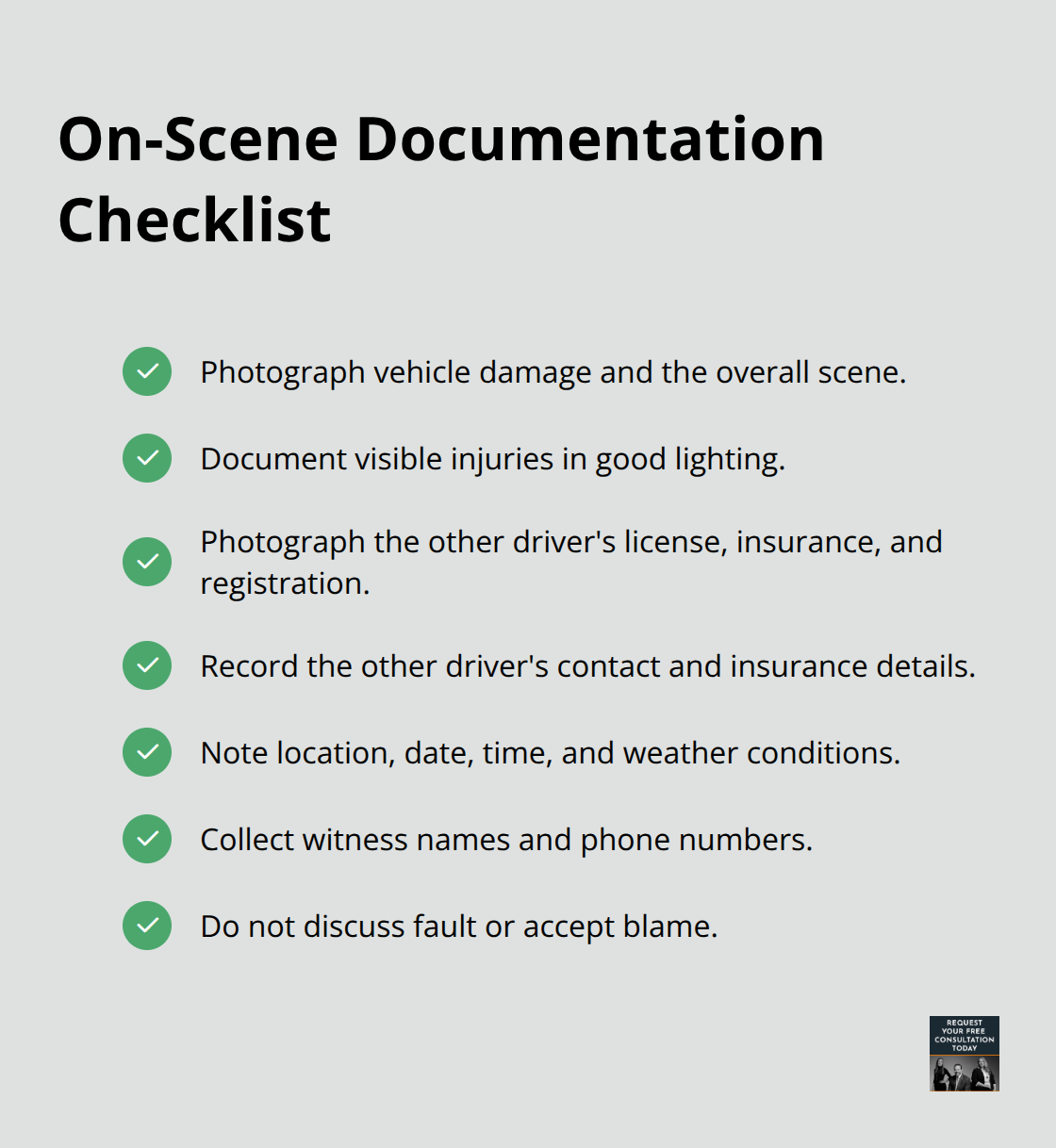
Note the exact location, date, time, and weather conditions. If witnesses remain at the scene, record their names and phone numbers directly into your phone rather than relying on memory. Do not discuss fault or accept blame, as anything you say can be used against your claim later.
Obtain Police Reports and Officer Information
If police respond to the scene, obtain the officer’s name and badge number, then request the report number so you can retrieve the full police report within days. The police report provides an official account of the crash and often includes the officer’s assessment of fault. This document becomes essential when you file your insurance claim or pursue legal action. Request a copy directly from the Santa Cruz County Sheriff’s Office or the local police department that responded.
Build Your Medical Documentation File
Seek medical attention even if injuries feel minor, because internal injuries and soft tissue damage often appear hours or days after impact. Keep every receipt, medical bill, prescription label, and therapy invoice in a single folder (physical or digital). Document lost wages by obtaining written statements from your employer showing dates missed and hourly rate. These records establish the full scope of your damages and support your claim for compensation.
Preserve Vehicle and Maintenance Records
Photograph your vehicle before any repairs begin, preserving evidence of impact severity. Request and preserve all maintenance records and service receipts for your vehicle, as these demonstrate you maintained the car properly and protect against claims that mechanical failure contributed to the crash. If your vehicle contains event data recorder information (similar to black-box technology), contact a lawyer immediately to preserve this data before it cycles out of the system.
Prevent Claim Denials Through Complete Documentation
Insurance companies often deny or minimize claims when documentation is incomplete, so gathering everything at the scene and during medical treatment prevents gaps that adjusters exploit. The legal team at Schaar & Silva LLP can guide you through the documentation process and help ensure nothing critical gets overlooked.
Final Thoughts
The common causes of car accidents in Santa Cruz County-distracted driving, speeding, and impaired driving-remain preventable through deliberate action and awareness. You control whether your phone stays in the glove compartment, whether you adjust your speed for conditions, and whether you use a rideshare service instead of driving impaired. These choices directly reduce your crash risk and protect everyone sharing the road.
When accidents happen despite your best efforts, the documentation you gather at the scene becomes your strongest asset. Photographs of vehicle damage, police reports, witness information, and medical records transform a weak claim into one that stands against insurance company pushback. The elevated intersection crash rate in Santa Cruz County and dangerous intersections like Highway 1 and Highway 9 create unique risks for drivers in this area, making thorough documentation even more important.
If you’ve been in an accident, contact us to discuss your situation and learn how we can support your recovery and your claim. We at Schaar & Silva LLP can guide you through the documentation process and help you evaluate your claim fairly. Your focus should remain on healing while we handle the legal complexities of your case.
