
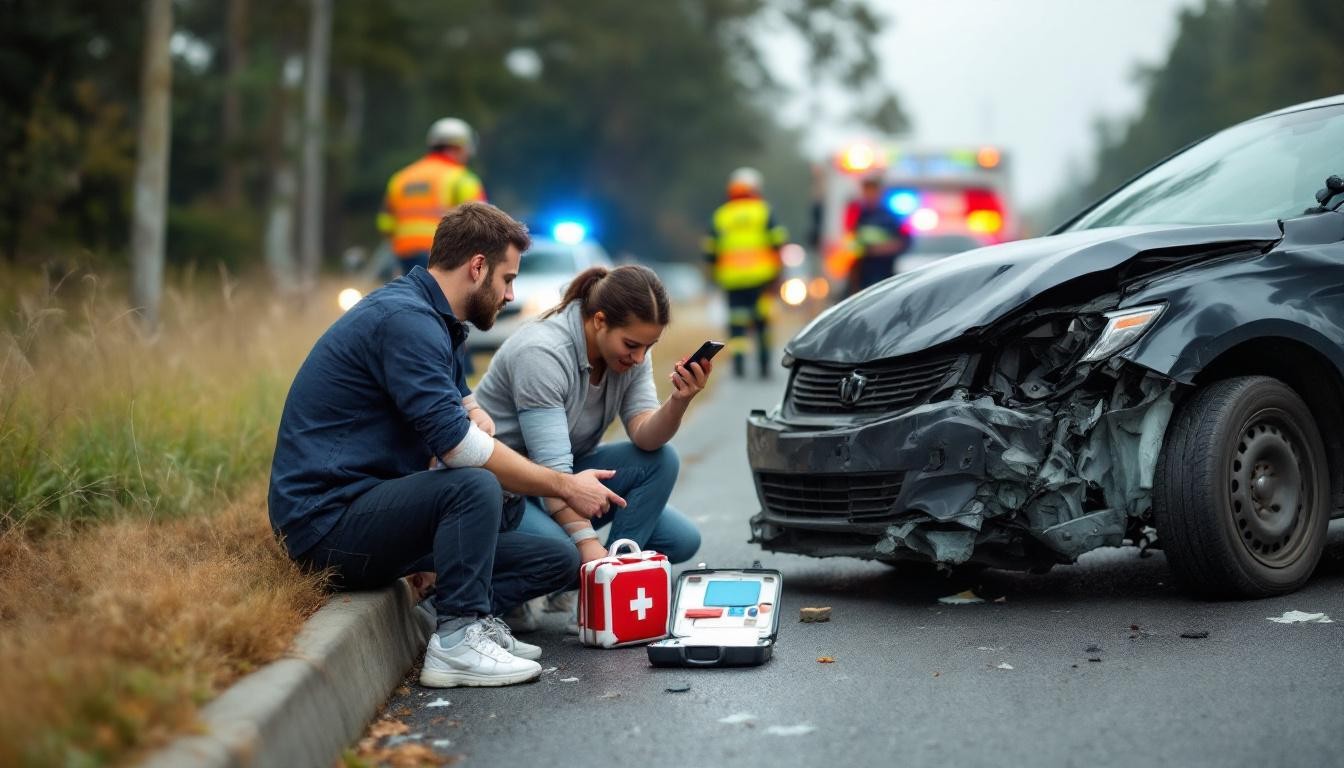
A crash can happen in seconds, but the decisions you make afterward shape your entire recovery. In the event of a crash, personal injury claims require quick action and careful documentation.
We at Schaar & Silva LLP help Santa Cruz County residents navigate this process from start to finish. This guide walks you through the essential steps to protect your rights and build a strong case.
What to Do Immediately After a Crash
Move to Safety and Call for Help
The first few minutes after a crash determine how strong your case becomes. Most people freeze or panic, which means they miss critical documentation steps that could cost them thousands of dollars later. If no one is seriously injured, move your vehicle out of traffic immediately to avoid additional collisions. Call 911 only if someone needs emergency medical care. Once you’re safe, your priority shifts to documenting everything before memories fade and evidence disappears.
Document the Scene Thoroughly
Take photos of all vehicle damage from multiple angles, including close-ups of dents, broken glass, and tire marks. Photograph the accident scene itself, including road conditions, traffic signs, weather, and the positions of both vehicles. These photos are far more valuable than your memory will be weeks later when the case progresses. If you have a smartphone, video captures context and movement even better than still images. Don’t skip this step thinking insurance will handle it-your insurer works for their bottom line, not your recovery.
Exchange Information and Gather Witnesses
Exchange information with the other driver immediately, but never admit fault or apologize for the crash. Get their full name, phone number, driver’s license number, vehicle registration, insurance company name, and policy number. If they refuse to provide information or become hostile, do not engage further. Instead, call the police and wait for an officer to document the scene. Gather contact information from every witness at the scene, including their names, phone numbers, and what they saw. These independent accounts carry tremendous weight in resolving disputes about how the crash happened.
Report and Seek Medical Care
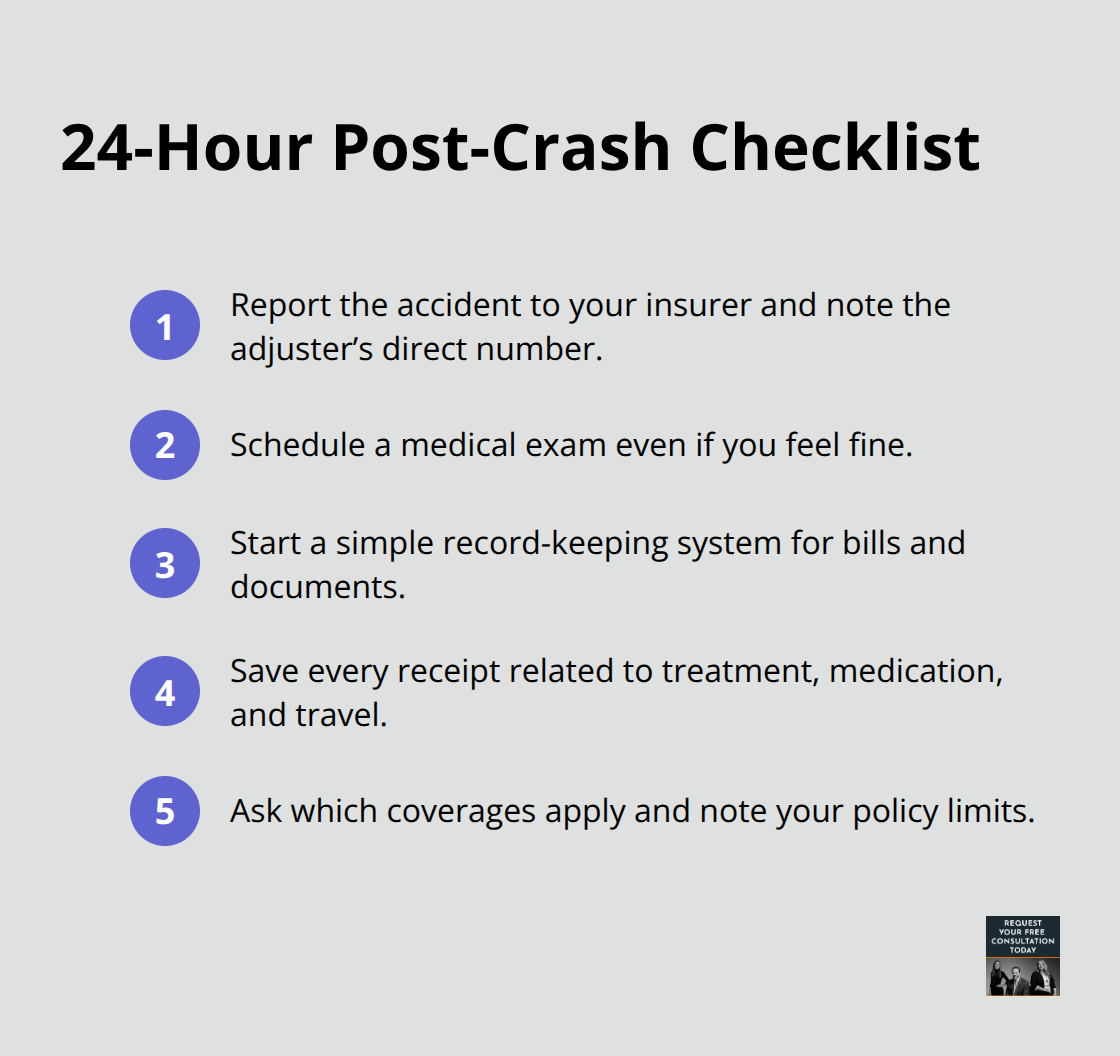
After you get home, contact your insurance company within 24 hours to report the accident and get your claims adjuster’s name and direct number. Then immediately schedule a medical appointment, even if you feel fine. Adrenaline masks injuries that appear days later, and medical records created soon after the crash prove the injury connection to the accident. Keep every receipt, bill, and document related to your injuries and treatment.
Understanding your legal rights and options requires knowledge of liability, insurance coverage, and filing deadlines-all of which shape what you can recover.
What You Need to Know About Liability and Coverage
How Liability Works in Santa Cruz County
Liability in a crash means one driver’s negligence caused the other driver’s injuries. In Santa Cruz County, the at-fault driver bears responsibility for damages, which includes their insurance company paying your medical bills, lost wages, and pain and suffering. However, proving liability requires showing that the other driver owed you a duty of care, breached that duty, and directly caused your injury. Simply being hit is not enough-you must demonstrate the other driver acted negligently or recklessly. This is why those photos and witness statements from the scene matter tremendously.
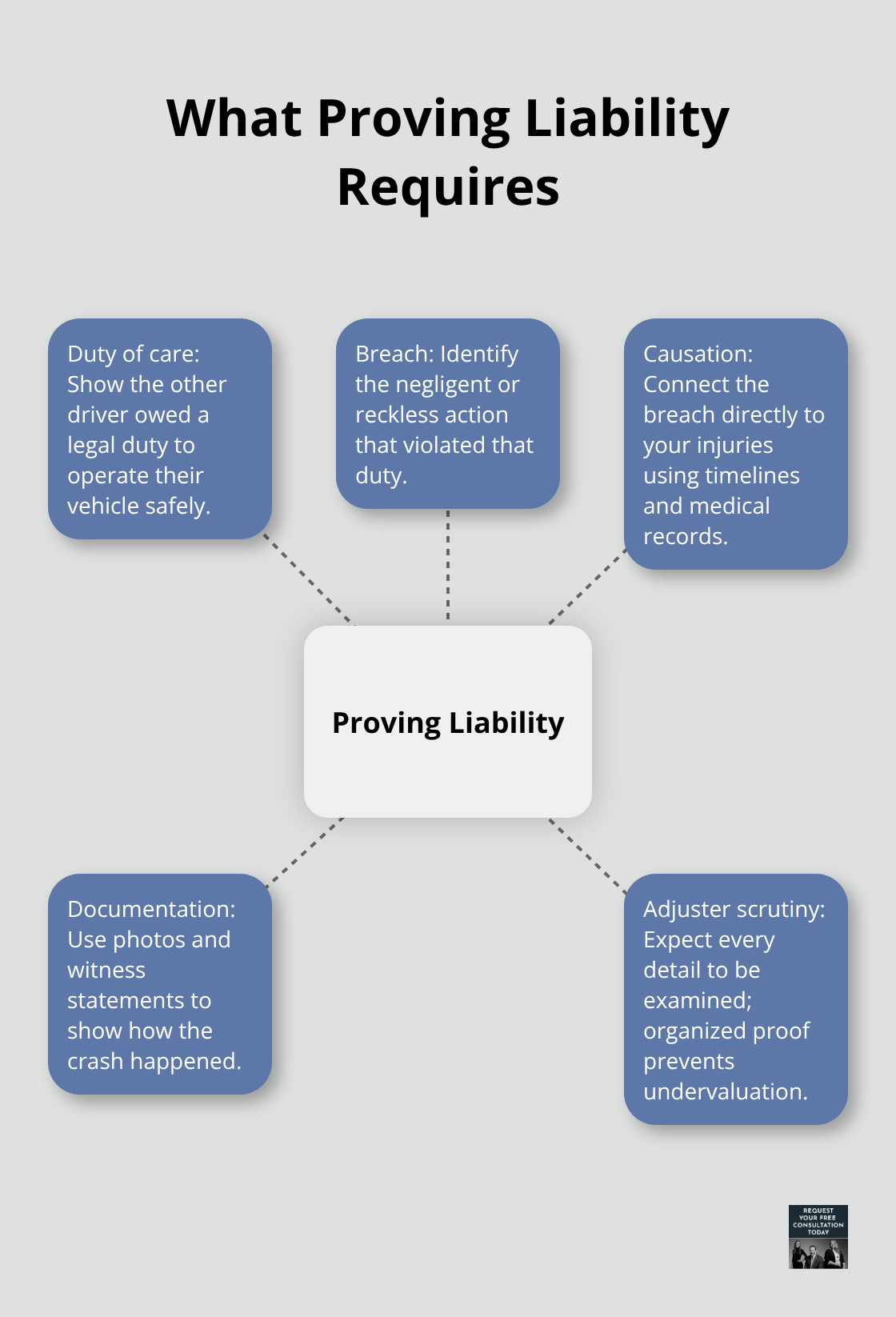
Insurance adjusters will scrutinize every detail, so documentation that clearly shows how the crash happened protects your claim from being denied or undervalued.
Understanding Your Insurance Coverage Types
Your insurance policy likely includes several coverage types that apply after a crash, and understanding these limits prevents you from leaving money on the table. Medical payments coverage and personal injury protection (PIP) pay your medical bills and lost wages regardless of who caused the crash, typically covering up to your policy limits. If the other driver is uninsured or underinsured, your uninsured/underinsured motorist coverage kicks in to cover repairs, rental car costs, and pain and suffering-often with a lower deductible than collision coverage. Contact your claims adjuster early and ask specifically what coverages apply to your situation, because many people never learn about these protections until it’s too late.
Know Your Filing Deadlines
The statute of limitations gives you two years from the date of injury to file a personal injury lawsuit under California Code of Civil Procedure section 335.1. This deadline is not flexible, and missing it bars your claim permanently unless tolling applies (such as when the injured person is a minor). If your crash also caused property damage to your vehicle, you have three years to sue for that damage under California Code of Civil Procedure section 338. The timelines differ because injury and property damage are separate legal claims with separate deadlines.
Many people assume they have plenty of time to decide whether to sue, but insurance settlements often expire within months, and witness memories fade quickly. Consulting with legal representation within weeks of your crash ensures you understand your exact deadline and whether any tolling circumstances apply to your case, protecting you from accidentally losing your right to recover. Building your personal injury case requires collecting medical records, preserving evidence, and working with legal representation to evaluate what damages you can claim.
Building Your Case After a Crash
Collect and Organize Medical Records
Your medical records form the foundation of your entire personal injury claim, and how you organize them determines whether you recover full damages or accept a reduced settlement. Start collecting medical documentation immediately after your first appointment, including doctor’s notes, test results, imaging reports, prescription records, and physical therapy invoices. Insurance adjusters scrutinize medical records for gaps in treatment, so consistency matters enormously. If you stop seeing your doctor for three months and then return, the adjuster will argue your injury wasn’t serious. The California Courts Self-Help Guide emphasizes that organized records strengthen your case substantially.
Create a spreadsheet that tracks every medical expense, the date of service, the provider’s name, and the amount paid. Include receipts for medications, medical equipment, and travel costs to appointments. Photograph your medical bills and store originals in a safe place. Many people lose cases not because their injury wasn’t real, but because they failed to document the treatment trail that proves it.
Preserve Evidence from the Scene
Evidence beyond medical records requires immediate action and careful organization. Contact every witness from the scene within days while their memory is sharp, and ask them to write down what they saw in their own words. Request their permission to record a brief phone conversation describing the crash, which creates a timestamped account. Police reports filed at the scene carry significant weight, so obtain a copy through the California Highway Patrol using Form CHP 190 if you’re a party of interest.
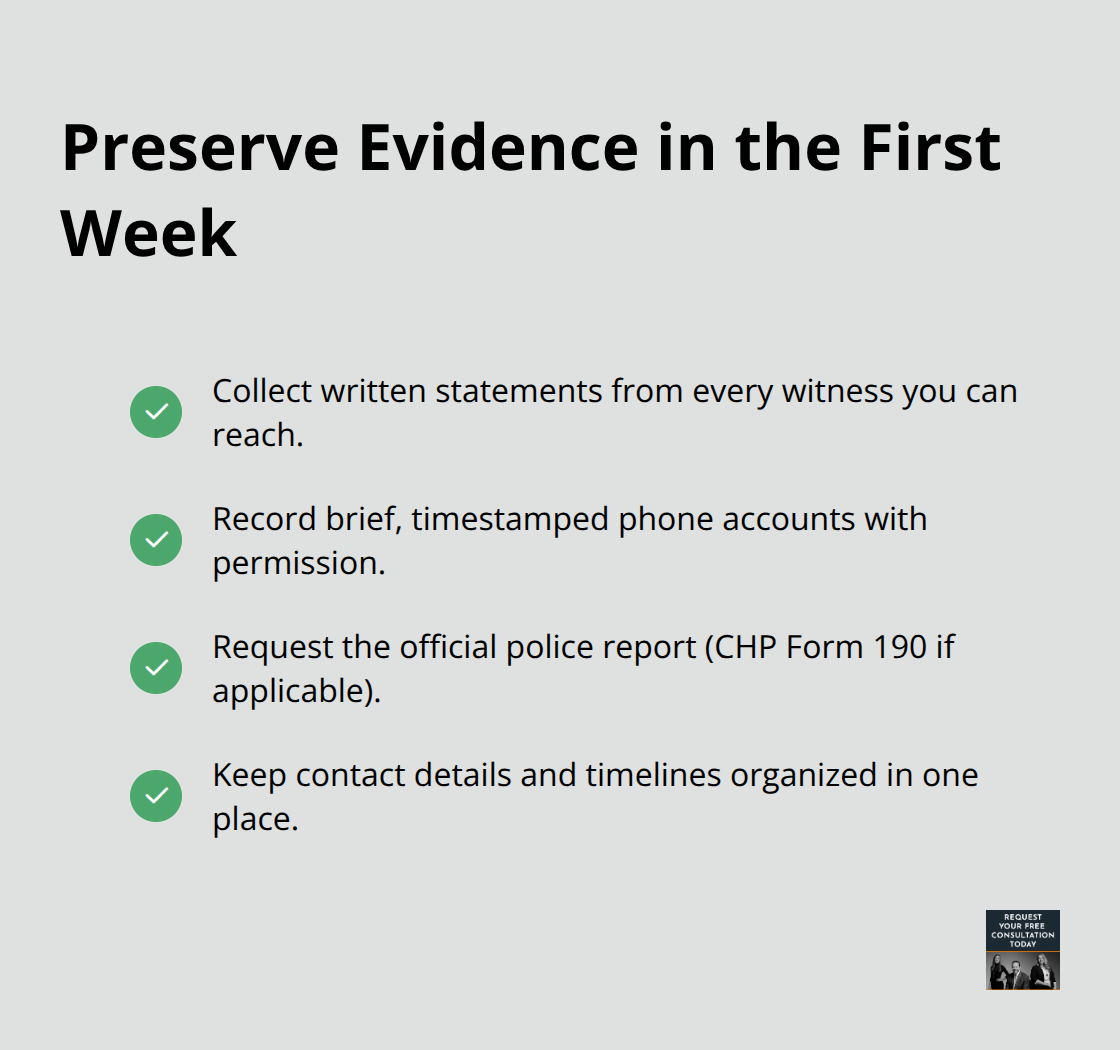
Collect repair estimates from body shops, which document the force and direction of impact. Keep your damaged vehicle photos organized by date and location. Insurance companies employ adjusters trained to minimize payouts, so evidence that clearly establishes the other driver’s fault protects you from lowball settlement offers.
Work with Legal Representation
We at Schaar & Silva LLP can help you understand what evidence matters most for your specific situation and guide you toward fair compensation. Without strong evidence preservation, even serious injuries result in reduced settlements because doubt creeps into every negotiation.
Final Thoughts
The steps you take immediately after a crash determine whether you recover full compensation or accept far less than your claim is worth. Moving to safety, photographing the scene, and gathering witness information sets the foundation for everything that follows. In the event of a crash, personal injury claims depend entirely on evidence collected when memories are fresh and details remain clear.
The two-year statute of limitations sounds like plenty of time, but insurance settlements expire within months, witnesses move away or forget details, and medical records become harder to obtain as time passes. Contact your insurance company within 24 hours, schedule a medical appointment even if you feel fine, and consult with legal representation within weeks to protect your rights and avoid missing critical deadlines. We at Schaar & Silva LLP help Santa Cruz County residents navigate this entire process from the crash scene through settlement, and we connect you with support services that handle medical bills and property damage claims while you focus on healing.
