
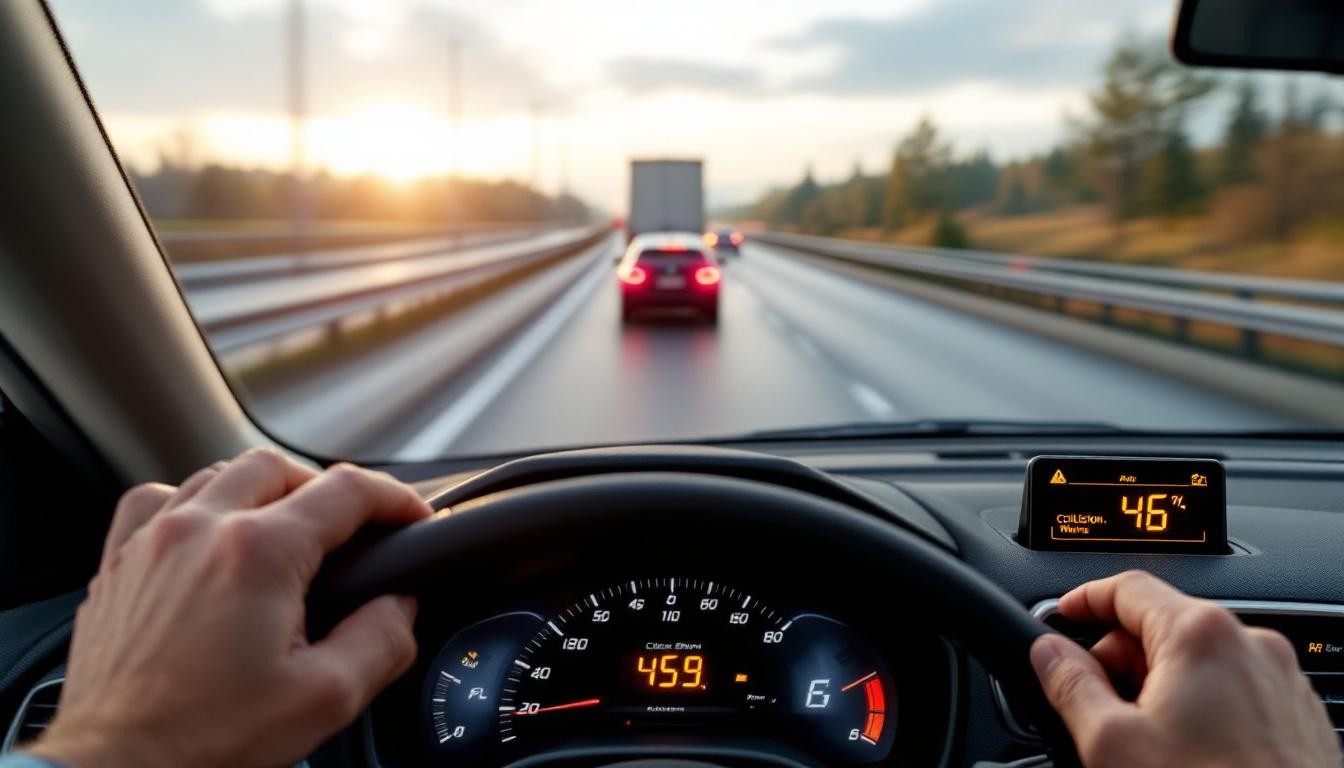
Speed dramatically changes what happens in a crash. When great speed increases the probability of injury in a crash, the consequences become severe and life-altering.
We at Schaar & Silva LLP have helped many Santa Cruz County residents navigate recovery after high-speed accidents. This guide shows you how to reduce injury risk and what to do if you’re involved in a collision.
How Speed Transforms Crash Physics
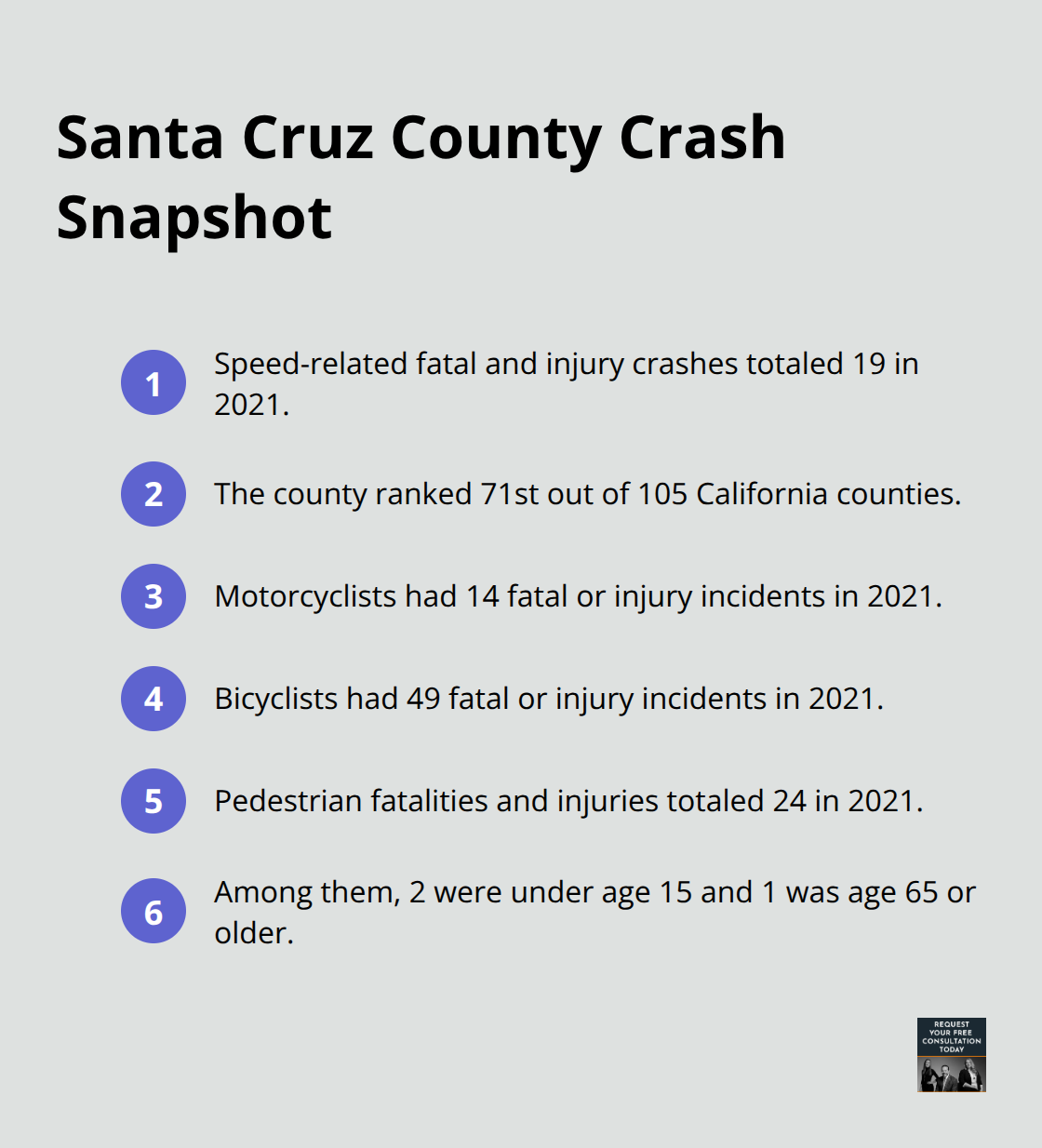
When a vehicle traveling at 40 mph collides with a stationary object, the crash energy is roughly 125 percent lower than the same impact at 60 mph. This isn’t a linear relationship-it’s exponential. The Insurance Institute for Highway Safety reports that speed-related crashes killed approximately 11,775 people in 2023, accounting for 29 percent of all motor vehicle fatalities. In Santa Cruz County, speed-related fatal and injury crashes accounted for 19 incidents in 2021, ranking the county 71st out of 105 California counties. The physics here matters because your body cannot absorb the energy differences the way engineers design vehicles to do. At higher speeds, the deceleration forces exceed what human tissue can withstand without tearing, breaking, or bleeding internally.
Survival Rates Drop Sharply at Higher Speeds
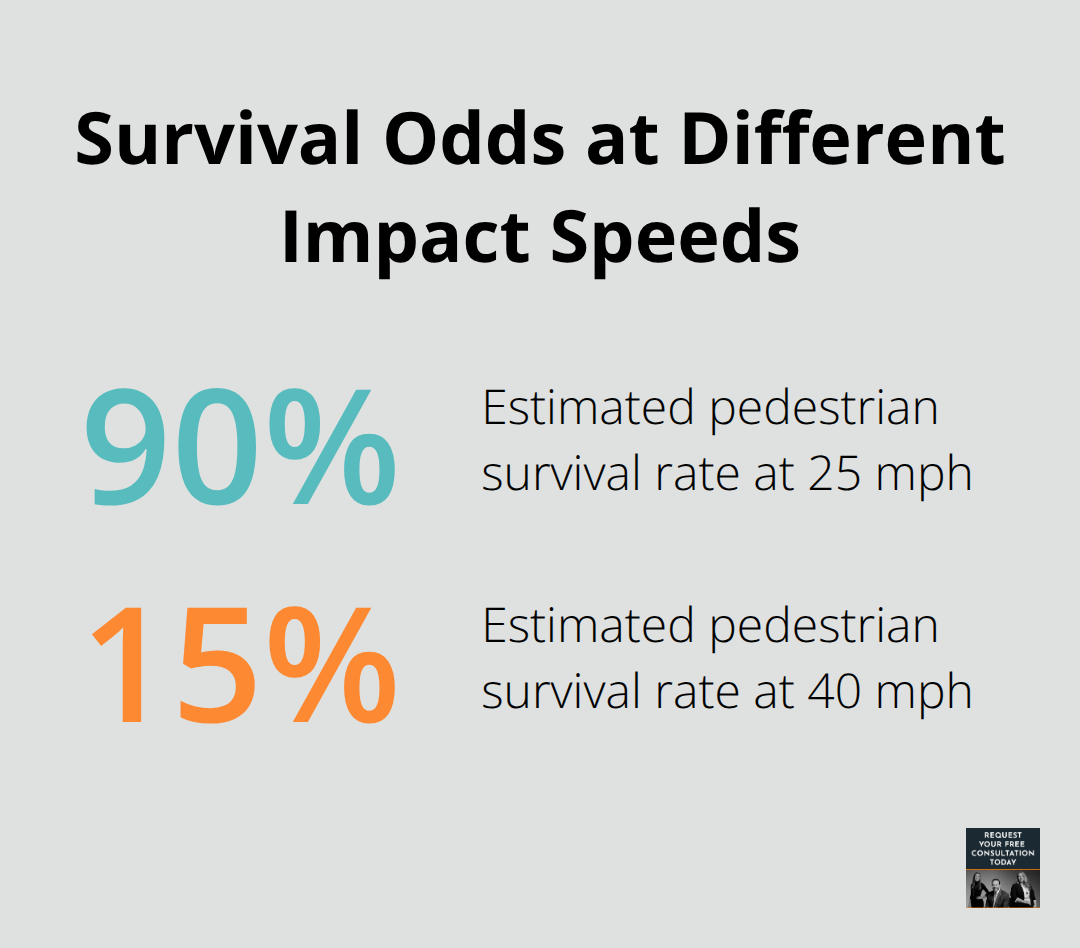
A pedestrian struck at 25 mph has roughly a 90 percent survival rate; at 40 mph, that drops to around 15 percent. This is why speed management saves lives-not because it sounds safe, but because the human body has hard limits that physics won’t negotiate. The difference between these two speeds translates to a 75 percentage point drop in survival odds.
Your vehicle’s safety systems work best within certain speed ranges; once you exceed those thresholds, the protection they offer diminishes rapidly.
High-Speed Collisions Create Severe Injury Patterns
High-speed collisions produce injuries that low-speed crashes simply don’t generate. At moderate speeds, you might experience whiplash or broken ribs. At high speeds, you face traumatic brain injuries, spinal cord damage, internal organ trauma, and catastrophic fractures that require emergency surgery and months of rehabilitation. Motorcyclists in Santa Cruz County experienced 14 fatal or injury incidents in 2021, and bicyclists faced 49-the third-highest rate among California counties-because these vulnerable road users have zero protection against impact forces.
Age Affects Injury Severity
The age of the injured person matters significantly; older adults and very young children sustain more severe injuries at lower speeds because their bodies are more fragile. Santa Cruz County recorded 2 pedestrians under 15 and 1 pedestrian age 65 or older among its 24 pedestrian fatalities and injuries in 2021. Recovery from high-speed crash injuries often involves multiple surgeries, intensive physical therapy, and permanent disability. Medical costs escalate rapidly when you’re fighting severe injuries instead of minor ones, and lost wages accumulate while you heal. Understanding these injury patterns helps explain why the steps you take after a collision matter so much for your recovery and your legal claim.
How to Protect Yourself Before Impact Happens
The Three-Second Rule Stops Rear-End Collisions
Speed management starts before you collide. The single most effective tactic is maintaining a following distance that matches your speed and road conditions. At 30 mph, you need roughly 90 feet to stop safely; at 60 mph, that distance jumps to 360 feet. Most drivers in Santa Cruz County drastically underestimate this requirement, which is why rear-end collisions remain common even on straightforward roads. The National Academies of Sciences, Engineering, and Medicine recommend using the 3-second rule as a minimum: pick a fixed object ahead, count the seconds it takes your vehicle to reach it after the car in front passes it. If you count fewer than 3 seconds, you’re too close. In rain or fog, increase this to 5 or 6 seconds. This isn’t theoretical-it’s the difference between stopping in time and becoming another statistic in Santa Cruz County’s 147 total killed and injured incidents from 2021.
Adjust Speed to Match Real Conditions
Adjusting your actual speed for conditions matters far more than following posted limits. Speed limit signs assume ideal conditions; they don’t account for wet pavement, visibility, or traffic density. Reducing your speed from 30 mph to 25 mph on urban arterial roads cuts injury crashes by 11 to 20 percent according to research from 2024. This small adjustment dramatically improves your stopping ability and gives your vehicle’s safety systems time to function. Vehicle safety features-airbags, electronic stability control, automatic braking systems-perform optimally within specific speed ranges. Exceeding these ranges means these systems can’t fully protect you.
Test Your Vehicle’s Safety Systems
Test your vehicle’s safety features regularly: know how your brakes respond, understand your visibility limits, and practice emergency maneuvers in a controlled environment if possible. Speed cameras operating in 287 U.S. communities across 22 states show consistent results: drivers reduce speeds by 1 to 15 percent after cameras deploy, and crashes decline by 8 to 49 percent in those areas. This data reveals that when consequences become real and visible, people change behavior. Apply that same mindset to your own driving-treat every road as if enforcement is present and injury risk is immediate. These protective actions reduce your crash probability, but they don’t eliminate it entirely. When high-speed collisions do occur in Santa Cruz County, the medical and legal aftermath demands immediate action.
What Happens Right After Your Crash
Preserve Evidence at the Scene
The first hour after a high-speed collision determines how much evidence you preserve and how quickly you protect your health and legal rights. Call 911 immediately if anyone is injured or if vehicles block traffic; police response creates an official report that becomes critical documentation for your injury claim. Move to safety if you can do so without worsening injuries. Photograph vehicle damage from multiple angles, capture road conditions and skid marks, and take images of the accident scene from a distance to show traffic patterns and visibility. Write down the names, phone numbers, and addresses of all witnesses before they leave-witness statements often vanish after a few days, and their testimony proves liability when insurance companies dispute fault.
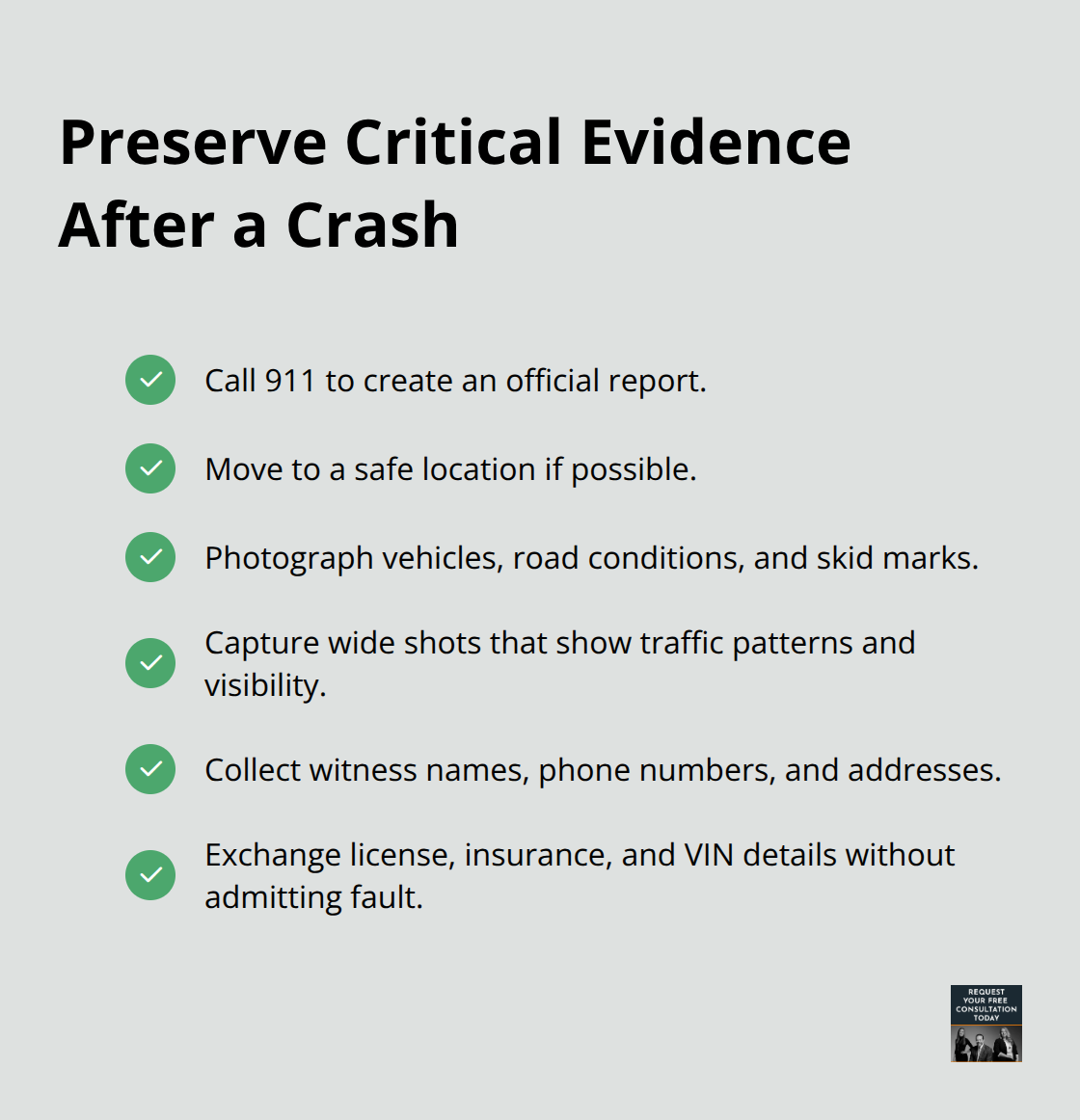
Obtain the other driver’s license plate number, driver’s license information, insurance company name and policy number, and vehicle identification number. Avoid discussing fault or apologizing for the accident, as these statements can be used against you later.
Seek Medical Attention Without Delay
High-speed crash injuries often emerge hours or days after impact as adrenaline wears off and swelling develops internally. Seek medical attention immediately, even if you feel fine. Document every medical visit, every medication prescribed, and every symptom you experience in writing, because insurance adjusters scrutinize injury claims that lack detailed medical records. In Santa Cruz County, where 147 people were killed or injured in traffic crashes during 2021, the quality of evidence you gather-both at the scene and through medical documentation-directly impacts whether you recover fair compensation.
Contact Legal Representation Early
Contact the legal team at Schaar & Silva LLP within the first few days after your accident, not weeks later, because evidence degrades and witness memories fade quickly. Our years of experience in personal injury law mean we understand what documentation insurance companies demand and what evidence strengthens your claim. We assist in evaluating your injuries, directing you toward medical lien services to handle bill payments while your case progresses, and ensuring you understand your rights under California law. The longer you wait to contact legal representation, the weaker your position becomes when negotiating with insurance companies that profit by paying claims as little as possible.
Final Thoughts
Speed management and injury prevention start with understanding that great speed increases the probability of injury in a crash exponentially. When you reduce speed by just 5 mph on city streets, you cut injury crashes by 11 to 20 percent. When you maintain proper following distances and adjust for weather, you eliminate most rear-end collisions entirely.
If you’ve already been in a collision in Santa Cruz County, your recovery depends on the steps you take in the first hours and days afterward. Photograph the scene thoroughly, gather witness information before people leave, and seek medical attention immediately even if you feel fine. Insurance companies scrutinize claims that lack detailed evidence, and they profit by paying less than you deserve.
We at Schaar & Silva LLP have guided Santa Cruz County residents through this process for years. Our team helps you evaluate your injuries, connects you with medical lien services so you’re not crushed by bills while your case progresses, and handles the legal complexities that insurance adjusters use to minimize payouts. Contact us at schaarsilvalaw.com within the first few days after your crash, because evidence degrades and witness memories fade quickly.
