
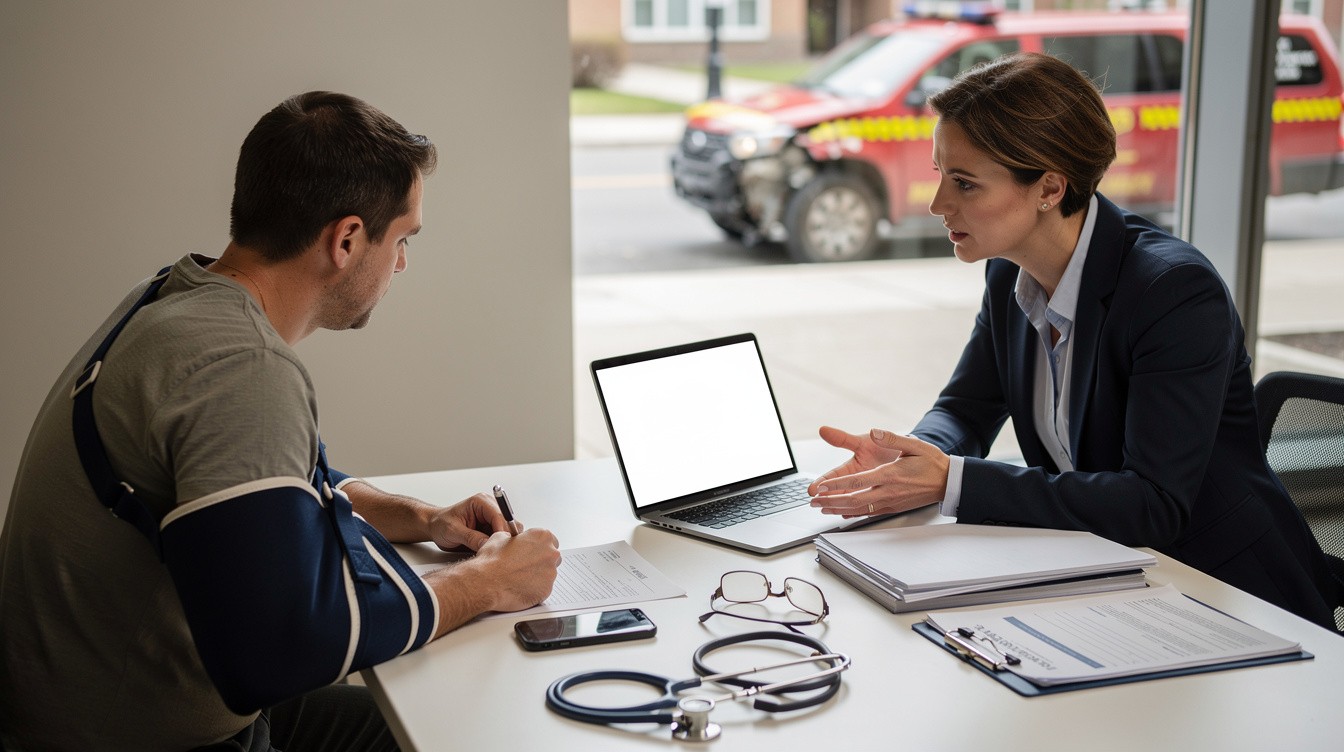
A car crash can turn your life upside down in seconds. Between injuries, medical bills, insurance paperwork, and legal questions, you’re facing decisions that feel overwhelming.
We at Schaar & Silva LLP created this guide to help you navigate car crash injury resources and understand your options. You’ll find practical steps to take right now, information about recovery, and guidance on pursuing the compensation you deserve.
What to Do Right After a Crash
Protect Your Claim in the First Minutes
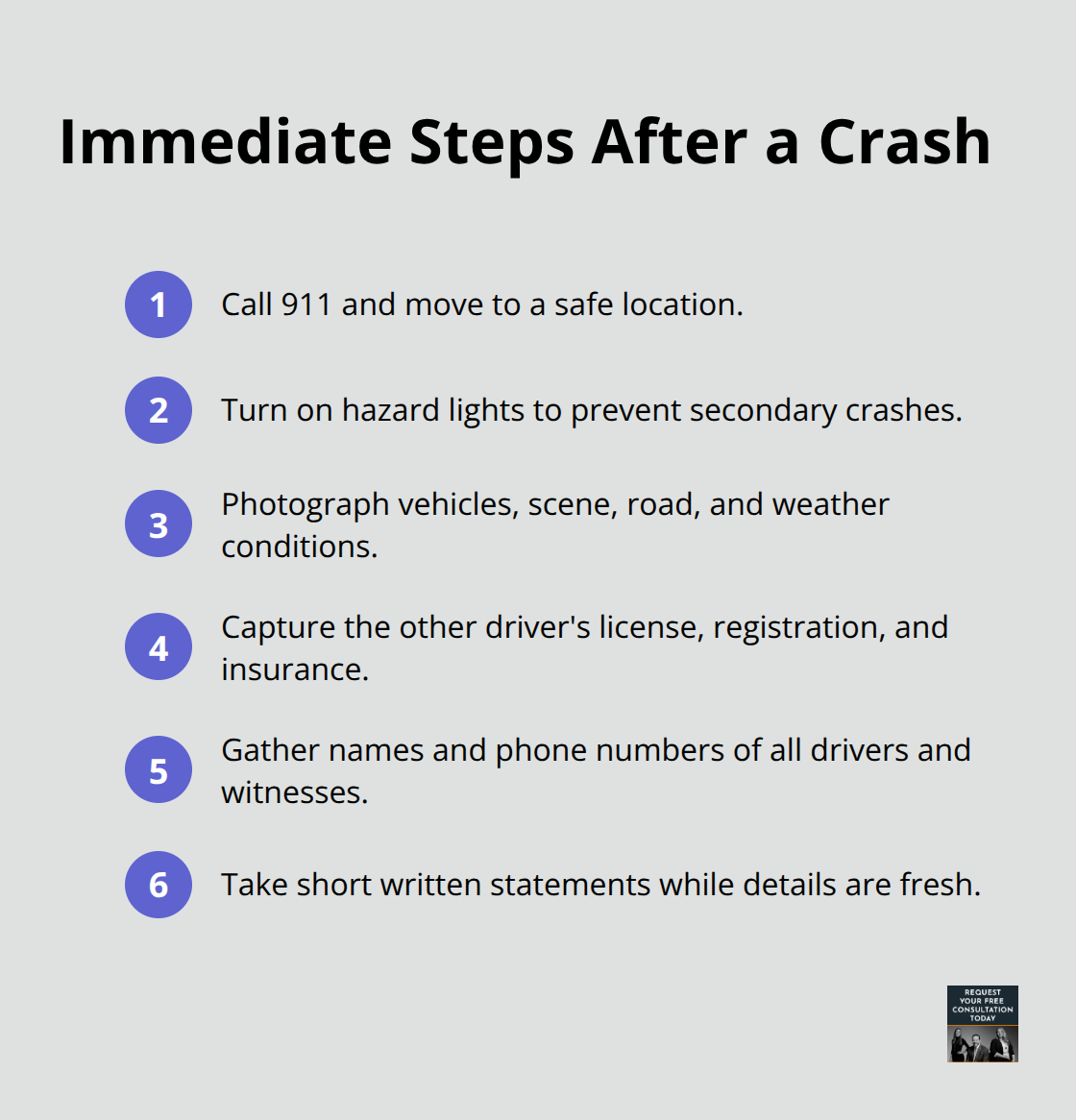
The first minutes after a crash determine how well you’ll recover your costs and protect your claim. Call 911 immediately if anyone is injured or traffic is blocked-this action prevents secondary accidents and creates an official record. While waiting for police, move to safety if possible and turn on hazard lights. Take photos and videos from multiple angles of vehicle damage, road conditions, weather, and the overall scene before anything changes. Photograph the other driver’s license, vehicle registration, and insurance card, then record the names, phone numbers, and written statements from all drivers, passengers, and witnesses.
What You Say Matters
Do not admit fault at the scene; stick to factual descriptions of what happened. Your words can undermine your claim later, so avoid any statements that suggest responsibility. Get the official CHP crash report number before officers leave, or request it through the CHP Crash Portal within days. This report number is essential for your insurance claim and any legal action.
File Your Claim Quickly
File your insurance claim within 30 days and include the CHP report number, scene photos, and any initial medical records. Insurers often undervalue injuries, especially soft tissue damage, so having documentation from day one strengthens your position. If you need help evaluating property damage or managing medical bills, we at Schaar & Silva LLP can assist you in navigating these claims and connecting you with medical lien services.
Medical Care Cannot Wait
Seek medical attention immediately, even if you feel fine. Injuries like whiplash, internal bleeding, and traumatic brain injury may not show symptoms for hours or days. Emergency department visits in Santa Cruz County commonly range from $1,200 to $3,500 depending on injury severity, so costs will mount quickly. If you cannot afford immediate care, ask hospitals about medical lien options-Watsonville Community Hospital and Dominican Hospital in Santa Cruz County accept liens, allowing you to defer payment until your case settles. Keep all medical records, receipts, and documentation of missed work, as these directly support your compensation claim. If medical bills arrive before settlement, medical liens prevent debt collection and preserve your recovery funds.
Your medical records and documentation form the foundation for understanding what happened to your body and what recovery will require.
What Injuries Develop After a Car Crash
Immediate and Hidden Injuries
Car crashes cause injuries that range from immediately obvious to hidden. Whiplash affects the neck and upper back when your body jerks forward and backward during impact, causing pain that often worsens over days. Fractures in ribs, arms, legs, and collarbones happen when your body strikes the steering wheel, dashboard, or door. Traumatic brain injury occurs when your head hits an object or experiences sudden acceleration, leading to cognitive problems, memory loss, and personality changes that may not surface for weeks. Spinal cord injuries cause partial or complete paralysis depending on injury severity and location. Internal bleeding and organ damage can be life-threatening but show no external signs initially, which is why immediate medical evaluation is non-negotiable even when you feel fine.
Building Your Recovery Plan
Medical treatment after a crash requires a structured approach. Start with emergency care to rule out life-threatening conditions, then move to follow-up appointments with your primary care doctor who can refer you to other medical professionals.
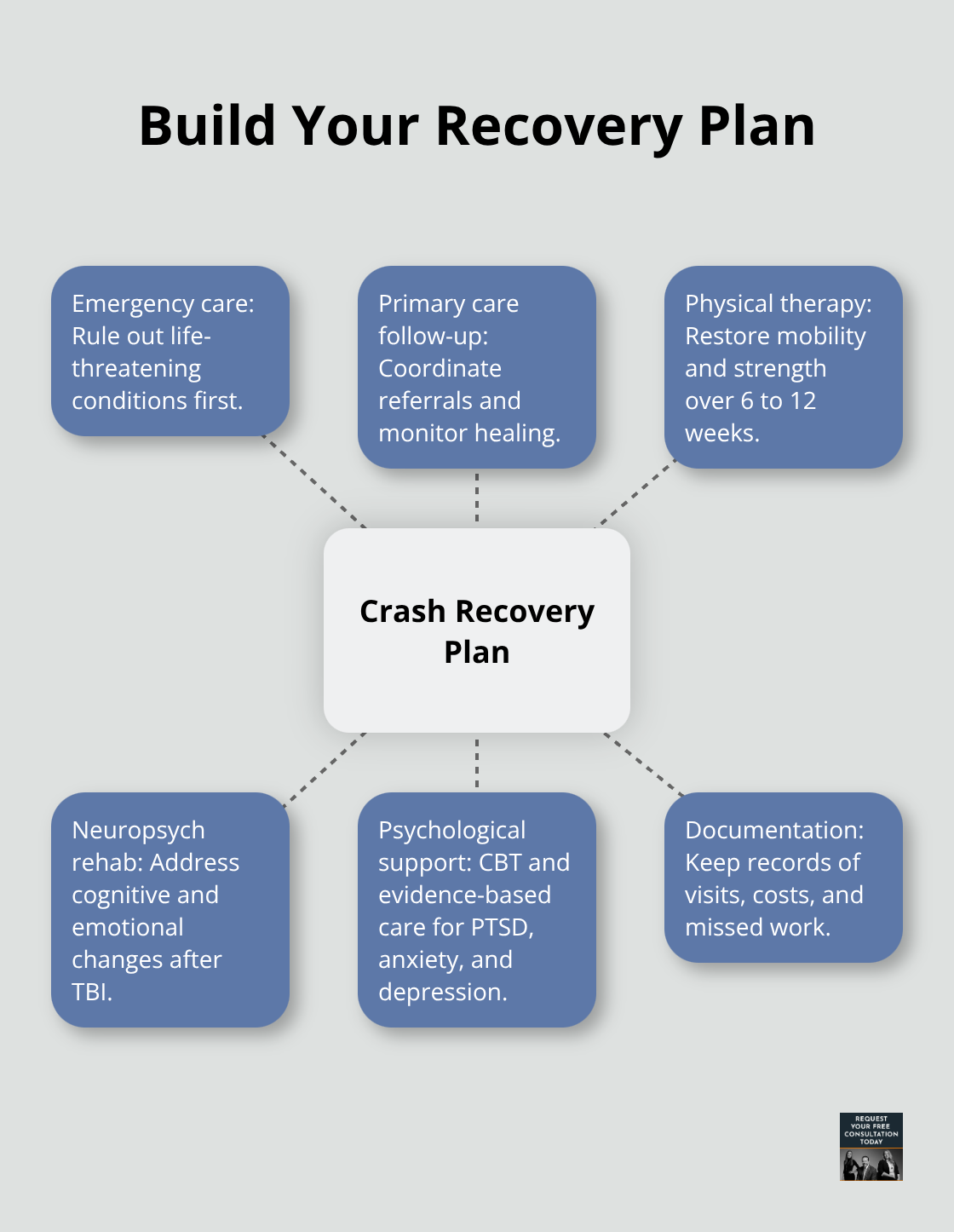
Physical therapy helps restore mobility and strength, typically running 6 to 12 weeks depending on injury severity. For traumatic brain injuries, neuropsychological rehabilitation addresses cognitive deficits and emotional regulation. Psychological support matters significantly because car crash survivors commonly experience post-traumatic stress disorder, anxiety, and depression. The National Institute of Mental Health reports that trauma survivors benefit from cognitive behavioral therapy and other evidence-based treatments.
Documenting Your Path to Recovery
Document every medical appointment, treatment, and therapy session with dates and costs, as this documentation directly strengthens your compensation claim and demonstrates the full scope of your injuries to insurers. Emotional trauma is frequently underestimated in accident claims, yet it represents a real and measurable part of your recovery. We at Schaar & Silva LLP connect clients with specialists who offer the psychological support you may require during recovery. Your medical records and documentation form the foundation for understanding what happened to your body and what recovery will require-information that becomes essential when you pursue compensation for your losses.
Getting Fair Compensation for Your Losses
Property Damage Claims Require Specific Documentation
Property damage claims and personal injury claims operate on different timelines and require different documentation, so understanding the distinction helps you recover what you’re actually owed. For property damage, photograph every dent, scratch, and broken component from multiple angles and capture wide shots showing your vehicle’s position at the accident location. Take your car to a repair shop within 24 hours if it’s drivable; if not, arrange a tow to a shop you choose rather than accepting the insurer’s preferred vendor. Obtain at least two written repair estimates from independent shops because insurers frequently rely on their own preferred vendors who may undervalue repairs.
Filing and Challenging Property Damage Valuations
File your property damage claim within 30 days with the CHP report number, photos, and those estimates. If the insurer’s offer seems low, request a re-inspection by a third-party appraiser rather than accepting their initial valuation.
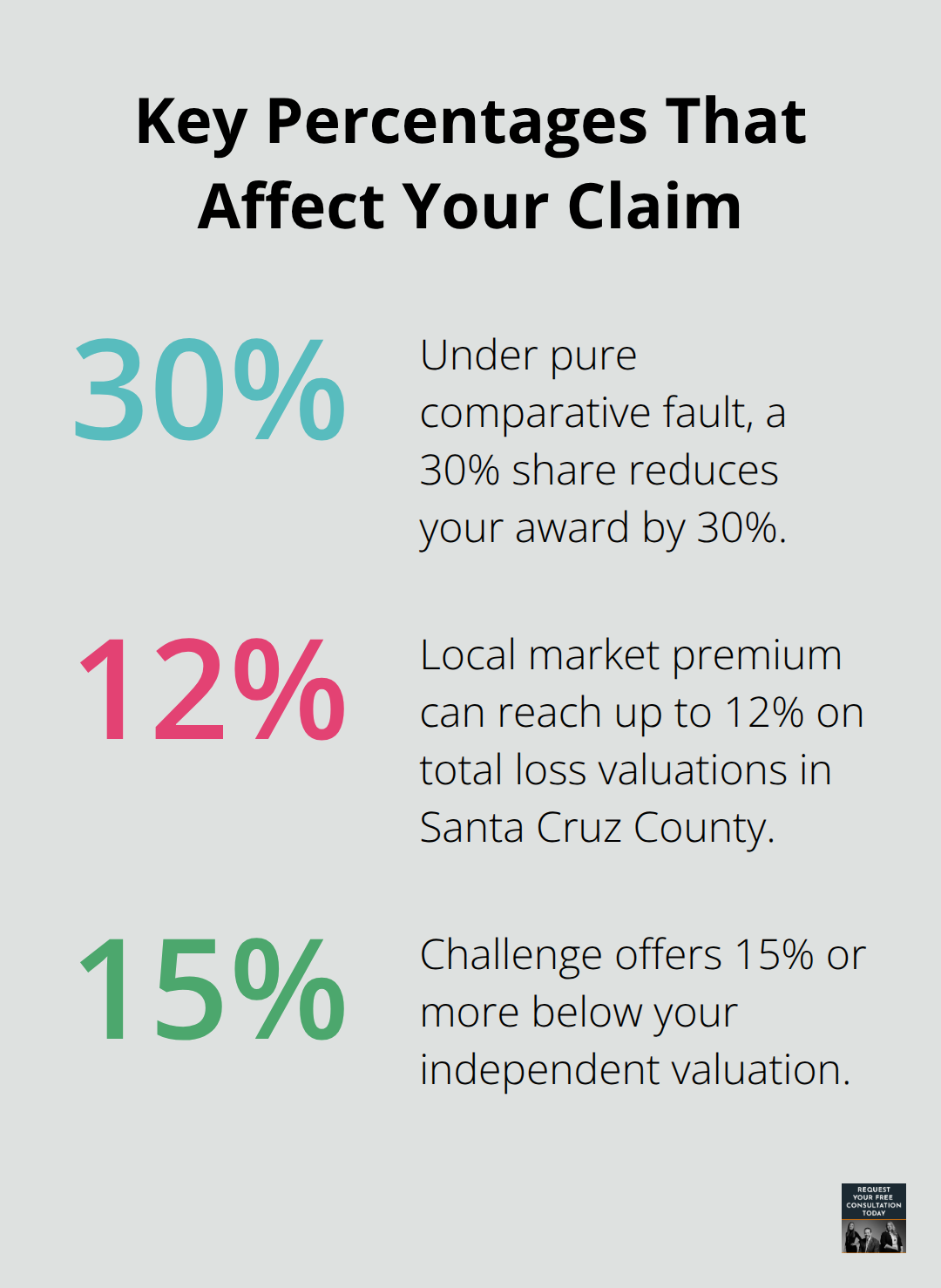
For total loss vehicles, verify the insurer’s valuation against actual cash value using NADA Guides or Kelley Blue Book; Santa Cruz County market factors often add 5 to 12 percent premium to standard valuations. If an offer falls 15 percent or more below your independent valuation, challenge it with documentation and consider legal support to prevent accepting an artificially low settlement.
Personal Injury Claims Demand Proof of Connection
Personal injury claims demand a fundamentally different approach because they require proving not just what happened, but also connecting your medical treatment directly to the crash. California law allows you to recover damages even if you’re partially at fault under pure comparative fault rules, meaning a 30 percent share of fault reduces your award by 30 percent rather than eliminating your claim entirely. Document every medical appointment, therapy session, and cost from day one because insurers scrutinize these records to determine injury severity and treatment necessity.
Economic and Non-Economic Damages
Economic damages cover medical care, hospitalization, future medical expenses, lost wages, and home modifications; non-economic damages address pain and suffering, emotional distress, loss of enjoyment of life, and permanent disfigurement. Catastrophic injuries like traumatic brain injury and spinal cord injuries commonly justify seven-figure settlements when properly documented. Most importantly, never accept an initial settlement offer without having it reviewed; insurers regularly undervalue claims, particularly soft tissue injuries and psychological trauma that don’t show on imaging.
Getting Help With Your Claim
We at Schaar & Silva LLP assist with medical bill lien management, property damage evaluation, and claim negotiation to help you understand whether an offer reflects your actual losses.
Conclusion
Recovery after a car crash involves far more than paperwork and medical appointments. Your immediate actions in the first days after a crash-obtaining a police report, documenting the scene, seeking medical care, and filing claims within 30 days-determine how much you’ll recover. Medical records and repair estimates become your evidence when insurers question your claim or offer settlements below your actual losses.
Property damage and personal injury claims require different approaches, and catastrophic injuries like traumatic brain injury and spinal cord injuries justify substantial compensation when properly documented. Psychological trauma is equally real and equally recoverable, though insurers frequently underestimate it. Many victims accept initial offers without understanding their true value, which is why having someone review your settlement matters.
You don’t have to navigate car crash injury resources alone. We at Schaar & Silva LLP assist with medical bill lien management, property damage evaluation, and claim negotiation to help you understand whether settlement offers reflect your actual losses. Contact us for a claim review and guidance tailored to your situation.
