
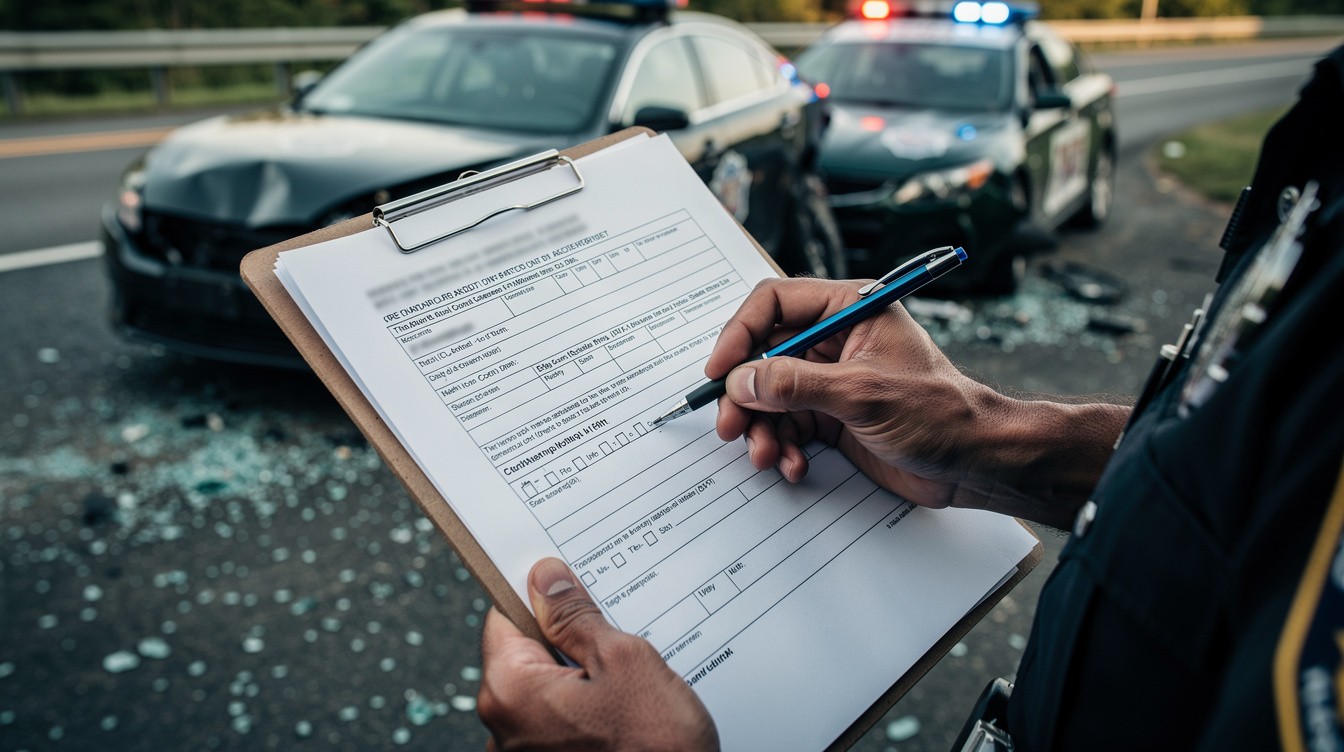
After a car accident, the police report becomes one of your most valuable documents. It provides an official record of what happened, who was involved, and what the responding officer observed at the scene.
At Schaar & Silva LLP, we’ve seen how a car accident police report can make or break an insurance claim. Without it, you’re left arguing your version of events against the other driver’s account, with no neutral third party to back you up.
What a Police Report Actually Contains
The Scene Documentation Officers Create
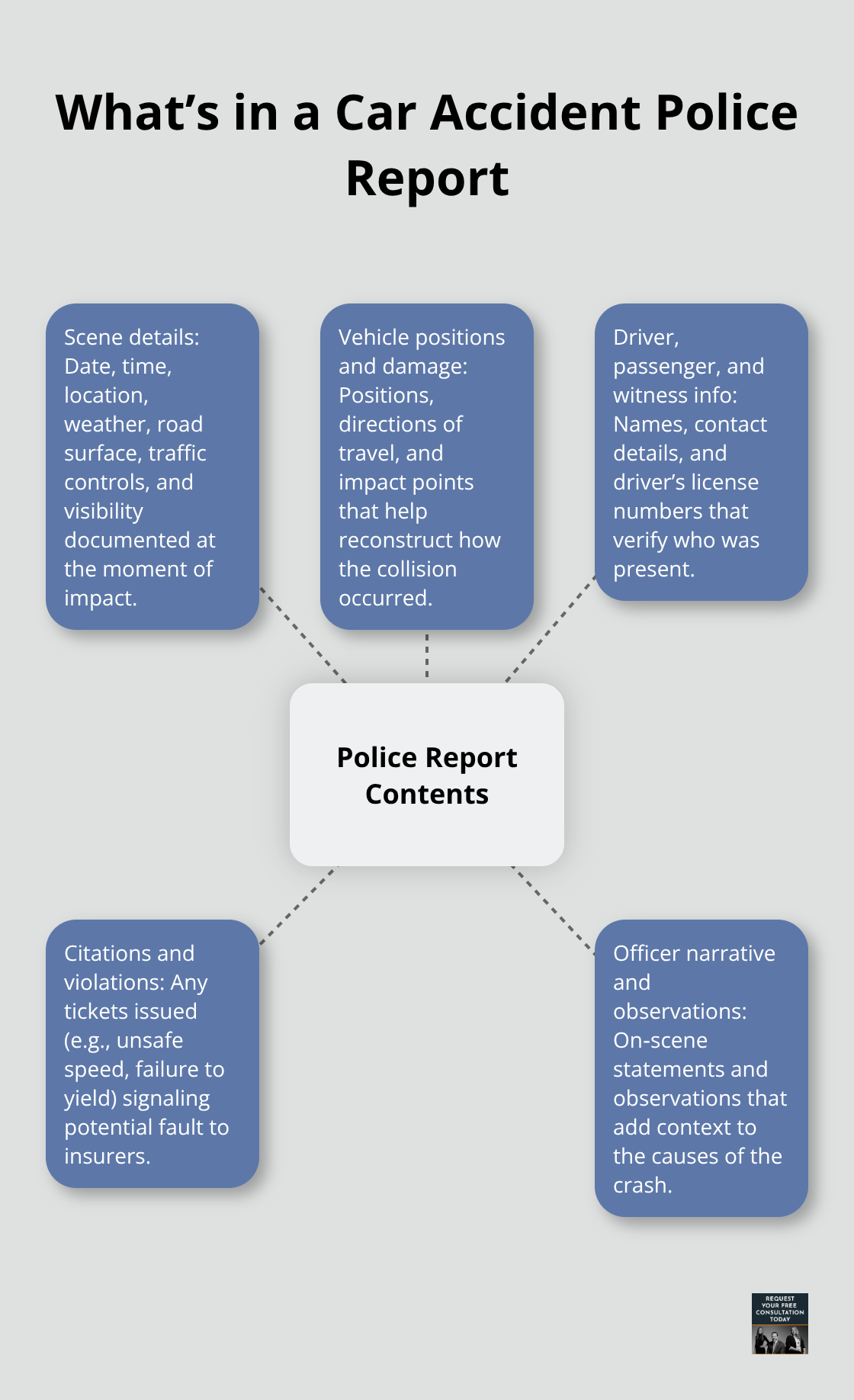
A police report documents the accident scene through the eyes of a trained officer who arrived within minutes of the crash. The officer records the date, time, and exact location of the accident, along with weather conditions, road surface, traffic signals, and visibility at the moment of impact. This contemporaneous account matters because memories fade and details blur within hours. The officer also documents vehicle positions, direction of travel, and damage patterns, which help reconstruct how the collision occurred.
Vehicle and Driver Information
You’ll find the vehicle identification numbers, license plate numbers, and insurance information for all parties involved in the report. The report includes the names, addresses, phone numbers, and driver’s license numbers of every driver, passenger, and witness present. This information is critical because it gives you a verified record of who was there, preventing the other driver from later claiming witnesses don’t exist or providing false contact details.
Citations and the Officer’s Assessment
The citations issued at the scene carry significant weight in your claim. If the other driver received a citation for unsafe speed, failure to yield, running a red light, or reckless driving, that citation creates a paper trail showing the officer believed the other party violated traffic law. Insurance adjusters rely heavily on citations because they represent an independent professional’s judgment about what caused the accident.
The officer’s narrative section describes what each driver reported, what witnesses said, and the officer’s own observations about contributing factors. Some reports include the officer’s opinion on fault, though this opinion doesn’t legally determine liability. However, it does provide valuable documentation that supports your version of events.
Getting Your Report and Checking for Errors
Request your report from the local police department immediately after the accident rather than weeks later, as details may become incomplete or harder to obtain after time passes. Review the report carefully for errors in vehicle descriptions, driver information, or accident details. If you find inaccuracies, contact the police department to request corrections. These details form the foundation that insurance adjusters and attorneys will examine as they evaluate your case and determine next steps.
Why Insurance Adjusters Need the Police Report
How Adjusters Use Police Reports to Start Their Investigation
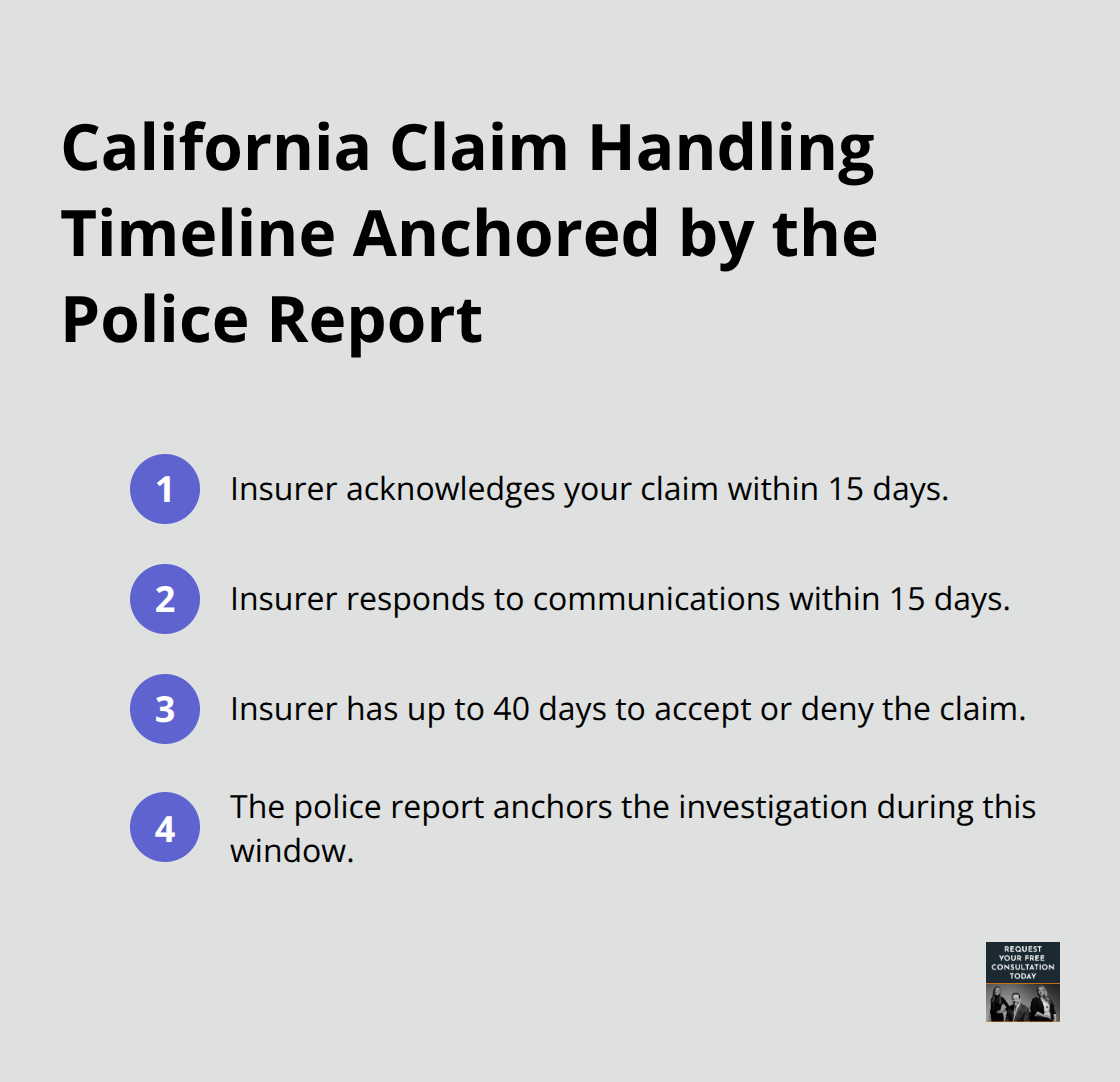
Insurance adjusters do not investigate accidents from scratch. They rely on the police report as their starting point because it contains observations made by an unbiased third party within minutes of the crash. When an adjuster receives your claim, they pull the police report and use it to establish a timeline, identify the vehicles involved, and understand the officer’s initial assessment of what happened. The California Department of Insurance requires adjusters to acknowledge your claim within 15 days and respond to communications within 15 days, but they can take up to 40 days to accept or deny a claim. During that window, the police report becomes the anchor for their investigation.
Citations and Evidence of Fault
If the report shows the other driver received a citation for unsafe speed or failure to yield, the adjuster treats that as strong evidence of fault. Without the report, you ask the adjuster to accept your word against the other driver’s word, which rarely works in your favor. A citation creates a paper trail showing the officer believed the other party violated traffic law, and adjusters weight this independent professional judgment heavily when they evaluate liability.
How Police Reports Expose Changing Stories
The police report also protects you against changing stories. Drivers frequently alter their accounts days or weeks after an accident, claiming they did not see the other vehicle, did not realize they caused the crash, or that the other party was at fault. The officer’s contemporaneous narrative contradicts these later claims because it documents what each driver said immediately after the collision. If the other driver told the officer they were traveling at 35 miles per hour but later claims they were going 15 miles per hour, the police report exposes that inconsistency.
Insurance adjusters use these contradictions to determine that a driver is being dishonest, which strengthens your position in settlement negotiations. The report also documents witness statements, which carry tremendous weight because witnesses have no stake in the outcome. An adjuster values a witness statement from the police report far more than a witness statement you provide later, simply because the police officer recorded it without bias.
Police Reports in Litigation
If your case proceeds to litigation, the police report becomes evidence that the other driver’s current account differs from their statement to the officer, which juries view as a sign of dishonesty. This documented inconsistency (recorded by an officer at the scene) undermines the credibility of the other party’s testimony in court. The contemporaneous nature of the police report-created within minutes of the accident-makes it far more reliable than statements made weeks or months later when memories have faded or stories have shifted.
Getting Your Police Report and What to Check
Request Your Report Quickly
Contact the police department that responded to your accident within the first week rather than waiting weeks later. Most police departments in Santa Cruz County, Sacramento, and Oakland process report requests within 5 to 10 business days, though some departments now offer online access for faster retrieval. You’ll need the accident date, location, and your case number if you have it. Many departments charge between $5 and $15 for a copy, and some allow you to request the report by phone, email, or in person. Online submission typically processes faster than mailing a check, so check your local department’s website for the quickest option.
Verify All Personal and Vehicle Information
Once you receive the report, read it immediately and thoroughly rather than filing it away. Look for your name, driver’s license number, vehicle identification number, and insurance information to confirm accuracy. Check that the officer recorded the other driver’s information correctly, including their license plate, VIN, and insurance company.
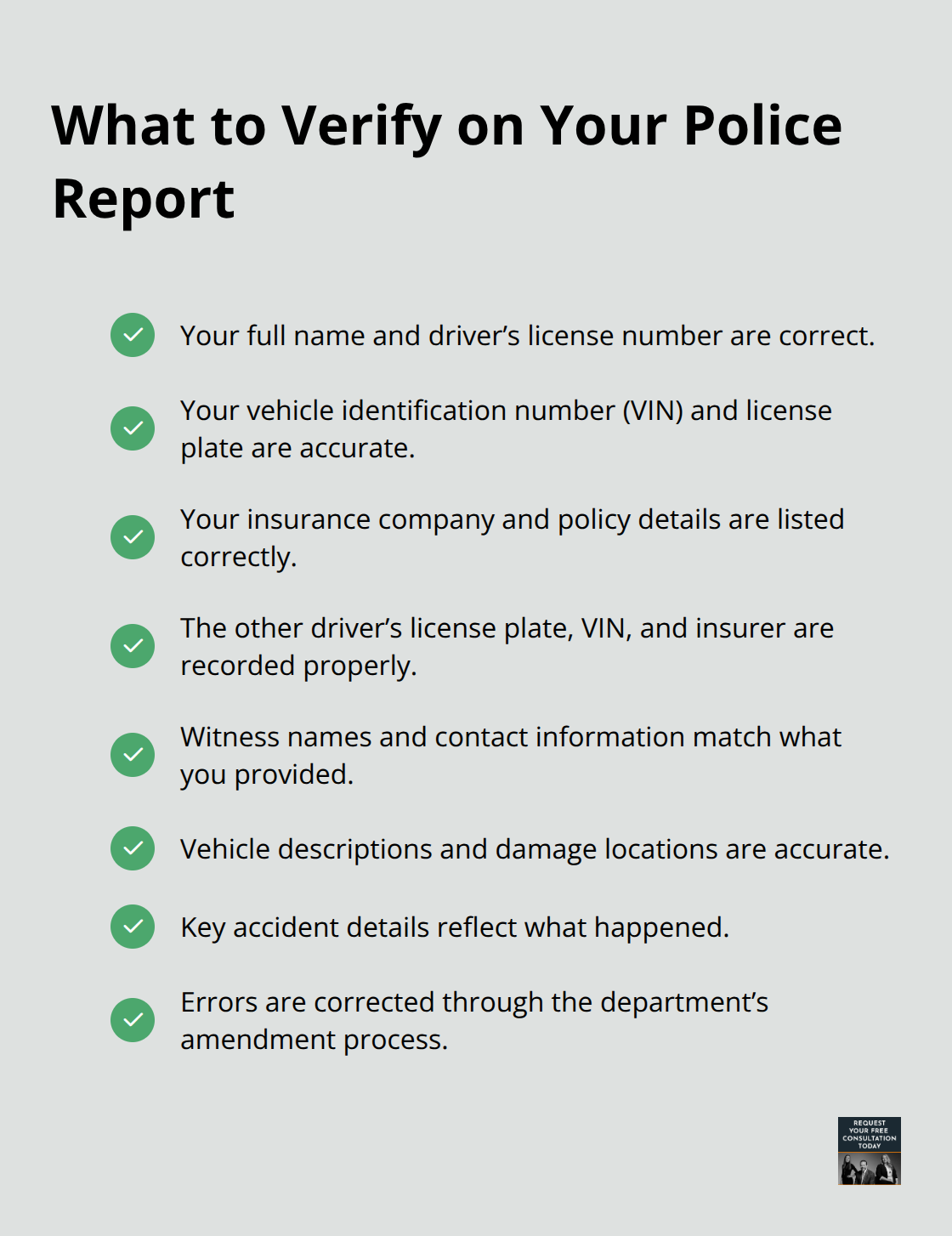
Verify that witness names and contact information match what you provided at the scene. If the report contains errors in vehicle descriptions, damage locations, or accident details, contact the police department to request corrections. Some departments allow amendments online, while others require a written request. Do not assume minor errors don’t matter; insurance adjusters scrutinize these details, and inaccuracies can complicate your claim.
Examine the Officer’s Narrative and Citations
The most important section to review is the officer’s narrative, which describes how each driver said the accident occurred and what the officer observed. If the report includes citations issued to the other driver, note the specific violation cited, as this becomes your strongest evidence of fault during settlement negotiations. If the report lacks important details you know happened (such as the other driver running a red light or failing to yield), document this discrepancy. You may need to provide the adjuster with additional information or witness statements that support facts missing from the police report. Some officers include their opinion on fault, though this opinion is not legally binding; however, it strengthens your position if the officer’s assessment aligns with your account.
Share the Report With Your Insurance Company and Attorney
Provide copies to your insurance company within 48 hours of receiving the report, as delays can slow your claim processing. If you’re working with an attorney, provide them with a copy immediately so they can begin building your case from day one. The police report becomes the foundation for all negotiations and potential litigation, so accuracy and completeness matter far more than you might initially realize.
Final Thoughts
When you work with an attorney after a car accident, the car accident police report becomes the foundation of your entire case. We at Schaar & Silva LLP use the report from day one to understand what happened, identify liability, and build a strategy tailored to your situation. The report provides an independent account of the scene, citations issued, and witness statements that we reference throughout negotiations and litigation.
During settlement discussions with insurance companies, the police report carries weight that your personal account alone cannot match. If the report documents that the other driver received a citation for failure to yield or unsafe speed, we present that citation as concrete evidence of fault. Insurance adjusters respond to official documentation far more readily than to arguments without supporting evidence, which makes them more willing to offer fair settlements when they see an officer’s contemporaneous observations backing your version of events.
If your case reaches court, the police report becomes critical evidence that demonstrates the other driver’s credibility problems. When testimony at trial contradicts what the other driver told the officer at the scene, juries view that inconsistency as dishonesty. Contact our team to discuss how we can help you navigate the claims process and protect your rights.
