
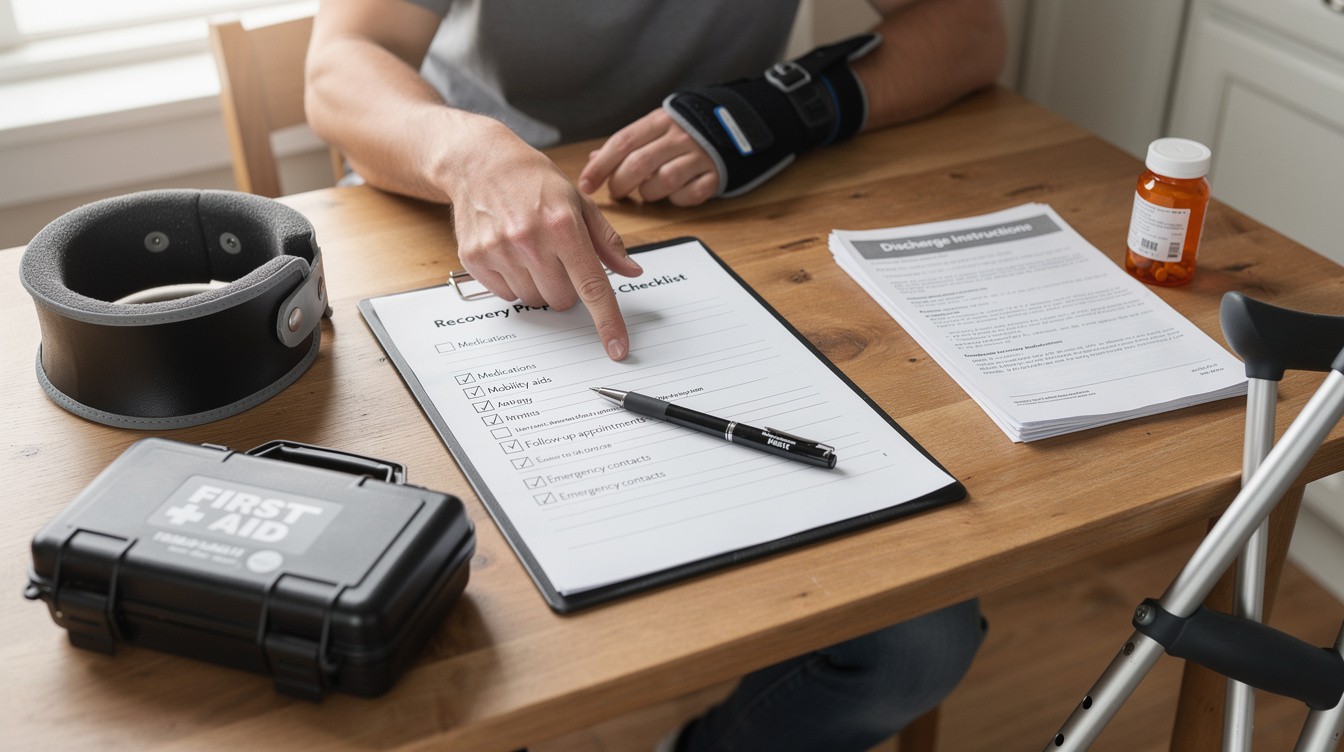
A car accident can leave you injured, confused, and unsure what comes next. We at Schaar & Silva LLP created this car accident injuries checklist to guide you through recovery step by step.
From the first hours after impact to months of healing, you’ll face medical decisions, insurance claims, and physical rehabilitation. This roadmap walks you through each phase so you know exactly what to expect and what actions matter most.
What to Do Right After Your Accident
The first hour after a car accident determines how well your recovery and claim will go. Your actions in those immediate moments create the foundation for everything that follows.
Prioritize Safety and Medical Care
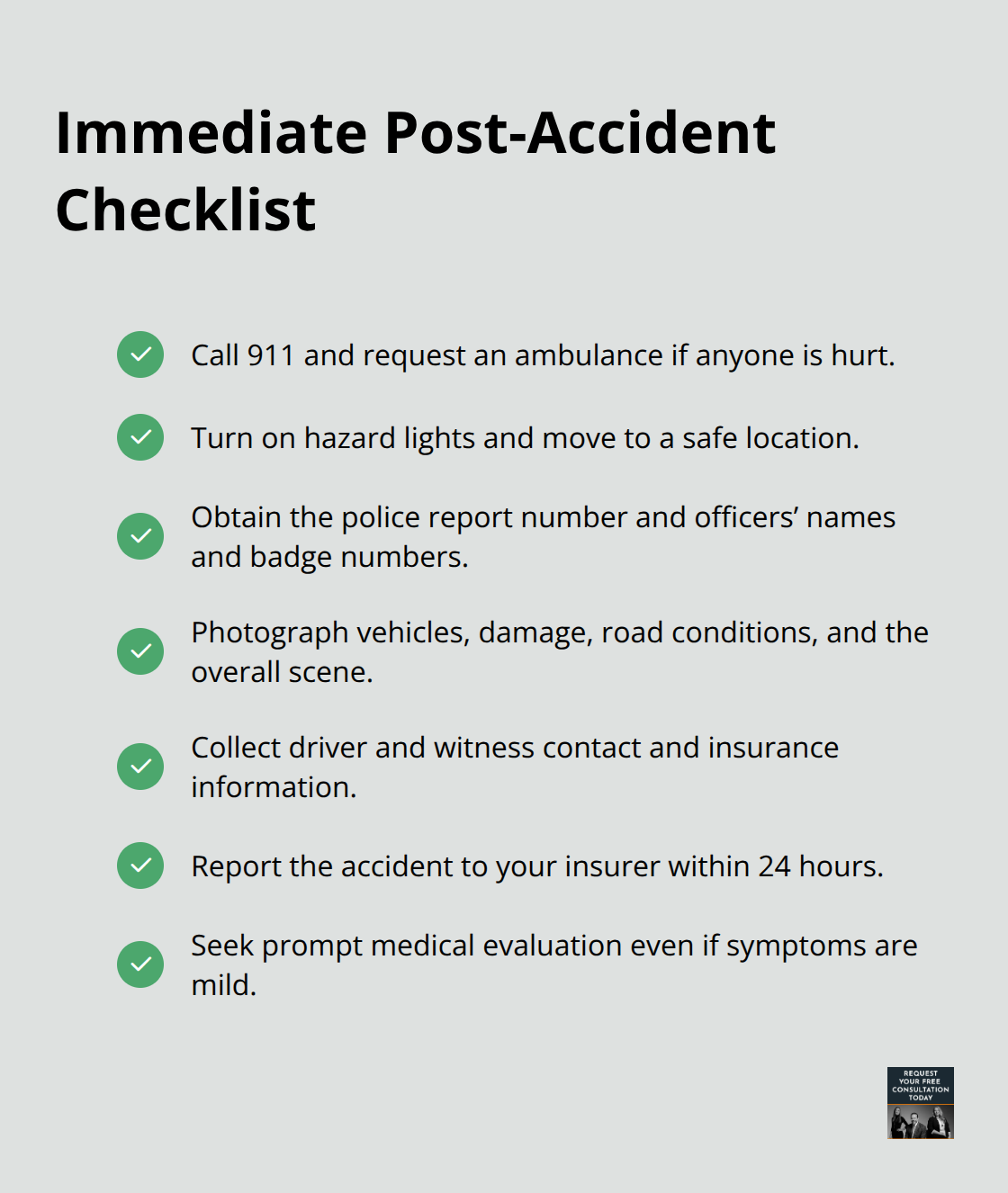
Stop at a safe location and turn on your hazard lights. Check yourself and your passengers for injuries. Call 911 immediately if anyone is hurt. The WHO reports that timely post-crash care is time-sensitive, and delays worsen injuries significantly. Request an ambulance even if injuries seem minor, since internal bleeding or concussions don’t always show symptoms right away.
Once emergency responders arrive, obtain the police report number and note the officer’s names and badge numbers. This documentation becomes critical for your insurance claim and any legal action that may follow.
Document the Scene with Photos and Video
Take photos and videos from multiple angles before moving your vehicle or anyone else’s. Capture the damage to all vehicles involved, road conditions, traffic signals, skid marks, and the overall scene. These images serve as objective evidence that insurance adjusters and attorneys rely on to determine fault. If you’re too injured to photograph, ask a witness or emergency responder to do it for you.
Don’t rely on memory or the other driver’s account. Visual evidence protects your interests far better than verbal statements alone.
Collect Critical Information
Exchange names, phone numbers, addresses, insurance policy numbers, vehicle makes and models, license plate numbers, and driver’s license numbers with the other driver. If witnesses are present, get their contact information immediately (many witnesses disappear before police arrive, and their statements can prove invaluable later).
Report the accident to your insurance company within 24 hours. The longer you wait, the more questions adjusters will ask about why you delayed reporting. This prompt action sets the stage for a smoother claims process and positions you well for the medical evaluation that comes next.
Common Injuries After a Car Accident
Whiplash and Neck Injuries
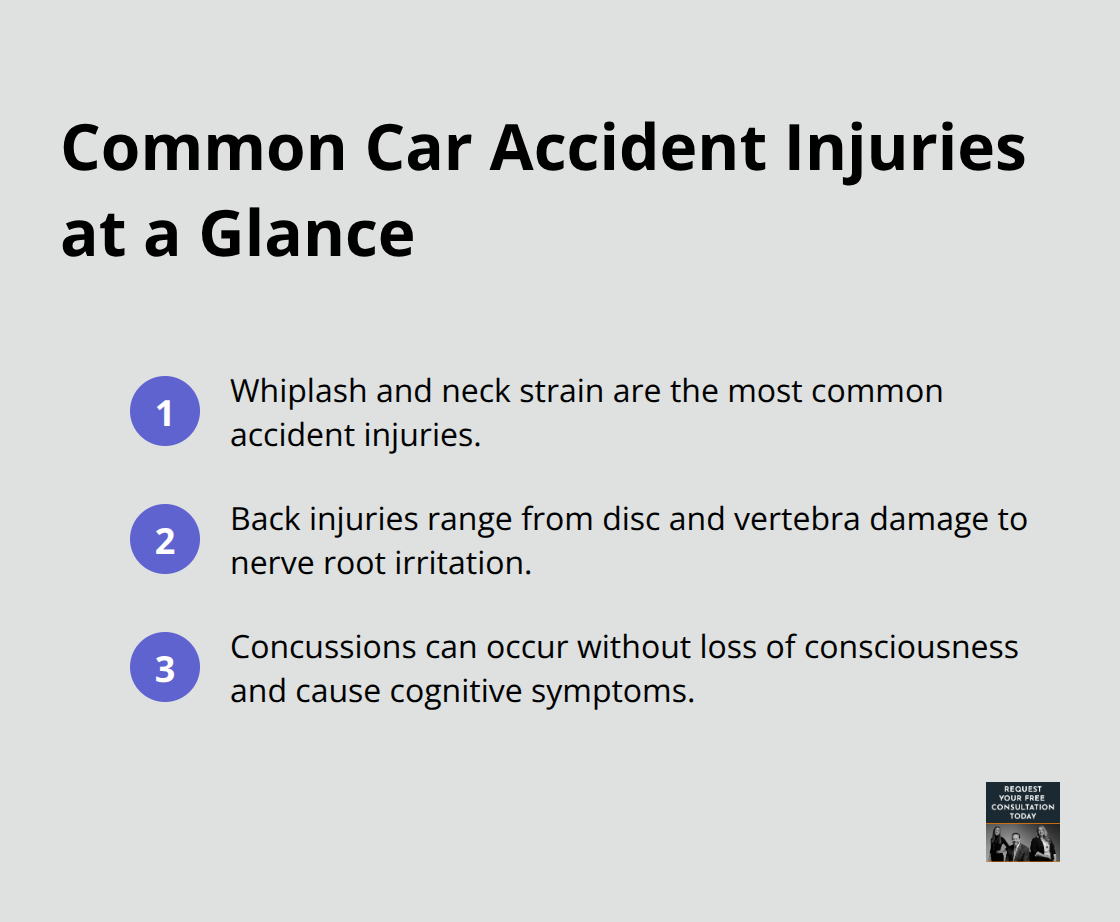
Neck injuries occur in nearly every car accident, and whiplash ranks as the most common type. Your neck contains seven vertebrae stacked like building blocks, and a sudden impact forces your head backward then forward, straining the soft tissue connecting them. Symptoms appear within hours or days: neck pain, stiffness, headaches, and reduced range of motion.
Some people feel fine immediately after impact but experience severe pain the next morning. This delayed response happens because inflammation builds gradually. Physical therapy within the first two weeks matters significantly.
A study published in the journal Spine found that patients who started therapy early recovered faster than those who delayed treatment. You’ll need exercises to strengthen neck muscles and restore mobility.
Back and Spinal Cord Injuries
The impact of a car accident compresses your spine, potentially damaging discs, vertebrae, or nerve roots. Lower back pain is the most frequent complaint, but upper back injuries and thoracic spine damage also occur. Spinal cord injuries are rare but catastrophic-even partial damage can cause permanent nerve loss and paralysis.
Seek immediate imaging (X-rays or MRI) if you experience severe back pain, numbness, tingling, or weakness in your legs. The sooner you obtain diagnostic imaging, the sooner treatment can begin. Delaying this step allows injuries to worsen and complicates recovery later.
Head Trauma and Concussions
Your brain sits inside fluid, and sudden deceleration causes it to move inside your skull, creating bruising and chemical changes. Concussion symptoms include headache, dizziness, confusion, memory problems, sensitivity to light, and nausea. The CDC emphasizes that you don’t need to lose consciousness to have a concussion.
Many accident victims ignore these symptoms or attribute them to stress, delaying diagnosis and treatment. Get a medical evaluation even if symptoms seem mild-untreated concussions can cause long-term cognitive problems and increase vulnerability to future brain injuries. This medical documentation also protects your insurance claim and any potential legal action, which is why prompt evaluation matters beyond just your health.
Recovery Timeline and What to Expect
First Days: Medical Evaluation and Documentation
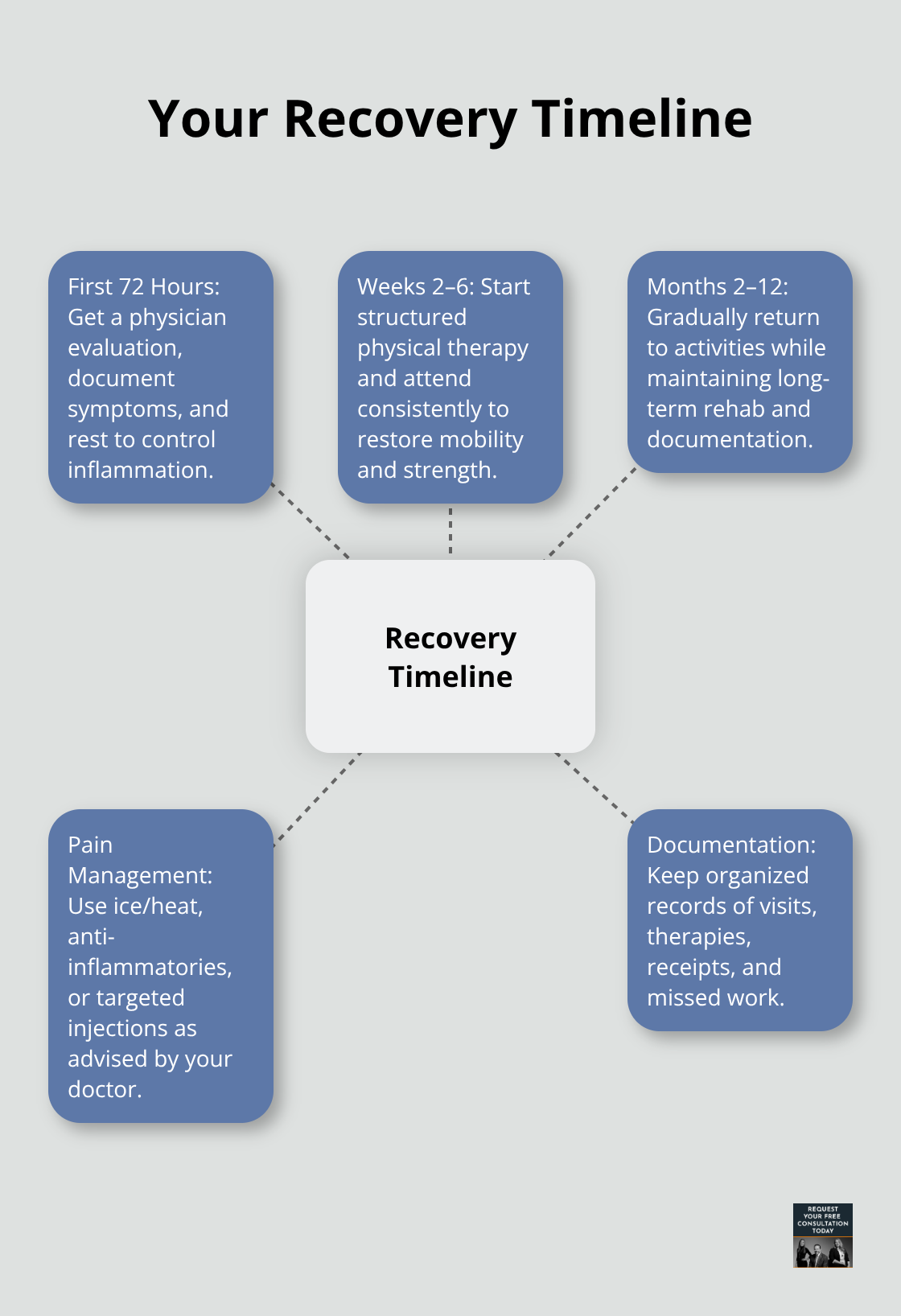
The first 72 hours after your accident are critical for establishing your medical baseline. Get evaluated by a physician even if you feel fine, since injuries like concussions and internal bleeding don’t always produce immediate symptoms. Your medical records from this initial evaluation become the foundation for your insurance claim and any legal action. The CDC notes that symptoms of concussion can emerge hours or days after impact, so a documented early exam protects you if problems surface later.
During these first days, focus entirely on medical care and rest. Avoid heavy activity, lifting, or strenuous exercise. Your body needs time to heal, and pushing too hard now can trigger inflammation that complicates recovery. Start a symptom journal that documents pain levels, headaches, dizziness, sleep quality, and any changes you notice. Insurance adjusters and attorneys rely on these detailed records to understand your injury’s severity and impact on your daily life.
Weeks 2-6: Physical Therapy and Pain Management
Between weeks two and six, physical therapy becomes your primary tool for recovery. Most neck and back injuries respond best to structured therapy within this window (patients who start early recover significantly faster than those who delay treatment). Attend every scheduled session-consistency matters more than intensity. Your therapist will guide you through exercises that restore mobility, build strength, and reduce pain without re-injuring the area.
Simultaneously, your doctor may recommend pain management strategies including ice or heat therapy, anti-inflammatory medication, or in some cases, targeted injections. Track which treatments work best for your specific pain pattern. This information helps your medical team adjust your approach and provides valuable documentation for your claim.
Months 2-12: Long-Term Rehabilitation and Return to Activities
Your focus shifts to sustained rehabilitation and gradual return to normal activities. This isn’t linear-some weeks you’ll feel better, others worse, and that’s normal. Avoid the temptation to resume full activity too quickly, as setbacks at this stage can extend your recovery by months.
Most soft tissue injuries resolve within 12 weeks, though some people experience lingering pain that requires longer-term physical therapy or specialized treatment. Throughout your entire recovery, maintain organized documentation of all medical visits, therapy sessions, prescription receipts, and any work you miss due to your injuries. This documentation proves invaluable when resolving your claim and establishing the full scope of your damages.
Final Thoughts
Recovery after a car accident extends beyond physical healing-you’ll navigate insurance claims, medical bills, and emotional challenges while your body mends. Medical expenses accumulate quickly after an accident, with hospital visits, physical therapy, imaging, and prescriptions creating bills that arrive while you’re still unable to work. We at Schaar & Silva LLP work with accident victims in Santa Cruz County to manage property damage claims and connect you with medical lien services that facilitate payment of your bills until your case resolves, removing the financial pressure during recovery.
Organize every document from day one using this car accident injuries checklist as your reference point. Keep medical records, therapy receipts, photos from the accident scene, police reports, and communications with insurance companies in one accessible location, as this organization proves invaluable when resolving your claim and establishing the full scope of your damages. Legal representation handles the complexities that insurance companies create, allowing you to focus entirely on healing while we handle the legal details.
Emotional recovery matters as much as physical healing, since car accidents create psychological trauma that many people underestimate. Anxiety about driving, sleep disruption, and stress about medical outcomes are real injuries that require attention, and we connect you with professionals who offer psychological support during your recovery journey. Your path forward includes medical care, legal guidance, and emotional support working together as you heal.
