

After a car accident, understanding the settlement timeline can reduce stress and help you plan ahead. At Schaar & Silva LLP, we’ve guided countless clients through this process in Santa Cruz County, Sacramento, and Oakland.
The path from accident to resolution involves multiple steps, and knowing what to expect matters. This guide walks you through realistic timelines, common delays, and how settlements actually get calculated.
How Long Does a Settlement Take
Most auto accident settlements in California take three to nine months from the date of the crash, though this timeline varies significantly based on injury severity and how quickly your insurer cooperates. The single biggest factor determining speed is reaching Maximum Medical Improvement, or MMI, before you settle. Settling before MMI means you risk being underpaid for future medical costs that emerge later.
Medical Treatment and Recovery Time
If you have mild soft tissue injuries, you stabilize in two to four months. Surgeries or complex injuries extend this phase considerably, sometimes stretching six months or longer. Your medical records, bills, receipts, wage loss statements, and accident photos need organization in one accessible place-this accelerates everything that follows. Clear liability evidence matters just as much. Dashcam footage, police reports, and witness statements speed negotiations substantially. Ambiguous fault generally slows progress because insurers dig in when liability isn’t obvious.
Settlement Versus Litigation
Settled cases move faster than cases that go to court. After your medical treatment ends, a detailed demand package goes to the insurer, who typically responds within about 30 days. Straightforward cases settle 60 to 90 days after the demand. Court cases take much longer because discovery collects evidence over several months, the defendant answers within about 30 days, and pretrial procedures extend timelines further. Trials, when they happen, can last days depending on complexity.
The Impact of Legal Representation
Data from the Insurance Research Council shows represented claimants recover about 3.5 times more than unrepresented claimants, even after attorney fees. Hiring an attorney often speeds resolution because your lawyer filters insurer outreach and handles settlement negotiations professionally. Liability disputes and multiple defendants stretch timelines significantly and may require litigation to move forward. If damages exceed the at-fault driver’s policy limits, you might pursue underinsured motorist coverage or other parties, which adds complexity to your case.
Understanding these variables helps you anticipate what comes next in your claim.
The Auto Accident Claims Process Step by Step
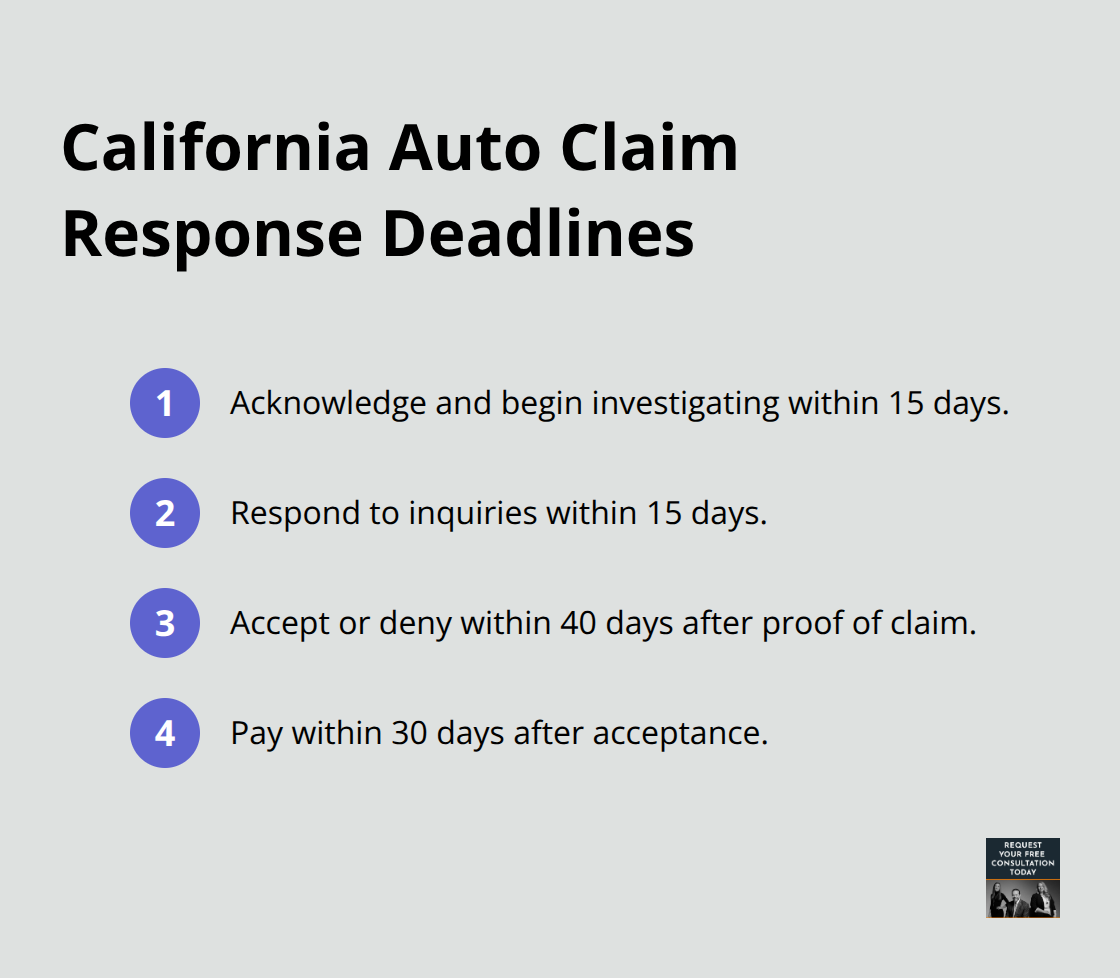
The first 30 days after a crash set the tone for your entire settlement timeline. You or your attorney send a representation letter to the at-fault driver’s insurance company, and this letter triggers their investigation clock. California’s Fair Claims Settlement Practices regulations require insurers to acknowledge and start investigating claims within 15 days, respond to inquiries within 15 days, accept or deny within 40 days after you submit proof of claim, and pay settlements within 30 days after acceptance. These aren’t suggestions-they’re legal minimums.
During these initial weeks, the insurer gathers the police report, witness statements, and your medical records. If you don’t have an attorney, the adjuster contacts you directly and may request a recorded statement. Never give one without legal guidance. Recorded statements lock your words in place and insurers use them to minimize payouts later. Instead, provide written responses through your attorney, which gives you time to think and prevents misstatements.
Filing Your Claim and Initial Documentation
Organize everything from day one: medical records, bills, receipts, wage loss documentation, photos of the accident scene, and vehicle damage. This single step cuts weeks off your timeline because the insurer won’t repeatedly ask for missing documents. The insurer’s property damage adjuster inspects your vehicle within days of filing. If additional damage appears later, they conduct a re-inspection and request new repair estimates. The insurer pays the lesser of repair costs or actual cash value, defined as fair market value.
Investigation and Damage Assessment
If you dispute the valuation on a total loss, demand an appraisal under California law. Two appraisers meet, select a neutral umpire, and their agreement becomes binding. Each party pays its own appraiser; you and the insurer split the umpire fee. This process takes two to four weeks but prevents accepting an unfairly low payout. Meanwhile, the bodily injury adjuster reviews your medical treatment. They want to see treatment that matches injury severity-frequent therapy sessions for minor soft tissue injuries raise red flags and give them ammunition to lower your settlement. Attend all appointments, follow your doctor’s recommendations exactly, and stop treatment only when your doctor releases you. Gaps in treatment signal to insurers that your injuries weren’t serious. Document everything: appointment dates, treatment type, costs, and how injuries affected your daily life.
Negotiation and Settlement Offers
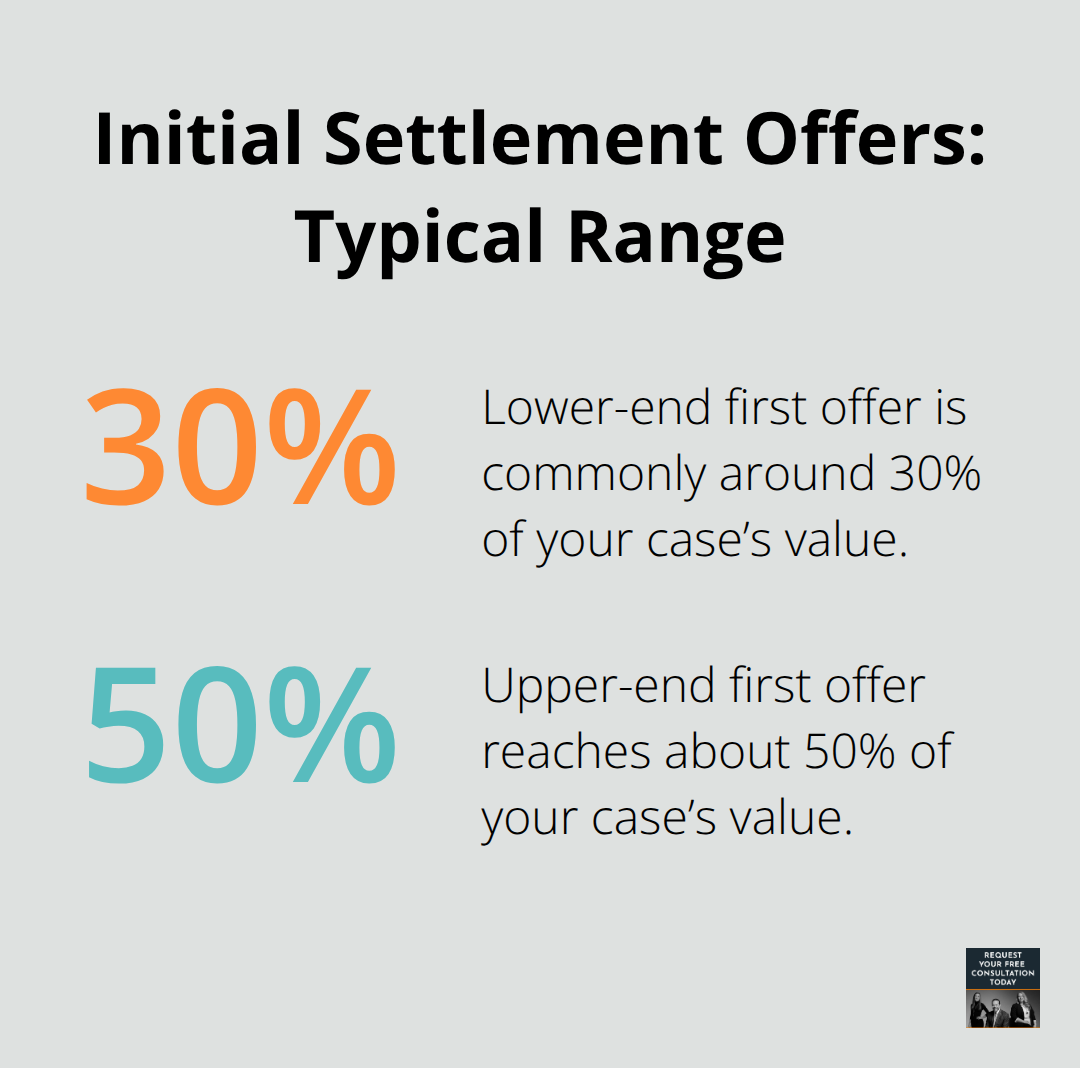
After your medical treatment ends and you reach Maximum Medical Improvement, your attorney sends a demand package to the insurer. This package includes medical records, bills totaling your past medical expenses, wage loss statements, and a narrative explaining how the crash affected your life. The insurer responds within about 30 days, usually with a lowball offer. Their first offer typically represents 30 to 50 percent of what your case is worth. Reject it.
Straightforward cases settle 60 to 90 days after the demand, but only because both sides negotiate seriously. Counter with documentation backing your number: medical expert opinions on future treatment needs, wage loss calculations from your employer, and evidence of the other driver’s fault. Clear liability evidence (dashcam footage, police reports naming the other driver at fault, multiple witness statements) accelerates this phase dramatically. Ambiguous liability cases stall here because insurers know you’ll struggle in court. If the insurer drags out negotiations past 90 days or refuses reasonable offers, your attorney files a lawsuit. This signals you’re serious and motivates settlement talks to restart. Most cases still settle after filing suit because discovery reveals evidence that strengthens your position. Settlement negotiations can occur before, during, or after litigation begins. When disputes over liability or damages emerge, understanding what happens next in the legal process becomes essential to protecting your rights.
Common Delays in Auto Accident Settlements
Disputed Liability Halts Progress
Disputed liability stands as the single biggest reason settlements drag past nine months. When the other driver claims you caused the accident, or when both drivers share fault, the insurer refuses to move forward until liability becomes crystal clear. California’s comparative negligence rules allow you to recover damages even if you’re partially at fault, but insurers weaponize this uncertainty to delay. They request accident reconstruction reports, depose witnesses multiple times, and demand independent medical evaluations. A dashcam video resolves this in days. Without it, you face three to six months of back-and-forth just to establish who caused the crash.
Witness statements matter tremendously here. Multiple independent witnesses stating the other driver ran a red light or was distracted accelerates liability determination significantly. If witnesses are unavailable or their statements conflict, expect delays stretching into months. The police report helps, but it carries no binding weight on civil liability, so insurers often ignore unfavorable findings and investigate further anyway.
Insurance Company Delay Tactics
Insurance companies deploy deliberate delay tactics that frustrate most unrepresented claimants. They request documents you’ve already submitted, schedule independent medical exams on inconvenient dates, and propose settlement conferences months out. Some adjusters simply don’t return calls for weeks.
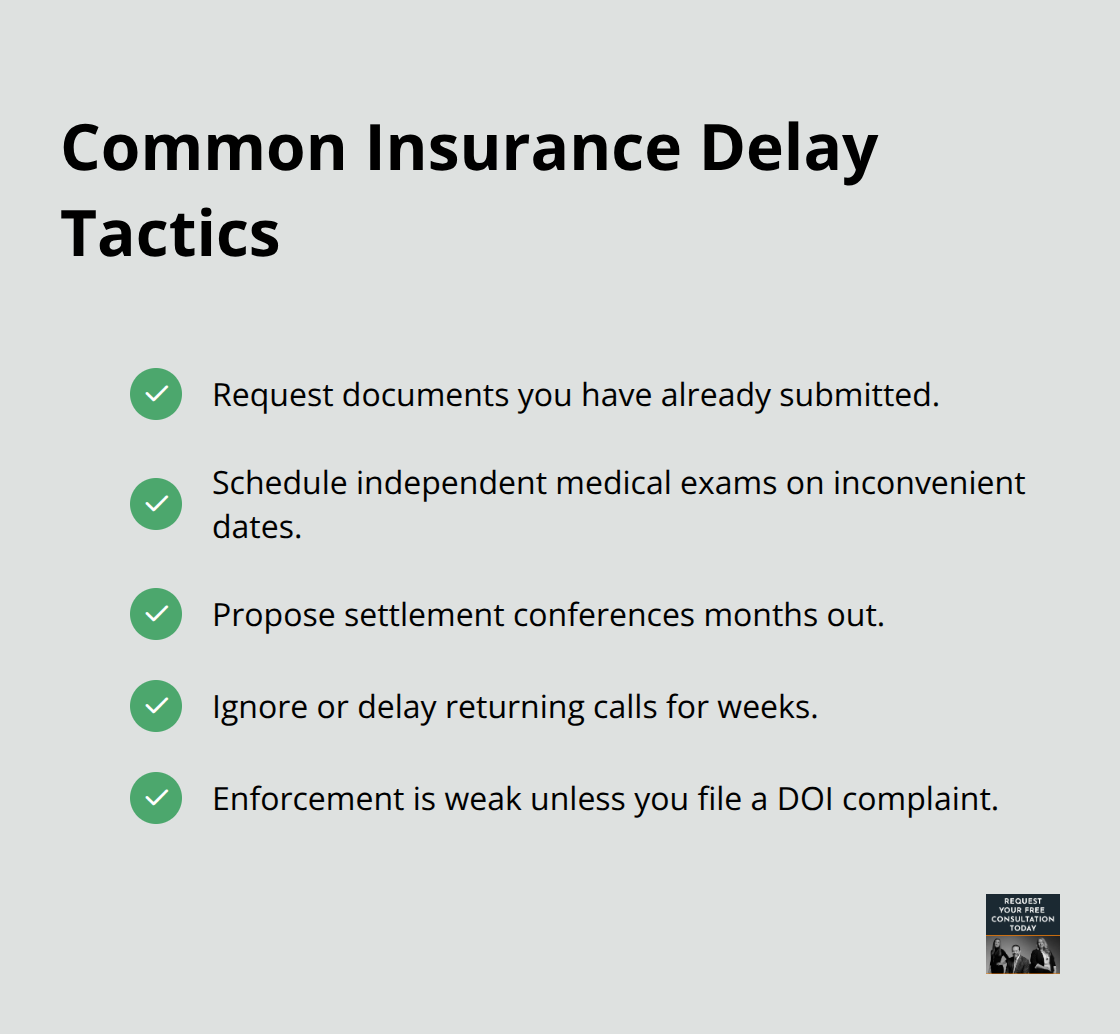
California’s Fair Claims Settlement Practices regulations require responses within 15 days and decisions within 40 days of proof of claim, but enforcement remains weak unless you file a formal complaint with the Department of Insurance.
The reality is that insurers bank on most people giving up or accepting lowball offers out of desperation. Medical treatment gaps work in their favor too. If you stop therapy for two months, then resume, they argue your injuries weren’t serious enough to warrant continuous care. They cite this gap repeatedly during settlement negotiations to justify reduced offers.
Documentation Problems Extend Timelines
Documentation issues compound these delays significantly. Missing medical records force the insurer to request them again, and hospitals sometimes take weeks to respond. Wage loss calculations require employer verification that doesn’t always arrive promptly. Organized documentation from day one prevents most of these delays, but even with perfect organization, insurers stretch timelines deliberately when liability remains unclear or when your settlement demand exceeds their initial reserve.
Hiring an attorney immediately after the crash changes this dynamic. Legal representation signals you won’t accept delay tactics, and insurers respond faster to attorneys than to unrepresented claimants because they know litigation costs them money and exposes them to bad-faith liability if they drag things out unreasonably.
Final Thoughts
Settlement amounts reflect the actual costs of your accident plus compensation for pain and suffering. Economic damages include medical expenses, lost wages, and property damage, while non-economic damages cover pain, suffering, and lost quality of life. The severity of your injuries drives the largest portion of your settlement, and your settlement timeline auto crash depends heavily on how thoroughly you document these costs from day one.
Property damage settlements are straightforward-the insurer pays repair costs or actual cash value, whichever is lower. Personal injury compensation is more complex because it includes future medical needs, ongoing therapy, and permanent disability if applicable. Reaching Maximum Medical Improvement before you settle matters tremendously because settling too early leaves you vulnerable to unexpected medical bills that your settlement won’t cover.
After you accept a settlement offer, you sign a release that closes your claim permanently, and the insurer typically issues a check within 10 to 21 business days (though some take up to 30 days). Your attorney deposits the check into a trust account and, after it clears, distributes funds minus the contingency fee (roughly 33 to 40 percent), medical liens, and case costs. We at Schaar & Silva LLP help clients in Santa Cruz County, Sacramento, and Oakland navigate every step of this process, and you can contact us for a free case evaluation to understand what your specific settlement timeline looks like.
