

A car crash shoulder injury can range from minor muscle strain to severe rotator cuff damage, and the symptoms often don’t appear immediately after the accident.
At Schaar & Silva LLP, we help accident victims understand their treatment options and navigate the recovery process. This guide covers the most common shoulder injuries from crashes, what happens during recovery, and the steps you need to take for both your health and your legal claim.
How Shoulder Injuries Develop After a Car Crash
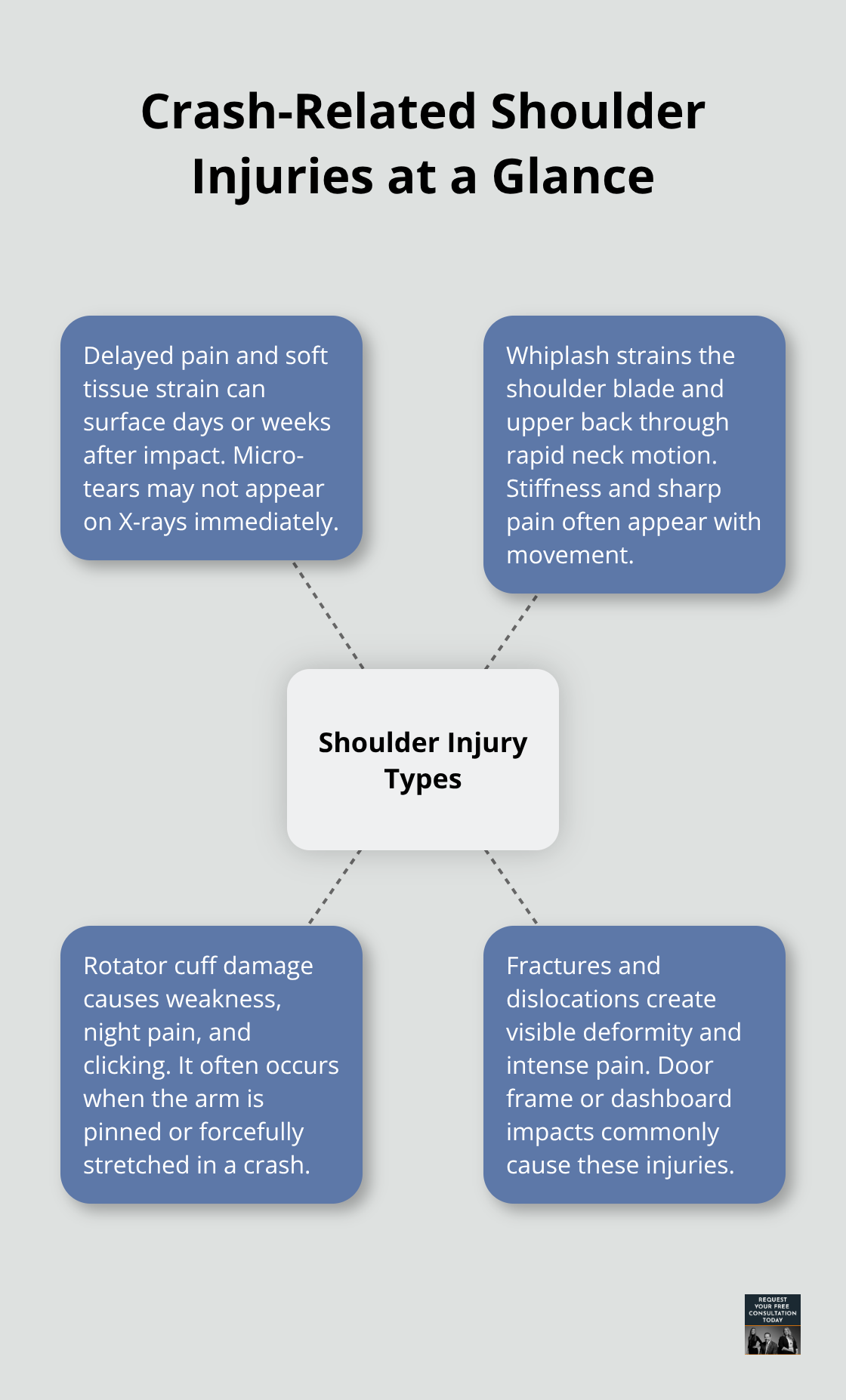
Delayed Pain and Soft Tissue Damage
Shoulder pain after a car crash often arrives days or even weeks after impact, which is why many accident victims miss the early warning signs. Your muscles tense in anticipation of collision, creating micro-tears in soft tissue that don’t cause immediate pain. According to California crash data from SWITRS, rear-end collisions account for a significant portion of injury crashes, and these impacts are particularly brutal on the shoulder and neck region.
Whiplash injuries occur when your cervical spine jerks backward and forward violently, straining the muscles around your shoulder blade and upper back. You might feel stiffness developing gradually, or sharp pain when you lift your arm or turn your head. Some people describe it as a dull ache that worsens with movement, while others experience sudden stabbing sensations.
Soft tissue damage from crashes doesn’t always show up on X-rays immediately, so you need to pay attention to how your body feels even when imaging comes back normal. This gap between impact and symptoms creates a critical window where hidden injuries progress without treatment.
Rotator Cuff Injuries and Structural Damage
Rotator cuff injuries present differently and are far more serious than simple muscle strain. These injuries damage the tendons and muscles that hold your shoulder in place and allow you to rotate your arm (common in crashes where your arm gets pinned or stretched forcefully). You’ll notice weakness when lifting objects, pain at night that disrupts sleep, and a clicking or popping sensation during movement.
Fractures and dislocations are the most obvious injuries-your shoulder will look visibly wrong if it dislocates, and pain will be intense. Broken bones in the shoulder area, including the clavicle and scapula, happen when you hit the door frame or dashboard during impact.
Why Early Evaluation Matters
Don’t wait for pain to become unbearable before seeking evaluation. Early assessment after your crash identifies hidden injuries before they develop into chronic conditions that take months or years to resolve. Many shoulder injuries worsen without proper treatment because the underlying structural damage goes unaddressed while you’re only managing pain symptoms (rather than addressing root causes).
Understanding what type of injury you have shapes everything that comes next-from how you treat it to how long recovery takes.
What Treatment Should You Start Right After Your Crash
Immediate First Aid Steps
The first hours after a shoulder injury matter far more than most people realize. If you experience acute pain, swelling, or limited movement, stop any strenuous activity immediately and apply ice to the affected area for 15-20 minutes at a time. Over-the-counter anti-inflammatory medications like ibuprofen reduce swelling, but they mask pain without addressing the underlying structural damage.
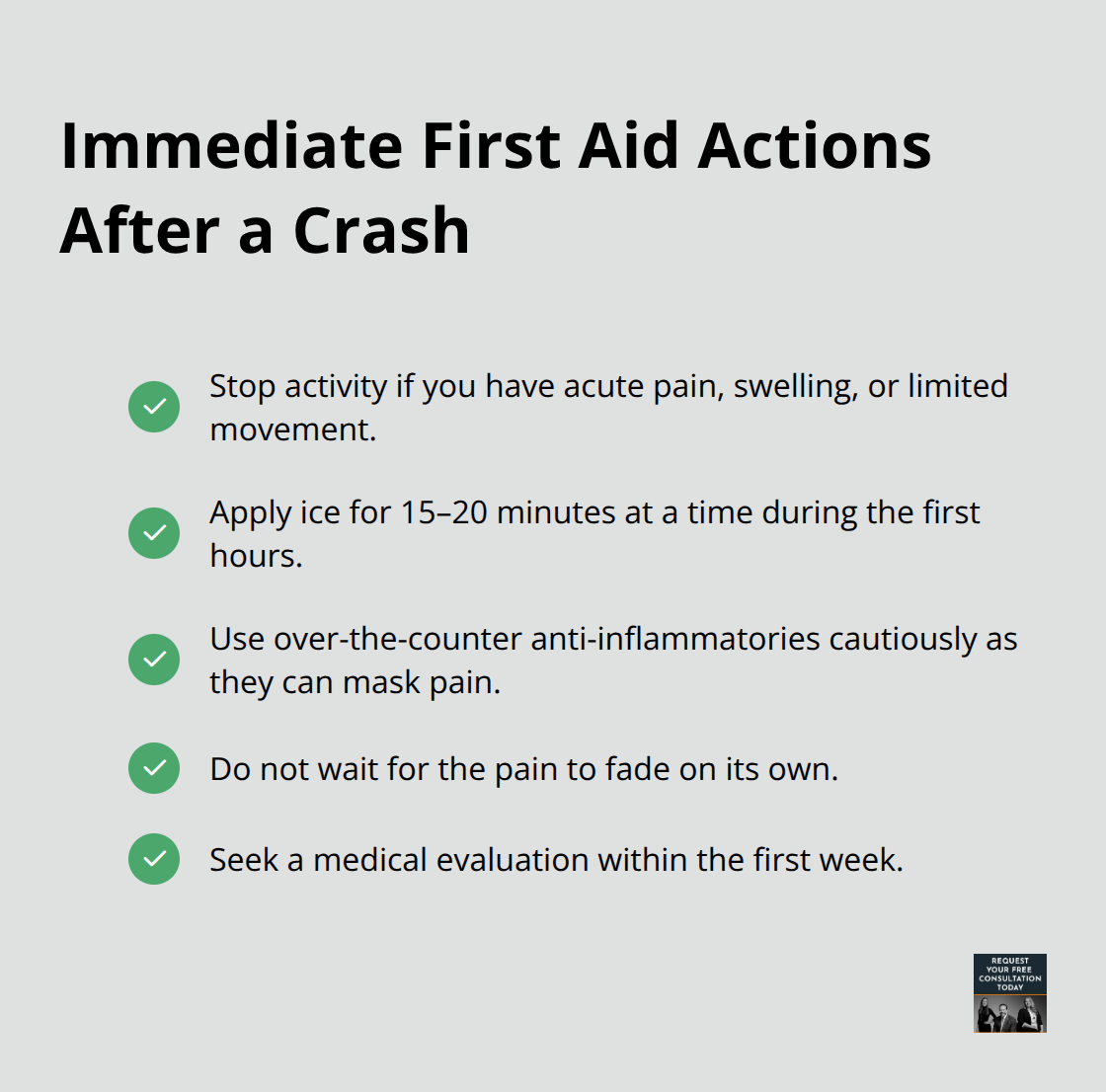
Waiting for pain to subside on its own is a mistake that allows injuries to worsen.
Getting Medical Evaluation Within the First Week
Seek medical evaluation within the first week after your crash, even if symptoms seem minor. A doctor orders imaging tests like X-rays or MRI scans to identify fractures, rotator cuff tears, or soft tissue damage that won’t heal without intervention. California emergency rooms see thousands of crash patients annually through SWITRS data, and the pattern is clear: patients who get evaluated early recover faster and experience fewer chronic complications than those who delay treatment.
Treatment for Soft Tissue Damage and Whiplash
Once imaging confirms your injury, your treatment path depends on severity. Minor soft tissue damage and whiplash respond well to chiropractic care focusing on spinal manipulation, muscle stimulation, and targeted shoulder exercises designed to restore range of motion and reduce inflammation. Treatment typically involves 2-4 visits per week over 4-12 weeks, with the goal of addressing root causes rather than just masking pain.
Treatment for Serious Injuries
More serious injuries like rotator cuff tears or fractures require physical therapy with a licensed therapist who works with post-crash rehabilitation, using progressive strengthening exercises to rebuild shoulder stability. Some patients need both chiropractic care and physical therapy working in parallel to achieve full recovery.
Managing Treatment Costs
Insurance often covers these treatments if documented properly from the start, which is why initial medical records are critical for your claim. Medical lien services help pay your treatment bills now while your case resolves, so you never have to choose between healing and paying rent. If you’re navigating Santa Cruz County and need guidance on accessing these services, Schaar & Silva LLP can connect you with the resources that support your recovery without financial strain.
What Happens During Recovery
The Acute Phase: Your First Two Weeks
The first two weeks after your crash determine whether shoulder injuries stabilize or deteriorate. Pain typically peaks between days three and five as inflammation builds, then gradually decreases if you receive proper care through chiropractic manipulation, soft tissue therapy, and targeted exercises. Most patients treating soft tissue damage and whiplash see measurable improvement within four to six weeks, with significant functional recovery by eight to twelve weeks.
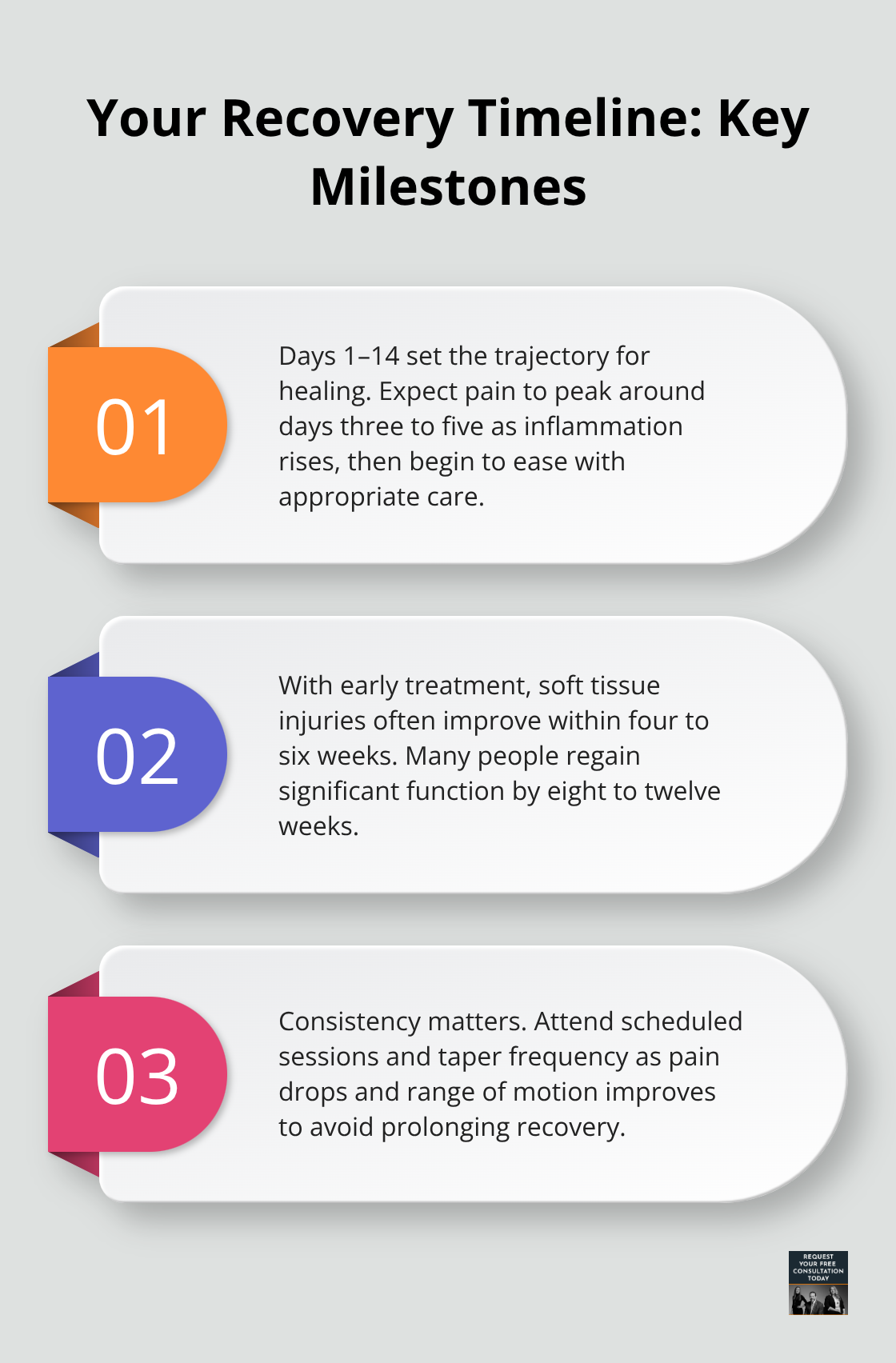
This timeline assumes you started treatment within the first week after your crash-patients who delay care often extend their recovery by months. During this acute phase, you should expect 2-4 treatment sessions per week, gradually reducing frequency as pain diminishes and range of motion improves.
Rotator Cuff Recovery Takes Longer
Rotator cuff injuries follow a longer trajectory, typically requiring 12-16 weeks of consistent physical therapy before you regain full strength and stability. The key actionable here is simple: commit to your treatment schedule completely. Missing sessions or stopping early because pain has reduced is the fastest way to develop chronic shoulder problems that persist for years.
Preventing Chronic Pain Through Progressive Activity
Chronic pain after shoulder injuries develops when you return to normal activities too quickly or when underlying structural issues went unaddressed during the acute phase. Pain management isn’t about medication-it’s about progressive strengthening and ergonomic changes that prevent reinjury. Incorporate shoulder-specific exercises into your daily routine even after formal treatment ends, focusing on rotator cuff strengthening and scapular stability work that takes just 10-15 minutes daily.
Desk ergonomics matter significantly if your job involves sitting; your desk height, monitor position, and chair support directly influence shoulder strain and pain recurrence. Return to activities gradually-start with light tasks in weeks 4-6, progress to moderate activity by weeks 8-10, and only resume full physical demands after your physical therapist confirms structural stability. Many patients assume pain-free movement means full healing; structural damage can remain even when symptoms disappear, so follow professional guidance on activity progression rather than your own perception of readiness.
Managing Financial Barriers to Treatment
If you experience persistent pain beyond twelve weeks or struggle to navigate insurance coverage while managing treatment costs, Schaar & Silva LLP can connect you with medical lien services that facilitate payment of your bills until your case resolves. This support ensures your treatment doesn’t get delayed by financial barriers while you focus on recovery.
Final Thoughts
Shoulder injuries from car crashes demand immediate attention and sustained treatment because structural damage worsens without intervention. The treatment approaches covered in this guide-from chiropractic care addressing soft tissue damage to physical therapy rebuilding rotator cuff strength-all share one principle: addressing root causes rather than masking symptoms with medication alone. Your recovery timeline depends entirely on when you start treatment and how consistently you follow through, which is why waiting weeks or months after your crash guarantees a longer, harder recovery path.
Professional medical evaluation within the first week after your accident identifies injuries that won’t show up on initial imaging and prevents hidden damage from becoming chronic pain that persists for years. A car crash shoulder injury that receives early, proper care typically resolves in weeks to months, while the same injury left untreated can cause problems for years. The difference between these outcomes comes down to one decision: getting evaluated and starting treatment immediately.
Your recovery also involves navigating insurance coverage, medical bills, and the financial strain that often accompanies treatment. We at Schaar & Silva LLP understand these barriers and can connect you with medical lien services that pay your treatment bills now while your case resolves, removing the financial pressure that delays recovery. Contact Schaar & Silva LLP to discuss your case and learn how we support Santa Cruz County accident victims through both recovery and the legal process.
