
A California car crash can turn your life upside down in seconds. Medical bills pile up, insurance companies make demands, and you’re left wondering what happens next.
We at Schaar & Silva LLP created this guide to walk you through your rights, the resources available in Santa Cruz County, and the concrete steps that protect your recovery.
What to Do Immediately After a Santa Cruz Car Crash
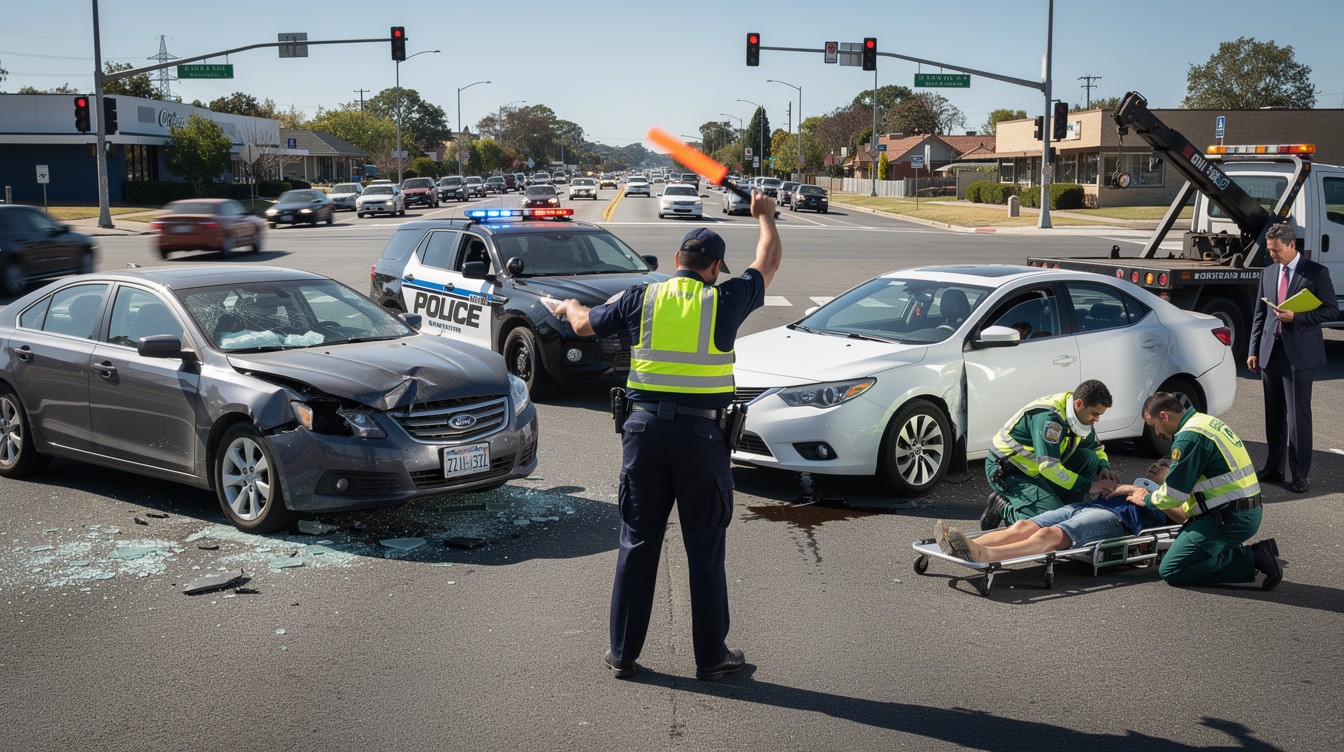
The first moments after a crash determine how well your recovery goes. Your priority is safety, then documentation, then medical attention. Move to a safe location if your vehicle is drivable and turn on hazard lights to warn other drivers. Call 911 immediately if anyone is injured or if there’s significant property damage. The California Highway Patrol will file an official report, and this public record becomes essential for your insurance claim and any legal action.
Protect Yourself at the Scene
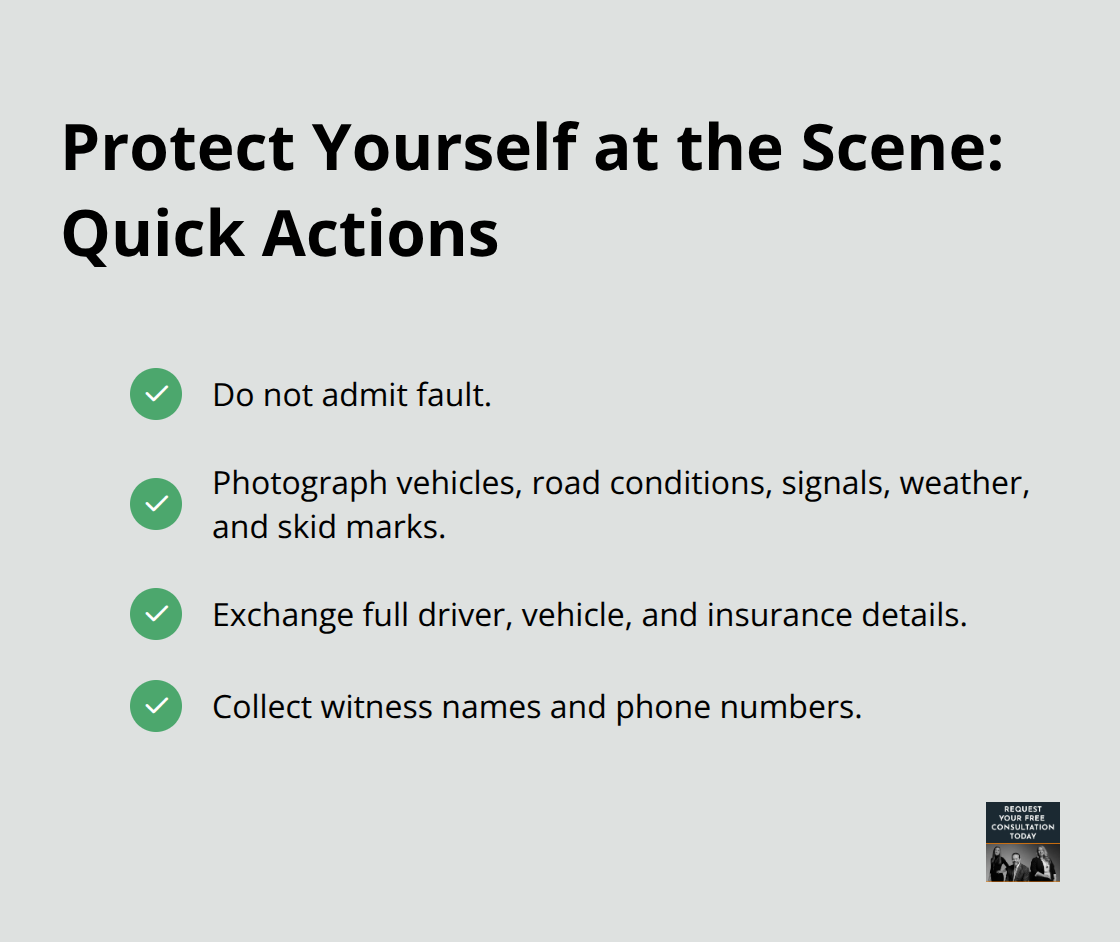
Do not admit fault at the scene, no matter how responsible you feel. Instead, take thorough photos of the damage from multiple angles, the road conditions, traffic signals, weather, and any skid marks. Exchange names, contact details, driver’s license numbers, license plates, vehicle identification numbers, and insurance information with all drivers involved. Collect witness names and phone numbers as well, since these contacts often prove invaluable later when memories fade.
Securing Your Property Damage Claim
Your vehicle’s repair bill is not just about fixing damage; it’s about establishing fair compensation. You have the right to choose your own auto body shop, and your insurer must pay reasonable repair costs. When the shop provides an estimate, verify that parts are clearly labeled as OEM (original equipment manufacturer), aftermarket, or reconditioned, since this directly affects both cost and safety. If the insurer’s valuation seems low, you can challenge it using resources like Kelley Blue Book or NADA Guides to support your position.
Property damage claims in Santa Cruz County sometimes require an appraisal process: each side appoints an appraiser, those two appraisers select an umpire, and the agreed amount becomes binding. Notify your insurer within 24 hours of the crash, and report the incident to the California DMV within 10 days if property damage exceeds $750 or anyone is injured. Failing to report can affect your driver’s license status.
Building Your Recovery File
Start organizing your recovery file on day one with receipts, estimates, and the police report, since thorough documentation strengthens every aspect of your claim. This file becomes your foundation as you move forward with medical treatment and potential legal action. The steps you take now-from scene documentation to prompt reporting-set the stage for protecting your rights and securing fair compensation.
What Your Legal Rights Actually Mean in California
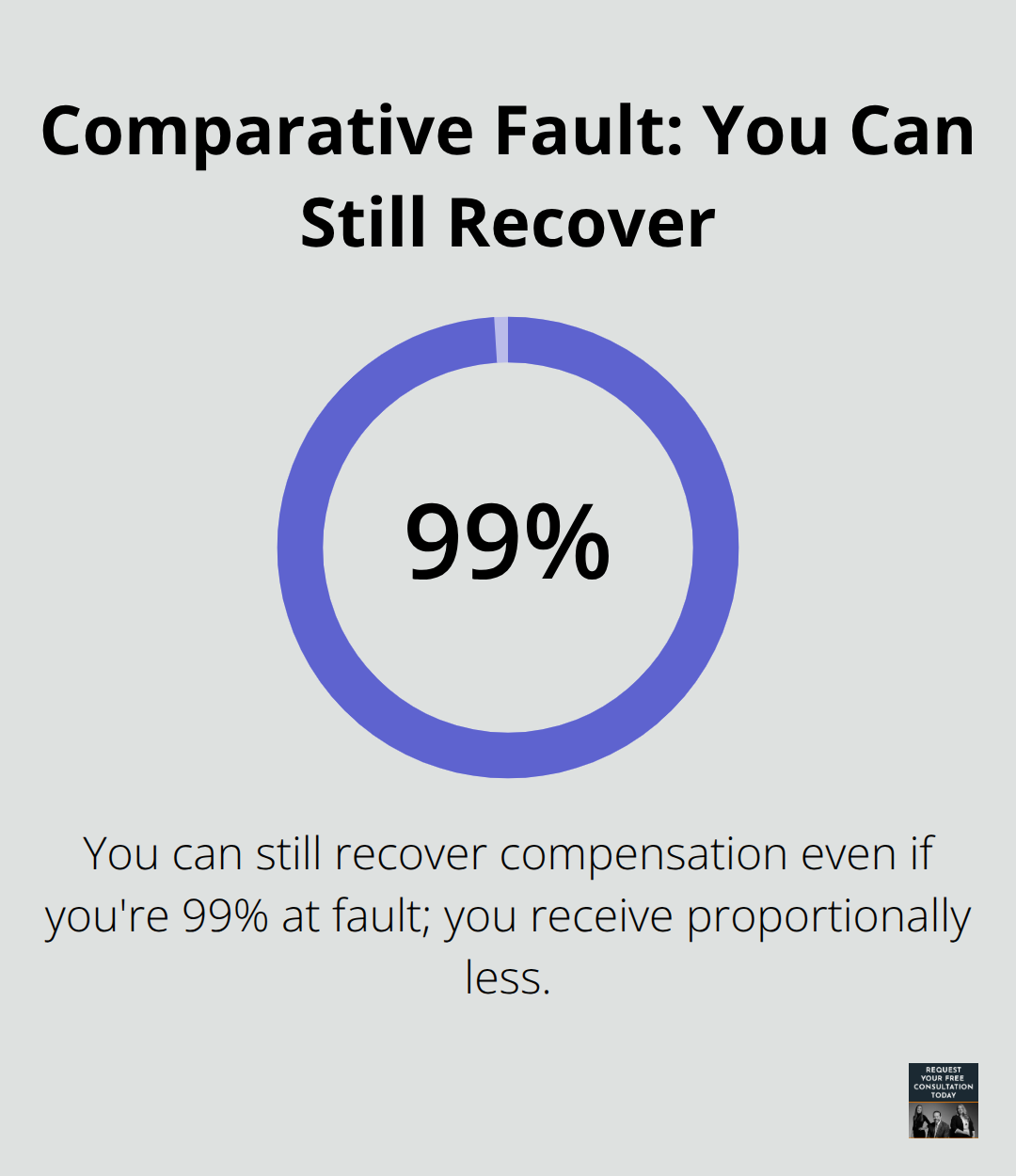
California’s comparative fault system reduces your compensation by your percentage of fault in the crash, so liability determination directly impacts your settlement or verdict amount. Unlike some states that bar recovery if you’re partially at fault, California allows you to recover damages even if you’re 99 percent responsible-you just receive proportionally less. This matters because insurance adjusters often try to inflate your fault percentage to lower their payout. Document everything at the scene and preserve evidence because the insurer will use any ambiguity to shift blame your way.
Economic and Non-Economic Damages
If the other driver caused the crash through distracted driving, speeding, or reckless behavior, California law lets you pursue both economic damages (medical expenses, lost wages, property damage) and non-economic damages (pain and suffering, loss of enjoyment of life). In rare cases involving extreme recklessness-such as driving under the influence or street racing-punitive damages become available to punish the wrongdoer and deter similar conduct.
Economic damages are straightforward: medical bills, rehabilitation costs, lost wages, and vehicle repairs all get added up with receipts and invoices to prove amounts. Santa Cruz County injury costs run 59.8 percent above the California average, with typical medical expenses ranging from about $57,000 to $123,000 depending on injury severity. Spinal surgeries often reach $100,000 to $200,000, emergency department visits cost around $3,300, and ambulance transport runs near $1,200.
Why Non-Economic Damages Matter
Non-economic damages require a different approach because there’s no receipt for pain or emotional distress. Insurers use formulas multiplying medical expenses by factors of 1.5 to 5 depending on injury severity, but these formulas undervalue trauma, especially psychological injury. If therapy costs $200 to $300 per session for 12 to 18 months of trauma-focused treatment, that represents real ongoing damage extending beyond the initial medical event.
Many victims miss this because they focus only on immediate medical bills and ignore future treatment needs. Insurance adjusters press for early settlements precisely because they know long-term damages and future medical needs often exceed initial offers. Taking time to assess the full scope means consulting with someone who understands how Santa Cruz medical providers structure treatment and what realistic recovery timelines look like in your situation.
The Two-Year Window and Settlement Reality
The statute of limitations in California gives you two years from the crash date to file a claim, but waiting that long weakens your case because witnesses disappear, memories fade, and evidence deteriorates. Most crashes settle through negotiation rather than trial, which means the quality of your documentation and medical records directly influences the settlement offer you receive. Insurance companies count on injured people accepting lowball offers quickly, so understanding that you have time to assess the full scope of damages before accepting anything protects your interests.
The resources available in Santa Cruz County-from trauma therapists to medical lien services-help you build a complete damages picture without financial pressure to settle prematurely.
Resources Available to Help You Recover
Immediate Medical Care in Santa Cruz County
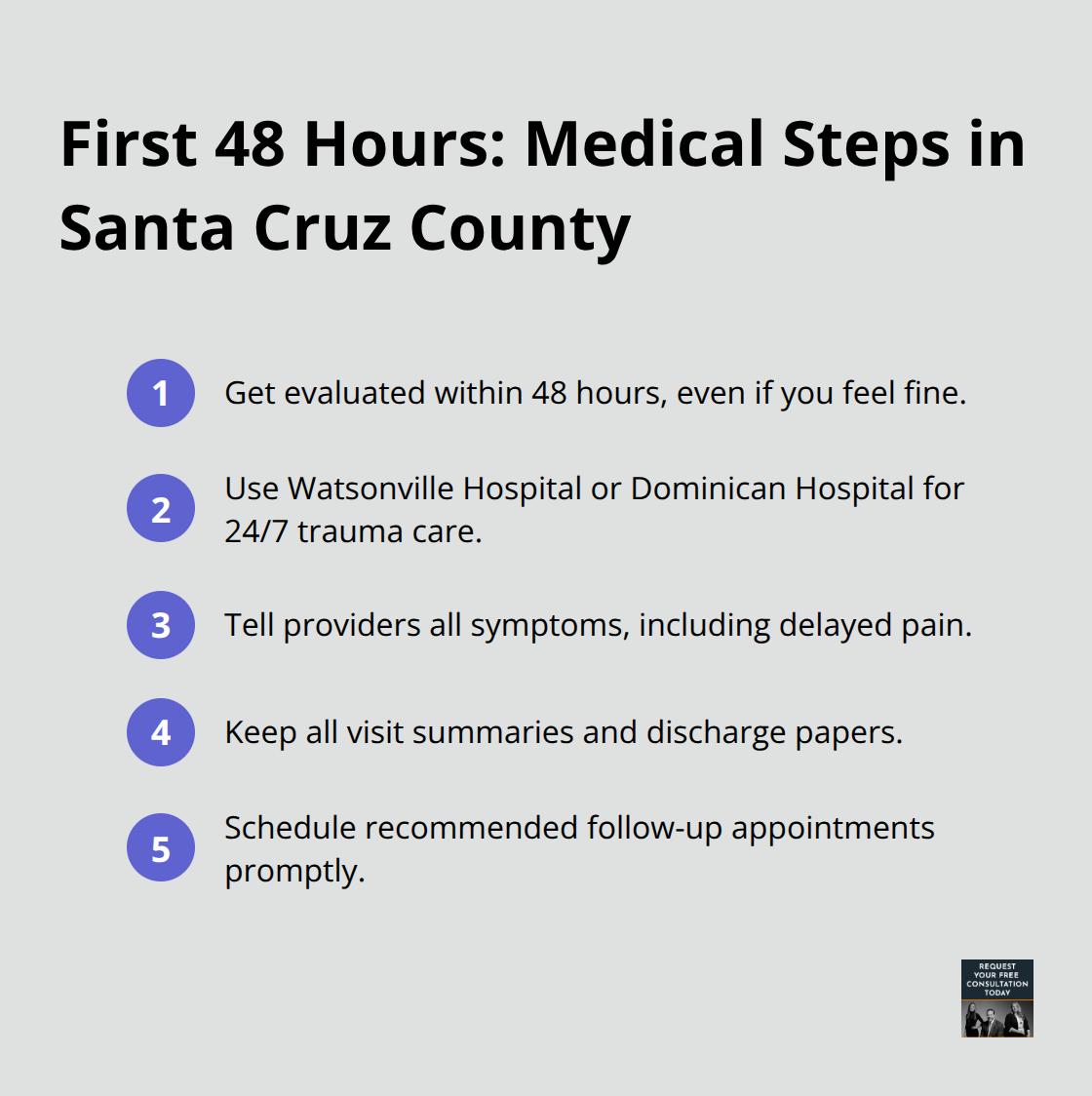
Santa Cruz County operates two 24/7 trauma centers ready to handle serious injuries: Watsonville Hospital and Dominican Hospital in Santa Cruz. You should obtain evaluation within 48 hours of your crash, even if you feel fine, because adrenaline masks injuries like whiplash and internal damage that emerge days later. Medical documentation from this early visit becomes critical evidence for your damages claim and establishes a timeline that strengthens your position with insurers.
Trauma-Focused Therapy and Mental Health Support
Once you receive initial care, trauma-focused therapies like cognitive behavioral therapy with exposure and EMDR show strong evidence of benefit for crash-related psychological injury. You can find qualified trauma therapists in Santa Cruz County through Psychology Today, where many providers accept major insurers including Aetna, Cigna, Anthem, UnitedHealthcare, Blue Shield, and Medi-Cal. Therapy typically costs $200 to $300 per session for 12 to 18 months of treatment, and these expenses belong in your damages claim because they represent real ongoing recovery needs that extend beyond initial medical bills.
Medical Lien Services: Funding Treatment Without Financial Pressure
Medical lien services transform your ability to afford proper treatment. Instead of paying upfront for therapy or specialized rehabilitation, providers place liens on your settlement proceeds, meaning you receive full treatment now and pay later from recovered funds. This eliminates the financial pressure to settle quickly or skip necessary care. You should ask your medical providers about lien options when scheduling appointments and consider medical lien services to streamline funding during recovery.
Building Documentation That Strengthens Your Claim
You must document every therapy session, symptom change, work impact, sleep disruption, and driving ability reduction because this documentation transforms vague pain and suffering claims into concrete damages supported by professional records. The Santa Cruz County District Attorney’s Victim Assistance Program and California Department of Insurance resources can direct you to local support options for both practical assistance and trauma counseling. We at Schaar & Silva LLP help direct clients to medical lien services and connect them with local providers who understand how to structure treatment documentation for maximum claim value, allowing you to focus on healing rather than navigating funding obstacles.
Final Thoughts
A California car crash disrupts your life across multiple fronts at once. You face medical recovery, property damage claims, insurance negotiations, and the emotional weight of trauma-all while insurance adjusters pressure you toward quick settlements before you fully understand your injuries or the cost of ongoing therapy. Santa Cruz County resources exist to support you through this process: medical lien services eliminate financial pressure to settle prematurely, trauma-focused therapists help you heal while creating documentation that strengthens your claim, and two 24/7 trauma centers stand ready for immediate care.
We at Schaar & Silva LLP help direct you to medical lien services so you can access the treatment you need without upfront costs. We evaluate property damage claims to challenge undervaluations and connect you with psychological support providers who document treatment in ways that maximize your damages claim. Contact us to discuss your recovery while you focus on healing rather than navigating legal complexity.
Your two-year window to file a claim gives you time to assess the full scope of your situation. Gather your documentation, access the resources available to you, and reach out for guidance when the process feels overwhelming.
