

If you’ve been in a crash, you’re probably wondering what your case is worth. The truth is that average crash settlement amounts vary dramatically depending on your specific situation.
At Schaar & Silva LLP, we’ve seen settlements range from a few thousand dollars to well over a million. This guide breaks down exactly what influences those numbers and how to avoid the mistakes that tank your claim’s value.
What Actually Determines Your Settlement Amount
Injury Severity Drives Everything
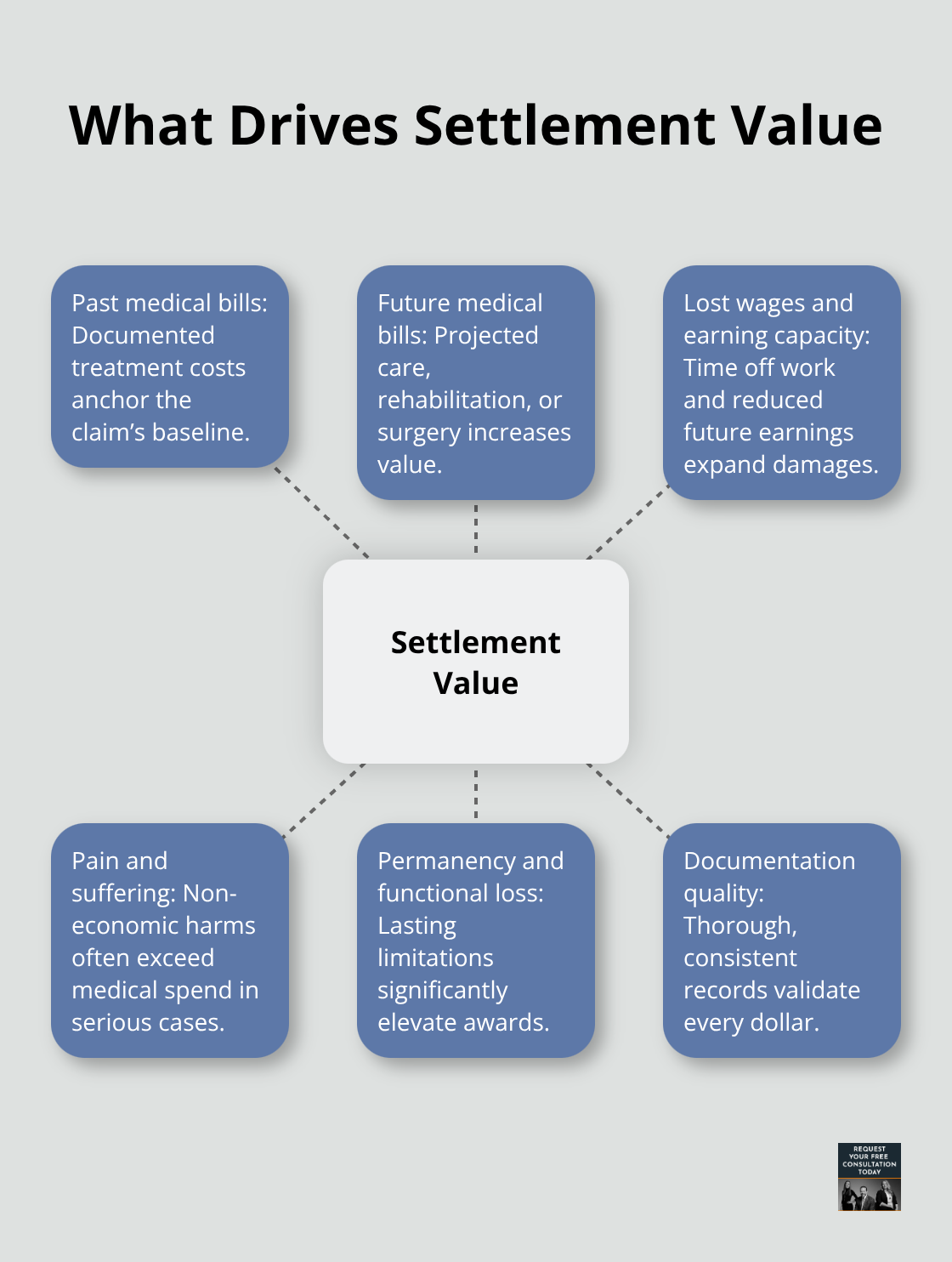
Injury severity controls settlement value more than any other factor. A minor whiplash claim settles for $500 to $3,000, while a herniated disc reaches six figures depending on treatment needs and permanency. Medical expenses and how the injury affects your daily life create the real difference. Surgery, ongoing physical therapy, or permanent limitations all push your settlement higher. Insurance companies calculate this using a straightforward formula: past medical bills plus future medical bills plus lost wages plus pain and suffering. Computer-based pain-and-suffering calculators that many insurers use frequently undervalue serious injuries by applying rigid multipliers that don’t reflect actual harm.
Property Damage and Insurance Limits
Property damage matters far less than most people assume. A totaled car worth $25,000 won’t significantly boost your settlement if you have minor injuries. However, severe property damage can indicate a high-impact collision, which strengthens your injury claim considerably. The at-fault driver’s insurance coverage limits create a hard ceiling on your recovery. If someone with minimal liability coverage causes catastrophic injuries, you hit their policy limit regardless of your actual damages. Liability disputes in California can force cases to trial if insurers doubt fault, which means no settlement offer at all until a judge decides.
Lost Wages and Earning Capacity
Lost wages matter enormously when injuries prevent you from working. Clients recover tens of thousands in lost income, and if your injury affects future earning capacity, that calculation extends years into the future. A construction worker with a permanent back injury loses far more earning potential than someone in an office job with the same diagnosis. Document every missed workday and every reduction in your ability to earn. The longer your recovery takes, the more your lost wages accumulate-and the higher your settlement should be.
How Insurance Companies Calculate Pain and Suffering
Pain and suffering represents the non-economic damages (physical pain, emotional distress, reduced quality of life) that extend beyond medical bills and lost wages. Insurance companies often multiply your medical expenses by a factor ranging from 1.5 to 5, depending on injury severity. A minor soft tissue injury might use a 1.5 multiplier, while permanent spinal cord damage could justify a 4 or 5 multiplier. These multipliers vary significantly based on jurisdiction and case facts, so the same injury in different situations produces vastly different pain-and-suffering awards. Understanding this calculation helps you recognize when an insurer’s offer falls short of what your case actually warrants.
Why Documentation Determines Your Outcome
Every medical record, receipt, and wage statement strengthens your claim’s value. Insurance adjusters build their settlement offers on the evidence you provide-medical bills, treatment notes, imaging results, and lost wage documentation all support higher valuations. Without thorough documentation, you hand the insurer an excuse to lowball your offer. Gaps in your medical treatment or missing wage records give adjusters reasons to argue your injuries weren’t serious or your losses weren’t substantial. The cases that settle for the highest amounts share one common trait: meticulous documentation from day one.
What Different Accidents Are Actually Worth
Soft Tissue Injuries from Minor Crashes
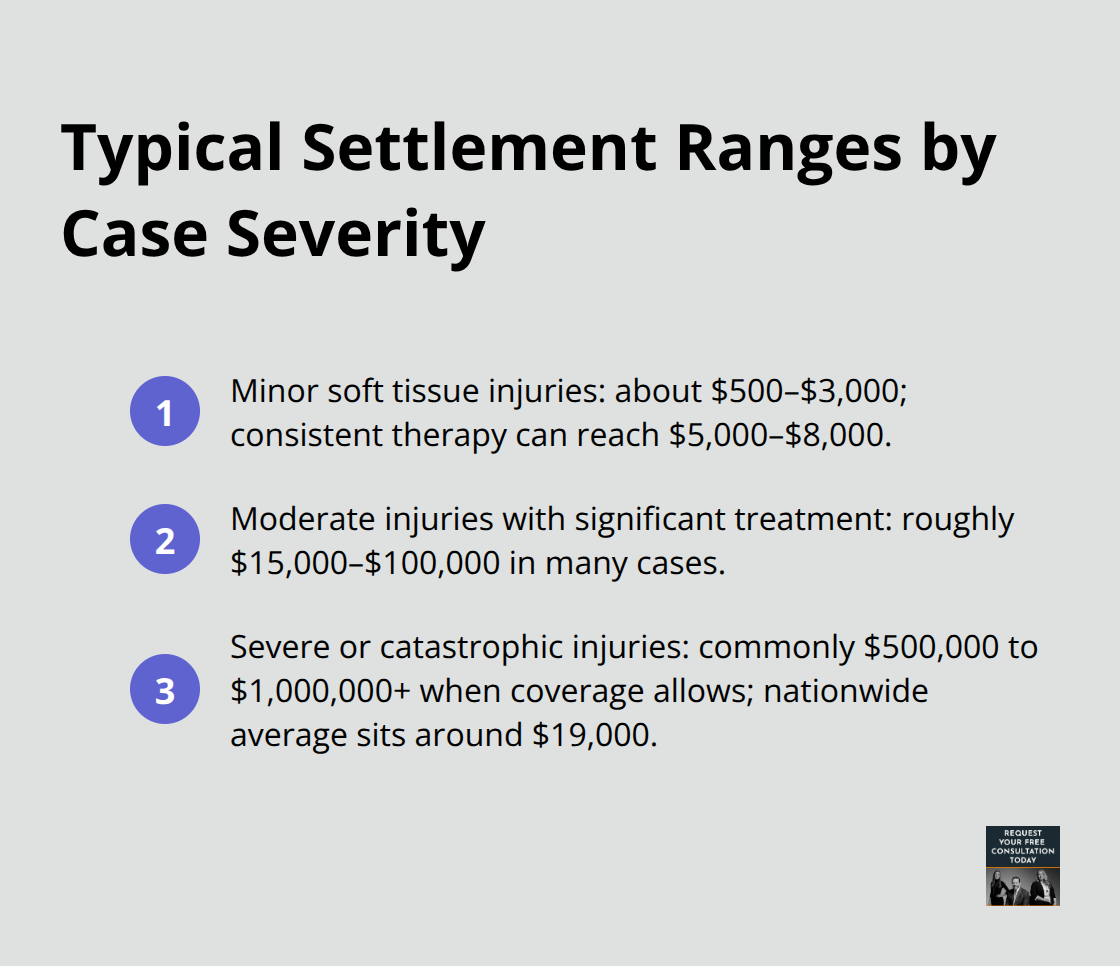
Soft tissue injuries from minor crashes settle quickly but for modest amounts. A typical whiplash case without imaging or ongoing treatment reaches $500 to $3,000, though some cases with consistent physical therapy climb to $5,000 or $8,000. Insurance adjusters move fast on these claims because liability is often clear and damages are limited. Most accident victims accept initial offers without understanding their true value. Many people with minor injuries still incur $2,000 to $4,000 in medical expenses, lost wages, and pain and suffering that far exceed what the insurer initially proposes. You should document every treatment session, every missed workday, and every expense related to your recovery, even for what seems like a minor injury. The difference between a $2,000 settlement and a $7,000 settlement often comes down to how thoroughly you’ve documented your losses.
Moderate Accidents with Significant Medical Treatment
Moderate accidents with significant medical treatment produce settlements ranging from $15,000 to $100,000 depending on injury type and permanency. A herniated disc requiring injections or surgery typically settles between $30,000 and $75,000, while a fractured bone with surgery and months of physical therapy can reach $80,000 or more. These cases require sustained medical evidence showing ongoing treatment, functional limitations, and clear causation between the accident and your injury.
Insurance companies scrutinize moderate cases more heavily because the settlement amounts justify their investigation. Gaps in your treatment or months without seeing a doctor give adjusters ammunition to argue your injury wasn’t serious. You should maintain consistency with medical care and document how your injury affects your ability to work, exercise, and perform daily activities.
Severe Accidents and Catastrophic Injuries
Severe accidents involving permanent spinal cord injuries, significant burns, loss of sight or hearing, or wrongful death produce settlements that depend almost entirely on the at-fault party’s insurance limits. Catastrophic injury cases reach $500,000 to over $1,000,000 when insurance coverage allows, though many cases hit policy limits far below actual damages. The average car accident settlement across the country sits around $19,000, but this figure masks the reality that catastrophic injuries and wrongful death cases have settlement values limited primarily by available insurance coverage rather than the actual harm suffered. These cases require aggressive legal representation because insurance companies know they face potential trial exposure and larger verdicts if they refuse reasonable settlement offers.
Why Insurance Coverage Limits Create Hard Ceilings
The at-fault driver’s insurance policy establishes a maximum payout regardless of your actual damages. Someone with catastrophic injuries but minimal liability coverage (say, $15,000 in bodily injury limits) receives far less than the case warrants. In California, liability disputes can force cases to trial if insurers doubt fault, which means no settlement offer at all until a judge decides. Understanding the at-fault party’s coverage limits helps you assess whether your case will settle or proceed to litigation. If coverage limits fall short of your damages, your attorney can explore additional recovery sources, though these options vary significantly based on your specific circumstances.
How Settlement Values Shift Based on Permanency
Permanency transforms settlement calculations dramatically. A temporary injury that heals completely within months settles for substantially less than an identical injury that causes permanent limitations. Medical evidence showing permanent nerve damage, chronic pain, or functional loss multiplies your settlement value considerably. Insurance adjusters distinguish sharply between injuries that resolve and those that alter your life permanently. You should obtain medical documentation that clearly establishes whether your injury will cause long-term effects, as this distinction often determines whether your case settles in the low five figures or reaches six figures. The cases that command the highest settlements share clear medical evidence of permanency combined with thorough documentation of how the injury affects your daily life and earning capacity.
Mistakes That Tank Your Settlement
The Danger of Accepting Initial Offers
The first offer from an insurance company arrives within days, often looking reasonable until you understand what your case actually warrants. Insurance adjusters count on accident victims accepting these initial proposals without realizing they’re typically 30 to 50 percent below fair value. The adjuster has already calculated your maximum exposure based on their formula, and that opening number reflects their interests, not yours. Accepting quickly means you forfeit thousands in legitimate recovery.
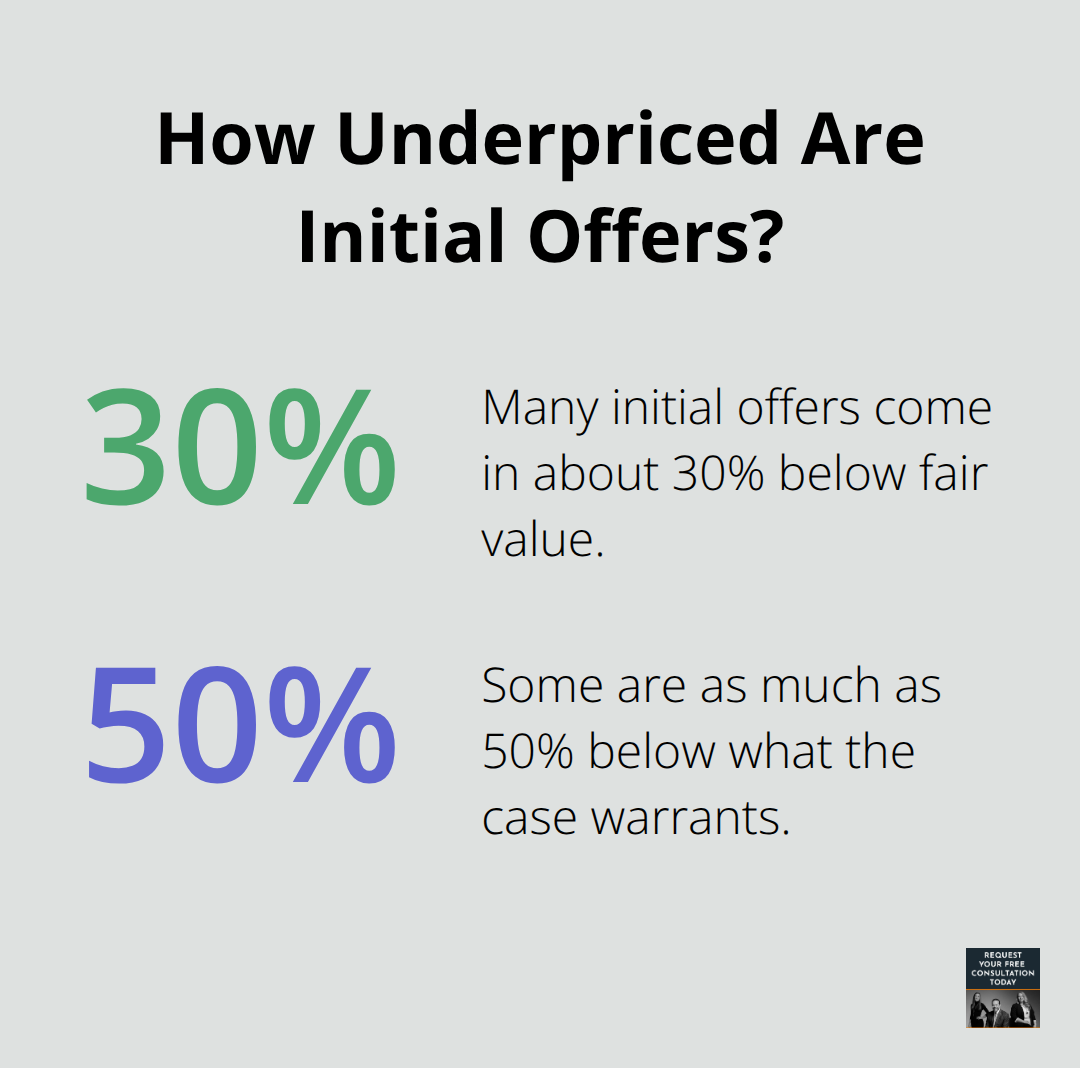
Many people settle for $8,000 when their case merits $20,000 simply because they didn’t push back on the initial offer.
The insurance company knows most accident victims feel stressed, overwhelmed, and eager to move forward, making them vulnerable to lowball proposals. You should treat that first offer as a starting point for negotiation, not a final decision. Waiting even a few weeks while gathering additional medical documentation or obtaining a second medical opinion often justifies demanding substantially higher settlements. The cases that command top-dollar recoveries share one trait: the victim refused to accept inadequate initial offers and instead built a stronger case through patience and documentation.
How Documentation Gaps Destroy Your Claim
Documentation gaps destroy settlement value more reliably than any other factor, yet accident victims consistently fail to maintain thorough records from day one. Missing medical records, gaps between treatment sessions, or incomplete wage documentation give insurance adjusters legitimate reasons to argue your injuries weren’t serious or your losses weren’t substantial. When you skip a month of physical therapy or stop seeing your doctor for three weeks, the adjuster interprets that silence as evidence your injury resolved faster than you’re claiming.
You should document every medical appointment, maintain organized records of all expenses, and avoid direct communication with insurance adjusters without legal guidance. The strength of your settlement depends entirely on the evidence you compile and preserve throughout your recovery. Insurance adjusters build their offers on what you provide-medical bills, treatment notes, imaging results, and lost wage documentation all support higher valuations. Without thorough documentation, you hand the insurer an excuse to lowball your offer.
Why Statements to Adjusters Backfire
Statements made directly to insurance adjusters without legal representation create permanent liability exposure that haunts your case throughout settlement negotiations. An adjuster will ask leading questions designed to minimize your injuries, and casual statements like “I’m feeling better” or “I can manage most activities” get weaponized against you in settlement discussions. Insurance companies record these conversations and use them to justify lower offers.
Talking to the other driver’s insurance adjuster without an attorney present can tank your case, so having representation from day one protects your rights and prevents statements that reduce your settlement value. You should avoid direct communication with insurance adjusters without legal guidance, as even seemingly innocent remarks can undermine your claim’s worth.
Final Thoughts
Settlement negotiations after a crash demand clarity about what your case actually warrants. Average crash settlement amounts across California range from a few thousand dollars for minor injuries to well over a million for catastrophic cases, but your specific recovery depends entirely on injury severity, documentation quality, and how aggressively you push back against initial insurance offers. Most accident victims leave substantial money on the table by accepting the first proposal without understanding their true claim value.
Legal representation fundamentally changes settlement outcomes because insurance adjusters take your claim seriously and offer substantially higher settlements than they would to unrepresented victims. Your attorney understands the calculation methods insurers use, recognizes when offers fall short of what your case warrants, and negotiates from a position of strength rather than desperation. We at Schaar & Silva LLP have recovered multi-million-dollar results for clients with severe injuries, and we know exactly how to value your claim based on injury type, permanency, and documented losses.
If you’ve been in a crash in Santa Cruz County, Sacramento, or Oakland, contact Schaar & Silva LLP for a free case evaluation. We handle medical bill assistance, property damage claims, and connect you with psychological support services while we manage the legal complexities of your situation (your recovery matters more than speed). Reach out today to understand what your crash settlement could actually be worth.
