
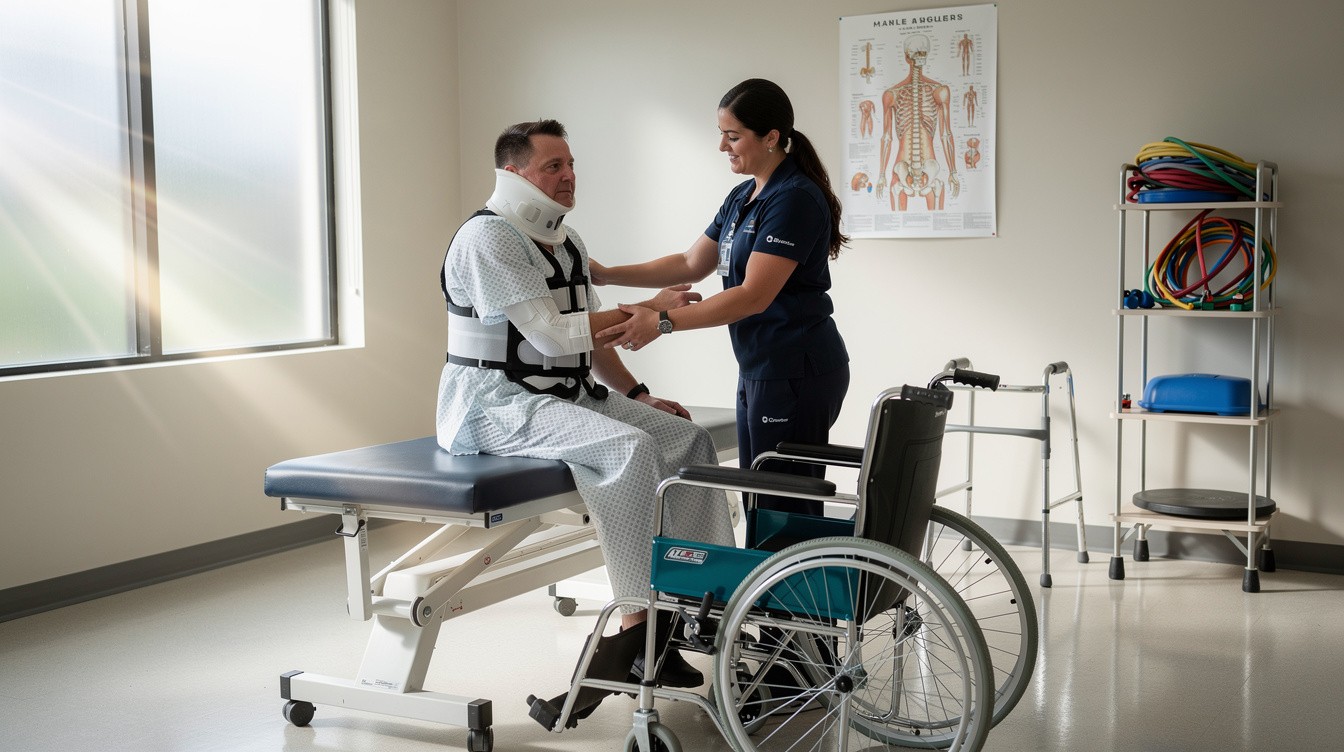
A car crash can injure your spine in ways that aren’t always obvious at first. Some people feel pain immediately, while others don’t notice symptoms until days or weeks later.
At Schaar & Silva LLP, we’ve helped many people in Santa Cruz navigate spinal injury recovery and get the compensation they deserve. This guide walks you through what to expect, how treatment works, and how to protect your rights while you heal.
How Spinal Injuries Happen in Car Crashes
The Forces That Damage Your Spine
Car crashes damage the spine through sudden, violent forces that your body cannot absorb. When a vehicle stops abruptly or gets hit from the side, your spine experiences compression, twisting, or stretching that tears ligaments, fractures vertebrae, or damages the spinal cord itself. The Mayo Clinic identifies motor vehicle crashes as the leading cause of spinal injury in people under 65, accounting for a significant portion of traumatic cases.
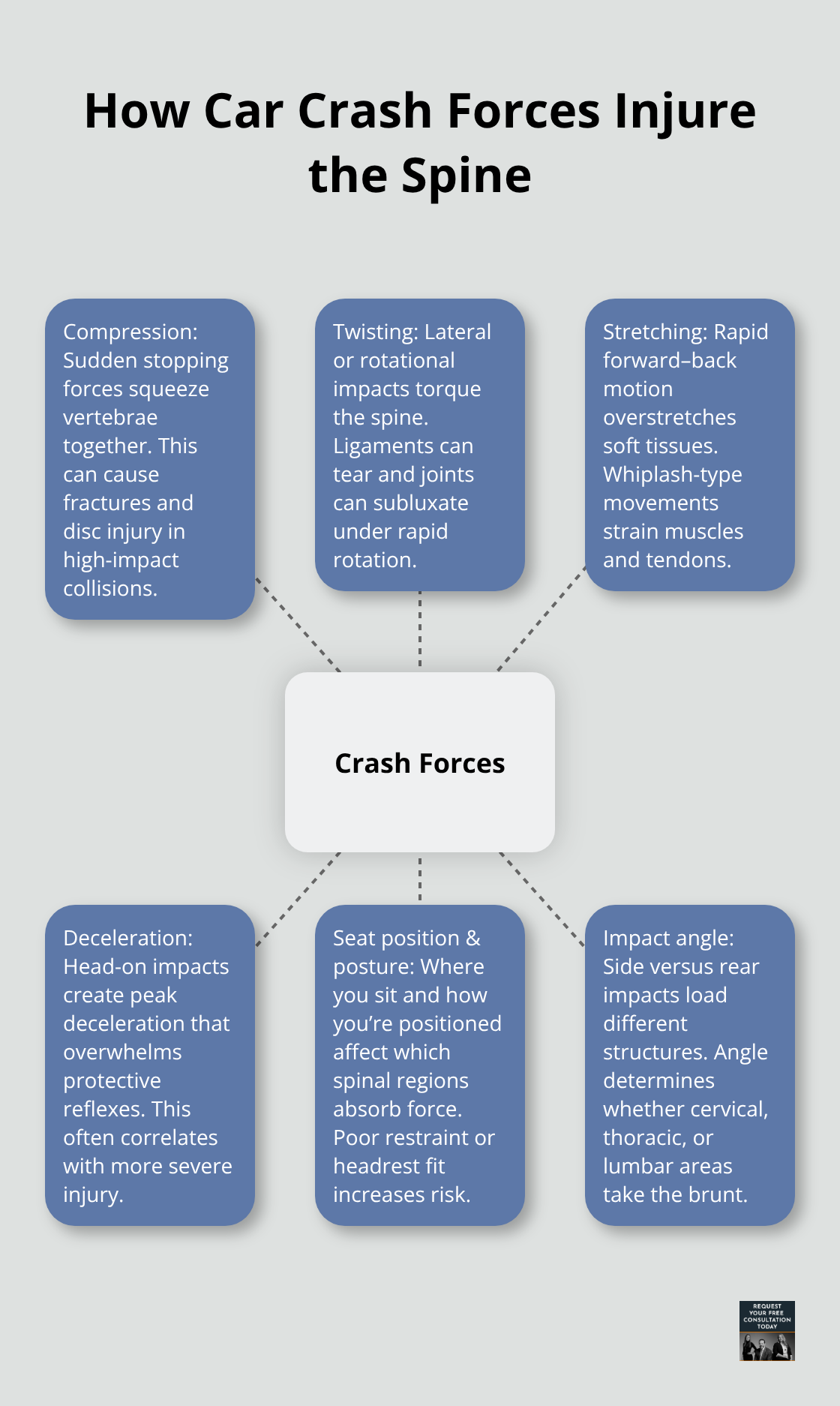
The type of damage depends on where you sit, how fast the vehicles travel, and what parts of your body absorb the impact.
A rear-end collision often causes whiplash that injures the cervical spine in your neck, while a side impact can fracture thoracic or lumbar vertebrae. Head-on collisions tend to create the most severe injuries because the deceleration forces are strongest. The location and angle of impact determine which spinal structures sustain damage and how severely.
Recognizing Urgent Warning Signs
You don’t need to feel immediate pain to have a serious spinal injury. The American College of Emergency Physicians warns that urgent signs like severe back or neck pain, weakness or numbness, loss of bladder or bowel control, balance problems, or trouble breathing demand immediate medical help. Many people walk away from crashes feeling fine, only to develop symptoms days or even weeks later when swelling and inflammation compress the spinal cord.
Why Symptoms Appear Days or Weeks Later
Delayed symptoms occur because your body’s initial response masks deeper damage. In the first hours after a crash, adrenaline suppresses pain signals, and swelling hasn’t yet reached levels that pinch nerves. The Mayo Clinic explains that secondary damage from bleeding, swelling, and fluid buildup worsens spinal injuries in the days to weeks following impact, even when the initial trauma seemed minor. This is why you should seek medical imaging like CT scans or MRI even if you feel okay after a crash.
Some people develop radiating pain in their arms or legs weeks later, while others notice tingling, numbness, or weakness that gradually worsens. Incomplete spinal injuries, where some nerve function remains below the injury site, often show variable symptoms that appear unpredictably. Medical documentation from the emergency room becomes critical evidence for your recovery and any legal claim you may need to pursue.
If you’ve been in a car crash in Santa Cruz County, don’t wait for symptoms to worsen before getting evaluated. The legal team at Schaar & Silva LLP can help you navigate both your medical recovery and the compensation process, ensuring your medical documentation supports your case while you focus on healing.
What to Expect During Your First Six Months of Recovery
Immediate Medical Assessment and Diagnosis
The first few weeks after a spinal injury demand immediate action. You’ll need imaging tests like CT scans or MRI to determine the exact location and severity of your injury, which the Mayo Clinic identifies as critical for guiding treatment decisions. Emergency room doctors assess whether you have a complete injury, where no nerve function remains below the damage, or an incomplete injury, where some function persists. This distinction shapes your entire recovery path.
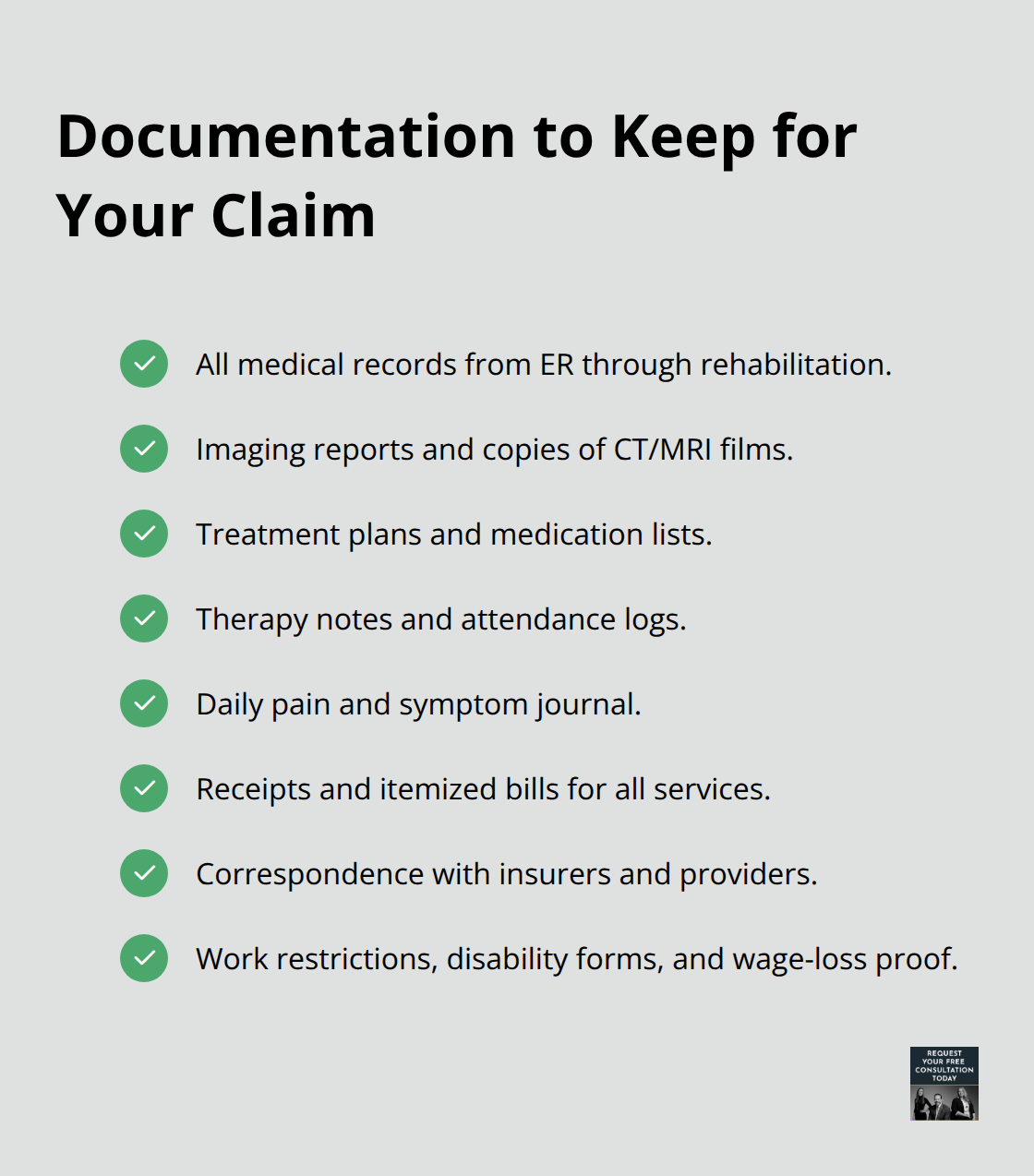
Most people spend one to three weeks in acute care, then transition to inpatient rehabilitation if the injury is moderate to severe. Dominican Hospital’s Acute Rehabilitation Unit on the Central Coast has operated for over 20 years and focuses specifically on spinal cord injury recovery, offering a full continuum from inpatient care to outpatient therapy. At this stage, you must document everything: medical records, imaging results, treatment plans, and medication lists. This documentation becomes essential later when filing insurance claims or pursuing legal compensation for your accident.
Intensive Rehabilitation: Months Two Through Six
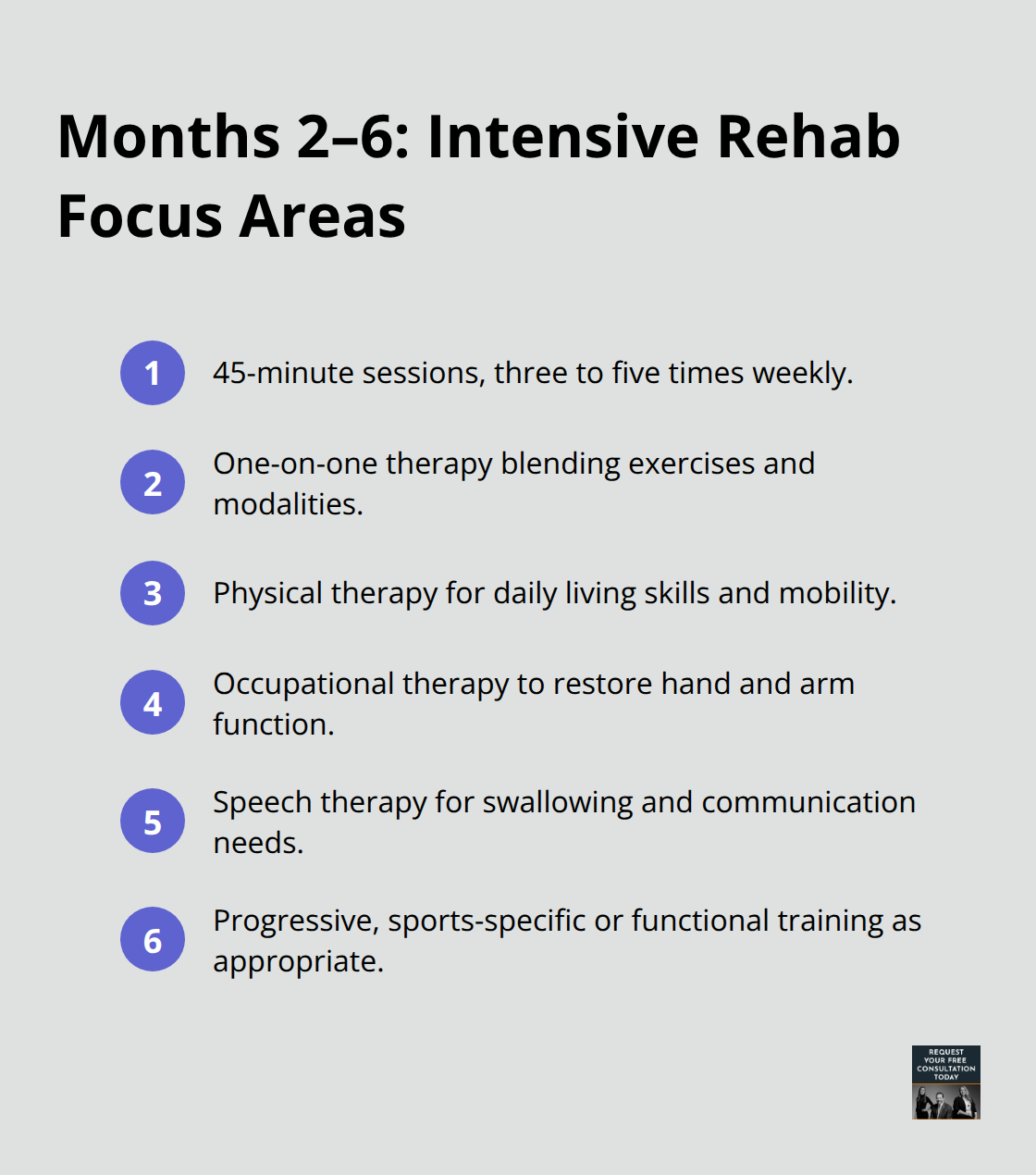
Months two through six mark your most intensive rehabilitation period, typically involving 45-minute therapy sessions three to five times weekly with one-on-one therapists who combine exercises, modalities, and sports-specific training. Physical therapy focuses on relearning activities of daily living like dressing, bathing, and transferring from bed to wheelchair. Occupational therapy helps restore hand and arm function, while speech therapy addresses swallowing and communication if your injury affected those areas.
Many people experience plateaus during this phase where progress slows, which is normal and doesn’t indicate treatment failure. Pain management becomes increasingly important as initial trauma subsides and you confront long-term pain patterns. The Mayo Clinic notes that spinal injury pain can be musculoskeletal or neuropathic, often requiring multidisciplinary approaches.
Transitioning Back to Community Life
Long-term recovery extends beyond six months and involves transitioning from inpatient or intensive outpatient settings back into your community. Your focus shifts toward independence: driving assessments if appropriate, return-to-work planning, and managing secondary complications like bladder changes or pressure sores. This phase demands consistency; people who maintain exercise routines and follow medical recommendations show better functional outcomes than those who stop therapy early.
As you progress through recovery, managing the financial and legal aspects of your accident becomes equally important. Medical bills accumulate quickly, and insurance companies often dispute claims or offer inadequate settlements. The legal team at Schaar & Silva LLP can help in directing you to medical lien services that facilitate the payment of your bills until your case is resolved, allowing you to focus on healing while we handle the legal intricacies of your situation.
Where to Find Spinal Injury Care in Santa Cruz County
Emergency Room Care and Initial Imaging
Getting the right medical care immediately after a car crash determines your recovery trajectory. Santa Cruz County offers several pathways to treatment, but you need to understand what each step involves and how to navigate the system while protecting your legal rights. The emergency room is your first stop, and this matters more than many people realize because the imaging and documentation you receive there become the foundation for both your medical recovery and any compensation claim.
When you arrive at an emergency room after a crash with back or neck pain, imaging tests like CT scans and MRI scans reveal the exact location and severity of spinal damage. CT scans work faster and typically become the first choice in acute settings, while MRI provides more detailed images of soft tissue and nerve damage. Dominican Hospital, the Central Coast’s only certified Primary Stroke Center, maintains high standards in neurorehabilitation that support comprehensive spinal injury recovery. The imaging results determine whether you have a complete injury with no nerve function below the damage site or an incomplete injury where some function remains, and this distinction shapes your entire treatment plan. Obtain copies of all imaging reports and films before you leave the emergency room; these become critical evidence if you need to pursue a legal claim for your accident. Hospital bills from emergency care accumulate quickly, often reaching thousands of dollars within the first few days, which is why documenting every test, procedure, and medication matters for your records and your case.
Inpatient Rehabilitation and Intensive Therapy
After emergency stabilization, inpatient rehabilitation at Dominican Hospital’s Acute Rehabilitation Unit provides intensive therapy designed specifically for spinal cord injury recovery. The unit operates a full continuum of care from inpatient rehabilitation to outpatient therapy, meaning you progress through different levels of intensity based on your needs rather than moving to an entirely different facility. Therapy sessions typically run 45 minutes, three to five times weekly, with one-on-one therapists who combine exercises, modalities, and functional training. Physical therapists focus on rebuilding strength and relearning activities like dressing, bathing, and transferring. Occupational therapists restore hand and arm function through progressive therapeutic exercises. Speech therapists address swallowing and communication if your injury affected those areas.
Transitioning to Home and Outpatient Care
The Assisted Daily Living Apartment at Dominican Hospital provides a home-like setting where you practice daily activities with family members before discharge, which significantly improves your ability to manage independently at home. Pain management becomes central during months two through six of recovery, and the Mayo Clinic identifies that spinal injury pain can be musculoskeletal or neuropathic, often requiring multidisciplinary approaches rather than medication alone. Many facilities now offer innovative therapies like Wheelchair Dance to improve balance and motor control, and vestibular rehabilitation systems address dizziness and balance issues that commonly accompany spinal injuries (these modalities help restore functional independence faster than traditional therapy alone).
As you transition to outpatient care, your therapy frequency typically decreases but your personal responsibility for consistency increases. People who maintain exercise routines and follow medical recommendations show substantially better functional outcomes than those who stop therapy early. Medical bills continue to mount during this phase, and insurance companies often dispute claims or offer inadequate settlements. The legal team at Schaar & Silva LLP can help in directing you to medical lien services that facilitate the payment of your bills until your case is resolved, allowing you to focus on healing without the financial burden of mounting medical expenses.
Final Thoughts
Your spinal injury in Santa Cruz demands immediate attention to both your medical recovery and your legal protection. Medical bills arrive within days of your accident, and insurance companies frequently dispute claims or offer settlements far below what your injury actually costs. We at Schaar & Silva LLP handle the legal complexities while you concentrate on therapy and rebuilding strength, directing you to medical lien services that pay your medical bills until your case resolves.
Protecting your rights starts the moment your crash happens. Keep every medical record, imaging report, therapy note, and receipt because insurance adjusters use gaps in documentation to minimize settlements. Document your pain levels, functional limitations, and how your injury affects your daily activities, as consistency in your medical care and record-keeping strengthens your position significantly.
Your spinal injury recovery may affect your earning capacity, independence, and quality of life for years to come. These factors matter in calculating fair compensation, and they require someone who understands both the medical realities of spinal injury recovery and the legal standards for damages in California. Contact Schaar & Silva LLP today to discuss your accident and protect your recovery.