

A car crash can leave you with injuries that range from minor to life-altering. Many people don’t realize how serious their symptoms are until days or weeks after the accident.
This car crash injuries guide walks you through what happens after a collision, from the moment you need medical care to managing your recovery and insurance claims. At Schaar & Silva LLP, we help people in Santa Cruz County navigate this process so they can focus on healing.
Common Car Crash Injuries and Their Symptoms
Whiplash and Neck Injuries Strike Without Warning
Whiplash hits faster than most people expect. According to CDC data, symptoms often appear within 24 to 72 hours after impact, which means you might feel fine at the scene but wake up with severe neck pain and stiffness the next morning. Neck pain, headaches, and dizziness mark the typical presentation, but many people fail to connect these symptoms to their crash because the delay tricks them into thinking they escaped uninjured.
Adrenaline masks pain immediately after an accident, so the absence of pain right now tells you nothing about your actual condition. Your neck contains seven vertebrae surrounded by muscles and ligaments that absorb impact force. When that force exceeds what these structures can handle, micro-tears develop. You need medical evaluation within the first week, even if you feel reasonably okay. A clinician assesses your range of motion and identifies injury patterns before they become chronic problems.
Back and Spinal Injuries Require Urgent Attention
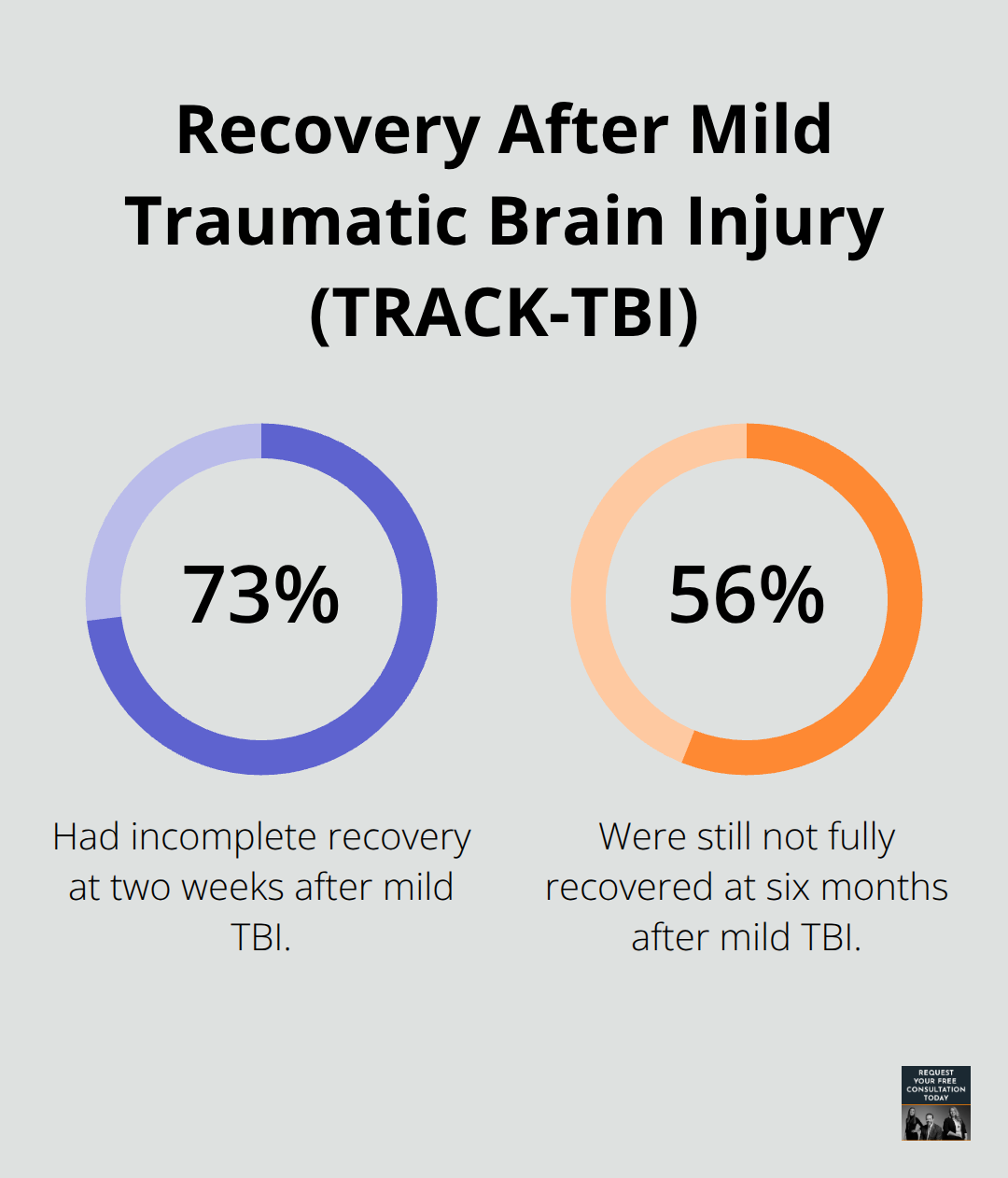
Back and spinal injuries demand immediate attention because delayed diagnosis leads to permanent nerve damage. Numbness, tingling, or weakness in your arms or legs signals nerve or spinal involvement and requires urgent imaging. The TRACK-TBI study found that 73 percent of adults with mild traumatic brain injuries had incomplete recovery at two weeks, and 56 percent still weren’t fully recovered at six months, even when initial CT scans appeared normal. A clean imaging result doesn’t guarantee quick healing.
Head Trauma and Concussions Develop Gradually
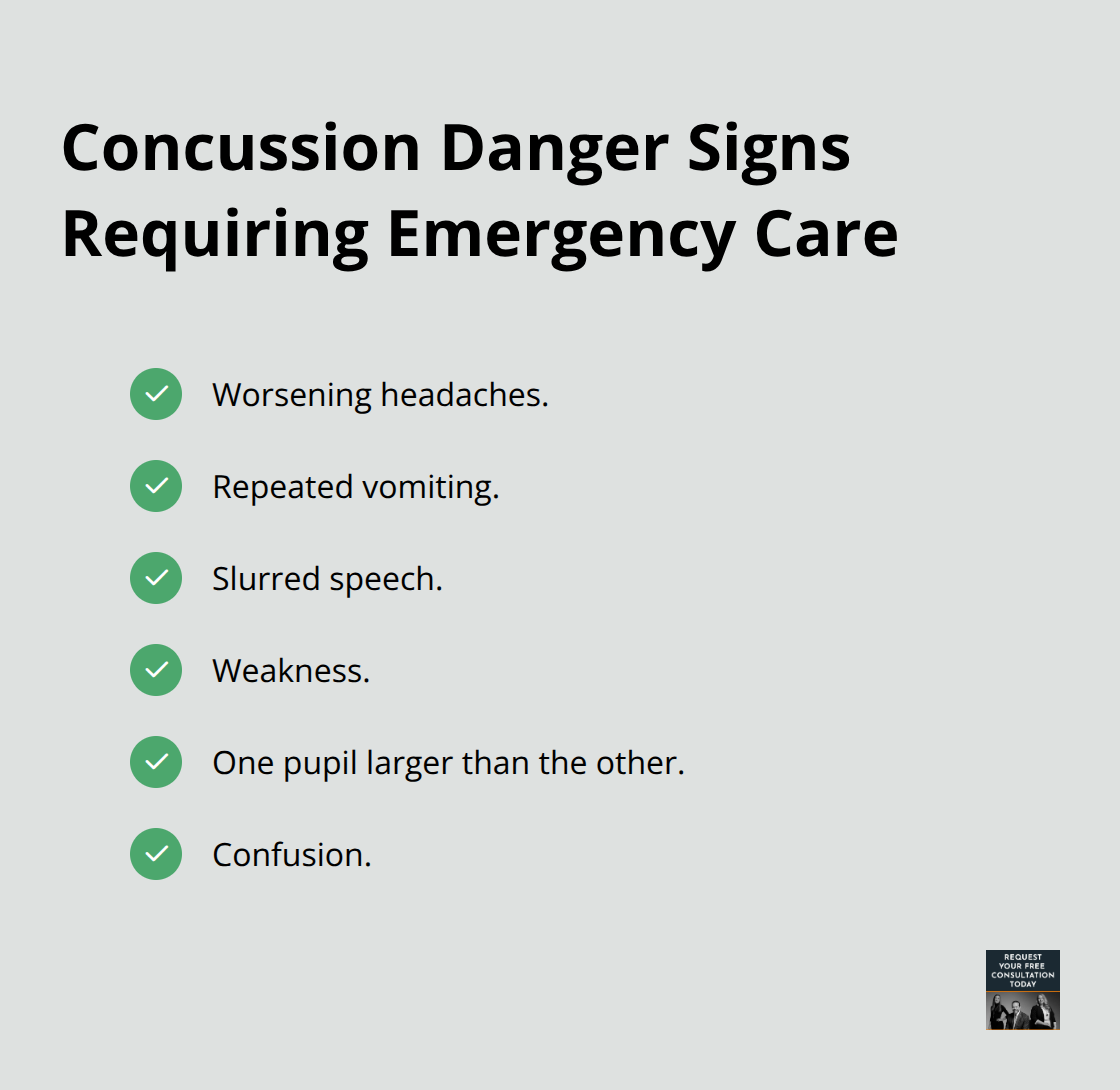
Head trauma from car crashes presents another layer of complexity because concussion symptoms develop gradually over hours or days. The CDC identifies key warning signs including persistent headaches, dizziness, light sensitivity, foggy thinking, memory gaps, irritability, and sleep disturbances. Danger signs requiring emergency care include worsening headaches, repeated vomiting, slurred speech, weakness, one pupil larger than the other, or confusion.
Keep a daily symptom diary for at least two weeks after your crash to help your clinician track whether symptoms improve or worsen, which guides treatment decisions. This documentation becomes essential when you move forward with medical care and any potential insurance or legal matters. Understanding these injury patterns prepares you for the medical evaluation process that comes next.
What Medical Care Comes First After a Crash
Act Fast When Danger Signs Appear
The moment after a crash determines your recovery path. You need immediate emergency services if you lose consciousness, experience severe pain, struggle to breathe, notice obvious deformity, or have uncontrolled bleeding. However, here’s what most people get wrong: feeling fine right now means nothing. According to CDC data, roughly 3.8 million emergency department visits annually stem from motor vehicle crash injuries, and many of those visits happen days after the collision when symptoms finally surface. Adrenaline suppresses pain signals, so your body’s silence doesn’t indicate safety.
Get Evaluated Within the First Week
You should get evaluated within the first week regardless of how you feel. During your ER visit, clinicians perform a head-to-toe examination that establishes a medical baseline. They check for soft tissue damage, rib fractures, lung contusions, and internal injuries that don’t announce themselves immediately. Chest pain, shortness of breath, or abdominal bruising all warrant urgent assessment.
Within two weeks of your crash, schedule a follow-up appointment with your primary care physician if symptoms persist-this timing matters because the TRACK-TBI study tracked 991 adults with mild traumatic brain injuries and found that 73 percent had incomplete recovery at two weeks. That follow-up visit catches people whose injuries aren’t resolving as expected and prevents months of unnecessary suffering.
Imaging Reveals What’s Happening Inside Your Body
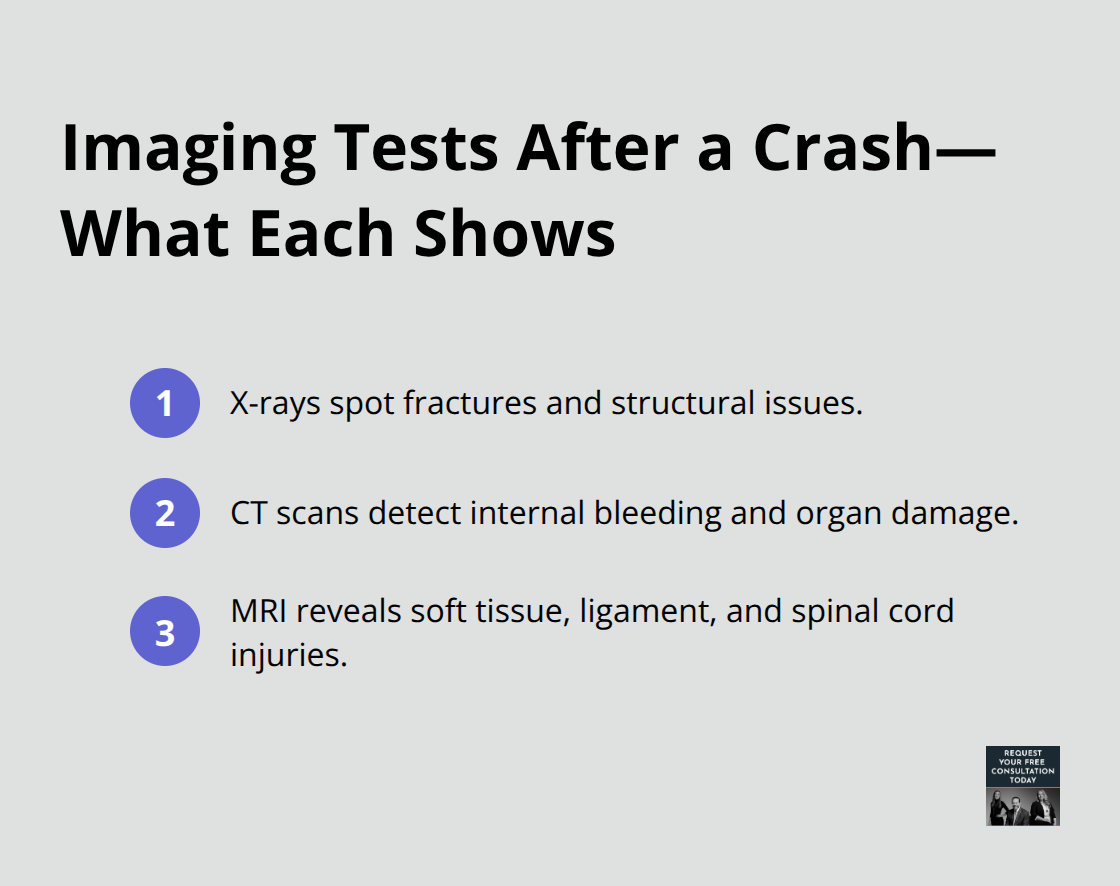
Diagnostic imaging tells you what’s actually happening inside your body. X-rays often come first for suspected fractures or obvious structural problems. CT scans provide detailed cross-sectional images and detect internal bleeding or organ damage. MRI offers the clearest view of soft tissue, ligaments, and spinal cord injuries but takes longer and costs more.
Your clinician chooses based on your symptoms and physical exam findings-don’t assume you need every test.
Document Everything for Your Records and Claims
You should keep detailed records of all imaging results, treatments, medications, and follow-up appointments because this documentation supports insurance claims and guides your treatment decisions. Track your daily symptoms in a written diary for at least the first two weeks; this documentation helps your clinician identify patterns and adjust your treatment plan accordingly.
Rehabilitation Begins Sooner Than You Might Think
Rehabilitation typically begins within weeks, not months. Physical therapy restores neck and spine mobility, reduces stiffness, and rebuilds strength. Your therapist creates a structured plan tailored to your specific injuries. Return to work or school only when your clinician clears you, and expect gradual ramp-up with activity restrictions rather than immediate full duty. Recovery timelines vary dramatically-soft tissue injuries may resolve in weeks while spinal injuries or post-concussion symptoms can persist for months. As your body heals and you move through rehabilitation, managing the financial side of your recovery becomes equally important, which brings us to how you’ll handle medical care and navigate your insurance coverage.
How to Handle Medical Bills and Insurance Claims
Your medical bills arrive before your body finishes healing, and insurance companies move slowly while your debt grows. This gap between treatment costs and claim resolution creates financial pressure that interferes with your recovery. Most people underestimate how much their crash will cost. A single emergency room visit for head trauma runs $3,000 to $5,000 before imaging, and if CT or MRI scans are needed, add another $1,500 to $3,000. Physical therapy sessions cost $100 to $200 each, and most people need 12 to 24 sessions for proper recovery from whiplash or spinal injuries.
Understand Your Insurance Coverage
Your insurance policy contains a deductible you pay first, a copay for each visit, and coinsurance that splits costs between you and your insurer after the deductible is met. Many policies cap annual benefits or limit physical therapy sessions to 20 or 30 visits, which falls short of what serious injuries require. Contact your insurance company within 48 hours of your crash and ask three specific questions: What is my deductible? What percentage do you cover after I meet the deductible? Are there limits on physical therapy, imaging, or specialist visits? Write down the answers and the representative’s name because you’ll reference this information repeatedly.
Use Medical Liens to Access Treatment Now
Medical liens solve the cash flow problem that stops people from getting necessary treatment. A medical lien allows your healthcare provider to bill your insurance and personal injury settlement directly, rather than demanding payment from you immediately. This arrangement means you don’t pay out of pocket while your case resolves. We at Schaar & Silva LLP direct clients to medical lien services that facilitate bill payment until your case concludes, removing the financial barrier to continued care. You should also ask your providers about payment plans or hardship assistance programs, which hospitals and clinics often offer without advertising. Some practices write off a portion of your bill if you’re uninsured or underinsured.
Document Every Medical Expense and Bill
Document everything meticulously: keep every medical bill, receipt, prescription, and explanation of benefits statement in one folder. Insurance companies scrutinize claims and deny payments for incomplete documentation. If your provider bills incorrectly or your insurer denies a legitimate claim, you need that paper trail to appeal. Photograph or scan each document and store digital copies in cloud storage as backup. Track your out-of-pocket spending separately because these expenses become part of your personal injury claim if you pursue legal action. Your organized records demonstrate the true cost of your injuries and strengthen any settlement negotiation or court case.
Final Thoughts
Your recovery after a car crash involves medical decisions, financial management, and often legal considerations working together. This car crash injuries guide covered the injuries you might face, the medical care timeline that matters, and how to navigate insurance without drowning in bills. The reality is that healing takes longer than most people expect, and the financial pressure compounds the physical pain.
If you’re still in the acute phase after your crash, prioritize that follow-up appointment around two weeks post-collision, even if you feel better. Bring your symptom diary to that visit so your clinician can assess whether you’re tracking toward full recovery or heading toward chronic problems. Santa Cruz County residents facing serious injuries or significant medical expenses should contact Schaar & Silva LLP for guidance on medical bill assistance and property damage claims.
Our team connects you with medical lien services that facilitate bill payment until your case resolves, so you can focus on healing rather than debt. We also help evaluate property damage and connect you with psychological support if emotional trauma affects your recovery. Document everything, follow your clinician’s recommendations, and reach out when medical or financial decisions feel overwhelming.
