

A spinal injury from a car or truck accident can change your life in seconds. If you’re dealing with a spinal injury in Santa Cruz, understanding your recovery path and legal rights matters.
We at Schaar & Silva LLP help accident victims navigate both healing and compensation. This guide walks you through what to expect medically and legally.
Understanding Your Spinal Injury Type
Cervical Spine Injuries: The Most Severe Impact
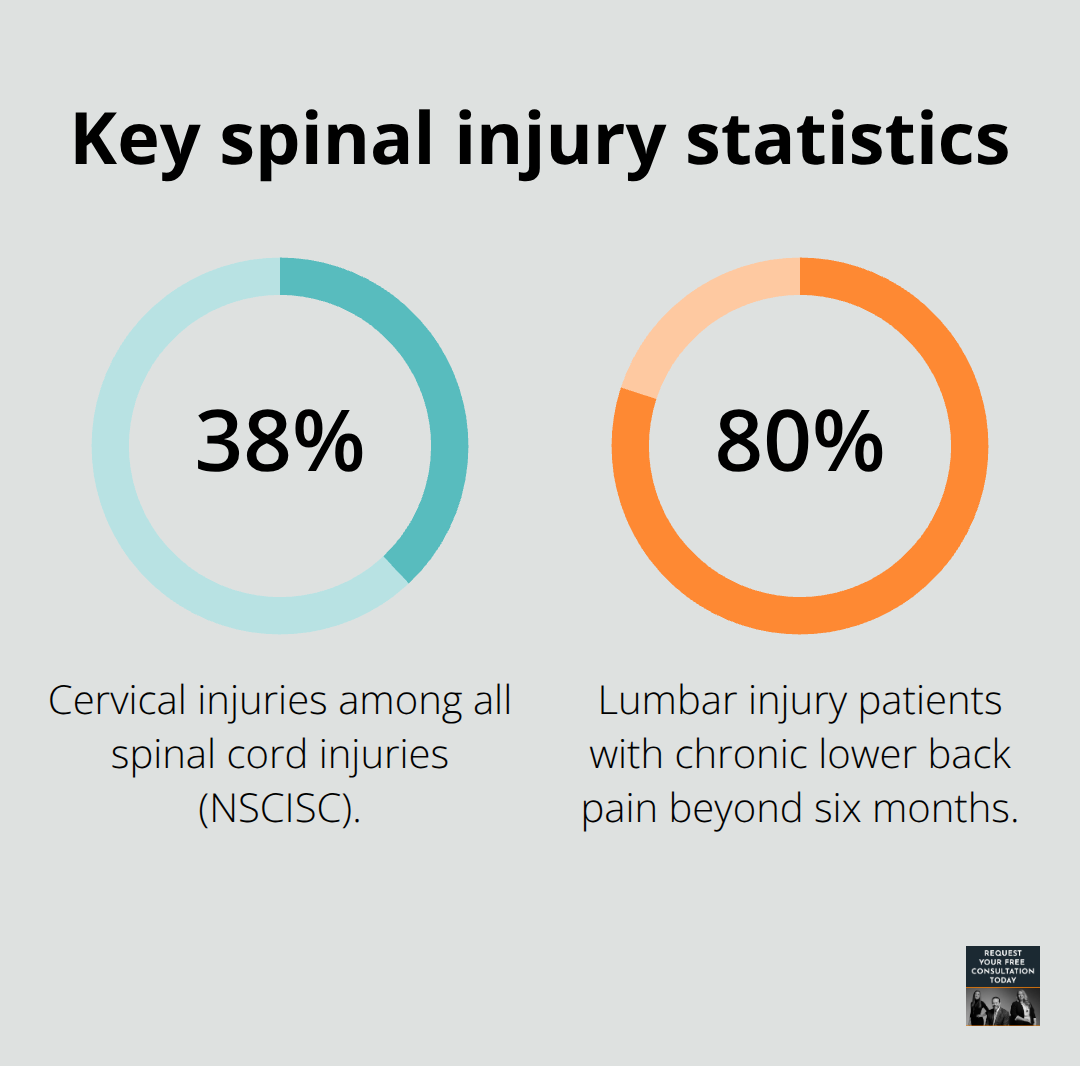
The spine is divided into three main regions, and where you sustain your injury dramatically affects your recovery timeline and long-term outlook. Cervical spine injuries, which occur in the neck area, represent the most serious type of spinal trauma from car accidents. According to the National Spinal Cord Injury Statistical Center, approximately 38 percent of all spinal cord injuries are cervical injuries.
These injuries frequently cause permanent nerve damage that affects both arms and potentially your legs, depending on severity. Many cervical injury patients experience chronic neck pain, reduced range of motion, and ongoing numbness or tingling sensations. The lifetime cost of a complete cervical injury averages $1.3 million according to Craig Hospital research, which accounts for medical care, equipment, and lost wages. Some individuals regain significant function within the first year, while others plateau and must adapt to permanent limitations.
Thoracic Spine Injuries: Mid-Back Damage and Mobility Loss
Thoracic spine injuries occur in the mid-back region and typically affect lower body mobility rather than upper body function. These injuries often result in partial or complete loss of leg function and impact your ability to maintain balance and core stability. The recovery process for thoracic injuries varies widely depending on whether the spinal cord sustained partial or complete damage.
Lumbar Spine Injuries: Lower Back Pain and Work Capacity
Lumbar spine injuries affect the lower back and lower spine, and they’re the most common spinal injuries from vehicle accidents. Unlike cervical or thoracic injuries, lumbar damage frequently allows patients to maintain upper body strength and function. However, chronic pain management becomes a primary concern-studies show that 80 percent of lumbar injury patients experience chronic lower back pain lasting beyond six months. Many people with lumbar injuries can return to work, though often with restrictions or modifications to their job duties.
Building Your Medical Documentation
The specific location and severity of your spinal injury determines your medical treatment plan, rehabilitation timeline, and compensation amount in a legal claim. Documenting which spinal region was injured and obtaining detailed imaging reports from your initial hospital visit matters significantly for your personal injury case. Gather all medical records immediately after your accident, as these documents form the foundation for calculating fair compensation and establishing the long-term impact on your life (including hospital discharge summaries, imaging results, and physician notes). Your medical records also establish the baseline for your recovery trajectory, which directly influences how much compensation you should pursue. With this documentation in hand, you’re ready to understand what your recovery process will actually look like.
What Happens During Spinal Injury Recovery
Immediate Hospitalization and Stabilization
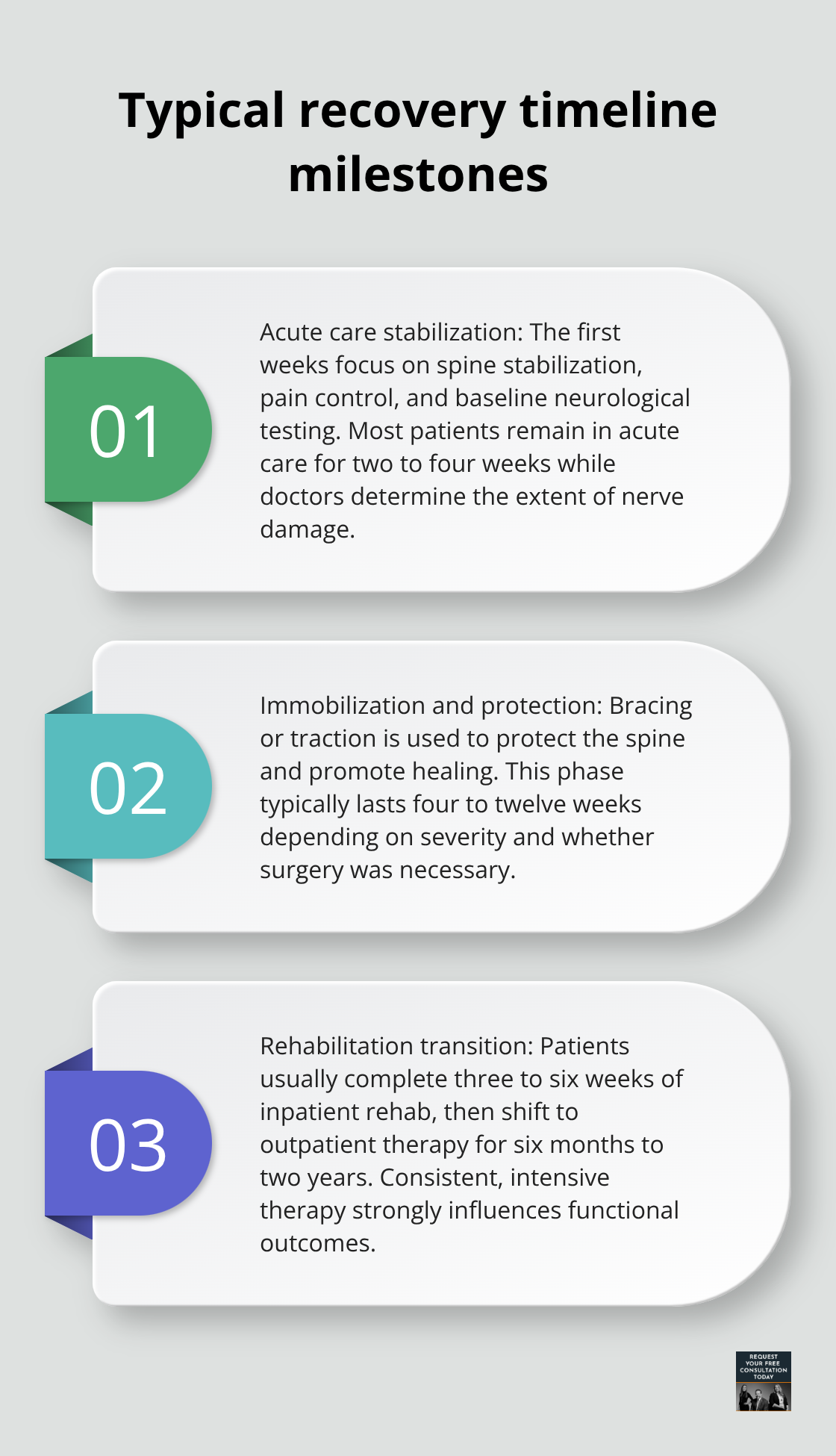
The first weeks after a spinal injury demand aggressive medical intervention. Most spinal injury patients spend between two to four weeks in acute care hospitalization, where doctors stabilize the spine, manage pain, and assess the extent of nerve damage through imaging and neurological testing. During this period, your medical team conducts baseline evaluations that determine your recovery trajectory.
The American Spinal Injury Association uses a standardized classification system to grade your injury from A (complete paralysis) to E (normal function), and this classification directly influences your rehabilitation timeline and expected outcomes. Immobilization through bracing or traction typically lasts four to twelve weeks depending on injury severity and whether surgery was necessary. Hospital costs for spinal cord injury care average $60,000 to $180,000 for the first year alone according to the National Institutes of Health, making documentation of every expense critical for your eventual compensation claim.
Physical Therapy and Rehabilitation Intensity
Physical therapy starts almost immediately, sometimes within days of hospitalization, and this phase determines your functional recovery more than any other factor. Your rehabilitation program focuses on rebuilding strength, retraining your nervous system, and adapting to any permanent limitations. Most patients attend inpatient rehabilitation for three to six weeks before transitioning to outpatient therapy, which continues for six months to two years depending on your progress.
Research from the Journal of Spinal Cord Medicine shows that patients who engage in intensive physical therapy within the first three months achieve significantly better outcomes than those who delay treatment. The intensity and consistency of your therapy sessions directly impact whether you regain lost function or plateau at a certain level of recovery.
Return to Work and Long-Term Capacity
Return to work varies dramatically based on injury type and job demands. Lumbar injury patients often return within six to twelve months with modifications, while cervical injury patients may never return to their previous positions. The honest reality is that many spinal injury patients face permanent changes to their work capacity and daily activities, which means your compensation claim must account for lost earning potential over your lifetime, not just current medical expenses.
When you calculate what you actually deserve, you need to factor in decades of reduced income, ongoing medical treatment, and adaptive equipment. This is where understanding the full scope of your damages becomes essential before you move forward with settlement discussions or trial preparation.
Building Your Spinal Injury Claim
Translating Medical Reality Into Compensation
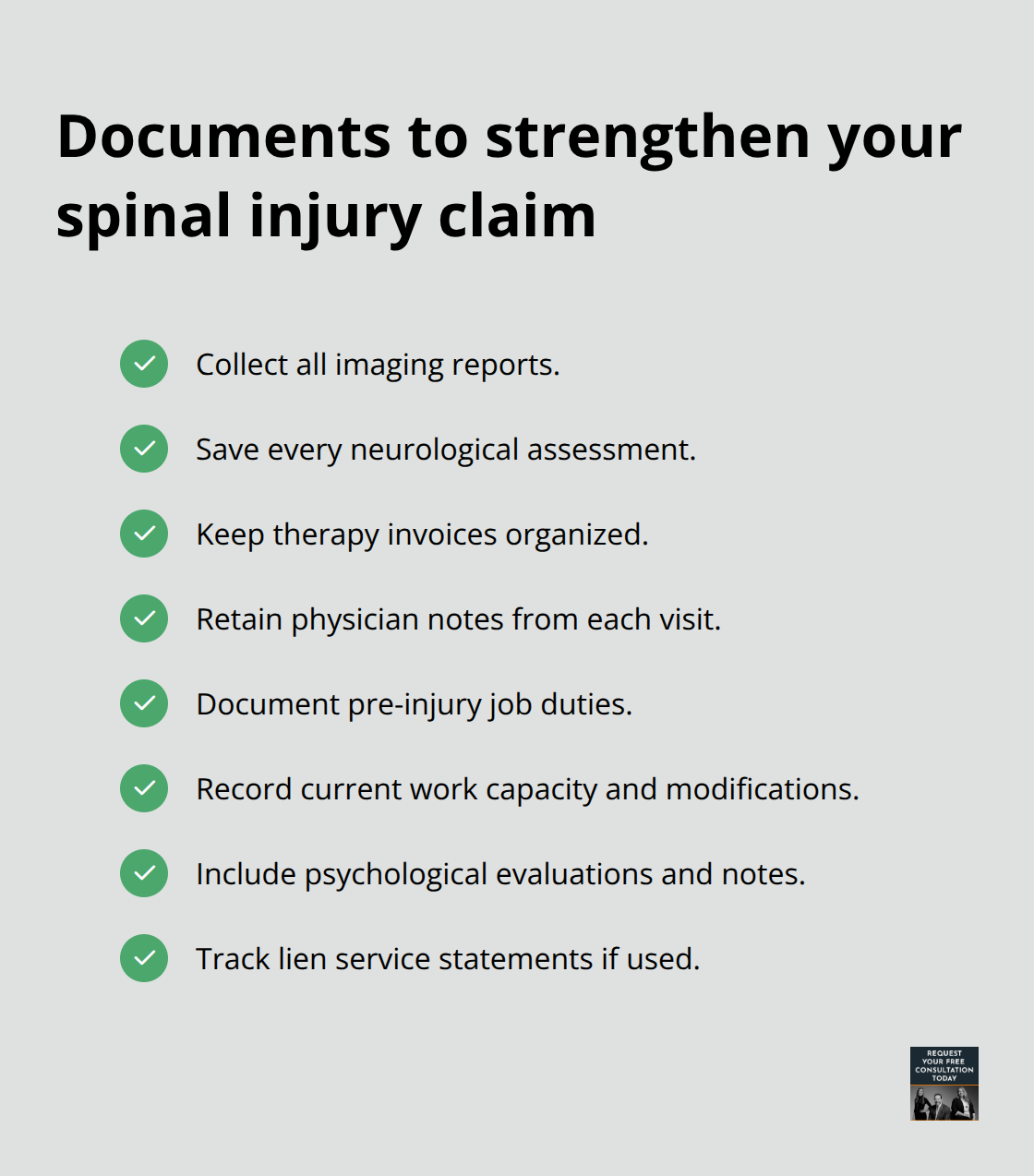
The moment you file a legal claim for your spinal injury, you translate your medical reality into financial terms. Most people underestimate what their injury actually costs because they focus only on immediate hospital bills rather than lifetime expenses. Your medical documentation from hospitalization becomes your foundation, but you need far more than discharge summaries. Collect every imaging report, neurological assessment, therapy invoice, and physician note from your initial treatment forward.
Documenting Your Medical Expenses and Lost Income
Medical bill assistance through lien services keeps your providers paid while your case resolves, which means you don’t drain your personal savings during recovery. The American Spinal Injury Association’s classification of your injury directly determines your damage calculation because a complete cervical injury warrants vastly different compensation than a partial lumbar injury. Document your job duties before the accident, your current work capacity, and any modifications you’ve needed to make-this establishes lost earning potential.
If you earned $65,000 annually before your injury and now can only work part-time at $30,000 annually, that $35,000 yearly gap compounds over forty years of work life. Calculating damages means accounting for past medical expenses, future treatment costs that the National Institutes of Health estimates between $60,000 to $180,000 annually for spinal cord injuries, lost wages both past and future, reduced quality of life, and ongoing pain management. Your property damage claim from the vehicle accident also factors in, and fair valuation for your loss matters significantly.
Presenting Your Case to Insurance Companies
Settlement negotiations require presenting this complete financial picture to insurance adjusters who will initially offer significantly less than your claim warrants. Most spinal injury cases settle between $500,000 and $5 million depending on injury severity and liability clarity, but only when your legal team presents compelling documentation. If settlement fails, trial preparation demands organizing all medical records chronologically, identifying medical professionals willing to testify about your prognosis, and demonstrating the defendant’s liability through accident reconstruction or traffic citations.
Strengthening Your Claim With Psychological Documentation
The psychological impact of spinal injury matters legally, and connecting with specialists who can document emotional trauma, depression, or anxiety resulting from your accident strengthens damage claims substantially. These elements demonstrate the full scope of how your injury affects your life beyond physical limitations. When you work with Schaar & Silva LLP, our team connects you with the specialists and resources necessary to build a comprehensive claim that reflects your actual damages.
Final Thoughts
A spinal injury from a car or truck accident reshapes your life physically, emotionally, and financially. Your recovery path depends on injury location and severity, but understanding what lies ahead gives you control over your decisions. The medical reality is straightforward: cervical injuries demand the most intensive treatment, thoracic injuries affect mobility significantly, and lumbar injuries create chronic pain that impacts work capacity for years.
Your legal claim must reflect this full reality, accounting for decades of ongoing medical expenses, lost wages, and adaptive equipment that follow your accident. Most people focus only on immediate hospital costs and miss the long-term financial impact that compounds over your lifetime. Documenting every medical record, imaging report, and therapy invoice from day one builds the foundation for fair compensation.
Santa Cruz residents facing spinal injury claims have specific legal rights under California law to pursue compensation for past and future medical expenses, lost earning potential, pain and suffering, and psychological trauma. Insurance companies will initially offer less than your claim warrants, which is why presenting complete financial documentation matters significantly. Contact Schaar & Silva LLP to discuss your spinal injury Santa Cruz claim and ensure your compensation reflects the full scope of your damages.
