
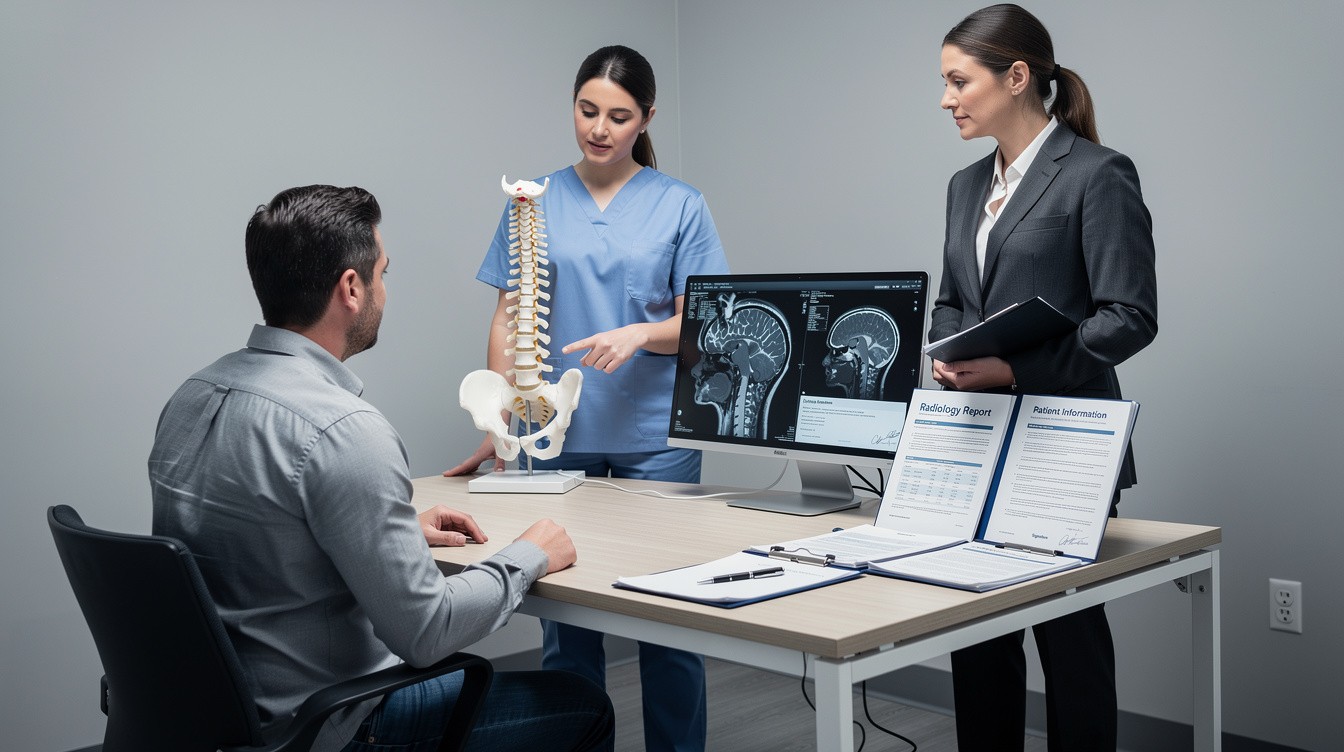
A spine injury from a car accident can change your life in seconds. Pain, limited mobility, and mounting medical bills create stress that extends far beyond the initial crash.
We at Schaar & Silva LLP help Santa Cruz residents understand their treatment options and what compensation they can pursue. This guide walks you through the types of spine injuries, recovery paths, and how to calculate fair settlement amounts.
What Spine Injuries Actually Look Like After a Car Accident
Whiplash and Cervical Spine Injuries
Whiplash ranks as the most common spine injury from car accidents, affecting roughly 1 million Americans annually according to data from the American Academy of Orthopaedic Surgeons. In Santa Cruz County crashes, whiplash occurs when your head snaps forward and backward violently, straining the cervical spine and surrounding muscles. The problem isn’t always obvious at first-some people experience minimal symptoms immediately after the crash, then develop significant neck pain, stiffness, and headaches days later.
Cervical spine injuries extend beyond whiplash. Fractures to the neck vertebrae can cause permanent nerve damage, loss of sensation, or partial paralysis depending on severity. If you’re experiencing radiating pain down your arms, weakness in your hands, or tingling sensations after your accident, these signal nerve involvement that requires urgent medical evaluation.
Thoracic and Lumbar Spine Damage
Thoracic and lumbar spine injuries affect your mid-back and lower back respectively, and they’re particularly problematic because your lower back bears most of your body weight during daily activities. A 2022 study published in the Journal of Orthopaedic Surgery and Research found that lumbar spine injuries result in significantly longer recovery periods than cervical injuries, often requiring 12 to 24 months for full healing.
Herniated Discs and Nerve Compression
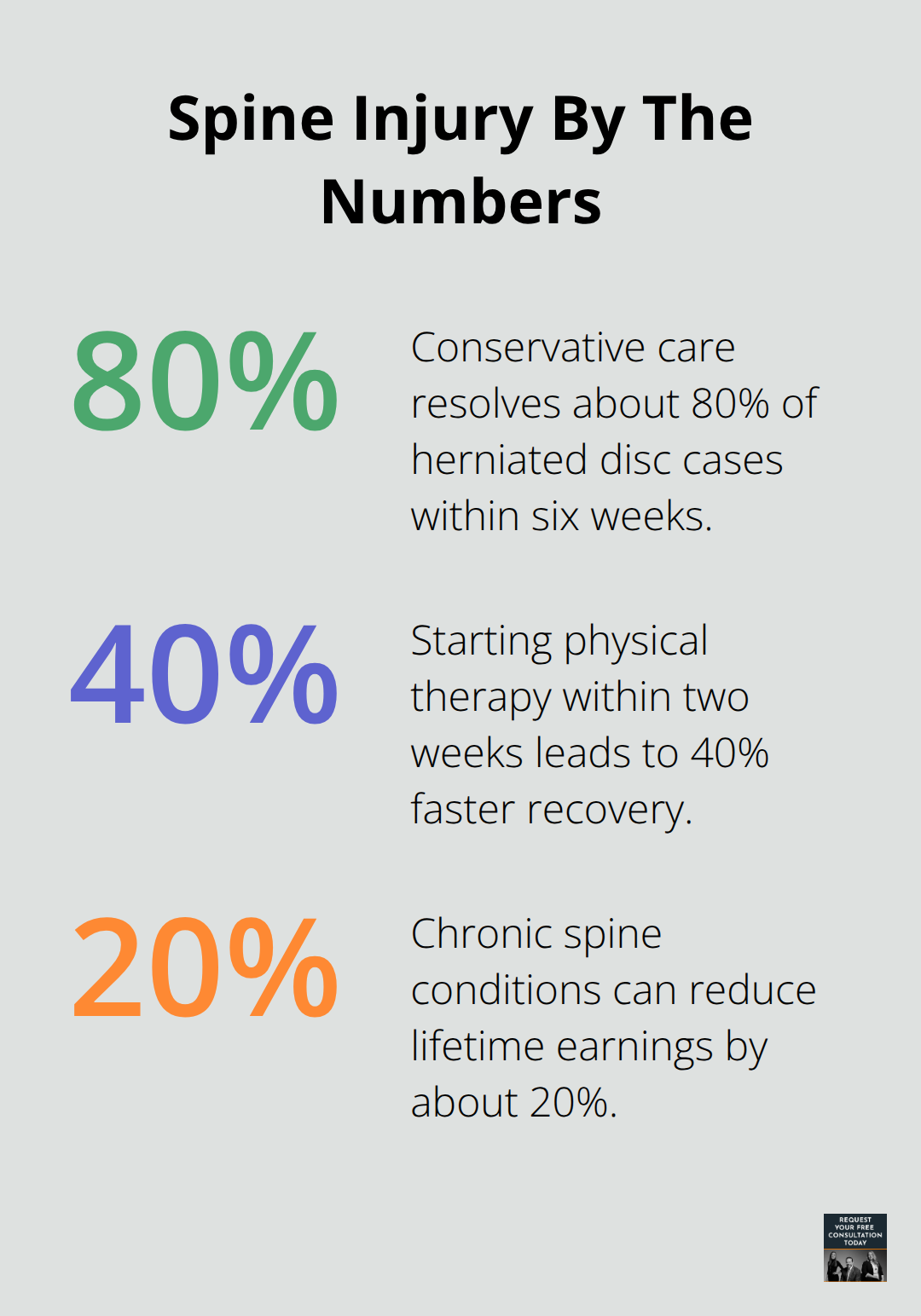
Herniated discs represent one of the most painful outcomes-the soft tissue between vertebrae ruptures and presses against nearby nerves, creating shooting pain that extends into your legs or feet. Many people mistakenly assume a herniated disc requires surgery, but conservative treatment works for approximately 80% of cases within six weeks, according to the American Academy of Orthopaedic Surgeons.
The key is obtaining accurate imaging immediately. MRI scans provide clear visibility of disc damage, while X-rays alone often miss soft tissue injuries entirely. If you’re experiencing leg pain, foot numbness, or difficulty controlling your bladder or bowel movements, these red flags demand emergency care and should be documented carefully for your claim. These symptoms also become critical evidence when you pursue compensation for your injuries.
How Spine Injuries Are Treated After a Car Accident
Conservative Treatment in the First Weeks
Most spine injuries from Santa Cruz car accidents respond well to conservative treatment in the first six to twelve weeks. Rest, ice application, and over-the-counter anti-inflammatory medications like ibuprofen form the foundation of initial care. Your doctor will likely recommend cervical collars for whiplash or bracing for lumbar injuries to limit movement while tissues heal.
Physical therapy during this phase matters enormously-a study in the Spine Journal found that patients who started physical therapy within two weeks of injury recovered 40% faster than those who delayed treatment. Your therapist will guide you through gentle range-of-motion exercises, gradually rebuilding strength without aggravating the injury.
Ice, Heat, and Movement Strategies
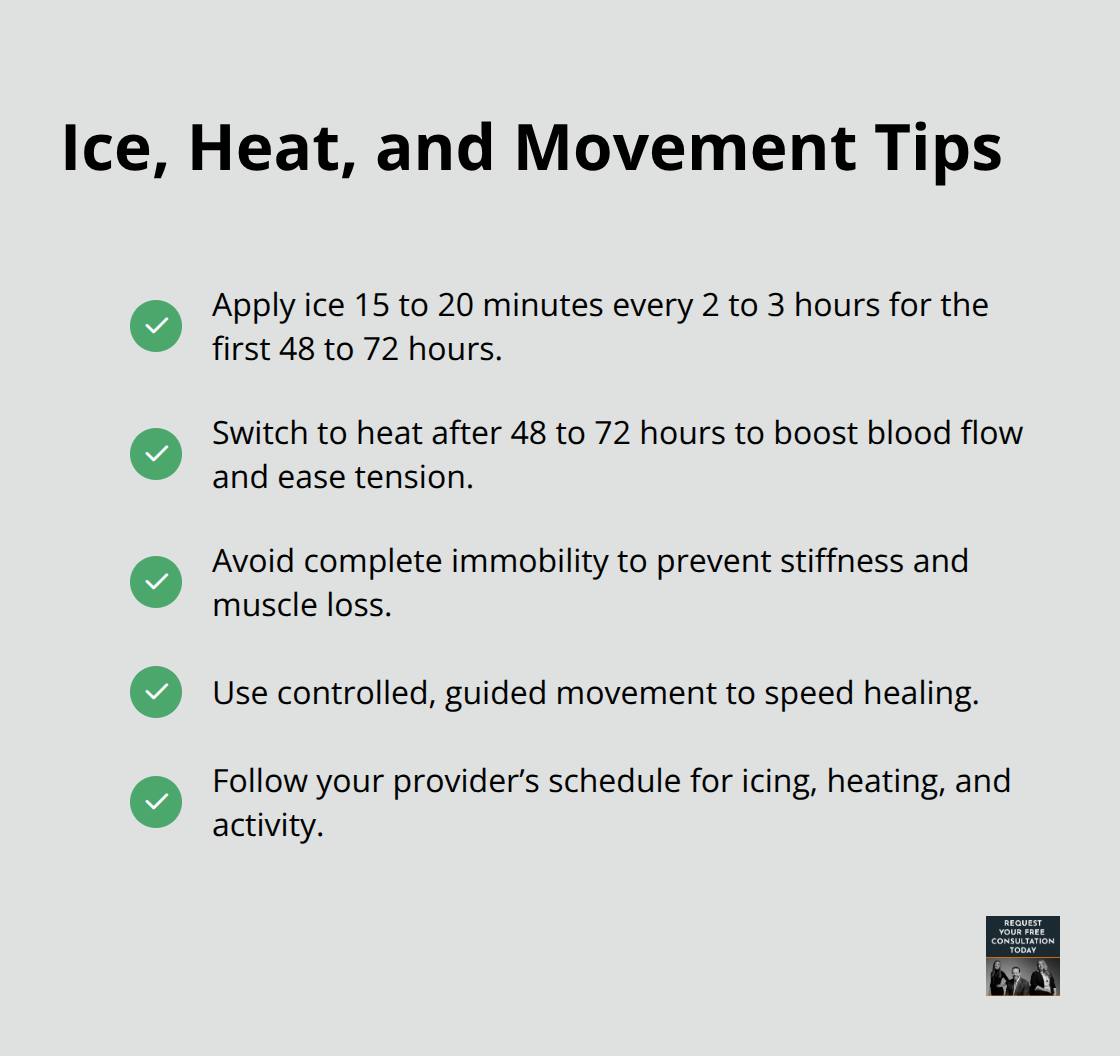
Ice application requires precision: apply it for 15 to 20 minutes every two to three hours during the first 48 to 72 hours, then heat can replace ice to improve blood flow and reduce muscle tension. Many people make the mistake of remaining completely immobile, which actually slows recovery by causing muscle atrophy and stiffness. Controlled movement under professional guidance accelerates healing significantly.
When Surgery Becomes Necessary
Surgical intervention becomes necessary when conservative treatment fails after eight to twelve weeks or when imaging shows severe nerve compression causing progressive neurological deficits like weakness, numbness that worsens, or loss of bladder control. Procedures like discectomy, spinal fusion, or decompression surgery carry risks including infection, bleeding, and incomplete symptom relief, which is why surgeons reserve these options for clear-cut cases where non-surgical approaches have been exhausted.
Recovery from spinal surgery typically requires six to twelve months before you return to normal activities, with some patients experiencing ongoing limitations. Physical therapy after surgery is mandatory, not optional-rehabilitation protocols following surgery are far more intensive than conservative treatment pathways.
Protecting Your Claim During Recovery
If your doctor recommends surgery, obtain a second opinion from another qualified physician to protect your interests. Throughout recovery, maintain detailed medical records, document all treatment dates and expenses, and photograph any visible injuries. This documentation strengthens your eventual claim for damages when you pursue compensation-and understanding what damages you can actually recover requires examining the financial impact of your injury.
Calculating Damages and Settlement Expectations
Medical Expenses and Future Care Costs
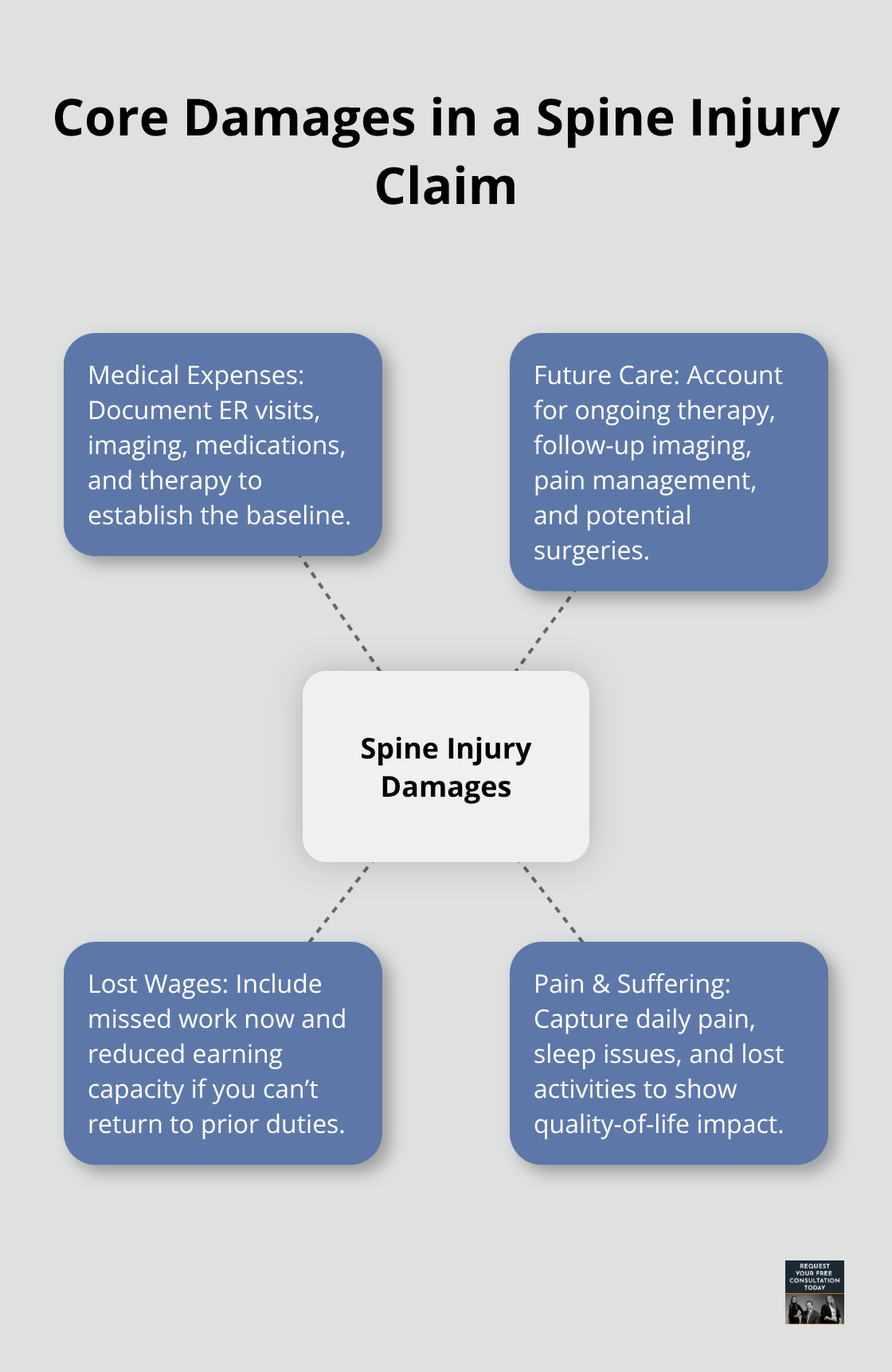
Medical expenses form the foundation of your spine injury claim-you’ll document every treatment cost from emergency room visits to ongoing physical therapy sessions, imaging studies, and medications. The National Health Care Anti-Fraud Association reports that medical costs for spine injuries average between $50,000 and $150,000 depending on severity and treatment path, though complex cases requiring surgery often exceed $200,000.
Future care costs matter equally because spine injuries frequently create long-term needs: ongoing physical therapy, imaging follow-ups, pain management appointments, and potential surgeries down the road. Insurance adjusters often underestimate these future expenses, which is why obtaining a life-care plan from your medical provider strengthens your position-this document outlines anticipated treatment costs over your lifetime based on your specific injury pattern.
Lost Wages and Earning Capacity
Lost wages represent the second damage category and extend beyond your immediate time away from work. If your spine injury prevents you from returning to your previous job or forces you into lower-paying work, you can claim lost earning capacity for that difference. The Bureau of Labor Statistics data shows workers with chronic spine conditions earn approximately 20% less over their lifetime compared to uninjured workers in similar positions.
Document your pre-accident income through tax returns, pay stubs, and employer letters, then obtain a vocational rehabilitation report from a qualified professional who can calculate your reduced earning potential. This evidence proves essential when negotiating with insurance companies.
Pain and Suffering Compensation
Pain and suffering compensation addresses the non-economic impact-the constant discomfort, sleep disruption, inability to participate in hobbies, and emotional distress. California courts recognize that spine injuries create measurable quality-of-life losses, though calculating these damages proves more subjective than medical expenses.
Insurance companies often use multiplier methods, applying a factor of 1.5 to 5 times your medical expenses to pain and suffering, but this approach frequently undervalues legitimate suffering from serious spine injuries. Settlement negotiations require presenting clear evidence: medical records showing ongoing pain, treatment notes documenting functional limitations, testimony from family members about lifestyle changes, and documented reduced activity levels.
Final Thoughts
Spine injury Santa Cruz cases require immediate medical attention and thorough documentation from the moment of your accident. Your treatment path, recovery timeline, and settlement amount depend on injury severity, but medical records, imaging reports, lost wage documentation, and detailed pain journals create the evidence foundation that insurance companies cannot ignore. Start documenting everything now: appointment dates, medication costs, physical therapy progress notes, and how your injury affects your daily activities.
We at Schaar & Silva LLP help Santa Cruz County residents navigate the complex calculations across medical expenses, lost earning capacity, and pain and suffering. Our team connects you with medical lien services that manage your bills while your case resolves, protecting you from financial hardship during recovery. We also evaluate property damage claims and link you with support resources that address both physical and emotional trauma from your accident.
If you haven’t sought medical evaluation yet, schedule an appointment immediately and request MRI imaging for accurate diagnosis. If you’re already in treatment, contact Schaar & Silva LLP to discuss your specific circumstances and learn what compensation you can realistically pursue based on your injury pattern and treatment costs.