

After a car accident, medical bills pile up fast. Many injured people don’t realize they can get treatment now and pay later through medical liens.
At Schaar & Silva LLP, we help clients use medical lien planning to access the care they need while protecting their settlement. This guide shows you how liens work and what mistakes to avoid.
How Medical Liens Actually Work in Auto Injury Cases
A medical lien is a written agreement between you and a healthcare provider stating that they will treat you now and get paid from your settlement later. This isn’t charity-it’s a business arrangement. The provider fronts the cost of your care, and when your case settles, they get reimbursed from your gross settlement before you receive your net amount. About one in ten Californians lack health insurance, which makes liens a lifeline for accident victims who need immediate access to orthopedists, MRI scans, surgery centers, and physical therapy without draining savings or credit cards. You must sign the agreement, and you need to understand exactly what you’re agreeing to before putting pen to paper. Many people sign liens without reading them carefully, then later discover the provider is taking far more from their settlement than expected. That’s a costly mistake.
Settlement payment order determines what you actually take home
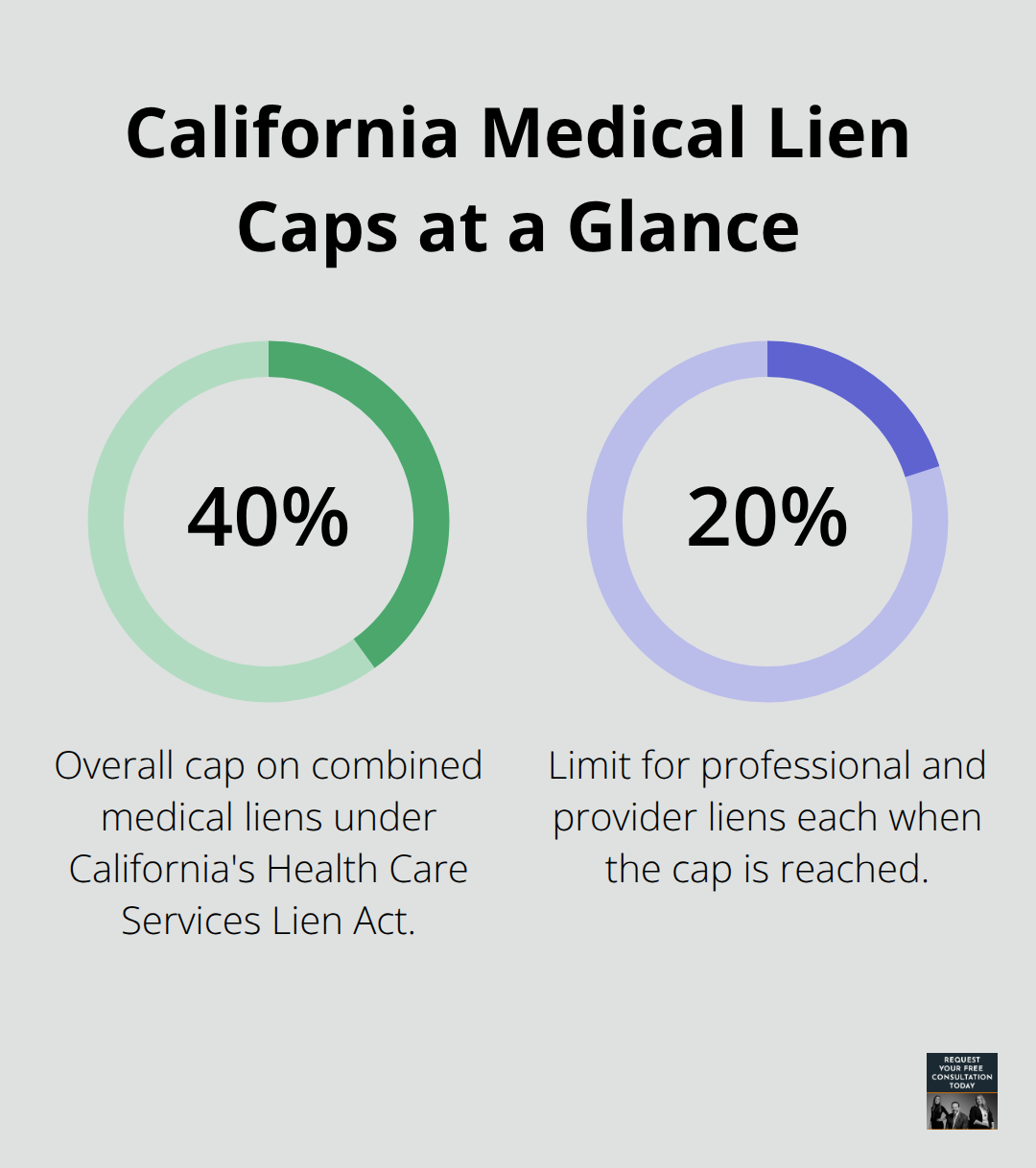
Settlement money flows in a specific order, and liens don’t come first. Attorney fees and case costs get paid before any lien. After that, hospital liens, statutory liens, and government program liens like Medicare and Medi-Cal come next. Private insurance and ERISA plan liens follow, and child support liens come last. This priority system protects your attorney’s fees and costs, but it also means liens can quickly consume what’s left. In one central Illinois car crash case, a hospital medical lien of over $20,000 was reduced after a year of negotiation, and the net settlement was nearly $45,000-illustrating that substantial money can be recovered on the back end through aggressive lien fighting. California’s Health Care Services Lien Act caps liens at 40% of the settlement, and no single licensed category can take more than one-third. When the cap is reached, professional and provider liens are limited to 20% each and can be reallocated. Understanding these caps and applying them correctly separates clients who walk away with real money from those who get shortchanged.
Provider liens and insurance liens require different strategies
Provider liens come from the doctors and facilities that treated you. Insurance liens come from your health insurer, Medi-Cal, Medicare, or workers’ compensation programs seeking reimbursement for what they paid on your behalf. Each type operates under different negotiation rules and legal frameworks. Provider liens are based on the reasonable value of services, not the provider’s full billed charges-meaning you can often negotiate them down significantly. Insurance liens, especially Medi-Cal and Medicare, have strict statutory formulas and notice requirements. Mishandling a Medicare lien under the Medicare Secondary Payer Act can trigger federal penalties and delay your entire settlement. The difference between treating these two lien types as the same versus understanding their distinct rules can cost you thousands of dollars in net recovery.
Routing care strategically protects your net recovery
Routing care through your existing health insurance first, when possible, leverages contracted rates and keeps bills lower. But when network access is limited or specialists aren’t available, a lien provider becomes necessary-just make sure the agreement is clear before treatment starts. You can negotiate liens yourself, but it’s risky; a skilled legal team will audit medical coding, compare plan language to governing law, and time negotiations for maximum leverage after liability and settlement amount are known. The next section covers the mistakes that derail lien planning and how to avoid them.
Why Medical Liens Give You Access to Care You Couldn’t Otherwise Afford
Medical liens remove the financial barrier to treatment
Medical liens solve a real problem for accident victims in Santa Cruz, Sacramento, and Oakland who lack health insurance or face network gaps after a crash. Without a lien agreement, you’d need to pay out of pocket for orthopedic surgery, MRI imaging, physical therapy, and specialist consultations-costs that easily reach $15,000 to $50,000 for serious injuries. A lien lets you access these treatments immediately while your case moves forward, and the provider waits for payment until settlement. About one in ten Californians lack health insurance entirely, and many others face high deductibles or limited network access. The provider fronts the money because they hold a legal claim against your future settlement, which removes the financial barrier between you and the care your injury demands.
Lien charges are negotiable, not fixed
The real strategic advantage emerges when you understand that liens are negotiable from day one. Many people assume the billed charges are fixed, but provider liens rest on reasonable value, not the provider’s full bill. A surgery center might bill $18,000 for an arthroscopic knee procedure, but the reasonable value for that service in your region could be $12,000 to $14,000. Negotiating liens down before treatment starts, or challenging inflated charges after the fact, directly protects your net recovery. You can also route certain care through your existing health insurance first-even if it means higher copays-because contracted rates are typically far lower than lien rates. The strategy shifts depending on your insurance status, the type of injury, and the providers available in your area.
Coordination with your attorney prevents costly surprises
Coordinating liens with your attorney from the start changes the outcome of your case. Many accident victims sign lien agreements without telling their lawyer, only to discover later that the provider’s charges will consume half the settlement. Your attorney needs to know every lien to calculate realistic net recovery, audit medical coding for errors or overcharges, and time settlement negotiations around lien payoffs. In one documented central Illinois car crash case, a hospital lien of over $20,000 was reduced after a year of negotiation, with the net settlement landing at nearly $45,000-far more than the initial offer. That result came from aggressive back-end lien fighting, something only experienced counsel can execute. The coordination prevents surprises at settlement and gives you leverage to reduce liens before funds are distributed. Without this coordination, you might settle for what seems like a large number, only to watch liens and fees shrink your take-home to less than half the gross amount. The difference between managing liens passively and managing them strategically is often tens of thousands of dollars in your pocket.
When you sign a lien agreement, you’re entering a binding contract that affects your final recovery. The next section covers the mistakes that derail lien planning and how to avoid them.
Mistakes That Drain Your Net Recovery
Failing to disclose liens to your attorney sabotages your case
Hiding liens from your attorney is the fastest way to sabotage your case. When you sign a lien agreement without telling your lawyer, you prevent them from calculating realistic net recovery, auditing medical charges for errors, or timing settlement negotiations around lien payoffs. Your attorney needs a complete picture of every lien holder, the original charges, and the legal basis for each claim to structure a settlement that protects you.
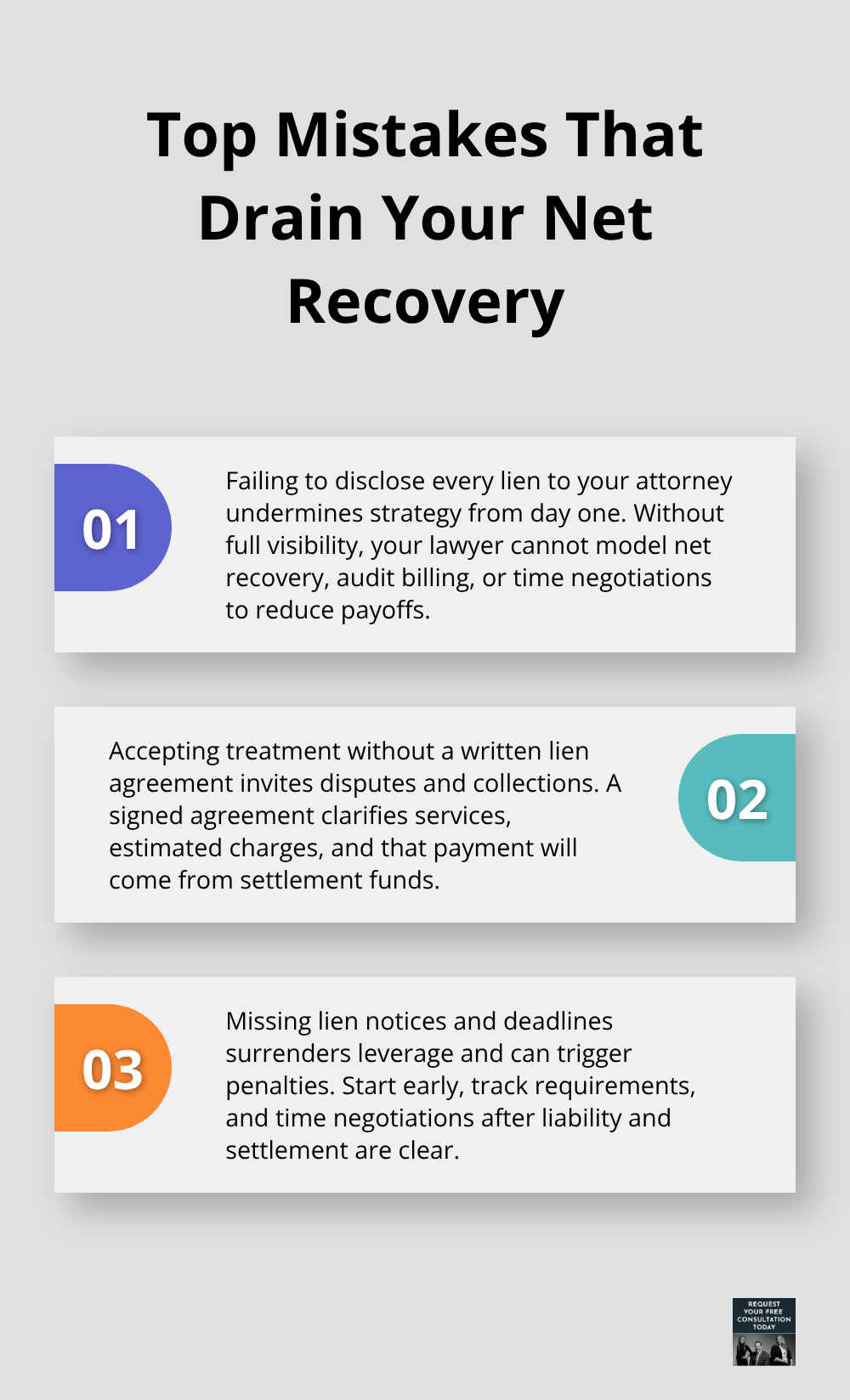
Many accident victims in Santa Cruz, Sacramento, and Oakland sign liens directly with providers, then mention them casually weeks later when their attorney asks about medical providers. The provider has treated you under terms you may not fully understand, and your attorney has missed the window to challenge unreasonable charges or negotiate reductions upfront. In one documented case, a hospital lien of over $20,000 was reduced after a year of negotiation, but that aggressive back-end fighting only works when counsel knows about the lien early and can build a strategy around it. Without disclosure, your attorney cannot protect you.
Accepting treatment without a written lien agreement creates legal chaos
The second critical mistake is accepting treatment from providers without a written lien agreement in place. Many accident victims assume verbal promises are enough, or they accept treatment and assume the provider will sort out payment later. Verbal agreements are unenforceable and create chaos at settlement.
A provider without a signed lien agreement can claim you promised to pay out of pocket, can pursue collection against you personally, or can delay settlement while disputing their charges. Always demand a written lien agreement before treatment begins, and provide a copy to your attorney immediately. The agreement should specify the services covered, the estimated charges, and the provider’s commitment to accept payment from your settlement. Without this written protection, you remain vulnerable to surprise bills and provider disputes that can delay your entire case by months.
Missing lien deadlines locks you into unfavorable terms
Misunderstanding lien deadlines and the negotiation window is the third mistake that costs accident victims real money. Many liens have notice requirements and deadline rules that, if missed, can invalidate the lien or lock you into unfavorable terms. Medicare liens under the Medicare Secondary Payer Act require notification to the Centers for Medicare and Medicaid Services, and missing the deadline can trigger federal penalties and delay settlement indefinitely. Medi-Cal liens require notifying the California Department of Health Care Services under Welfare and Institutions Code sections, and the state must respond with a final demand.
The window for negotiating liens effectively opens after liability is clear and a settlement amount is known, but before the settlement check is distributed. Many accident victims wait until settlement is imminent, then scramble to manage medical liens under time pressure, losing leverage and accepting higher payoffs than necessary. Start tracking liens early, gather all lien documents and plan documents now, and coordinate with your attorney to build a negotiation timeline that maximizes your leverage. If a lien holder refuses to cooperate or demands unreasonable amounts, filing a petition to adjudicate the lien can pressure acceptance and secure reductions. This tool only works when counsel files it at the right moment in the case, which requires planning, not panic. The difference between managing liens proactively and reactively is often tens of thousands of dollars in your actual take-home amount.
Final Thoughts
Medical lien planning transforms how you recover after an auto accident by protecting what you actually take home. The three core principles are straightforward: disclose every lien to your attorney immediately, demand written agreements before accepting treatment, and start negotiations early rather than scrambling at settlement. In the central Illinois case referenced throughout this guide, aggressive lien management reduced a $20,000 hospital lien through negotiation, with the final net settlement reaching nearly $45,000-far more than the initial offer would have provided.
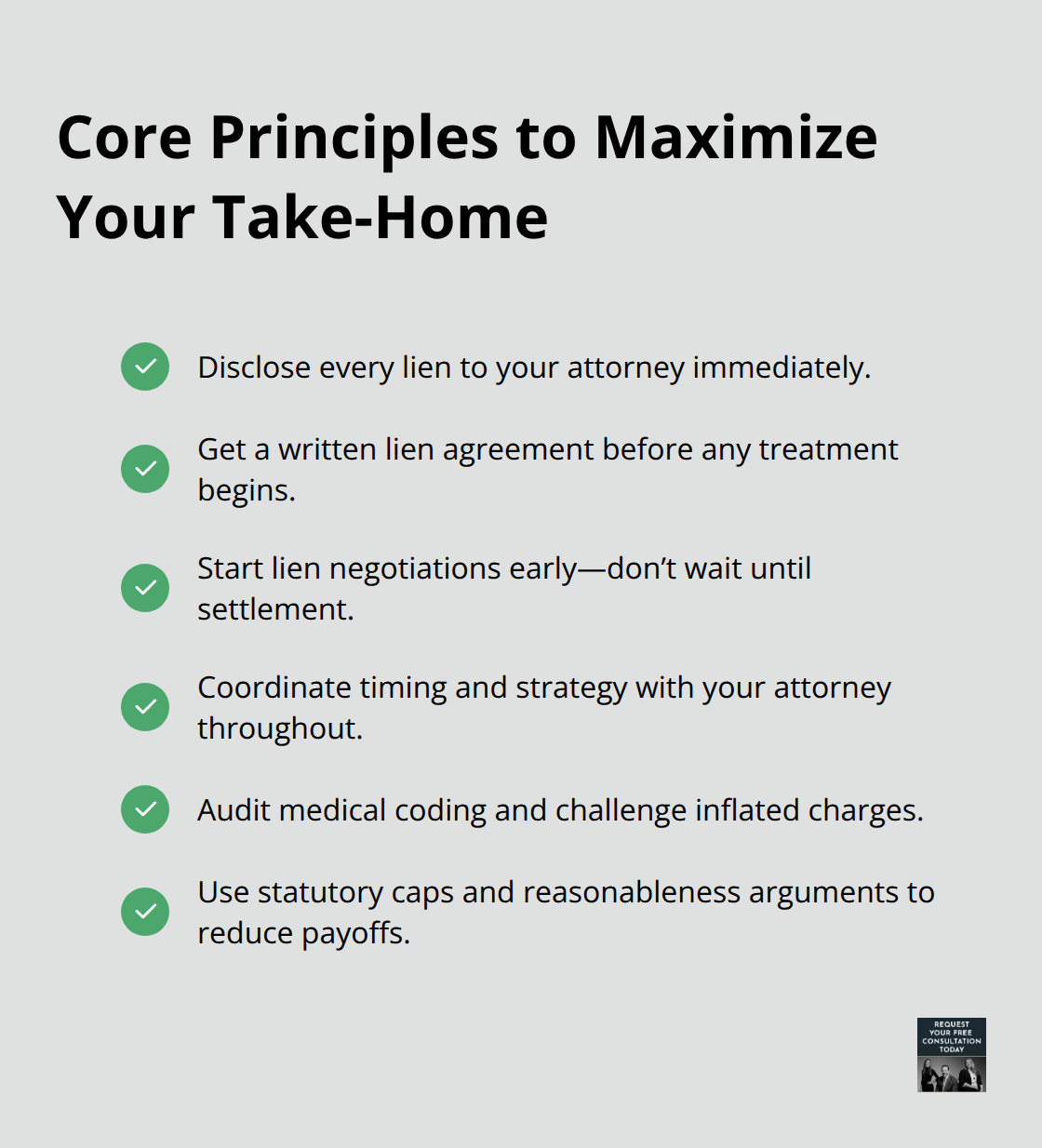
Your settlement amount matters far less than what you actually receive after liens, fees, and costs are paid. A $300,000 settlement can shrink to less than $150,000 without proper planning, while strategic medical lien planning preserves tens of thousands more in your pocket. We at Schaar & Silva LLP handle medical bill assistance by directing you to lien services that keep your treatment affordable while your case moves forward, audit medical coding for errors, challenge inflated charges, and negotiate liens down using statutory caps and reasonableness arguments.
Gather every lien document, medical bill, and insurance plan document you have, then contact Schaar & Silva LLP for a case review. We identify all potential liens, calculate your likely net recovery, and build a negotiation strategy tailored to your injury and circumstances. Medical lien planning is the difference between recovering fairly and leaving money on the table.