

After a car crash, medical bills pile up fast. Healthcare providers often place liens against your settlement to guarantee they get paid from your case proceeds.
At Schaar & Silva LLP, we see clients confused about how car crash medical liens actually work and what they mean for their recovery. Understanding these liens now protects your settlement later.
How Medical Liens Work in Car Accident Cases
What a Medical Lien Is
A medical lien is a legal claim that a healthcare provider places against your car accident settlement. When a hospital or doctor treats you after a crash, they front the cost of your care with the understanding that they’ll get paid from your settlement money once your case closes. This isn’t optional for providers-it’s how they protect themselves financially when patients lack immediate insurance coverage or when insurance denies claims. The provider files paperwork with the court or your attorney documenting the amount owed, and that lien stays attached to your case until resolution.
What makes this system problematic is that medical providers often charge rates far above what insurance companies would typically pay. A hospital might bill $15,000 for emergency care that an insurance company would negotiate down to $6,000. When a lien is placed, you’re stuck with the full billed amount unless you negotiate it down before settlement.
How Providers Place Liens on Your Settlement
Healthcare providers typically place liens through your attorney or directly with the court handling your case. Your doctor’s office or hospital sends official notification to your legal team stating the exact amount owed for your treatment. This happens whether or not you signed anything agreeing to the lien-California law allows providers to place liens automatically on personal injury settlements.
The timeline varies significantly depending on your case complexity. Simple rear-end accidents with clear liability might resolve in four to eight months, while cases involving multiple parties or serious injuries can take two to three years. During this entire period, the lien amount sits there, accruing interest in some cases.
What Happens When Your Settlement Arrives
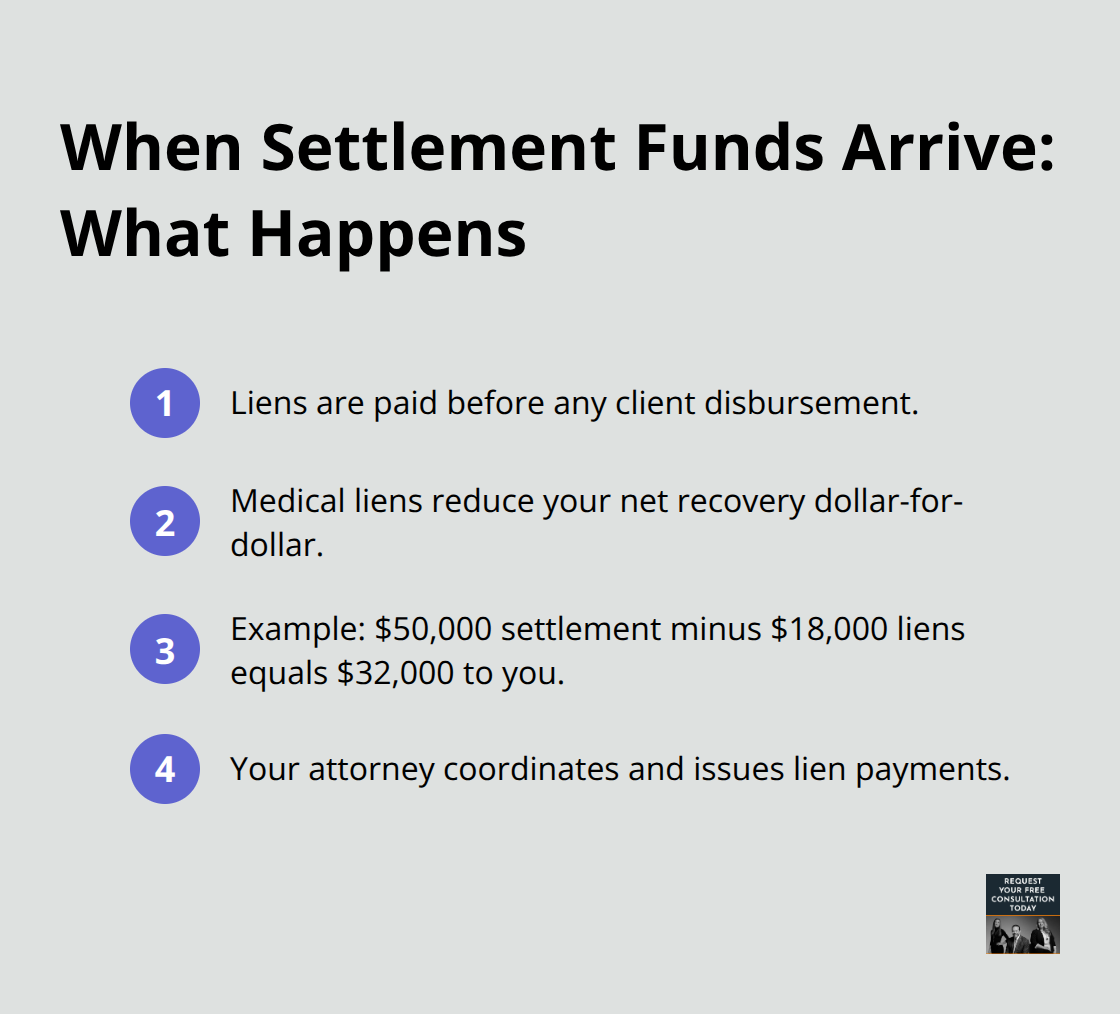
Once your settlement is reached, the lien must be paid before you receive your funds. Your attorney typically handles the actual payment, but you need to understand that medical liens reduce your net recovery dollar-for-dollar. If you settle for $50,000 and have $18,000 in medical liens, you walk away with $32,000 after liens are paid (assuming no other costs exist).
Many people don’t realize they can negotiate these amounts down before settlement finalizes. Healthcare providers often accept reduced lien amounts rather than risk getting nothing if a case stalls or fails. This negotiation directly increases what you keep from your settlement, which is why understanding your options matters before your case closes.
Common Misconceptions About Medical Liens
Medical Liens Don’t Stop You From Getting Treatment
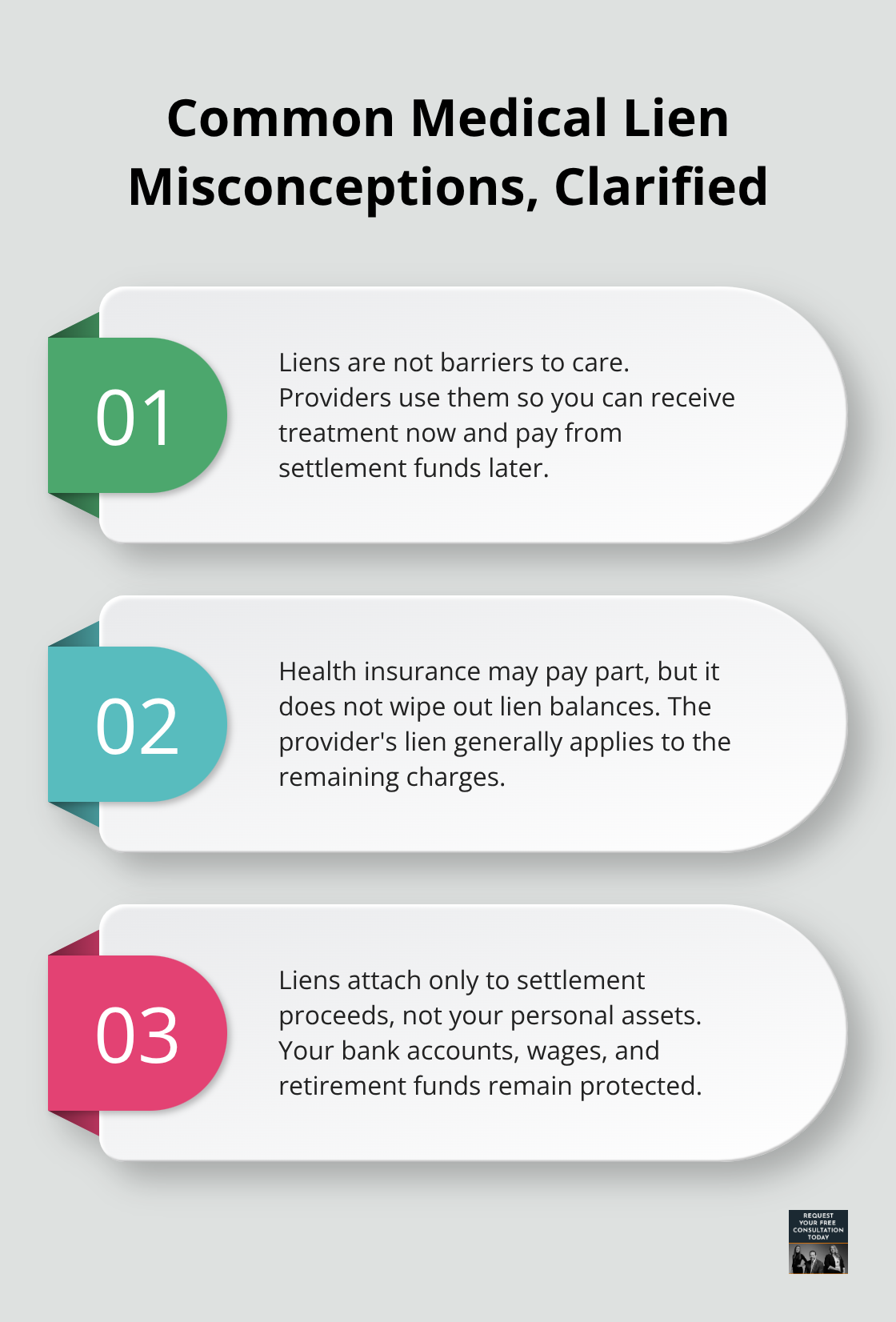
Healthcare providers place liens specifically because they want you to get treated now and pay later from your settlement. Hospitals and doctors file liens constantly in California car accident cases, and California law protects this arrangement. The lien acts as a backstop for the provider, not a barrier to your treatment. You receive full medical care without worrying about bills until your case resolves.
Delaying treatment to avoid liens is the wrong move. Untreated injuries often worsen and become harder to prove in settlement negotiations. Get the care you need immediately after your crash.
Your Insurance Doesn’t Automatically Cover Lien Amounts
Your insurance won’t magically cover lien amounts, and this creates real confusion for many accident victims. If your health insurance covers some of your treatment costs, the healthcare provider’s lien typically applies only to the remaining balance. For example, if a hospital charges $20,000 and your insurance pays $12,000, the lien covers the $8,000 gap.
Your auto insurance settlement is separate from your health insurance coverage. The settlement money comes from the at-fault driver’s liability policy, not your own health insurance. Many people mistakenly believe their auto insurance will handle lien payments directly, but that’s not how it works. Your settlement funds go to your attorney, who then distributes money to pay down liens before you receive your portion.
Liens Apply Only to Settlement Proceeds, Not Your Own Funds
Medical liens only attach to your personal injury settlement proceeds, not to other funds in your life. Your bank accounts, retirement funds, and wages stay completely protected. If your settlement is small or nonexistent because liability is unclear, medical providers cannot chase your personal assets to satisfy their liens.
This protection exists specifically for accident victims in California. The lien sits against your case outcome, nowhere else. Understanding this distinction means you can focus on recovery without fearing that providers will seize your personal finances. With this foundation clear, managing liens after your crash becomes a matter of strategy rather than panic.
Managing Medical Liens After a Car Crash
Negotiate Lien Amounts With Healthcare Providers
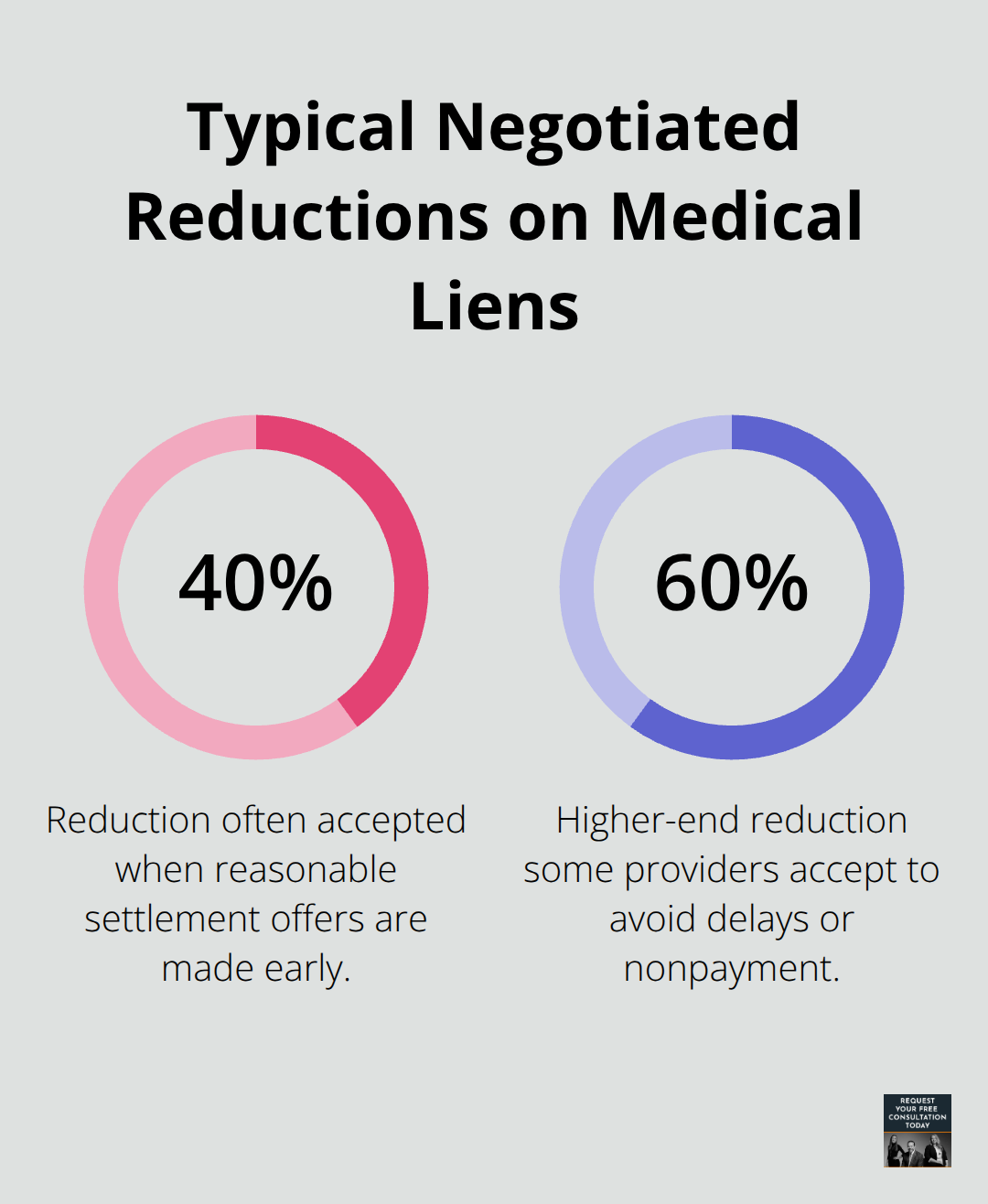
Medical providers set their lien amounts based on what they billed, not what they’ll realistically accept. This gap creates your opening to negotiate. Most hospitals and doctors will reduce their liens significantly rather than wait years for a case to resolve or risk getting nothing if settlement falls through. Healthcare providers often accept 40 to 60 percent reductions when presented with reasonable settlement offers early.
Start negotiations before your case closes, not after. Contact the billing department at each healthcare facility and ask directly what they’ll accept as full payment. Providers often have settlement authority that front-line billing staff don’t advertise. Request their final settlement figure in writing before your case concludes. If a provider refuses to negotiate, your attorney can push harder by pointing out that delayed cases mean delayed payments for them too. Healthcare facilities track cash flow closely, and a bird in hand today beats an uncertain settlement tomorrow. Document every negotiation in writing and get signed agreements confirming reduced amounts. This protects you if a provider later tries to claim the original inflated bill amount.
Work With Your Attorney to Prioritize Payments
Your attorney plays a critical role in how settlement funds get distributed, and you need clear communication about payment priorities before money arrives. Some liens have legal priority over others depending on California law and the type of healthcare provider. Hospital liens often rank differently than doctor liens, and workers compensation providers have their own rules.
Ask your attorney for a written breakdown showing the total settlement, all lien amounts, attorney fees, court costs, and your net take-home figure. This transparency prevents surprises when funds arrive. If your settlement is tight, your attorney may negotiate with some providers to accept partial payments spread over time rather than demanding full payment immediately. This strategy keeps more money in your pocket now while you recover.
Understand What Happens if Your Settlement is Small
Small settlements sometimes mean choosing which liens to pay first, and your attorney should guide this decision based on what provides you the most financial relief during your recovery period. California law protects certain types of liens over others, so the order matters significantly. Your attorney knows which providers have priority claims and which ones you can negotiate with for delayed or reduced payments depending on your specific situation and case details.
Final Thoughts
Car crash medical liens feel overwhelming when injuries already consume your attention, but the process works straightforwardly once you understand it. Healthcare providers place liens to secure payment from your settlement, you negotiate those amounts downward before your case closes, and you keep what remains after liens are paid. Your attorney handles these discussions strategically to maximize your net recovery.
The difference between poor lien management and smart negotiation can mean thousands of dollars in your pocket. Your attorney knows which providers will negotiate aggressively, which liens have legal priority, and how to structure payments that protect your interests under California law. They spot situations where providers overreach with inflated amounts and push back on your behalf.
If you’re handling a car accident in Santa Cruz County, Sacramento, or Oakland, contact Schaar & Silva LLP to discuss how we protect your settlement from car crash medical liens and maximize your recovery.