

A car accident, workplace injury, or slip and fall can leave you facing massive medical bills while your case is still pending. Medical lien services in California help you get the treatment you need without draining your savings before your settlement arrives.
We at Schaar & Silva LLP understand how overwhelming this situation feels. This guide walks you through how medical liens work, your rights as a patient, and practical ways to manage your medical debt during your recovery.
What Exactly Is a Medical Lien and How Does It Work
A medical lien is a legal claim that healthcare providers file against your personal injury settlement or judgment to secure payment for treatment related to your accident. When you suffer injuries in a car accident, workplace incident, or slip and fall, medical bills accumulate quickly. California law allows hospitals, doctors, and other providers to place liens on your future recovery instead of demanding immediate payment. This means you can receive treatment now and pay for it later from your settlement funds. The lien essentially tells the at-fault party’s insurance company to hold back money from the settlement to pay this medical provider first.
Three Main Types of Liens in California
California recognizes three main types of liens, and each follows different rules and reduction formulas. Statutory liens come from government programs like Medi-Cal or from hospitals operating under the Hospital Lien Act. Contractual liens arise from private health insurance plans or ERISA-governed employer plans. Consensual liens happen when you and a provider agree upfront that treatment will be paid from your settlement. Understanding which type applies to your situation matters because the reduction formulas and negotiation strategies differ significantly.
How the Lien Gets Attached to Your Settlement
Once a provider files a lien, it becomes a formal claim against any recovery you receive. The process starts when a healthcare provider notifies the liable party’s insurance company and your attorney that a lien exists. In California, the Hospital Lien Act requires certified mail notice to both the at-fault party and their insurer-failure to follow these strict procedures can invalidate the entire lien. For Medi-Cal liens, the Department of Health Care Services typically issues a Notice of Lien within 30 days of notification, and you should calendar this date to track its status.
Settlement Distribution and Negotiation
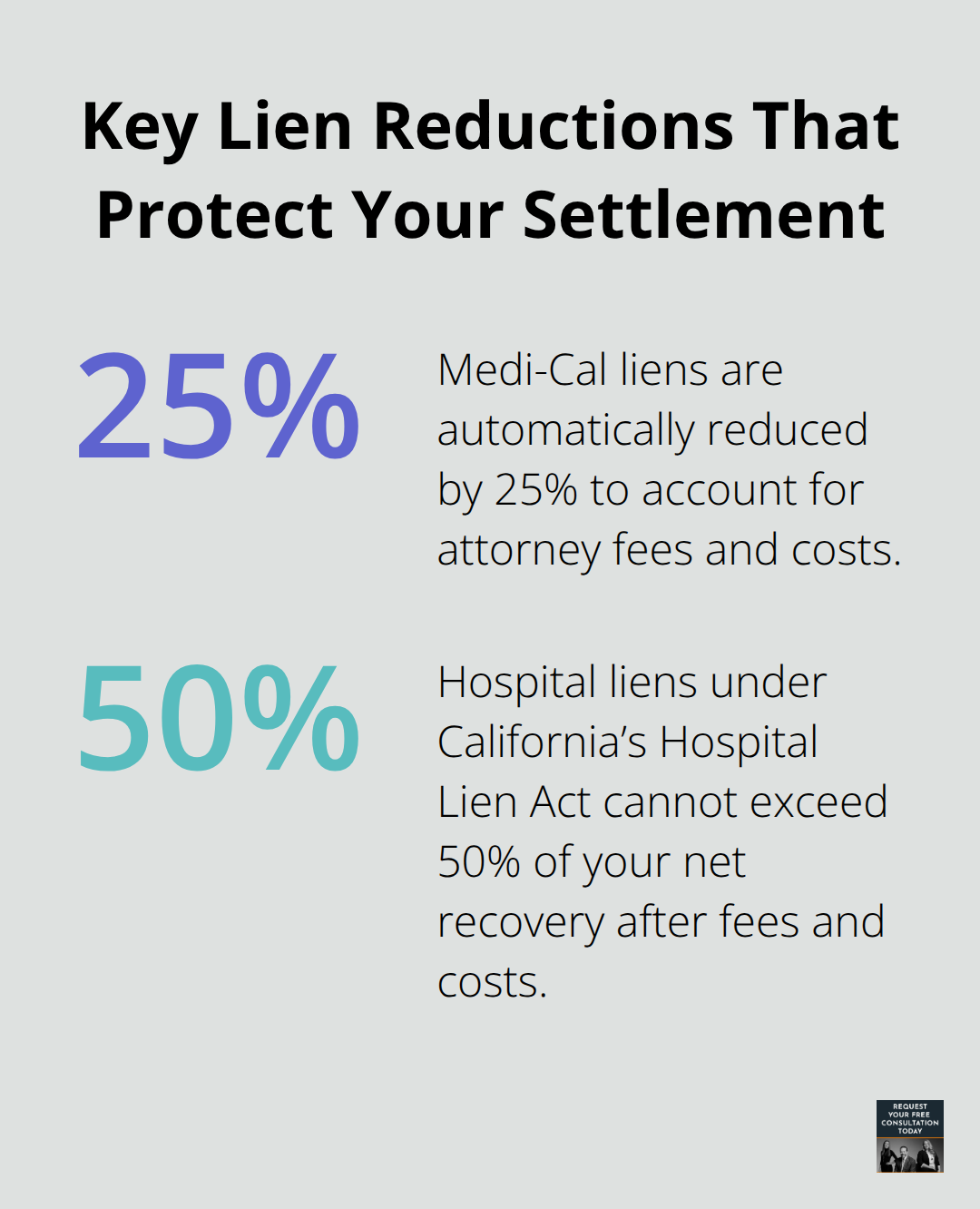
When your case settles, the insurance company does not send all settlement funds directly to you. Instead, funds flow to your attorney’s trust account, and liens are paid first before you receive your portion. This is where negotiation becomes critical. Medical providers often bill inflated amounts that do not reflect market value, and negotiating liens down from billed charges to reasonable amounts is both standard practice and legally sound. The 25 percent rule also applies to Medi-Cal liens, meaning the lien amount is automatically reduced by 25 percent to account for attorney fees and costs, protecting your recovery further. These reductions can significantly increase what you take home from your settlement.
Understanding how liens attach to your settlement and what reduction strategies apply sets the stage for exploring the specific scenarios where liens most commonly appear.
Where Medical Liens Show Up Most Often
Car Accidents and Vehicle Collisions
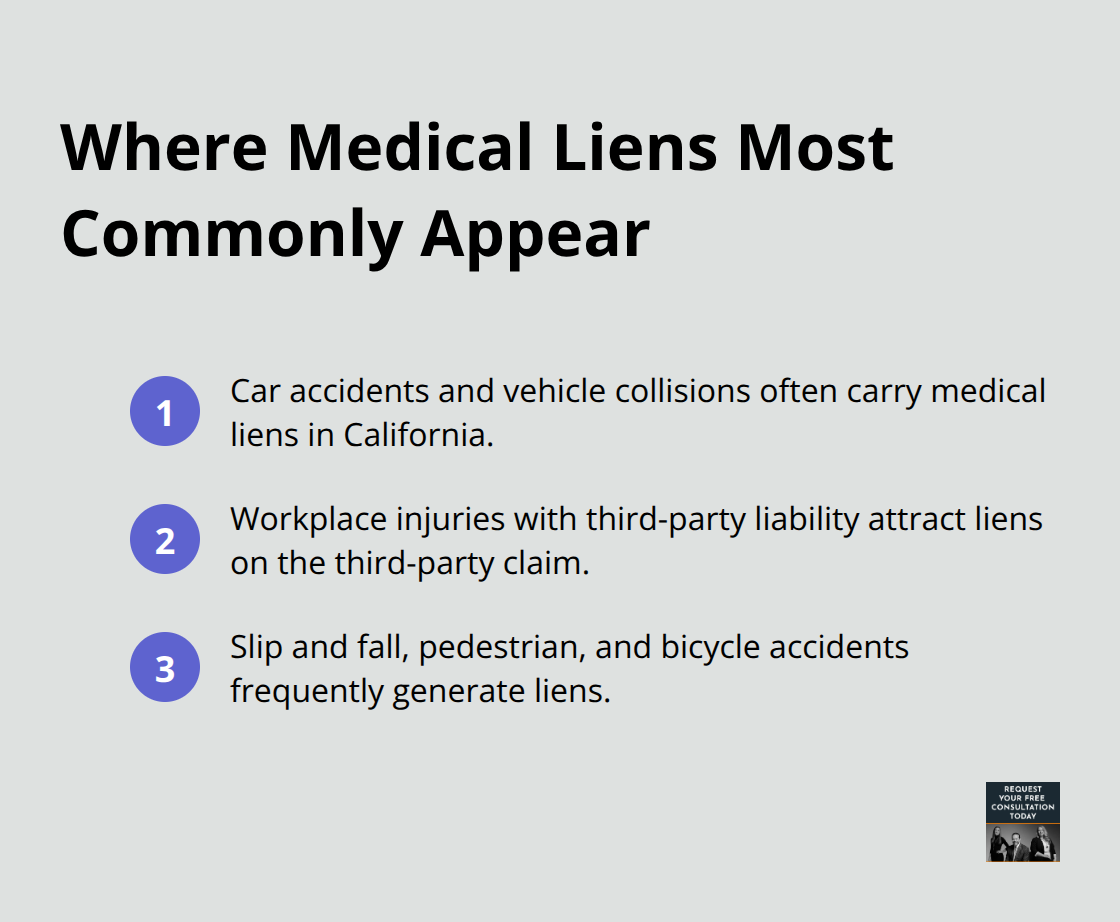
Car accidents rank as the most common scenario for medical liens in California, and the numbers reflect this reality. In Santa Cruz County, Sacramento, and Oakland, vehicle collisions generate thousands of injury claims annually, with medical liens attached to the vast majority of settlements. When another driver causes a crash, their liability insurance becomes the source of your recovery, and medical providers know this. Hospitals and doctors file liens immediately after treating accident victims because they understand the settlement will arrive eventually. The Hospital Lien Act specifically authorizes this practice, requiring only certified mail notice to the at-fault party and their insurer. If another vehicle hit you, a medical lien is almost certain to appear on your case.
Workplace Injuries with Third-Party Liability
Workplace injuries with third-party liability also trigger medical liens regularly, though the mechanics differ slightly. If someone else’s negligence hurt you at work-a contractor’s faulty equipment, a property owner’s unsafe conditions, or a vendor’s dangerous product-you have a third-party claim separate from workers compensation. Your employer’s workers comp covers immediate medical treatment, but the third-party settlement is where liens attach. This dual-track system means you might have both a workers comp claim and a personal injury claim running simultaneously. Medical providers file liens on the third-party settlement to secure their payment from that fund.
Slip and Fall and Pedestrian Accidents
Slip and fall accidents on someone else’s property follow the same lien pattern as car accidents. Property owners and their liability insurers know that settlements will eventually cover medical bills, so liens are filed as standard procedure. Pedestrian accidents and bicycle collisions also generate liens with high frequency because the at-fault driver’s insurance is clearly the responsible party. In each scenario, the at-fault party’s insurance will ultimately pay your recovery, and medical providers file liens to guarantee their payment from that fund.
Why Liens Appear Across These Scenarios
The common thread across all these situations is straightforward: when a third party’s insurance will pay your recovery, medical providers file liens to secure their portion. Hospitals and doctors understand the settlement timeline and file liens as routine business practice. This predictability means you can anticipate liens appearing in your case and plan accordingly. Managing these liens effectively requires understanding which scenario applies to your situation and what reduction strategies will maximize your take-home amount. The next section covers how you can negotiate with healthcare providers and reduce what you owe from your settlement.
How to Negotiate Your Medical Bills and Reduce What You Owe
Healthcare providers routinely inflate medical bills, and California law recognizes this reality through reduction formulas that protect your recovery. The Howell v. Hamilton Meats decision established that liens should reflect market value, not the inflated billed charges hospitals submit. This means negotiating liens down from the full amount is both legally sound and standard practice in personal injury cases. When a provider bills $15,000 for imaging or surgery, the actual market value might be $8,000 to $10,000, and your attorney should push back on the inflated figure.
Challenging Inflated Charges
Most providers expect negotiation and will accept reasonable reductions rather than risk getting nothing if the case stalls. Start by requesting itemized billing records from each medical provider and comparing those charges against standard rates in your region. Sacramento and Oakland hospitals charge different amounts than rural Santa Cruz County facilities, so local market rates matter. If a provider refuses to negotiate, you have additional leverage through the statutory reduction formulas that apply automatically.
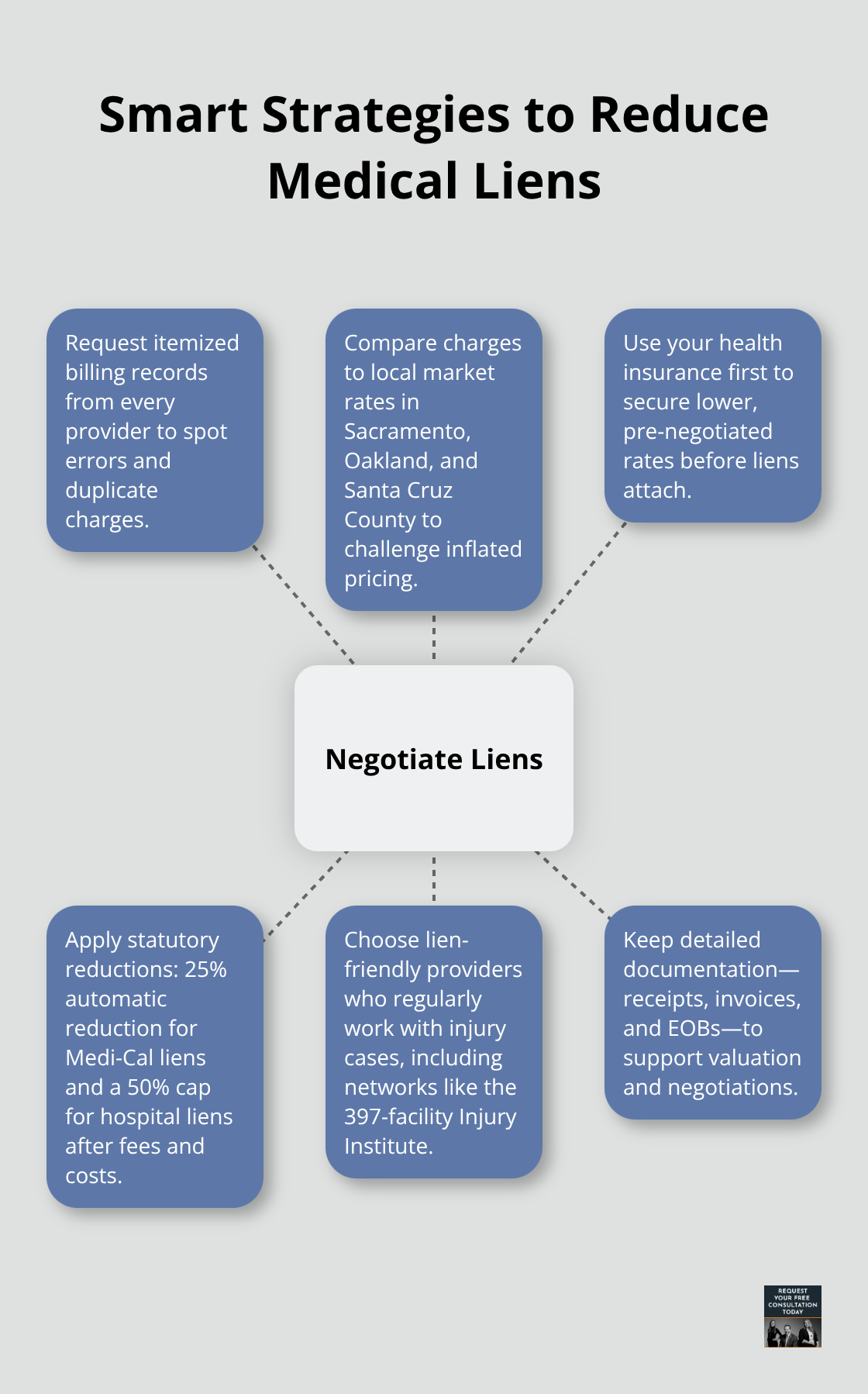
Medi-Cal liens face a mandatory 25 percent reduction to account for attorney fees and costs, while hospital liens under the Hospital Lien Act cannot exceed 50 percent of your net recovery after fees and costs are deducted. These caps exist specifically to prevent medical debt from consuming your entire settlement.
Understanding Your Patient Rights
Your rights as a patient include the right to understand what you are being charged and why. California hospitals must provide you with cost estimates before non-emergency procedures, though many fail to do so voluntarily. Request these estimates upfront and ask whether the facility accepts lien-based payment. If a hospital refuses to treat you on a lien basis, medical lien funding services can provide advance funds to cover surgery and rehabilitation costs. These funds are repaid only when your case settles, eliminating the pressure to pay upfront.
Selecting Lien-Friendly Providers
The Injury Institute operates a network of 397 medical facilities across California that accept lien-based treatment, giving you options if your primary provider refuses liens. When selecting providers, choose facilities that work regularly with personal injury attorneys because they understand the timeline and documentation requirements that your case demands. They also tend to be more reasonable on billing because they have experience with lien-based arrangements. Keep detailed records of every medical expense tied to your injury, including receipts, invoices, and explanation of benefits statements. This documentation supports lien valuation and gives you ammunition to challenge inflated charges during negotiation.
Maximizing Insurance Coverage First
If you have health insurance, use it first before relying on liens. Your insurance company has already negotiated rates with providers, so those charges will be lower than what a hospital bills an uninsured patient. California allows providers to file liens even when you have insurance, but using your coverage reduces the lien amount that ultimately attaches to your settlement. This strategy protects more of your final recovery for your own needs.
Final Thoughts
Medical liens in California allow you to receive treatment now and pay later from your settlement, transforming what could be a financial crisis into a manageable process. Statutory liens like Medi-Cal reduce automatically by 25 percent to account for attorney fees, while hospital liens cannot exceed 50 percent of your net recovery. Contractual liens from private insurance and consensual liens with out-of-network providers respond to negotiation, often dropping from inflated billed charges to reasonable market rates that reflect actual costs.
Medical lien services California providers-particularly the Injury Institute network of 397 facilities across California-accept lien-based treatment and give you access to quality care without upfront costs. If a provider refuses liens, medical lien funding services advance funds for surgery and rehabilitation, with repayment due only when your case settles. These services protect both your health and your financial recovery by ensuring you get necessary treatment while preserving settlement funds for your own needs.
Contact Schaar & Silva LLP if you are in Santa Cruz County, Sacramento, or Oakland and need guidance on managing medical liens in your case. Our team directs you to medical lien services that work with your providers and negotiates liens down to reasonable amounts. We handle the legal complexities while you focus on healing.
