
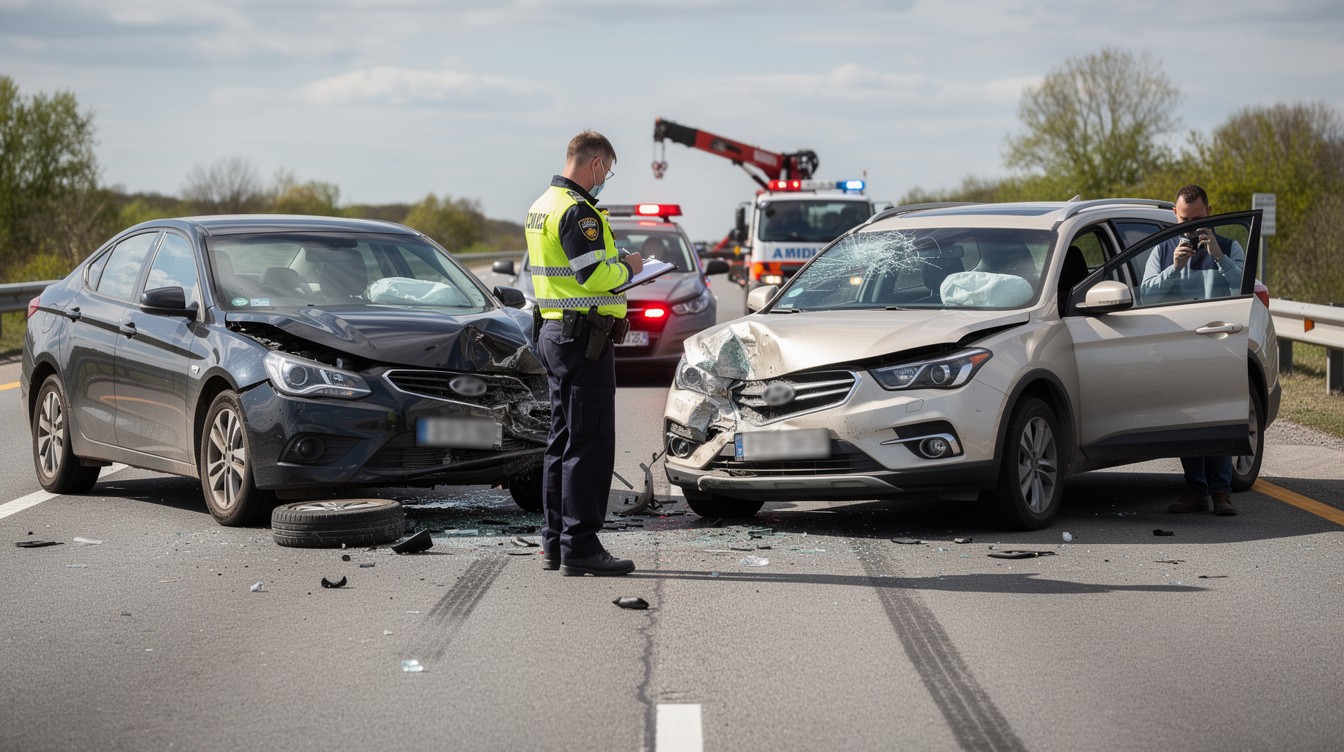
A California motor vehicle accident can leave you confused about what happens next. Medical bills pile up, insurance companies call, and you’re unsure what you’re legally entitled to recover.
We at Schaar & Silva LLP help accident victims in Santa Cruz County, Sacramento, and Oakland understand their rights and fight for fair compensation. This guide walks you through the steps you need to take right now and explains the laws that protect you.
What to Do Right After the Crash
Stop Safely and Call for Help
Stop your vehicle safely if you can and turn on hazard lights. Call 911 immediately if anyone is injured or if there is significant damage. California law requires you to report accidents to the Department of Motor Vehicles within 10 days if anyone is injured or property damage exceeds $750-failure to report triggers automatic license suspension.
Document Everything at the Scene
Take photos and videos of the accident scene from multiple angles, including vehicle damage, road conditions, traffic signals, and skid marks. Photograph the license plates, vehicle identification numbers, and the overall scene. These images become critical evidence later because memories fade and insurance companies question accounts that lack visual proof.
Collect Information from Other Parties
Collect the names, phone numbers, addresses, driver’s license numbers, vehicle registration information, and insurance details from the other driver and any passengers. Write down the exact location, date, time, weather conditions, and how the crash happened. Get contact information from witnesses even if they seem reluctant, as their statements often carry more weight than either driver’s account.
Protect Yourself from Liability Claims
Do not admit fault or sign any documents at the scene beyond the police report. Many drivers mistakenly apologize or say things like “I wasn’t paying attention,” which insurance companies later use against them in settlement negotiations. Notify your insurance company and police as soon as possible.
Cooperate with Your Insurer and Track Communications
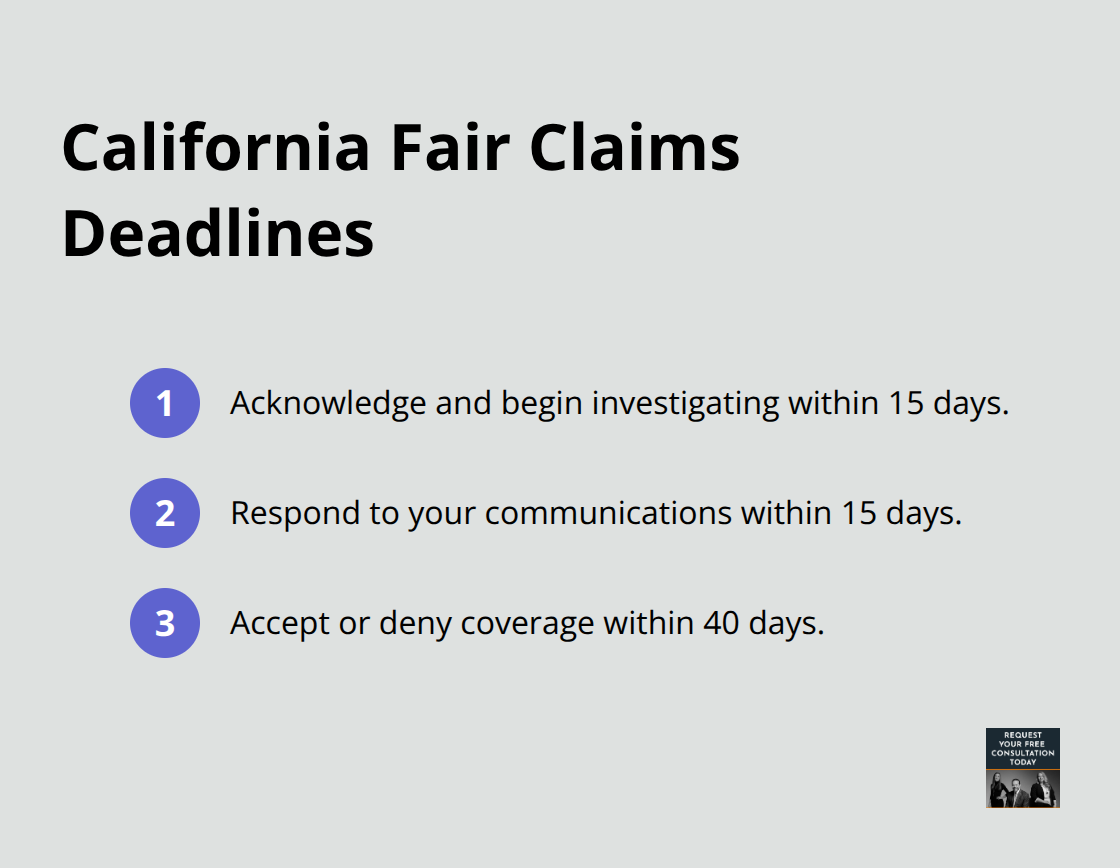
California law requires you to provide a written or recorded statement if your insurer requests one, and you should cooperate fully with their investigation. However, keep copies of everything you submit and maintain a timeline of all communications with your insurer, including dates, times, and names of representatives you speak with. The California Department of Insurance’s Fair Claims Settlement Practices Regulations require insurers to acknowledge your claim and investigate within 15 days, respond to you within 15 days, and decide on your claim within 40 days (so document any delays).
This foundation of documentation and timely reporting prevents insurers from denying your claim or undercutting your settlement later. Understanding how California determines fault in your accident shapes what compensation you can actually recover.
How Fault Works in California Auto Accidents
Pure Comparative Negligence Protects Partial Fault Victims
California uses pure comparative negligence, which means you can recover compensation even if you’re partially responsible for the crash. Your award gets reduced by your percentage of fault. For example, if you’re found 20% at fault and your damages total $100,000, you’d recover $80,000. This rule applies regardless of fault percentage, so even drivers who are 99% responsible can still pursue claims. The key is proving what actually caused the accident and who violated traffic laws or safety duties.
Traffic Violations and Breach of Duty
California Vehicle Code Section 22350, the Basic Speed Law, holds drivers accountable for operating at speeds unsafe for road conditions, regardless of posted limits. Running red lights under Vehicle Code Section 21453, failing to yield at crosswalks under Section 21950, and distracted driving all constitute breaches of the duty of care that drivers owe. Police reports document traffic violations at the scene, but these aren’t automatically binding on liability. Insurance adjusters and courts look at the full accident reconstruction, including witness statements, vehicle damage patterns, skid marks, and traffic signal timing. The at-fault driver’s insurance company bears the burden of paying your damages, but they’ll aggressively defend their insured and minimize liability whenever possible. This is why documenting the scene thoroughly and obtaining independent witness accounts matters so much.
Minimum Coverage Limits Leave You Exposed
California law requires minimum financial responsibility of 15/30/5, meaning $15,000 per person for bodily injury, $30,000 per accident for bodily injury, and $5,000 for property damage. These minimums are dangerously low for serious injuries. A single emergency room visit and a few days of hospitalization can easily exceed these limits, leaving you responsible for the rest. Most drivers carry higher limits, but uninsured or underinsured motorist coverage protects you if the other driver has insufficient insurance.
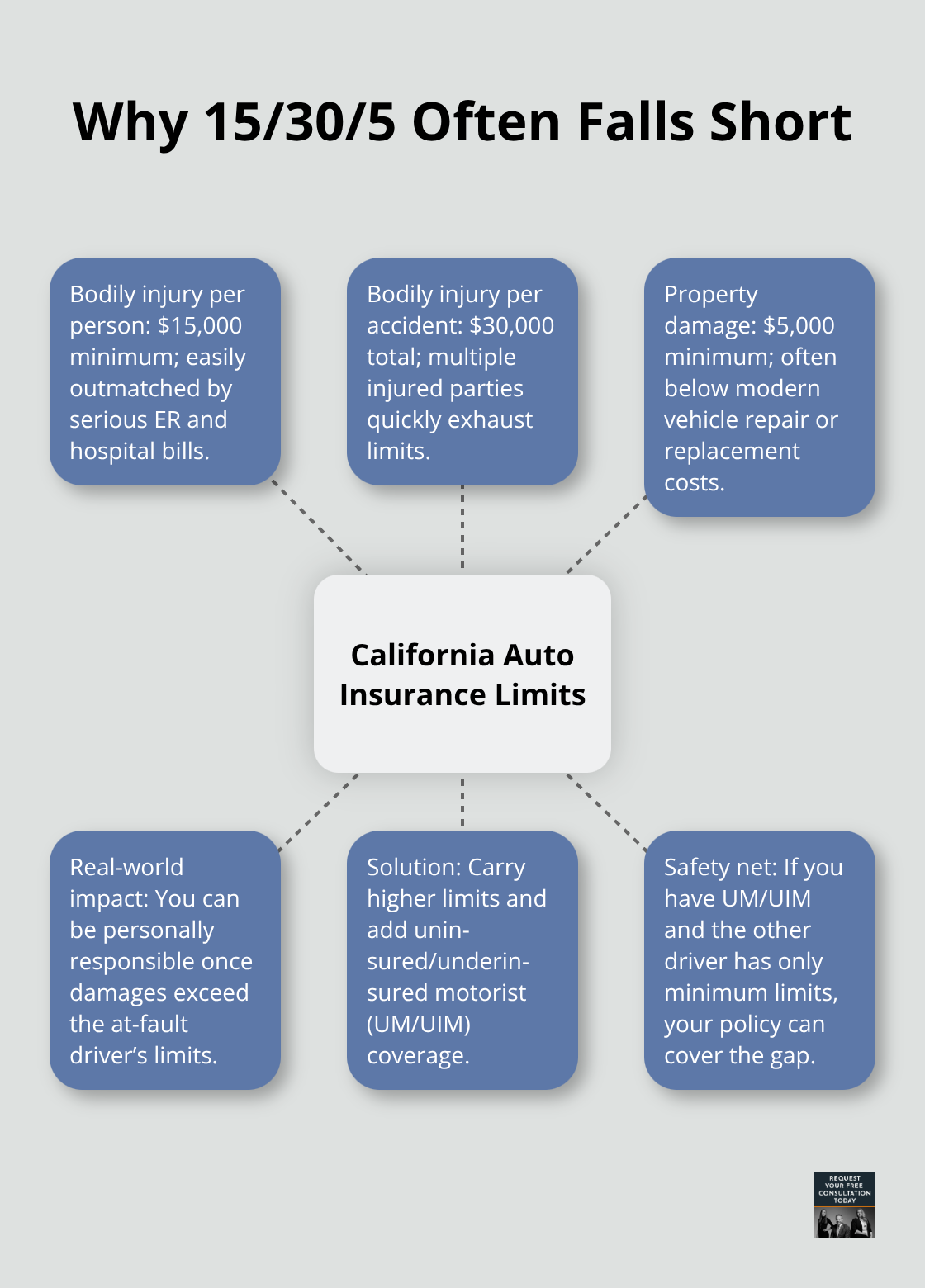
If you carry uninsured motorist coverage and the other driver carries only minimum limits, your own policy steps in to cover the gap.
Insurance Company Tactics and Settlement Pressure
Many victims make the mistake of accepting the first settlement offer, which typically undervalues non-economic damages like pain and suffering and future medical costs. The California Department of Insurance enforces fair claims practices, requiring insurers to acknowledge claims within 15 days, investigate promptly, and respond within 15 days. Failure to meet these timelines gives you grounds to file complaints with the Department of Insurance and potentially pursue bad faith claims. When settlement negotiations stall or the insurer denies your claim entirely, legal representation becomes necessary. We at Schaar & Silva LLP help accident victims in Santa Cruz County navigate these disputes and hold insurers accountable for following the law. Understanding what damages you can actually claim shapes whether you accept a settlement or pursue further action.
What Compensation Can You Actually Recover
Economic damages are straightforward to calculate and insurers must pay them. Medical expenses before settlement include emergency room visits, hospitalization, surgery, physical therapy, prescription medications, and future medical care. Lost wages from time off work count too, as do reduced earning capacity if your injuries prevent you from returning to your previous job. Property damage to your vehicle follows the Actual Cash Value standard in California, meaning the fair market value of your car at the time of the crash, not the replacement cost. If repairs exceed the ACV, your insurer typically pays the lesser amount, though you can request Original Equipment Manufacturer parts instead of aftermarket replacements. Home modifications for mobility assistance, transportation costs, and medical equipment also fall under recoverable economic losses.
Non-economic damages are where settlement negotiations become contentious because they lack fixed dollar amounts. Pain and suffering, emotional distress, loss of enjoyment of life, permanent scarring or disfigurement, and loss of consortium with your spouse all qualify but require careful valuation. A 2023 estimate places average wrongful death settlements between about $800,000 and $5 million depending on case specifics, though typical pedestrian injury settlements range from $50,000 for minor soft-tissue injuries to $500,000 or more for traumatic brain injury or paralysis cases. Insurance companies deliberately lowball non-economic damages because juries and judges must decide these amounts, creating uncertainty that favors settlement pressure.
File Your Insurance Claim Immediately
File your claim right after reporting the accident to police. Provide your insurer with the police report number, witness contact information, photos of vehicle damage and the scene, medical records documenting your injuries, and receipts for all expenses related to the crash. Do not exaggerate injuries or expenses because insurers investigate claims thoroughly and will deny or reduce settlements based on inconsistencies.
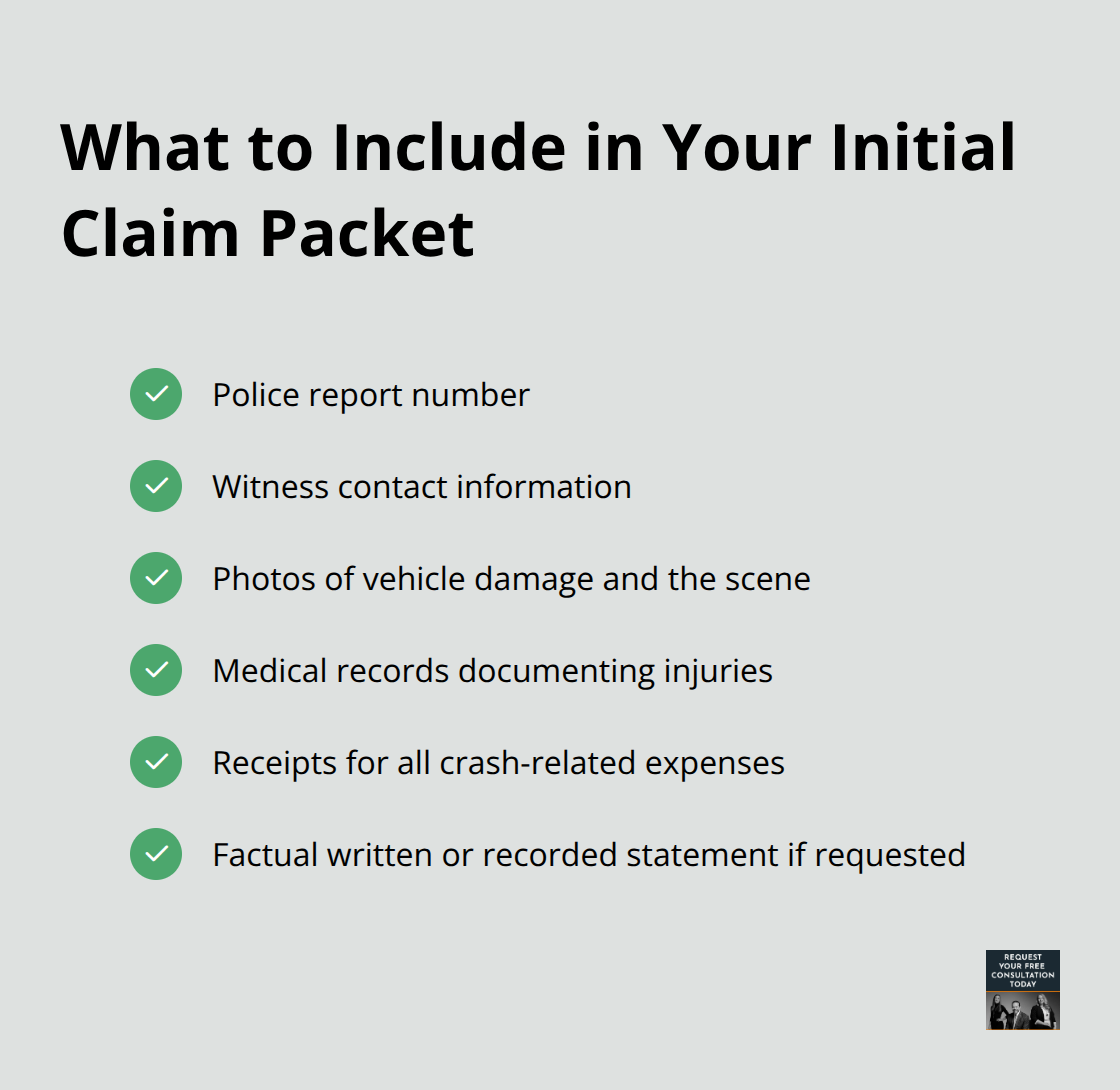
When your insurer requests a written or recorded statement, provide factual information but avoid detailed narratives about pain or suffering at this stage.
Keep copies of every document you submit and every communication you receive, including email confirmations, claim numbers, and the names of adjusters handling your case. California’s Fair Claims Settlement Practices Regulations require your insurer to acknowledge your claim within 15 days, investigate and respond within 15 days, and make a coverage decision within 40 days. If your insurer misses these deadlines, document the delay because it strengthens your position in disputes.
Challenge Low Settlement Offers
Many victims accept the first settlement offer without understanding that adjusters use low initial offers as negotiating tactics. Request an itemized breakdown of how the insurer calculated your damages and challenge any deductions you believe are incorrect. Insurance adjusters know that most people lack legal knowledge and will accept inadequate offers to avoid prolonged disputes. Pushing back on initial offers often results in significantly higher settlements, particularly for non-economic damages where the insurer has wide discretion.
Pursue Legal Action When Necessary
Hire an attorney when the insurer denies your claim entirely, offers significantly less than your documented damages, refuses to investigate properly, or misses regulatory deadlines. Insurance companies deny claims based on coverage exclusions, policy limits, or disputed liability, and contesting these denials requires legal knowledge and negotiating power. If the at-fault driver carries only minimum limits and your damages exceed those limits, your uninsured motorist coverage may cover the gap, but this requires filing a separate claim with your own insurer and potentially pursuing arbitration or litigation.
When multiple parties share fault, determining each party’s liability percentage becomes complex, and insurers use comparative negligence arguments to minimize their exposure. We at Schaar & Silva LLP help accident victims in Santa Cruz County navigate these disputes and pursue fair compensation when insurers act in bad faith. Contingency fee arrangements mean you pay no legal fees unless we recover compensation for you, eliminating financial barriers to representation.
Final Thoughts
A California motor vehicle accident disrupts your life immediately, but understanding your rights transforms confusion into action. The steps you take in the first hours after a crash determine whether you recover fair compensation or accept inadequate settlements from insurers who profit by paying less. Start by documenting everything at the scene, collecting information from other parties, and reporting to police and your insurer within the required timeframes.
California’s pure comparative negligence law protects you even if you’re partially at fault, but only if you prove what actually caused the accident and who violated traffic laws. Minimum insurance limits of 15/30/5 leave most victims exposed to significant out-of-pocket costs, making uninsured motorist coverage essential protection. Economic damages like medical expenses and lost wages are straightforward to claim, but non-economic damages for pain and suffering require aggressive negotiation because insurers deliberately undervalue these amounts.
Insurance companies use low initial offers as tactics to pressure quick settlements, and most victims accept these offers without understanding they could recover substantially more. When insurers deny claims, offer significantly less than your documented damages, or refuse to investigate properly, legal representation becomes necessary. We at Schaar & Silva LLP help accident victims in Santa Cruz County, Sacramento, and Oakland navigate insurance disputes and pursue fair compensation-contact us for a free consultation to discuss your case without financial risk through our contingency fee arrangement.
