

A head injury from a car crash can change your life in seconds. Even injuries that seem minor at first often develop serious complications weeks or months later.
We at Schaar & Silva LLP help accident victims understand their injuries and fight for fair compensation. This guide walks you through the medical facts, the immediate steps you need to take, and how to build a strong legal claim.
What Head Injuries from Car Crashes Actually Look Like
Concussions: The Most Common but Misunderstood Injury
Concussions rank as the most common head injury from car crashes, yet most people underestimate their severity. A concussion occurs when the brain moves inside the skull due to sudden acceleration or deceleration-even low-speed crashes trigger them. You don’t need to lose consciousness to suffer a concussion; in fact, most people with concussions stay awake throughout the crash.
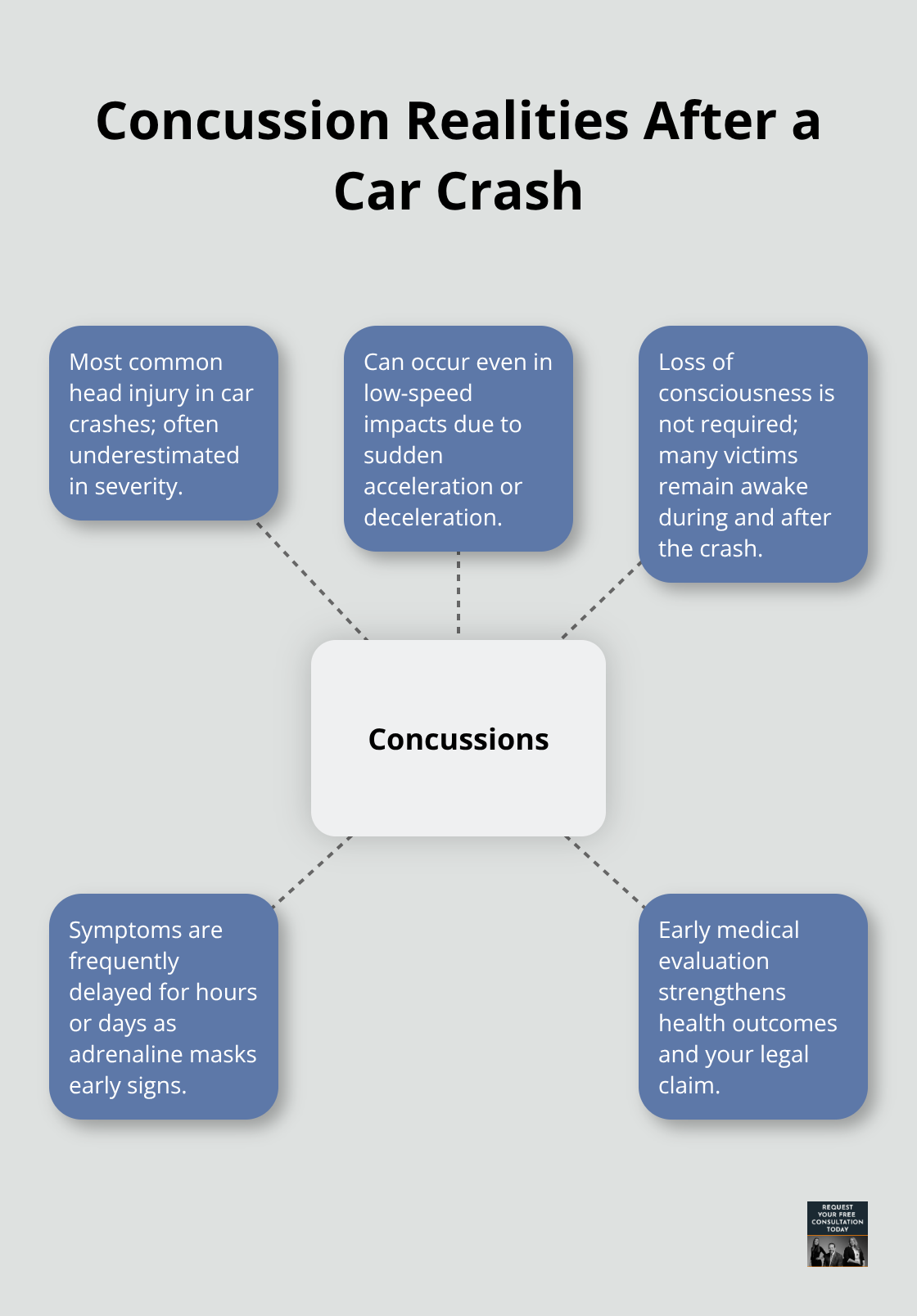
Symptoms often appear hours or days after impact because adrenaline masks the initial injury. Persistent headaches, dizziness, confusion, memory problems, concentration difficulties, nausea, vision changes, noise sensitivity, and mood or sleep changes all signal a concussion. Many people dismiss these symptoms as minor or stress-related, which delays treatment and weakens their legal claim. If you experienced any of these symptoms after a crash, you need immediate medical evaluation regardless of how you feel in the moment.
Traumatic Brain Injuries: Structural Damage with Long-Term Consequences
Traumatic brain injuries and skull fractures represent more severe outcomes that fundamentally alter long-term health and earning capacity. A traumatic brain injury occurs when the brain suffers structural damage, which causes chronic cognitive problems like attention deficits, memory loss, and planning difficulties, along with emotional changes including anxiety and depression, and ongoing physical limitations such as dizziness and fatigue. Skull fractures and internal bleeding pose equal danger-bleeding inside the brain can develop slowly, making delayed diagnosis a critical issue. CT scans often miss functional brain injuries and concussions, which is why neuropsychological evaluations and specialized imaging become essential for building a strong claim.
Why Long-Term Costs Matter More Than Initial Medical Bills
The long-term costs of brain injuries extend far beyond immediate medical bills. You may face years of rehabilitation, lost earning capacity, reduced ability to work, and ongoing care needs that should be factored into your damages. Insurance companies frequently underestimate these long-term impacts, which is why thorough documentation and early legal guidance matter significantly. When you document how your injury affects your daily life-your memory, mood, ability to work, sleep patterns, and family responsibilities-you create objective evidence that counters insurer pushback about invisible symptoms. This documentation becomes your strongest tool when building your claim and proving the full scope of your losses.
What to Do Right After a Car Crash
Seek Medical Attention Immediately
Medical evaluation within hours of a crash separates strong claims from weak ones. Head injuries frequently show no visible symptoms immediately, which is why waiting to see if you feel better is a dangerous mistake. Go to an emergency room or urgent care facility even if you feel fine, because adrenaline masks injury and symptoms often emerge days later. The medical record created on the day of the crash becomes your foundation for proving the injury happened because of the collision, not something else. Document everything the medical provider observes: your description of the crash, your symptoms, vital signs, imaging results, and their clinical notes. This contemporaneous medical evidence is far more persuasive than recalling symptoms months later.
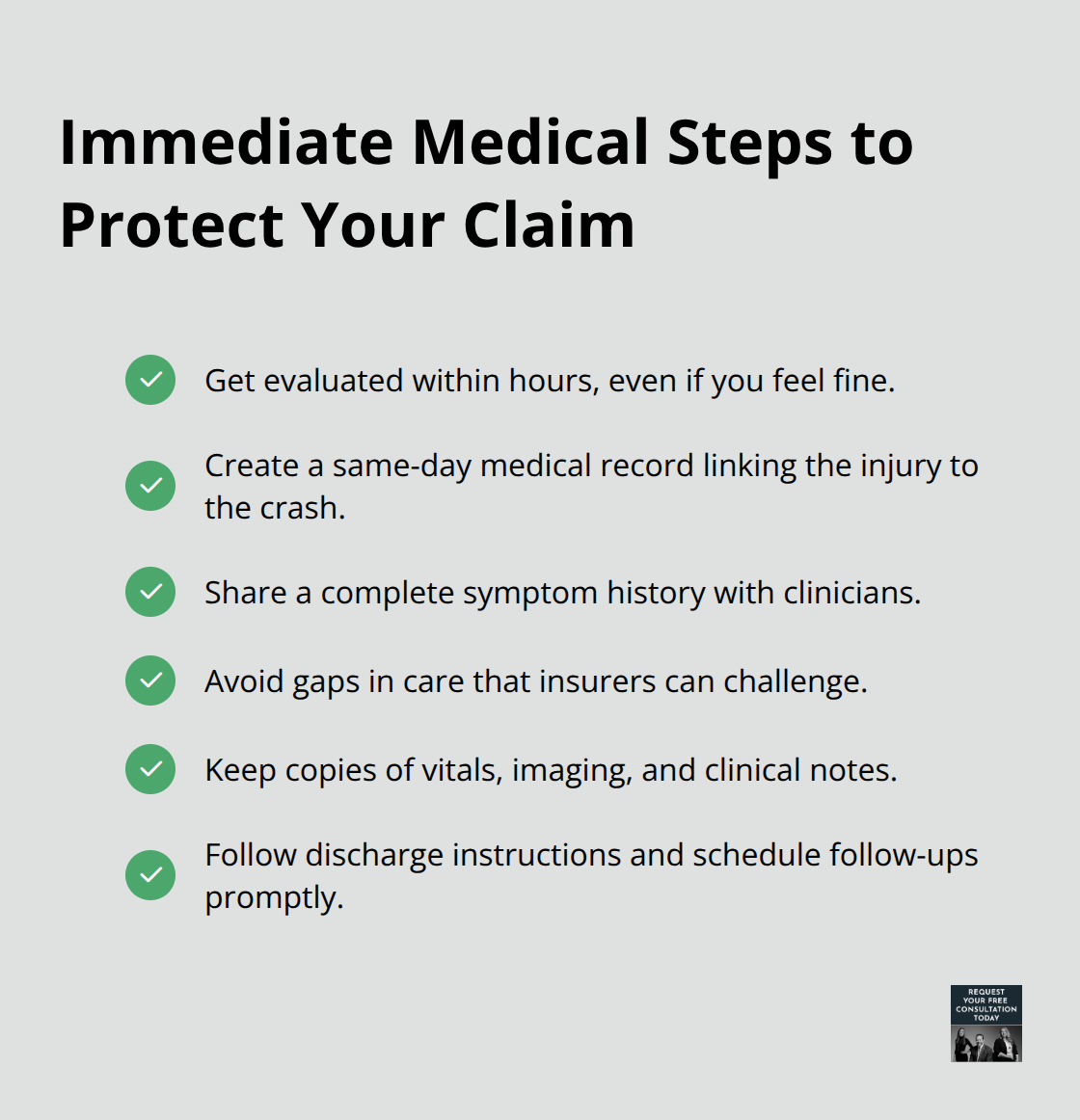
Insurance companies scrutinize gaps between the crash date and first treatment, so immediate evaluation closes that door to their defense strategies.
Gather Evidence at the Scene
Photograph the crash scene, vehicle damage, road conditions, traffic signals, and your visible injuries before leaving the location. Take photos of the other vehicle, the driver’s license and insurance card, and the surrounding area from multiple angles. Collect names and phone numbers from witnesses who saw the crash happen, not just people who arrived afterward. File a police report if law enforcement responds, and obtain the report number immediately. Report the crash to your insurance company promptly, but limit your statement to basic facts about what happened, when, and where. Never admit fault or speculate about how the crash occurred.
Preserve Your Medical Records and Documentation
Keep copies of the police report, medical records, imaging results, and all correspondence with insurance companies in a dedicated folder. Start a symptom journal the day of the crash, noting when headaches begin, concentration problems emerge, sleep disruption starts, or mood changes occur. This journal documents the timeline of your injury in your own words and becomes powerful evidence of how the crash affected you. When you track specific examples of how symptoms interfere with work, family responsibilities, or daily activities, you create objective proof of damages that medical records alone cannot capture.
Protect Your Claim with Early Legal Guidance
Early legal guidance protects your rights because attorneys understand what evidence insurance companies will challenge and how to preserve it before records are lost or memories fade. The decisions you make in the first days after a crash determine whether your claim remains strong or weakens over time. Understanding what documentation matters and what statements to avoid prevents costly mistakes that insurers exploit later. Your next step involves navigating the personal injury claim process itself, where compensation calculations and legal representation become critical to recovering what you’ve lost.
Building Your Claim from Medical Records to Compensation
What Medical Expenses You Can Recover
Medical expenses from a head injury claim typically include emergency room visits, imaging scans, neuropsychological testing, rehabilitation therapy, and ongoing appointments with medical providers. In California, these costs are recoverable as economic damages, meaning you can claim reimbursement for every dollar spent on treatment related to your car crash. The key is documenting each expense with itemized bills and medical records that clearly connect the treatment to your car crash. Insurance companies often challenge medical costs by questioning whether treatment was necessary or reasonable, which is why obtaining detailed explanations from your medical providers about why each test or therapy session was required strengthens your position.
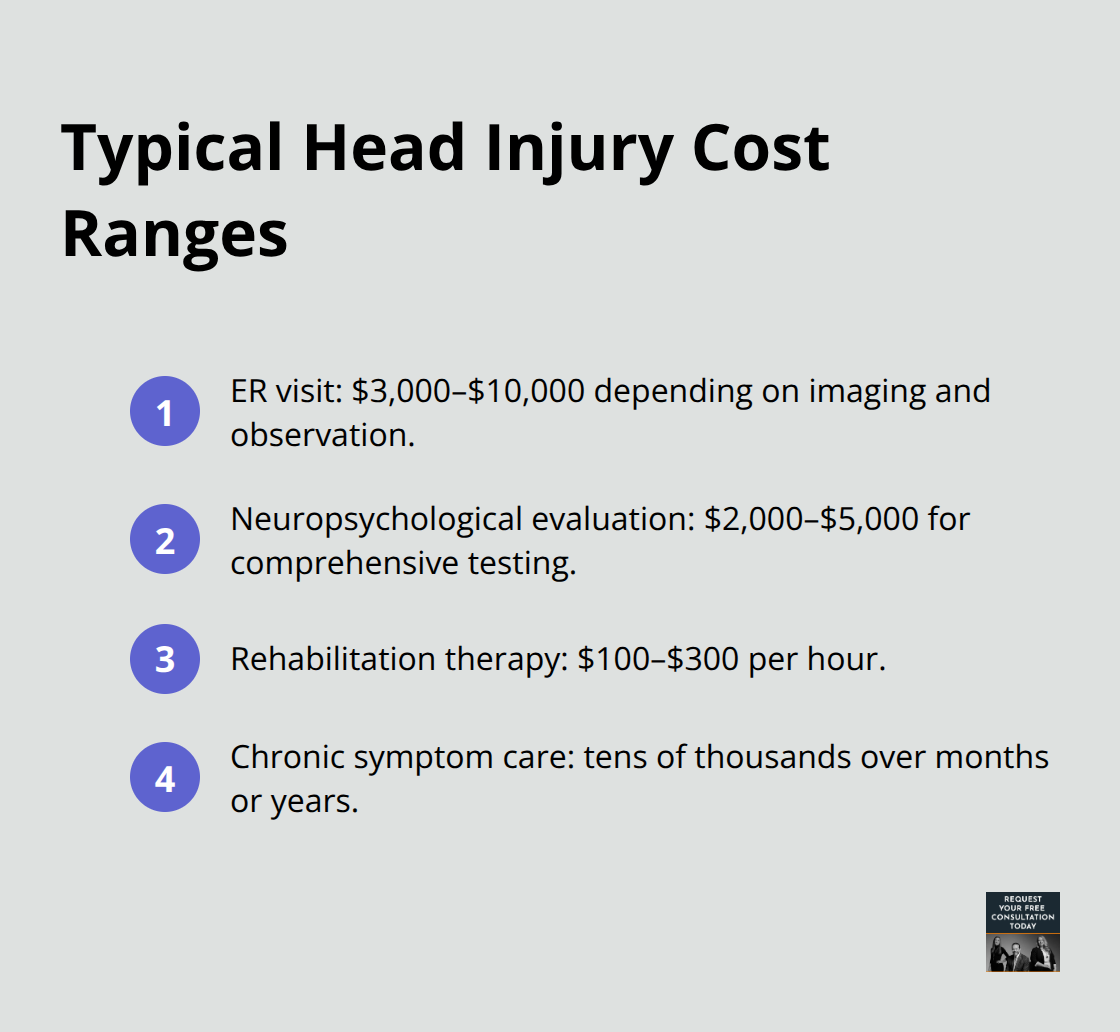
Hospital emergency room visits for head injuries typically cost between $3,000 and $10,000 depending on imaging and observation needs, while neuropsychological evaluations run $2,000 to $5,000 for comprehensive testing that proves the extent of cognitive damage. Rehabilitation therapy sessions average $100 to $300 per hour, and ongoing treatment for chronic symptoms can accumulate to tens of thousands of dollars over months or years.
Calculating Lost Wages and Reduced Earning Capacity
Lost wages represent another major category of economic damages that many people fail to calculate properly. You can claim compensation not only for time missed from work immediately after the crash but also for reduced earning capacity if your injury prevents you from returning to your previous job or working the same hours. If you earned $60,000 annually and your head injury reduces your ability to work to part-time status, that lost earning capacity compounds over decades of your working life.
Document lost wages with pay stubs, tax returns, and written statements from your employer confirming missed work days and any reduction in hours or job duties. These records provide concrete proof of financial losses that insurance companies cannot dispute.
Non-Economic Damages: Pain, Suffering, and Loss of Life Quality
Non-economic damages like pain and suffering and loss of enjoyment of life are harder to quantify but often represent the largest portion of a claim’s total value. California law recognizes that living with chronic headaches, memory problems, mood changes, and fatigue significantly diminishes quality of life, and compensation should reflect that reality. Insurance companies typically resist paying full value for non-economic damages because they involve subjective assessment rather than concrete bills, which is why detailed documentation of how your injury affects daily activities becomes critical.
Your injury journal documenting specific moments when symptoms interfered with work, family time, or activities you previously enjoyed provides concrete examples that counter insurer arguments that invisible symptoms deserve minimal compensation.
Why Legal Representation Changes Claim Outcomes
Working with legal representation fundamentally changes claim outcomes because attorneys understand settlement negotiation tactics and know when offers fall short of actual damages. Insurance adjusters are trained to minimize payouts, and they exploit gaps in documentation, delays in treatment, or lack of legal knowledge to reduce what they offer. An experienced attorney identifies damages you might overlook, such as future medical care needs or the cost of ongoing psychological support for trauma, and presents evidence in ways that force insurers to increase their offers. Many head injury claims settle for significantly less than they should because victims accept first offers without understanding their claim’s true value or lack the resources to challenge insurer tactics.
Final Thoughts
A head injury from a car crash demands immediate action on two fronts: your health and your legal claim. The decisions you make in the first hours and days after the collision determine whether you recover fully and receive fair compensation. Seeking medical evaluation immediately, documenting everything at the scene, and preserving your medical records create the foundation for both your recovery and your case.
Your claim’s value depends on thorough documentation of medical expenses, lost wages, and how your injury affects your daily life. Many people underestimate their damages because they focus only on immediate medical bills and miss the long-term costs of rehabilitation, reduced earning capacity, and ongoing care. Insurance adjusters exploit this gap by offering settlements far below what your claim actually deserves, which is why understanding that non-economic damages like pain and suffering often represent the largest portion of your recovery helps you resist pressure to accept inadequate offers.
We at Schaar & Silva LLP recognize that navigating a head injury car crash claim while managing your recovery is overwhelming. Contact us to discuss your case-we serve Santa Cruz County and understand the specific challenges accident victims face in your area. Your recovery and your claim deserve attention from someone who will fight for your full compensation, not settle for what insurance companies offer first.
