
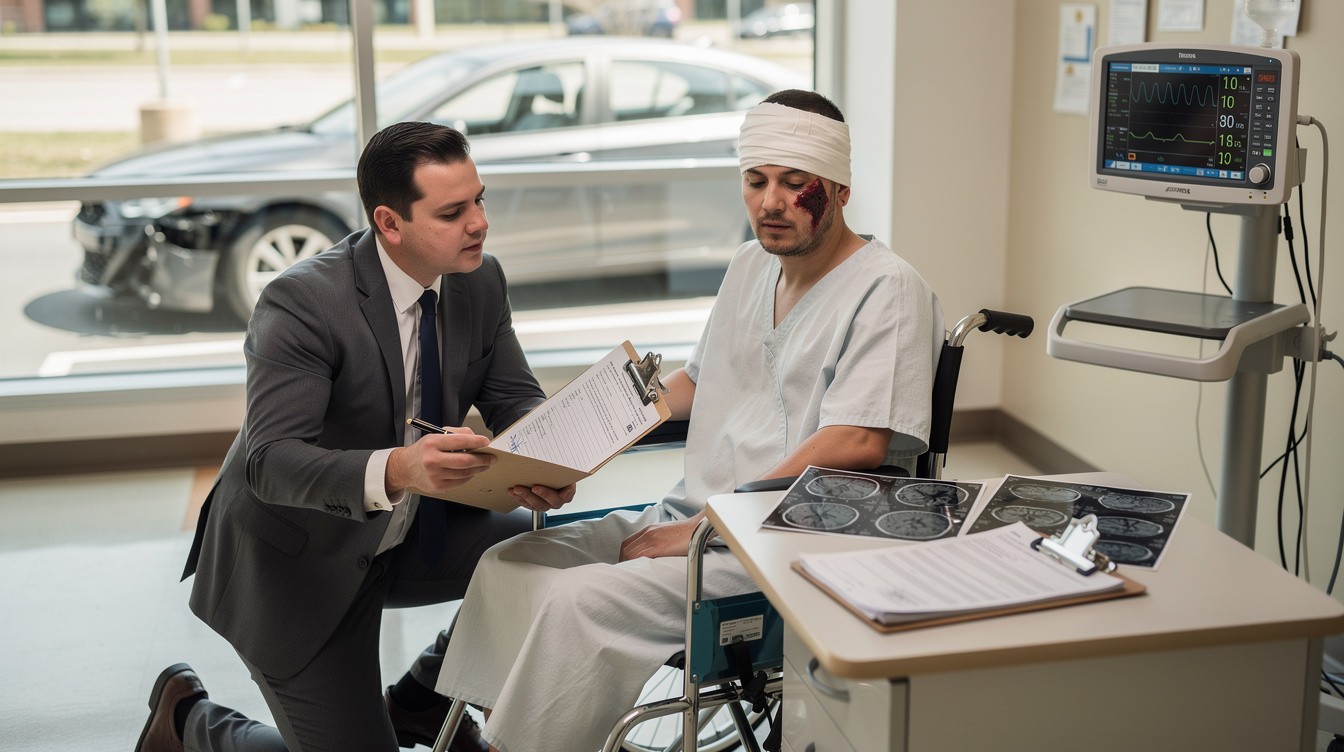
A head injury from a car accident can change your life in seconds. The impact might feel minor at first, but symptoms often emerge days or weeks later, affecting your memory, balance, and ability to work.
We at Schaar & Silva LLP help accident victims in Santa Cruz County, Sacramento, and Oakland understand what they’re entitled to recover. This guide walks you through the medical evidence you’ll need, the compensation available to you, and how to build a strong head injury car case.
What Head Injuries Look Like After a Car Accident
Immediate Signs That Appear Right After Impact
Head injuries from car accidents don’t announce themselves clearly. The National Highway Traffic Safety Administration reports that vehicle crashes are a leading cause of traumatic brain injury hospitalizations, yet many victims miss critical warning signs in the immediate aftermath. Right after impact, you might feel dazed or experience a brief moment of confusion, but adrenaline masks the real damage.
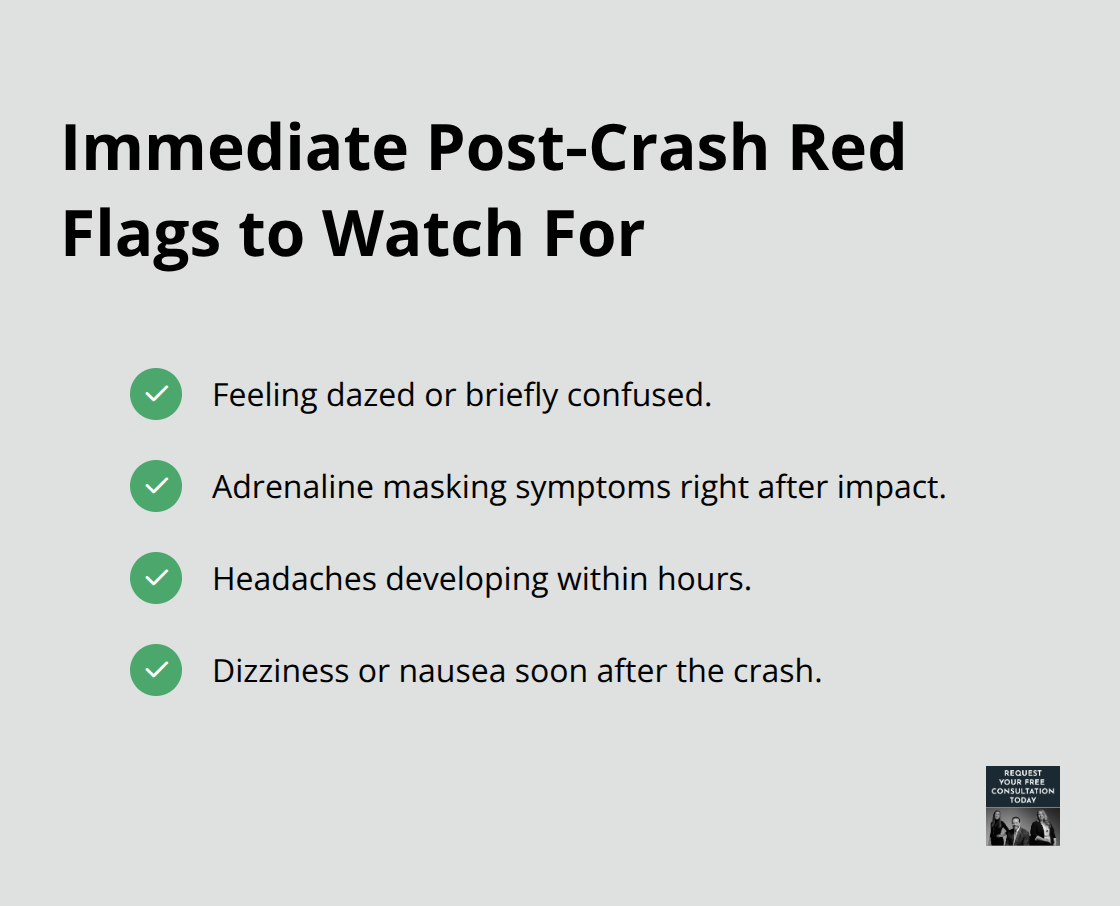
Headaches, dizziness, and nausea can appear within hours, though some people dismiss these as normal post-accident shock.
Why Symptoms Worsen Over Days and Weeks
The dangerous reality is that symptoms often worsen over days or weeks as swelling and internal bleeding develop. Memory problems, difficulty concentrating, mood changes, and sleep disturbances frequently emerge when you’re back home, making it tempting to attribute them to stress rather than brain injury. This delay is precisely why insurance companies exploit the gap between accident and full symptom presentation-they count on victims accepting early lowball settlements before understanding the true scope of their injuries.
Long-Term Complications That Affect Your Life
Permanent cognitive deficits can persist for years, including persistent headaches, memory loss, difficulty processing information, and emotional instability that affects your ability to work and maintain relationships. The CDC emphasizes that many traumatic brain injuries show no signs on standard CT or MRI scans, making neuropsychological testing and functional imaging essential to document invisible deficits that courts and insurance companies need to see. Physical complications like balance problems, sensitivity to light and sound, and coordination issues can prevent you from performing your job or enjoying activities you once took for granted.
Building Your Documentation Foundation
If you’ve experienced any head impact during your accident, seek a comprehensive neurological evaluation immediately-not days later. Document every symptom in a detailed journal, noting headaches, confusion, mood shifts, and sleep problems, and have family members or coworkers corroborate changes they observe in your behavior and functioning. This documentation becomes your foundation for proving damages when insurers inevitably argue that your injuries aren’t serious enough to justify substantial compensation. The medical records you gather now will directly influence the compensation you can pursue, which is why the next section focuses on what evidence matters most to your case.
Medical Documentation That Wins Head Injury Cases
Why Your Medical Records Matter Most
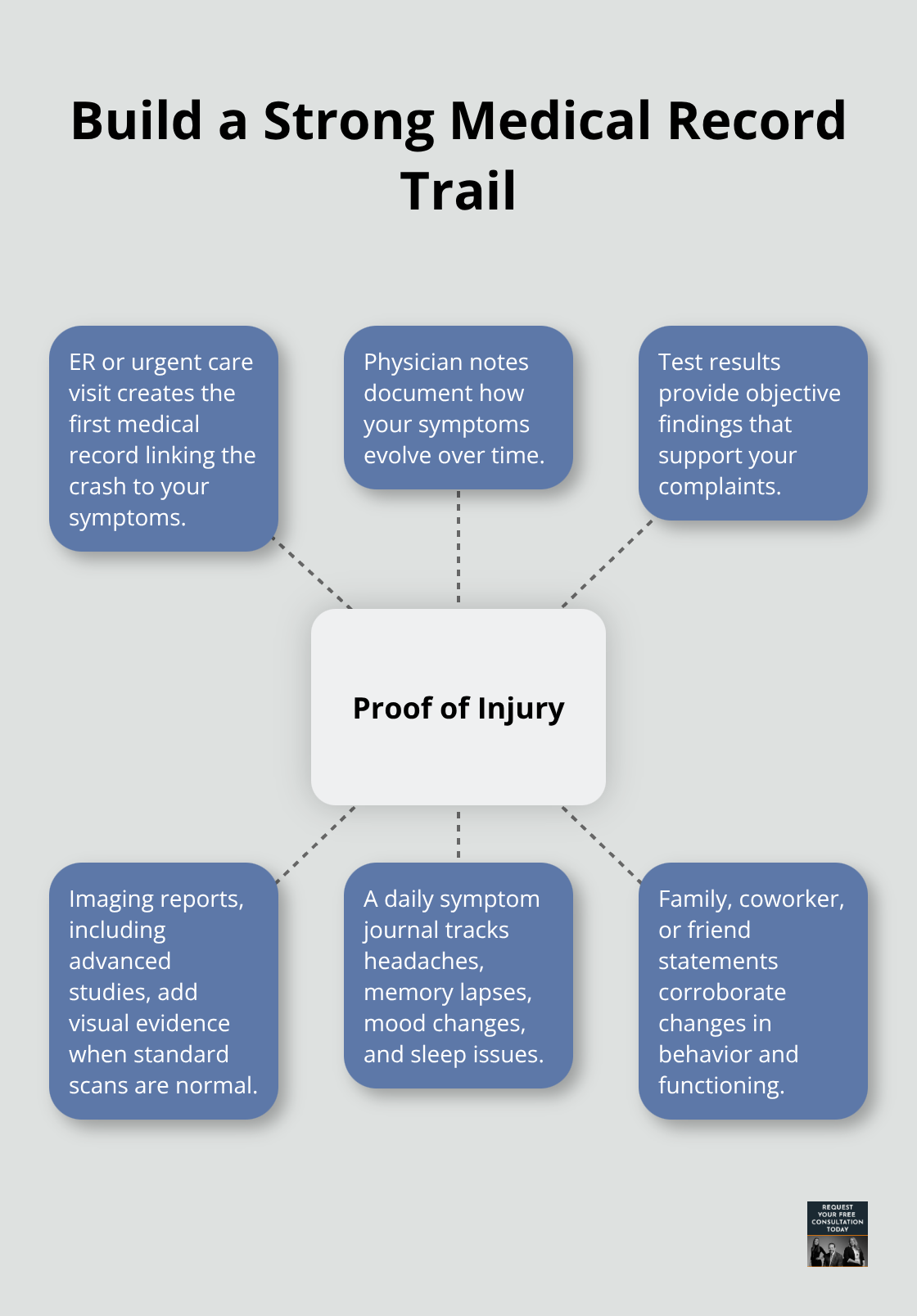
Your medical records form the foundation of your compensation claim. Insurance adjusters scrutinize every detail, and gaps in documentation give them ammunition to deny or reduce what you deserve. The moment after your accident, you must establish a clear medical trail that connects your symptoms to the crash. This means seeking evaluation at an emergency room or urgent care facility immediately, even if you feel fine. Many head injuries don’t show obvious symptoms until hours or days later, but the initial medical visit creates the critical first record linking your injury to the accident.
Request copies of all emergency room reports, physician notes, and test results without delay. Insurance companies frequently argue that delayed medical treatment means your injuries weren’t serious, so immediate documentation defeats this tactic. If you wait days or weeks before seeing a doctor, adjusters will claim your symptoms resulted from something else entirely. Keep detailed records of every medical appointment, every test, and every provider you see, including dates, times, and what was discussed. Many victims fail to organize this information, making it difficult for their attorney to build a persuasive damages case when settlement negotiations begin.
Tests and Imaging That Prove Your Injury
The types of tests and imaging you receive determine how compelling your evidence becomes. Standard CT or MRI scans frequently come back normal in brain injury cases, which is precisely why the CDC emphasizes that many traumatic brain injuries show no signs on conventional imaging. Neuropsychological testing becomes invaluable here-it objectively measures memory, concentration, processing speed, and emotional functioning through standardized assessments. Functional MRI and SPECT imaging reveal brain activity patterns that standard scans miss, providing visual proof of injury when you need it most.
Request that your treating physician order these advanced tests if you experience persistent cognitive symptoms. Additionally, maintain a symptom journal separate from your medical records. Document daily headaches, memory lapses, mood changes, sleep disturbances, and how these symptoms affect your ability to work or perform household tasks. Have family members, coworkers, or friends write brief statements describing changes they’ve observed in your behavior and functioning.
Organizing Evidence for Maximum Impact
When your case reaches settlement negotiations, organized documentation transforms abstract complaints into concrete, measurable evidence. Insurance adjusters respond to organized evidence far more than vague descriptions of how you feel. Store all medical records, test results, imaging reports, and your symptom journal in a single folder-digital or physical-with clear labeling by date and type.
This organized foundation positions you to calculate your damages accurately and present a compelling case that prevents insurers from minimizing your legitimate claim. The next section explains exactly what compensation categories you can pursue and how your medical evidence supports each one.
Compensation You Can Pursue for Head Injuries
Medical Expenses That Extend Far Beyond Your Initial Hospital Bill
California law allows you to recover all past medical costs under Civil Code § 3281, including emergency room visits, neurological evaluations, neuropsychological testing, functional MRI imaging, and ongoing treatment. The critical detail most victims miss is that you can recover future medical expenses as well, and in serious head injury cases, this becomes the largest component of your award. Life-care planning experts project your lifetime medical costs by analyzing your injury severity, age, and expected treatment needs. A 35-year-old with permanent cognitive deficits requiring ongoing neuropsychological therapy, medication management, and periodic imaging could face hundreds of thousands in future care costs. The Howell v. Hamilton Meats & Provisions decision limits recovery to amounts actually paid or accepted as full payment by providers, not inflated billed amounts. You should document what your insurance actually paid versus what providers wrote off, as this distinction directly affects your recovery amount. Keep every receipt and medical bill, no matter how small, because these records form the foundation of your damages calculation.
Lost Wages and Earning Capacity That Multiply Your Case Value
Lost wages compensate you for income you missed during recovery, supported by pay stubs, W-2s, and employer records showing exactly how much time you lost. Lost earning capacity exceeds lost wages because it projects your lifetime earnings loss when head injuries create permanent deficits that reduce your ability to work. Vocational experts calculate this by analyzing your age, education, pre-injury earning history, and how your cognitive or physical limitations affect your employability. A 40-year-old accountant with permanent memory problems might earn significantly less in their remaining 25 working years even if they return to work, and that lifetime reduction is what lost earning capacity measures. Insurance adjusters frequently offer settlements that cover only wages you’ve already lost without accounting for future earning capacity, which dramatically undervalues your claim. The difference between accepting a lowball offer and pursuing full compensation can reach hundreds of thousands of dollars over your lifetime.
Pain and Suffering Damages Without Statutory Caps
Pain and suffering damages encompass the non-economic impact of your injury, including persistent headaches, emotional distress, sleep disturbances, loss of enjoyment of life, and cognitive impairment affecting your relationships and activities. California imposes no statutory cap on non-economic damages in standard car accident cases, unlike medical malpractice claims, which means your pain and suffering award depends entirely on your injury severity and the evidence you present. Insurance companies typically use the multiplier method, calculating pain and suffering as 1.5 to 5 times your economic damages, with serious head injuries justifying multipliers of 3 to 4 or higher. A case with $500,000 in medical and wage losses could justify $1.5 to $2 million in pain and suffering damages under a 3 to 4 multiplier for permanent cognitive deficits.
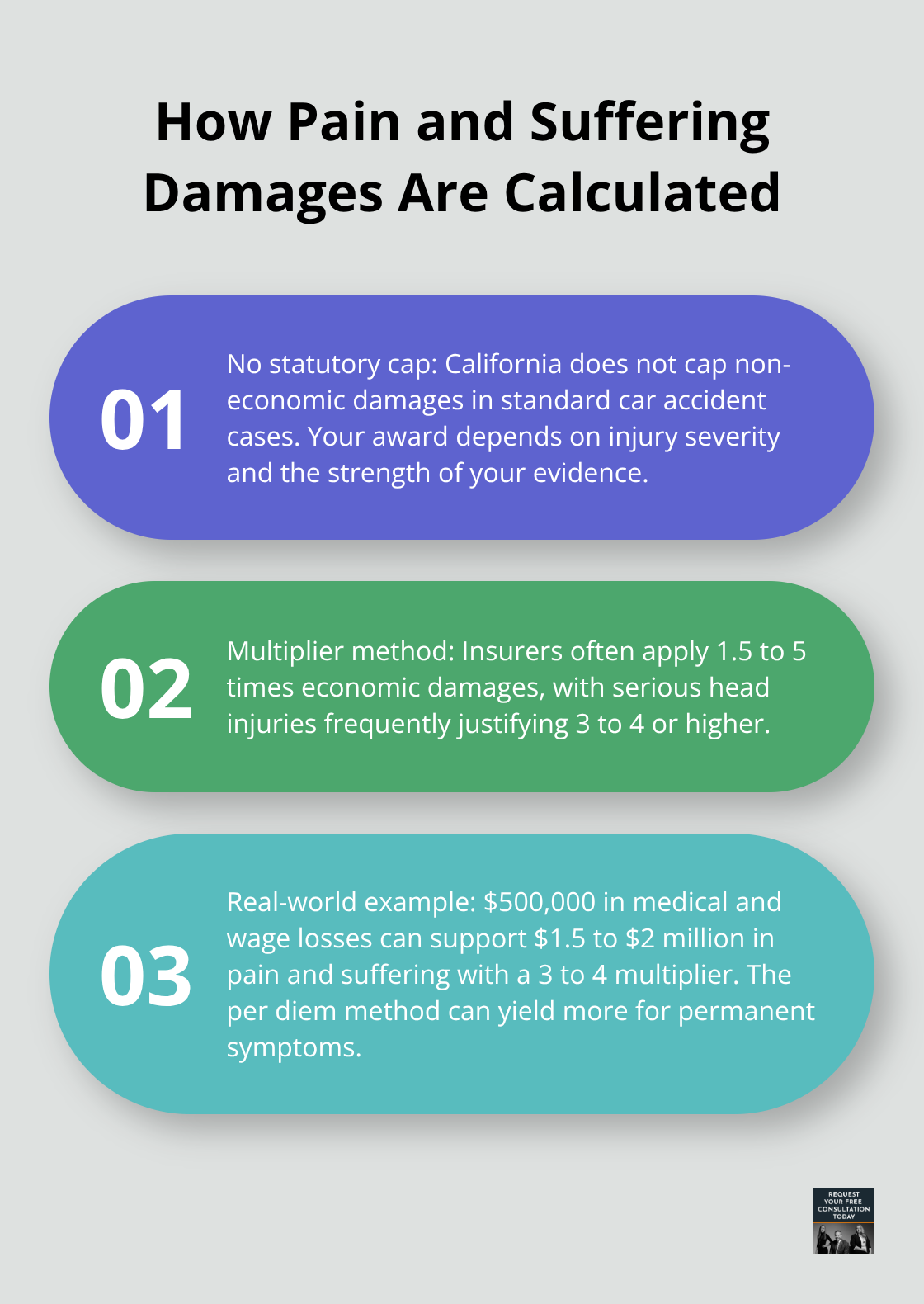
The per diem method assigns a daily value to your suffering and multiplies it by the number of days you’ll experience symptoms, which often produces higher awards for permanent injuries. You should document everything that demonstrates your injury’s impact: how headaches disrupt your work, memory problems affecting your job performance, mood changes affecting your family relationships, and activities you can no longer enjoy. Insurance adjusters respond to organized, detailed evidence far more than vague descriptions, so your symptom journal and medical records become your strongest negotiating tools when settlement discussions begin.
Final Thoughts
Your head injury car case succeeds when you act immediately and document thoroughly. Seek comprehensive medical evaluation right after your accident, maintain detailed records of every symptom and treatment, and organize this evidence before settlement negotiations begin. Insurance adjusters exploit gaps in documentation and delays in treatment, so moving fast protects your ability to recover what you deserve.
We at Schaar & Silva LLP understand that head injuries create both immediate medical needs and long-term financial consequences. Our team helps accident victims in Santa Cruz County, Sacramento, and Oakland navigate the legal process while focusing on recovery. Contact Schaar & Silva LLP for a free confidential consultation, and we’ll review your accident details, assess your injuries, and explain exactly what compensation you can pursue.
Time matters in your head injury car case because evidence preservation and statute of limitations deadlines create urgency. We work on contingency, meaning you pay nothing upfront and only if we win your case. The sooner you take action, the stronger your position becomes when negotiating with insurance companies or preparing for trial.
