
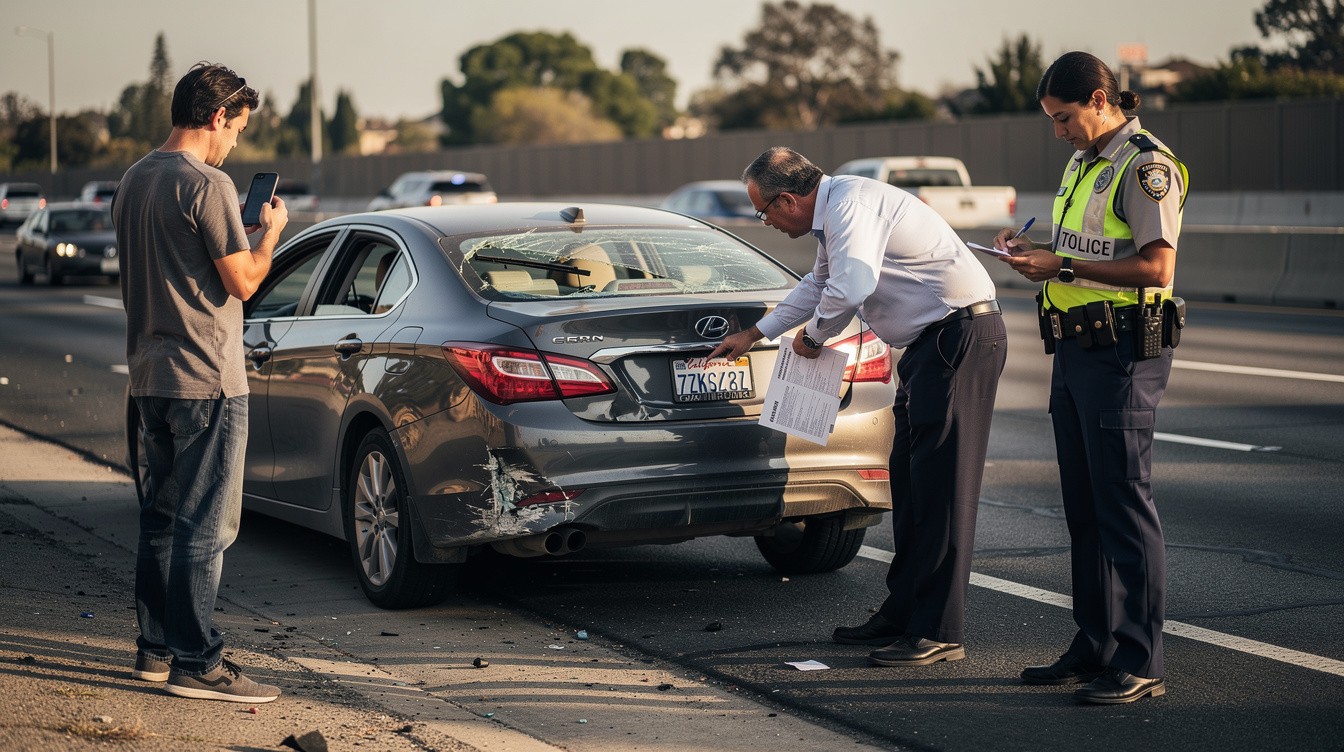
A car accident in California can leave you facing medical bills, vehicle repairs, and lost wages. Filing an auto accident claim in California requires knowing the right steps to protect your rights and maximize what you recover.
At Schaar & Silva LLP, we’ve helped countless accident victims navigate this process and avoid costly mistakes. This guide walks you through what happens after a crash, how California’s claim system works, and the errors that tank claim values.
What to Do Right After Your Accident
Document the Scene Immediately
The first hour after a crash determines whether your claim succeeds or fails. California law requires you to report accidents involving injuries or property damage exceeding $750 to the Department of Motor Vehicles within 10 days, but waiting that long costs you critical evidence. Start documenting at the scene. Take photos of vehicle damage from multiple angles, road conditions, traffic signals, and street signs. Capture the position of both vehicles and any visible injuries. If dashcam or surveillance footage exists nearby, note the location and business name so you can request it later.
Collect Witness Information and Driver Details
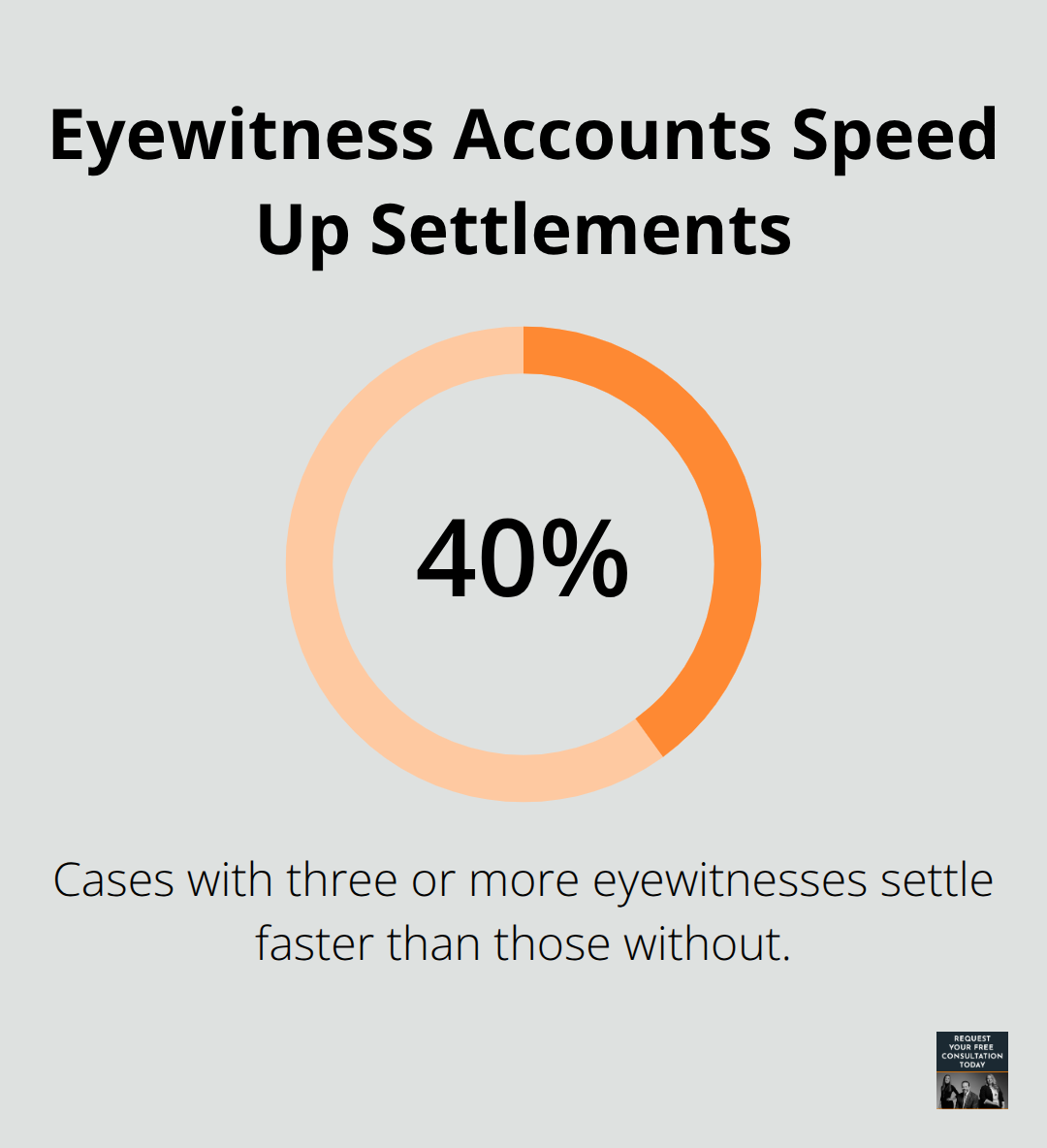
Witness statements matter far more than you think-cases with three or more eyewitness accounts settle 40% faster than those without, according to insurance claim data. Get names, phone numbers, addresses, and what each person saw. Collect the other driver’s name, address, driver’s license number, license plate, vehicle identification number (VIN), and insurance policy information.
Take a photo of their driver’s license and insurance card rather than writing details by hand, which introduces errors.
Report to Police and Your Insurance Company
Call police immediately if anyone is injured or if damage appears significant; the police report number becomes your reference document and the official record of what happened. Do not admit fault or apologize for the accident, even if you think you caused it. Insurance adjusters use any statement against you, and California courts can treat admissions as evidence of liability. Contact your insurance company the same day, not tomorrow. Most California insurers require notice within a reasonable time, and some policies allow up to 15 days for them to contact you after you report a loss, but reporting promptly protects you from coverage disputes.
Seek Medical Treatment and Organize Records
Seek medical treatment within the first week, even for minor symptoms like neck stiffness or headaches. Insurance companies track the gap between accident date and first medical visit; longer gaps suggest injuries were not serious, which reduces settlement values. Keep all medical records, bills, receipts for medications, and documentation of lost wages. Organize these materials chronologically because adjusters review them in order and disorganized files trigger requests for clarification that delay your claim.
Understanding how California’s fault-based insurance system works helps you navigate what comes next.
How California’s Claim System Works
California’s Fault-Based Insurance System
California operates on a fault-based insurance system, meaning the driver who caused the accident pays for damages through their liability coverage. You cannot file a claim with your own insurer for another driver’s negligence; instead, you pursue the at-fault driver’s insurance company or file a lawsuit. The at-fault driver’s insurer must acknowledge your claim within 15 days, investigate it thoroughly, and respond to your proof of loss within 40 days under California’s Fair Claims Settlement Practices Regulations. If they miss these deadlines, document the delay because it strengthens your position in negotiations. Insurance companies routinely undervalue claims by 30 to 50 percent on the initial proposal, banking on victims accepting quickly without understanding their full damages. Do not accept their first settlement offer.
Your Deadline to File a Claim
Your deadline to file a personal injury claim in California is two years from the accident date, per California Code of Civil Procedure Section 335.1. For property damage claims involving your vehicle, you have three years from the damage date. These timelines are absolute; missing them means losing your right to recover entirely. Start your claim immediately after the accident, not months later. The sooner you file, the fresher witness memories are and the easier it becomes to obtain surveillance footage or dashcam recordings before they are deleted.
Damages You Can Recover
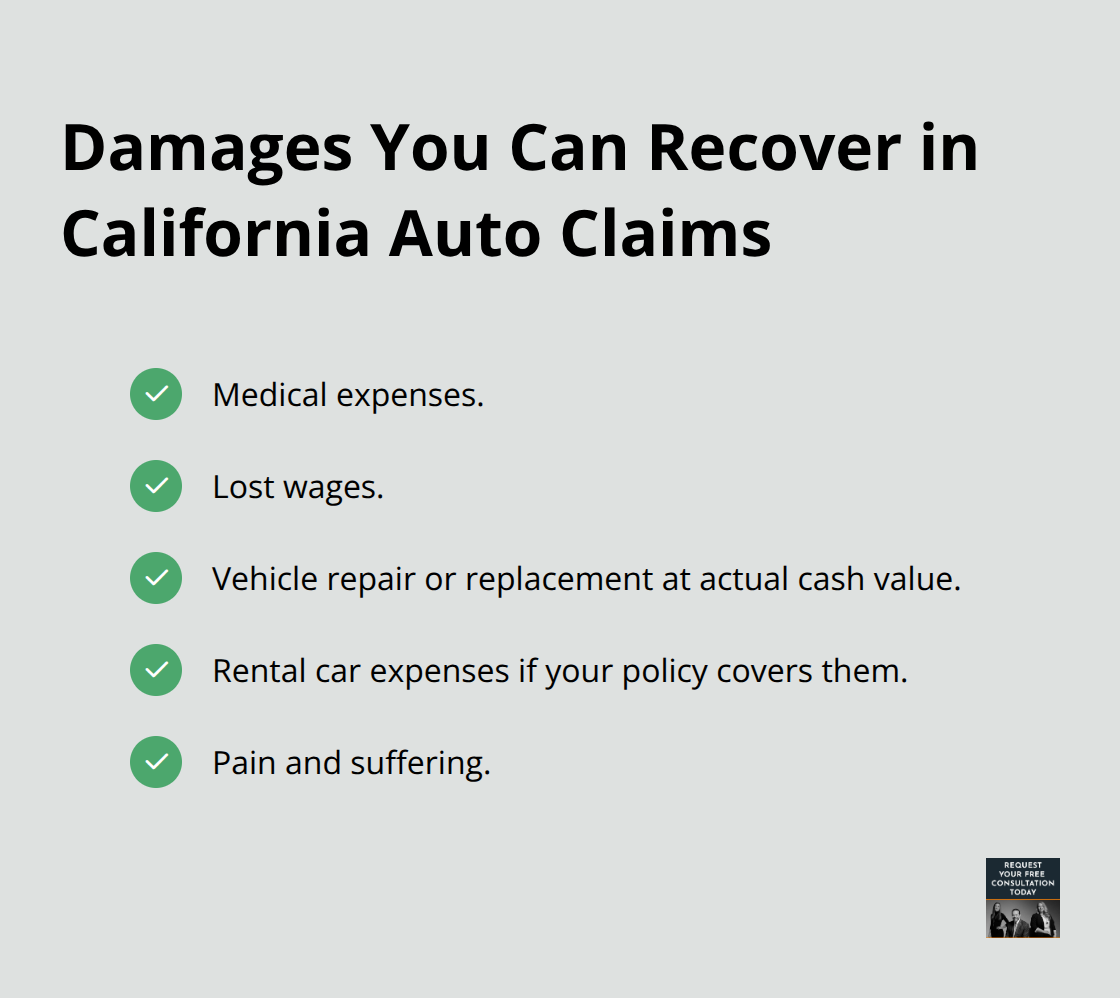
You can recover medical expenses, lost wages, vehicle repair or replacement costs at actual cash value, rental car expenses if your policy covers them, and pain and suffering. Pain and suffering damages depend on injury severity and your medical documentation. The California Department of Insurance reports that claims with comprehensive medical records and clear causation between the accident and injury receive settlements 25 to 40 percent higher than those with sparse documentation.
Actual cash value means your vehicle’s fair market value at the time of loss, not what you paid for it years earlier. If you disagree with the insurance company’s valuation, your policy likely includes an appraisal provision where two appraisers select an umpire to decide the amount, and that decision is binding on both parties.
Understanding what mistakes reduce your claim value helps you avoid the traps that cost victims thousands in lost compensation.
Common Mistakes That Reduce Your Claim Value
Admitting Fault Destroys Your Settlement
The decisions you make in the first weeks after an accident directly determine whether you recover fair compensation or leave thousands on the table. One critical mistake is saying anything that admits fault at the scene. Many accident victims apologize out of politeness or shock, not realizing that insurance adjusters treat casual statements as legal admissions. A simple phrase like “I wasn’t paying attention” or “I didn’t see them coming” gets documented in police reports and used against you in settlement negotiations. California courts treat these admissions as evidence of liability, meaning the other driver’s insurer will cite your own words to reduce what they owe you.
Say nothing beyond providing your name, insurance information, and factual details like vehicle color or license plate number. If the other driver or police officer asks what happened, respond with “I’m not sure,” “I need to consult with a lawyer,” or “I’d prefer to discuss this with my insurance company.” This approach protects your claim without being rude or evasive.
Delaying Medical Treatment Signals Weakness to Adjusters
The second major mistake is waiting weeks or months to seek medical treatment. Insurance adjusters scrutinize the gap between accident date and first doctor visit because they know that legitimate injuries produce immediate symptoms. If you were hit on Monday but didn’t see a doctor until three weeks later, the adjuster will argue your injuries weren’t serious and offer a lower settlement.
Seek medical attention within the first week, even for symptoms that seem minor (neck stiffness, headaches, or lower back soreness). These early symptoms often develop into chronic pain conditions that cost tens of thousands to treat over years. The insurance company’s own data shows that claimants with medical visits within seven days of an accident receive settlements 35 to 50 percent higher than those who delay treatment. Document everything the doctor says about your condition and follow all treatment recommendations because gaps in treatment also signal to adjusters that you weren’t truly injured.
Rejecting Lowball Offers Increases Your Recovery
The third mistake is accepting the first settlement offer without pushback. Insurance companies deliberately lowball initial offers because they know many victims will accept rather than negotiate. Their opening proposal typically undervalues your claim by 30 to 50 percent according to industry data.
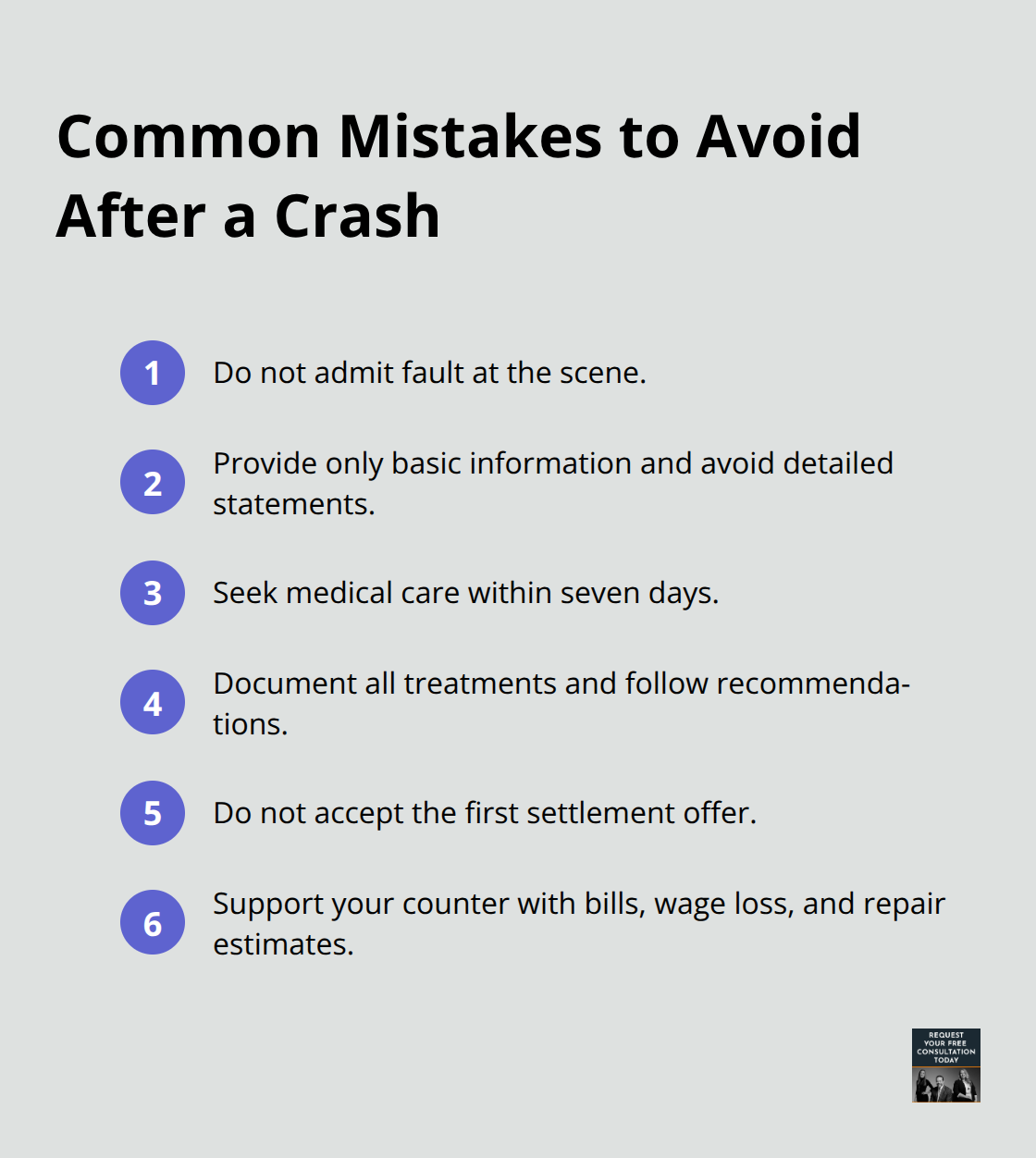
Counter their offer with documentation of your actual losses: medical bills, lost wages, vehicle repair estimates, and pain and suffering supported by your medical records. Most claims settle during negotiation rather than at trial, but only if you refuse their first number and provide evidence of your damages. Accepting quickly tells the adjuster they guessed too high and leaves you with compensation that doesn’t cover your actual costs (medical expenses, rehabilitation, and lost income).
Final Thoughts
Filing an auto accident claim in California succeeds when you act fast, document thoroughly, and refuse to settle for less than your damages deserve. Report to police and your insurer the same day, gather evidence before it disappears, seek medical treatment within the first week, and organize all records chronologically. Never admit fault, never accept the first offer, and never delay treatment hoping your injuries will resolve on their own.
Your two-year deadline to file an auto accident claim in California is absolute, but waiting months weakens your case as witnesses forget details and footage gets deleted. The California Department of Insurance data shows that organized, well-documented claims settle 25 to 40 percent higher than those with sparse records. This difference often means thousands of dollars in your pocket.
When your injuries are serious, when the other driver’s insurer refuses to negotiate fairly, or when you’re unsure whether you’re being offered fair compensation, talking with a legal professional becomes necessary. We at Schaar & Silva LLP help accident victims in Santa Cruz County, Sacramento, and Oakland navigate claims and recover what they’re owed. Contact us for a free case review to understand your options and next steps.
