

After a car accident, the settlement timeline can feel uncertain and stressful. You’re dealing with injuries, vehicle damage, and mounting bills while wondering when you’ll actually receive compensation.
At Schaar & Silva LLP, we’ve helped countless accident victims in Santa Cruz County, Sacramento, and Oakland navigate this process. This guide breaks down exactly what happens from the moment you file a claim through final payment.
How Long Does an Auto Accident Settlement Take
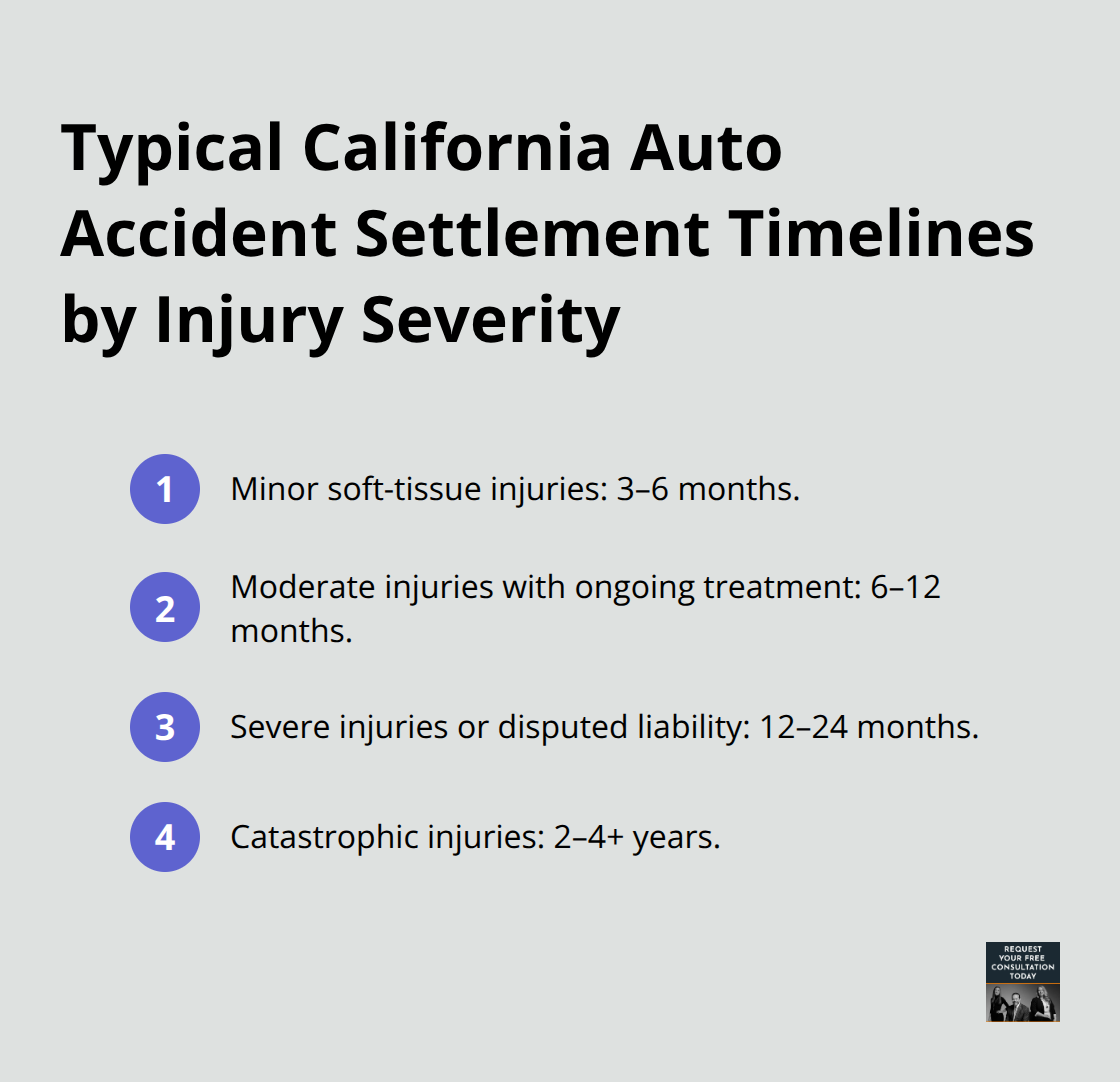
Settlement timelines in California vary dramatically based on injury severity and liability clarity. Minor soft-tissue injuries with clear liability often resolve in three to six months, while moderate injuries requiring ongoing treatment typically extend to six to twelve months. Severe injuries or disputed liability can stretch settlements to twelve to twenty-four months, and catastrophic injuries may take two to four years or longer.
The single biggest factor determining your timeline is reaching maximum medical improvement, or MMI, before settlement discussions advance. Settling too early risks underestimating future medical costs and can lock you into an inadequate payment that doesn’t cover long-term care needs.
The First Month Sets the Pace
The initial thirty days after your accident are critical for speed. During this window, your claim representation letter goes to insurers, police reports are collected, witness statements are obtained, and medical records begin accumulating. How organized you are during this phase directly affects how quickly the process moves forward. Insurance Research Council data shows represented claimants recover approximately three and a half times more than unrepresented claimants, partly because attorneys handle communications efficiently and preserve evidence properly. If liability is clear-such as in rear-end crashes or red-light violations-insurers move faster because fault determination is straightforward.
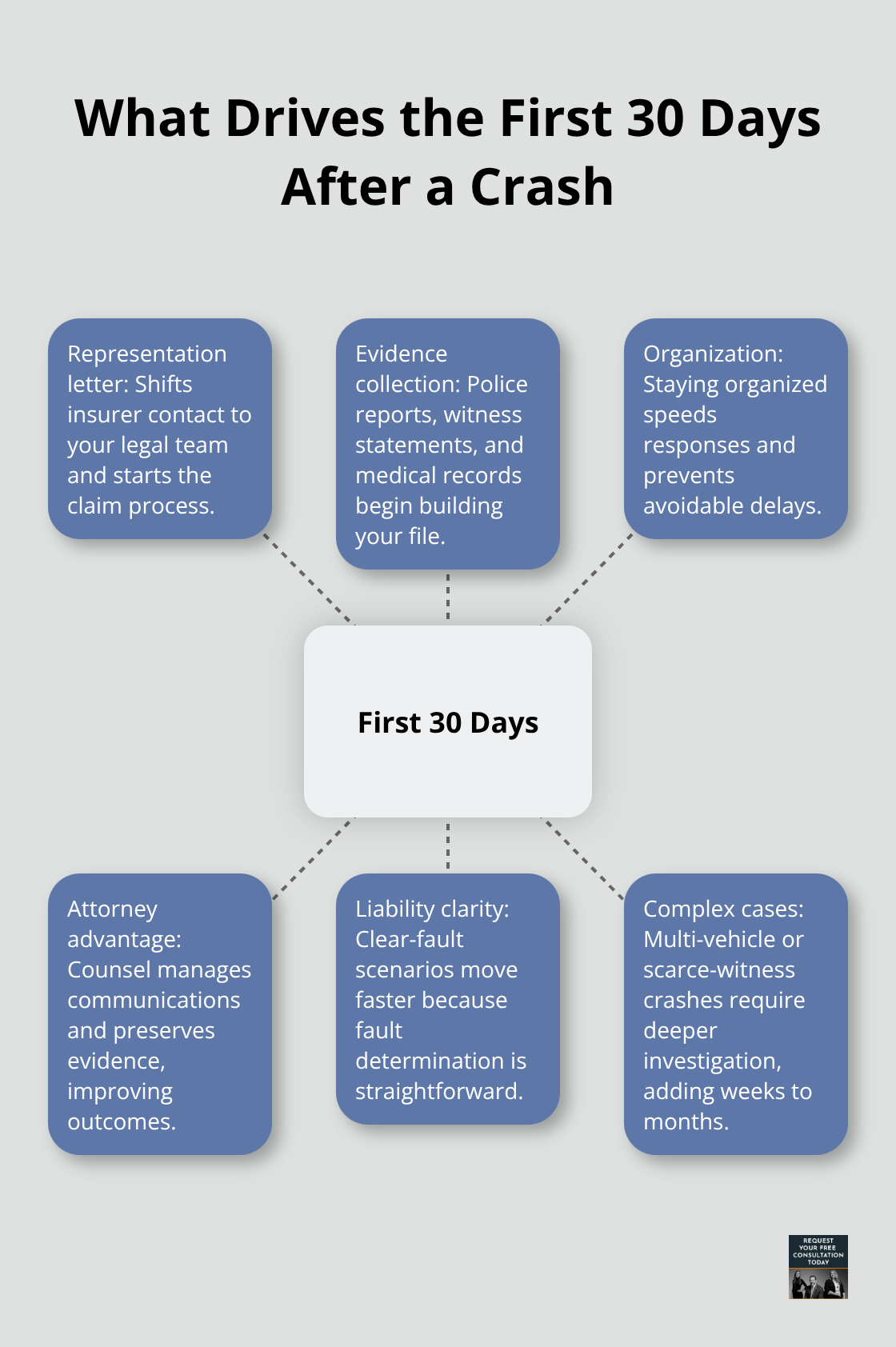
Multi-vehicle crashes or incidents with scarce witnesses require deeper investigation and depositions, which adds months to your timeline.
Treatment Determines the Middle Phase
Months two through six are driven entirely by your medical treatment. You continue therapy or rehabilitation while your damages file grows. Minor injuries often stabilize in two to four months, but surgeries and ongoing physical therapy extend this phase significantly. For spinal cord injuries or traumatic brain injuries, this phase can stretch much longer because comprehensive life-care planning becomes necessary. A certified life-care planner must work with your treating physicians to project lifetime costs, which can take months to complete accurately. Insurers will use any gap in your medical records or any claim of incomplete recovery against you during negotiations. Your medical documentation is your leverage, so allow treatment to finish before settlement discussions move forward.
Negotiation Follows Medical Stability
Once you reach maximum medical improvement, the final three to six months shift toward negotiation and resolution. Your attorney sends a detailed demand package to the insurer, who typically responds within thirty days. Straightforward cases may settle in sixty to ninety days after the demand, while complex cases require multiple rounds of back-and-forth offers and counteroffers. The strength of your documentation-medical records, wage loss statements, and life-care projections (if applicable)-directly influences how quickly insurers move toward your settlement figure. Clear liability cases settle faster than those involving fault disputes, which may require expert analysis or additional investigation before either side feels confident in their position.
The Settlement Process Actually Works
The first thirty days after you file your claim set the foundation for everything that follows. Your attorney sends a representation letter to the at-fault driver’s insurance company, which immediately stops them from contacting you directly and shifts all communication to your legal team. During this window, you gather every document related to the accident: the police report, medical records from your initial visit, photos of vehicle damage, and contact information for any witnesses. Insurance companies request these documents repeatedly throughout the process, so organizing them now prevents delays later. Many people underestimate this phase, but insurers use incomplete or disorganized submissions as reasons to request information again, which stretches timelines by weeks or months. Once your representation letter arrives, the insurer typically assigns an adjuster and begins their investigation into liability. If liability is clear, this phase moves quickly. If fault is disputed, the insurer may request additional statements, surveillance footage, or accident reconstruction analysis, which can add two to four weeks to your timeline.
The Demand Letter Marks a Turning Point
After your medical treatment stabilizes and maximum medical improvement is reached, your attorney prepares a detailed demand letter outlining all damages and supporting evidence. This document serves as your formal settlement offer to the insurance company. The demand includes medical expenses, lost wages, property damage, and for serious injuries, projections for future care costs. Insurance companies respond to formal demands within thirty days in most cases, though some deliberately delay by requesting additional medical records or clarification on damages. When you receive their response, it is rarely their final offer. Straightforward cases with clear liability and minor injuries often reach settlement within sixty to ninety days after the demand. Complex cases with disputed fault or catastrophic injuries typically require three to six months of negotiation, with multiple rounds of counteroffers before both sides agree on a number. During negotiations, your documentation quality directly influences their willingness to increase their offer. Organized medical records, detailed wage loss statements, and professional life-care plans signal that you are serious and prepared, which accelerates settlement discussions.
How Documentation Strengthens Your Position
The strength of your evidence determines how quickly insurers move toward your settlement figure. Medical records that show consistent treatment, diagnostic imaging results, and physician notes about your prognosis carry significant weight in negotiations. Wage loss statements from your employer (or tax returns if self-employed) prove financial impact. For catastrophic injuries, a certified life-care planner’s projections demonstrate lifetime costs with credibility that generic damage estimates cannot match. Insurers recognize when you have built a solid case and respond accordingly by increasing their offers faster. Conversely, gaps in medical records or vague documentation about your injuries give insurers reasons to dispute your damages and drag out negotiations. Your attorney coordinates with medical providers to obtain complete records quickly, which prevents the insurer from using missing documentation as a delay tactic.
Settlement Agreement and the Path to Payment
Once you and the insurer agree on a settlement amount, your attorney reviews the release document carefully before you sign anything. This release typically ends your right to pursue further claims related to the accident, so reviewing it thoroughly prevents future problems. After you sign, the insurer issues a settlement check within ten to twenty-one business days. However, receiving the full amount takes longer because medical liens and case costs are paid directly from the settlement before you receive your portion. If you received emergency medical treatment at a hospital, that facility may hold a lien against your settlement. Additionally, your attorney’s fees and case costs (such as court filing fees or medical record retrieval charges) reduce your net payment. Many clients are surprised by how much is deducted, so ask your attorney for a detailed breakdown before settlement. The entire process from signed agreement to funds in your account typically takes two to six weeks. If the insurer delays payment beyond twenty-one days, your attorney can apply pressure through demand letters or file motions in court, though this rarely becomes necessary with established insurance companies. Understanding what happens next-when disputes arise or when liability itself becomes contested-helps you prepare for potential complications in your specific situation.
Common Delays in Auto Accident Claims
Insurance companies deliberately stretch investigations when liability isn’t crystal clear. An adjuster assigned to your claim requests medical records, police reports, witness statements, and vehicle inspection photos-sometimes multiple times throughout your case.
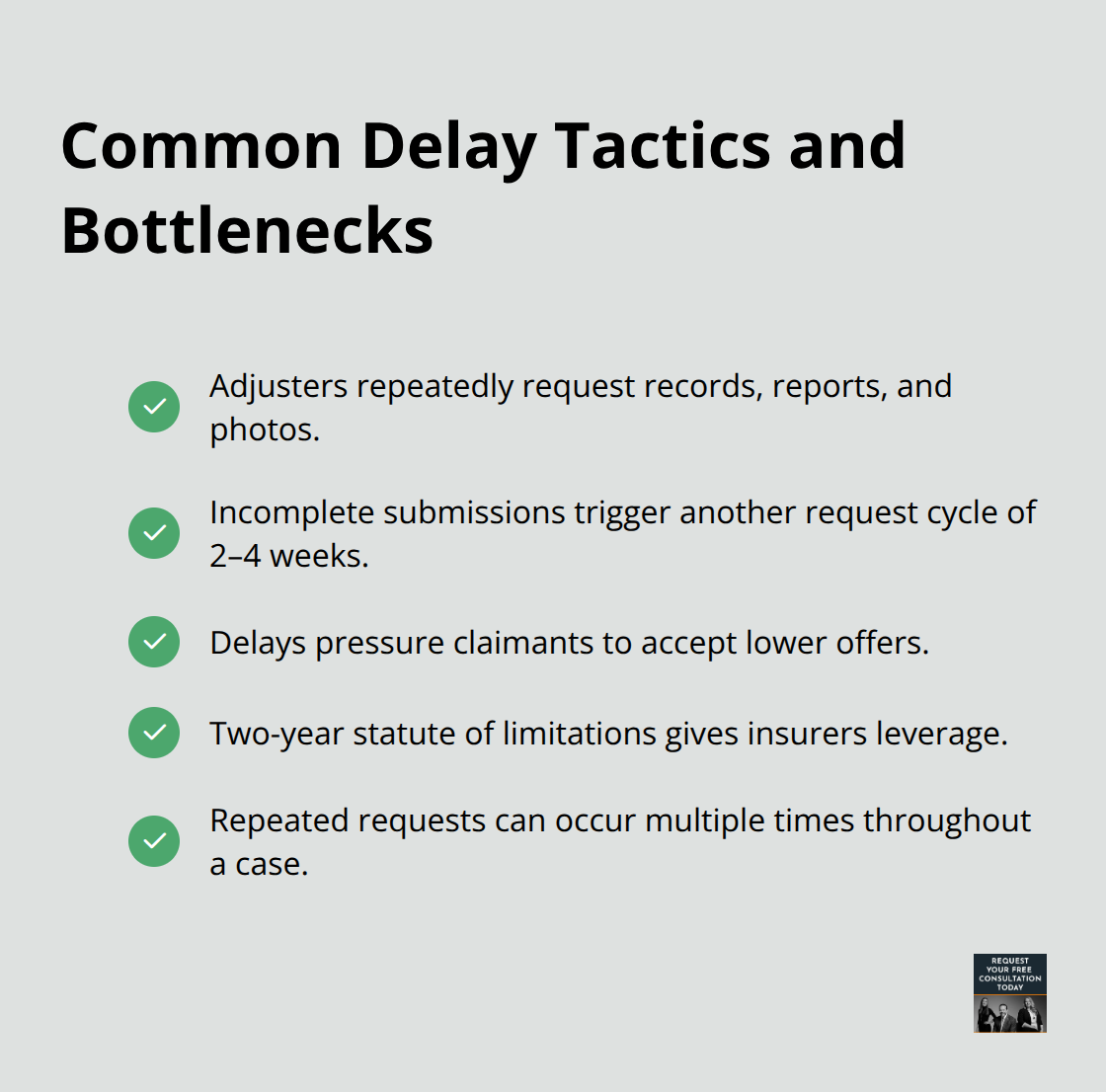
If you provide incomplete documentation the first time, they request it again, adding two to four weeks per cycle. This isn’t accidental inefficiency; it’s a standard tactic. Insurers know that delays frustrate claimants into accepting lower offers. The California statute of limitations gives them leverage-they can drag out negotiations knowing you face a two-year deadline to file a lawsuit.
How Liability Disputes Halt Progress
Disputed liability stands as the single biggest settlement killer. When the other driver’s insurance company contests fault, your attorney must gather dashcam footage, obtain detailed witness statements, and potentially hire accident reconstruction experts to establish negligence. This process routinely adds three to six months to your timeline. Clear liability cases like rear-end crashes or red-light violations bypass much of this friction because fault determination is obvious. Multi-vehicle accidents, especially those involving scarce witnesses or complex intersection scenarios, trigger deeper investigations including accident reconstruction analysis, which adds six to twelve weeks alone.
Ongoing Medical Treatment Extends Timelines
Medical treatment that continues beyond your maximum medical improvement creates another significant delay. Insurers refuse to discuss settlement figures seriously while you’re still undergoing therapy or awaiting surgical results because they cannot accurately predict your final damages. If your injuries require ongoing treatment, do not rush settlement-accepting early offers while still in active treatment almost always results in inadequate compensation that fails to cover future medical needs. For serious injuries like spinal cord damage or traumatic brain injury, this phase extends substantially because life-care planners need complete medical documentation and physician prognosis statements before projecting lifetime costs. Gaps in your medical records during treatment give insurers reasons to dispute the severity of your injuries and challenge your damage calculations. Stay consistent with medical appointments and ensure your attorney obtains complete records from every provider immediately after each visit.
Coverage Limits and Multiple Policies
When the at-fault driver carries only California’s minimum bodily injury coverage of thirty thousand dollars per person, investigations become even slower because insurers know the claim will eventually exceed available limits, making settlement discussions less urgent on their end. When multiple insurance policies are involved-such as your underinsured motorist coverage layered over the at-fault driver’s liability policy-settlement negotiations become exponentially slower because different insurers must coordinate and agree on their respective contributions. Bad-faith tactics from insurers, like repeatedly requesting the same documents or assigning new adjusters mid-claim, extend timelines further.
Final Thoughts
Settlement timeline auto crash cases move fastest when you have legal representation from the start. Insurance Research Council data confirms represented claimants recover approximately three and a half times more than those handling claims alone, partly because attorneys prevent costly mistakes and handle insurer communications efficiently. Your attorney coordinates medical records, organizes documentation, and responds to insurer requests promptly, which eliminates delays caused by disorganization. They also recognize bad-faith tactics like repeated document requests or adjuster changes and push back immediately rather than letting months slip away.
After your settlement is finalized and payment arrives, understand that medical liens and attorney fees reduce your net amount. Ask for a detailed breakdown before signing any release so you know exactly what you’ll receive. If the insurer delays payment beyond twenty-one days after you sign, your attorney can demand immediate payment through formal channels.
We at Schaar & Silva LLP help accident victims in Santa Cruz County, Sacramento, and Oakland navigate this entire process. We assist with medical bill management through lien services, evaluate property damage claims fairly, and connect you with psychological support when emotional trauma affects your recovery. Contact us for a free consultation to discuss your specific settlement timeline auto crash situation and protect your financial recovery.
