
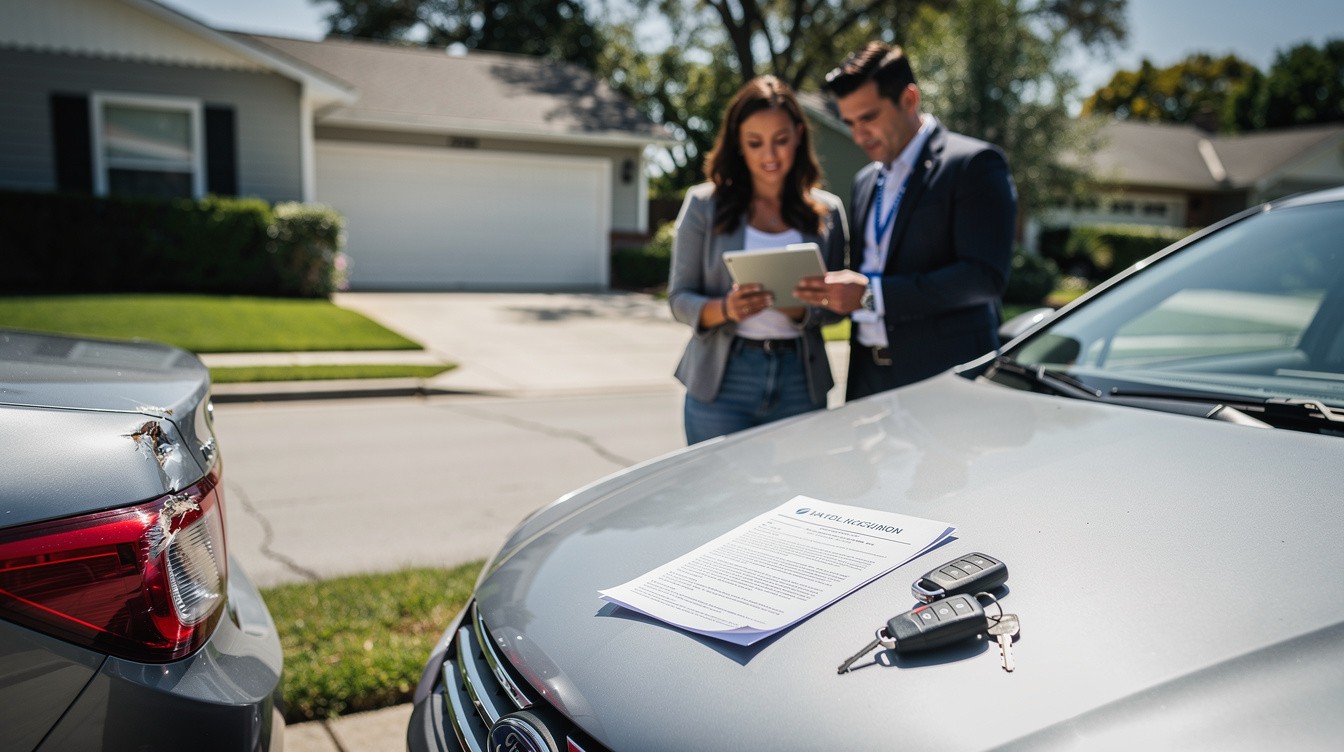
A crash with an uninsured driver can leave you facing serious financial and medical consequences. California law requires uninsured motorist coverage, yet many Santa Cruz residents don’t fully understand what it covers or how to use it.
We at Schaar & Silva LLP have helped accident victims navigate these policies and recover the compensation they deserve. This guide walks you through your coverage options and shows you how to protect yourself on Santa Cruz roads.
What California’s Uninsured Motorist Coverage Actually Covers
A crash with an uninsured driver creates serious financial and medical consequences. California law requires auto insurers to offer uninsured motorist coverage, though you can decline it in writing. This protection activates when an uninsured driver hits you or when a hit-and-run driver flees the scene.
What Your Coverage Pays For
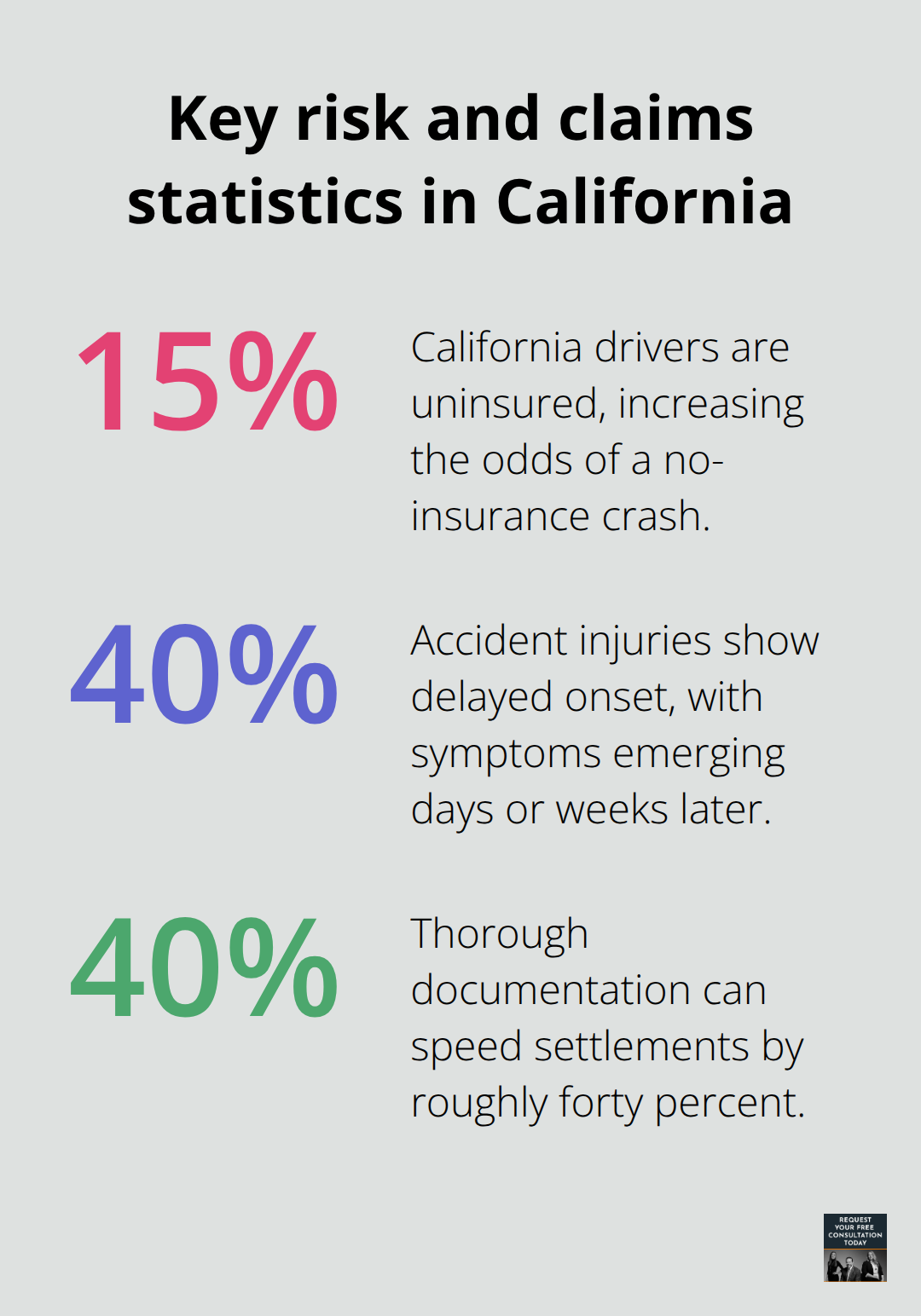
Uninsured motorist coverage pays for medical expenses, lost wages, pain and suffering, and vehicle damage up to your policy limits. About 15% of California drivers are uninsured according to the California Department of Insurance, which means one in every seven vehicles on Santa Cruz roads could leave you paying out of pocket without this protection.
Underinsured motorist coverage works differently: it activates when the at-fault driver has insurance but their limits fall short of your actual damages. If an at-fault driver carries only the California minimum liability of $15,000 per person and your medical bills total $20,000, your underinsured motorist coverage bridges that $5,000 gap.
Property Damage and Higher-Value Vehicles
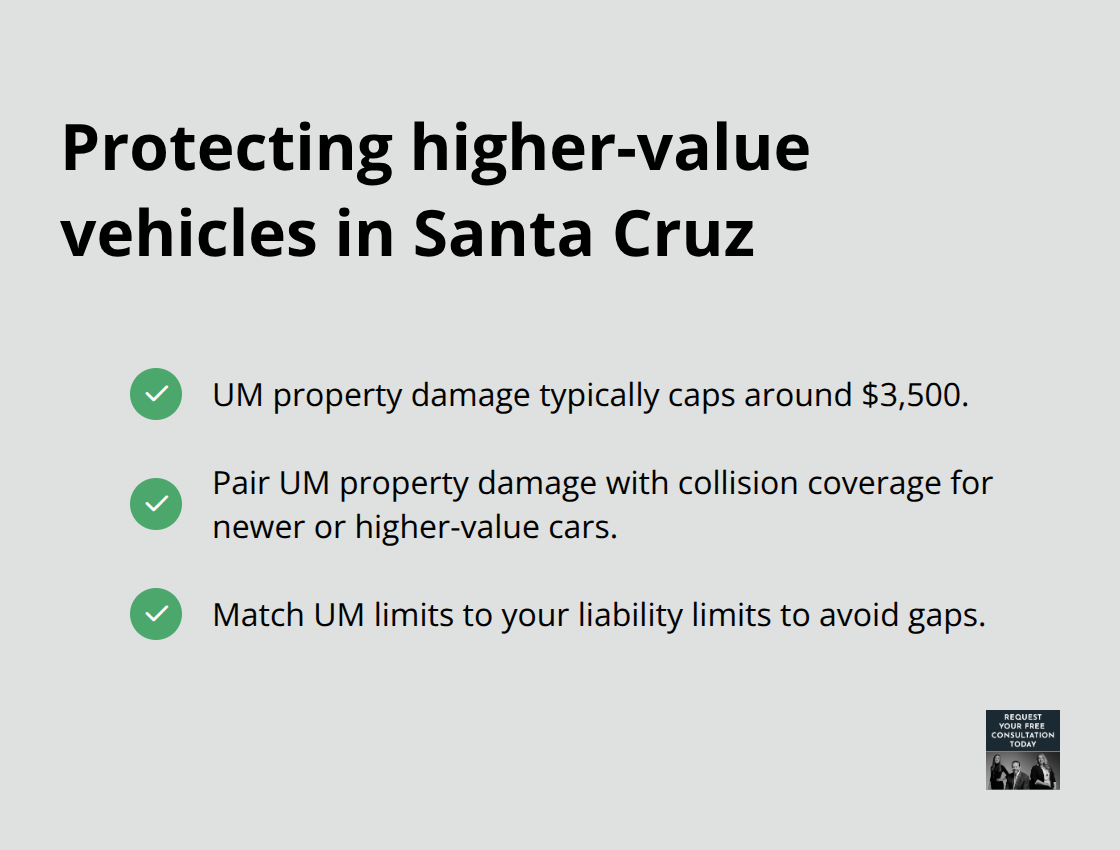
Property damage coverage under uninsured motorist protection typically caps around $3,500. Owners of higher-value vehicles should pair this with collision coverage as backup protection. The California Department of Insurance recommends aligning your uninsured motorist limits with your liability limits to prevent coverage gaps that could force you to absorb losses yourself.
How Coverage Limits Work in Practice
Your uninsured motorist and underinsured motorist coverage typically share the same limits. If you carry a 25/50 bodily injury liability policy, your uninsured and underinsured motorist protection usually mirrors that same 25/50 structure, meaning $25,000 per person and $50,000 per accident. California prohibits stacking of uninsured motorist coverage across multiple vehicles or policies-you cannot combine limits from two vehicles or two policies to increase your payout on a single claim. Santa Cruz residents with multiple vehicles should focus on raising the per-vehicle limits rather than relying on a patchwork of policies.
Additional Protection Layers
Medical payments coverage offers another layer of protection by covering medical costs for you and your passengers regardless of fault, paying out before other coverages activate. When you file an uninsured motorist claim, you work through your own insurer rather than suing the uninsured driver directly, which simplifies the process but demands thorough documentation of all damages. Understanding these coverage mechanics helps you identify gaps in your current policy and take action before an accident occurs.
Types of Uninsured Motorist Coverage Available
Uninsured motorist coverage splits into three distinct layers, and understanding each one prevents you from buying redundant protection or leaving gaps in your policy.
Bodily Injury Coverage and Pain and Suffering Damages
Uninsured motorist bodily injury coverage pays medical expenses, lost wages, and pain and suffering when an uninsured driver hits you. The California Department of Insurance recommends matching your uninsured motorist bodily injury limits to your liability limits, which means if you carry 50/100 liability, your uninsured motorist bodily injury should also be 50/100 (fifty thousand per person, one hundred thousand per accident). Santa Cruz residents frequently underestimate pain and suffering damages, but California courts apply multipliers of 1.5 to 5 times your medical expenses when calculating these awards. A person with twenty thousand dollars in medical bills could reasonably claim thirty to one hundred thousand dollars in pain and suffering, depending on injury severity and recovery time.
Property Damage Coverage Limits
Property damage coverage under uninsured motorist protection caps at approximately three thousand five hundred dollars according to the California Department of Insurance, which proves insufficient for vehicles worth more than fifteen thousand dollars. If you own a vehicle worth thirty thousand dollars or more, collision coverage becomes essential backup protection because uninsured motorist property damage alone cannot cover the loss.
Underinsured Motorist Coverage and the No-Stacking Rule
Underinsured motorist coverage activates in a different scenario: when the at-fault driver carries insurance but their limits fall short of your actual damages. California prohibits stacking coverage across multiple vehicles or policies, meaning you cannot combine your two vehicles’ uninsured motorist limits to increase payout on a single claim. Instead, try raising per-vehicle limits to at least 50/100 for bodily injury and 25,000 for property damage.
Medical Payments Coverage as Immediate Protection
Medical payments coverage operates independently and pays medical costs for you and passengers regardless of fault, activating before other coverages. This layer proves valuable because it covers immediate medical expenses while your uninsured motorist claim processes, which typically takes weeks or months. Adding medical payments coverage at limits of 5,000 to 10,000 per person costs only ten to twenty dollars monthly but prevents gaps during the claims process. Once you understand these coverage layers, the next step involves assessing your specific financial situation and comparing what different insurers actually offer.
How to Choose the Right Uninsured Motorist Policy for Santa Cruz
Assessing Your Financial Situation and Risk Factors
Your financial situation and vehicle value determine which coverage limits actually protect you versus which ones leave gaps. Santa Cruz residents with mortgages, significant savings, or assets worth more than one hundred thousand dollars should carry uninsured motorist bodily injury limits of at least 50/100, meaning fifty thousand per person and one hundred thousand per accident. The California Department of Insurance recommends matching your uninsured motorist limits to your liability limits, but this baseline often falls short for people with real assets to protect. If you own a home or have substantial retirement savings, an uninsured driver’s injury claim could threaten your financial security if your coverage maxes out at the California minimum of 15/30.
Comparing Coverage Limits Across Insurance Providers
Comparing quotes from multiple insurers reveals significant variation in pricing for higher limits. One Santa Cruz resident might pay an additional twenty-five dollars monthly to jump from 15/30 to 50/100 bodily injury coverage with one insurer, while another insurer charges forty dollars for the same upgrade. Obtain written quotes from at least three insurers before deciding, and specifically ask about discounts for good drivers, multi-car policies, or bundling home and auto coverage. The California Department of Insurance maintains a list of licensed insurers and their claims-paying histories, which you can review before committing to any policy.
For vehicle owners, property damage limits matter equally. Standard uninsured motorist property damage caps at 3,500 dollars, which covers a ten-year-old sedan but leaves owners of newer vehicles severely underprotected. If you drive a vehicle worth more than twenty thousand dollars, add collision coverage with a five-hundred-dollar deductible rather than relying solely on uninsured motorist property damage protection.
Steps to File a Claim with Your Uninsured Motorist Coverage
Contact your insurance company within twenty-four hours of the accident, not days later, because delays weaken your claim’s credibility. Gather the other driver’s license, insurance information, vehicle details, and license plate number at the scene; photograph all vehicle damage and the accident location from multiple angles; and collect contact information from any witnesses who saw what happened. Do not sign any fault statements or statements of blame at the scene, as these can complicate your claim later.
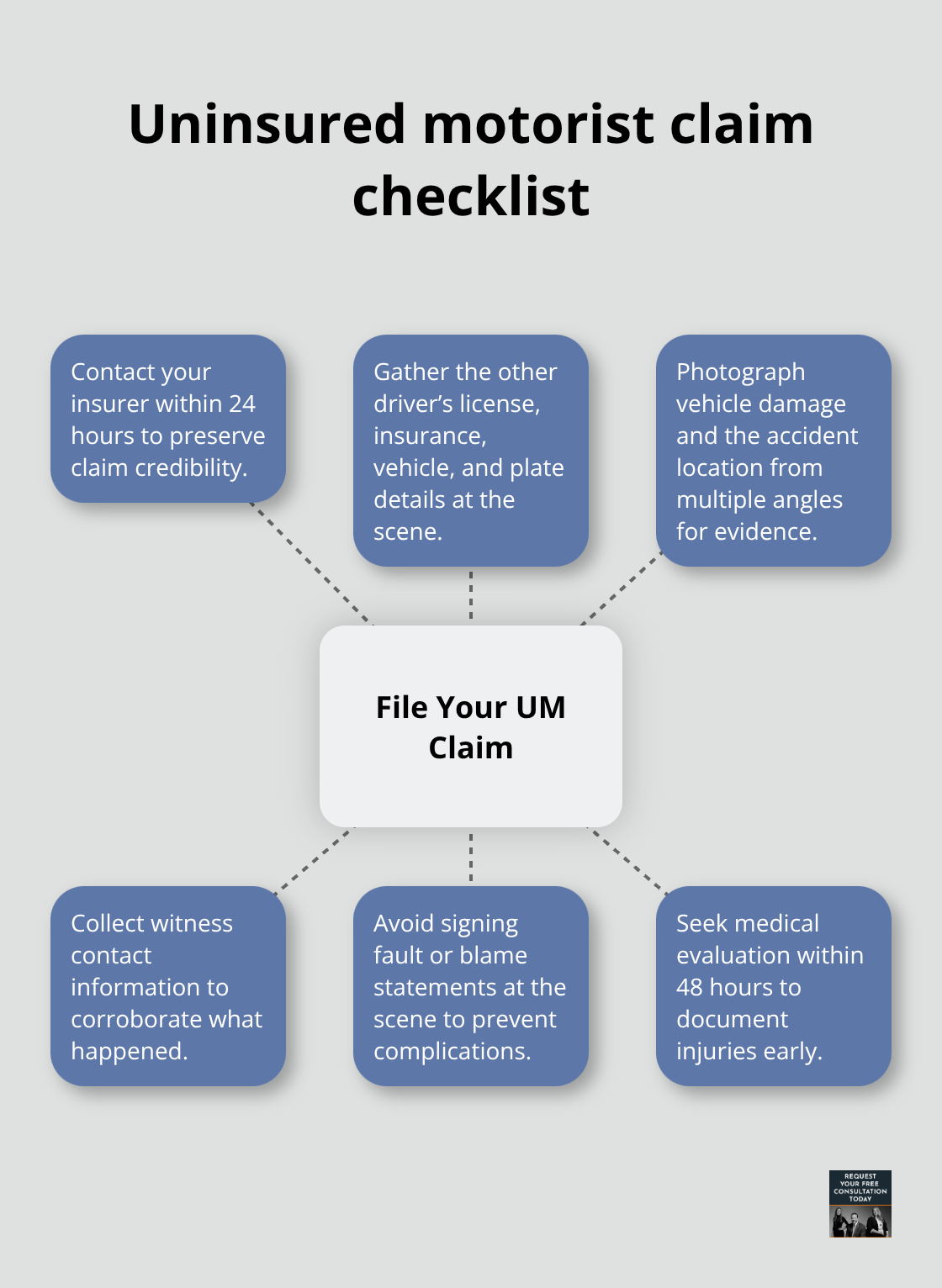
Seek medical evaluation within forty-eight hours even if you feel fine, because approximately forty percent of accident injuries show delayed onset, meaning pain and complications emerge days or weeks after impact. Keep every medical receipt, bill, prescription, and treatment record in a single organized folder with dates clearly marked. Build a damages log documenting medical costs, lost wages with pay stubs as proof, vehicle repair estimates from body shops, rental car expenses, and rehabilitation or physical therapy costs. Thorough documentation typically speeds settlements by roughly forty percent according to the California Department of Insurance.
Negotiating Your Settlement Offer
Initial settlement offers from insurers typically fall thirty to fifty percent below fair value, so never accept the first offer. Respond with a professional demand letter that references the police report, witness statements, and your comprehensive medical records. Insurance adjusters may request formal statements and may require an independent medical examination, which is standard practice and not a sign of denial. Negotiate your settlement offer with professional guidance to ensure fair compensation for your damages and losses.
Final Thoughts
Uninsured motorist coverage in California protects you from financial devastation when an uninsured or underinsured driver causes an accident. With 15% of California drivers uninsured, the odds of encountering one on Santa Cruz roads are significant. Your policy choices today determine whether you absorb thousands in medical bills and vehicle damage or whether your coverage handles these costs. Higher limits cost only $25 to $40 monthly but prevent catastrophic out-of-pocket losses.
Review your current policy now rather than after an accident. Contact your insurance company and request a written quote for increasing your uninsured motorist bodily injury limits to 50/100 and your property damage limit to at least $25,000. Compare quotes from at least three insurers before deciding, and check the California Department of Insurance website to verify that your insurer has a solid claims-paying history.
If you’ve already been in an accident with an uninsured or underinsured driver, contact Schaar & Silva LLP for legal assistance. We help Santa Cruz accident victims navigate complex insurance claims, handle medical bill assistance, and negotiate settlements that reflect your actual losses. Many cases are handled on a contingency basis, meaning you pay nothing unless we recover compensation for you.
