
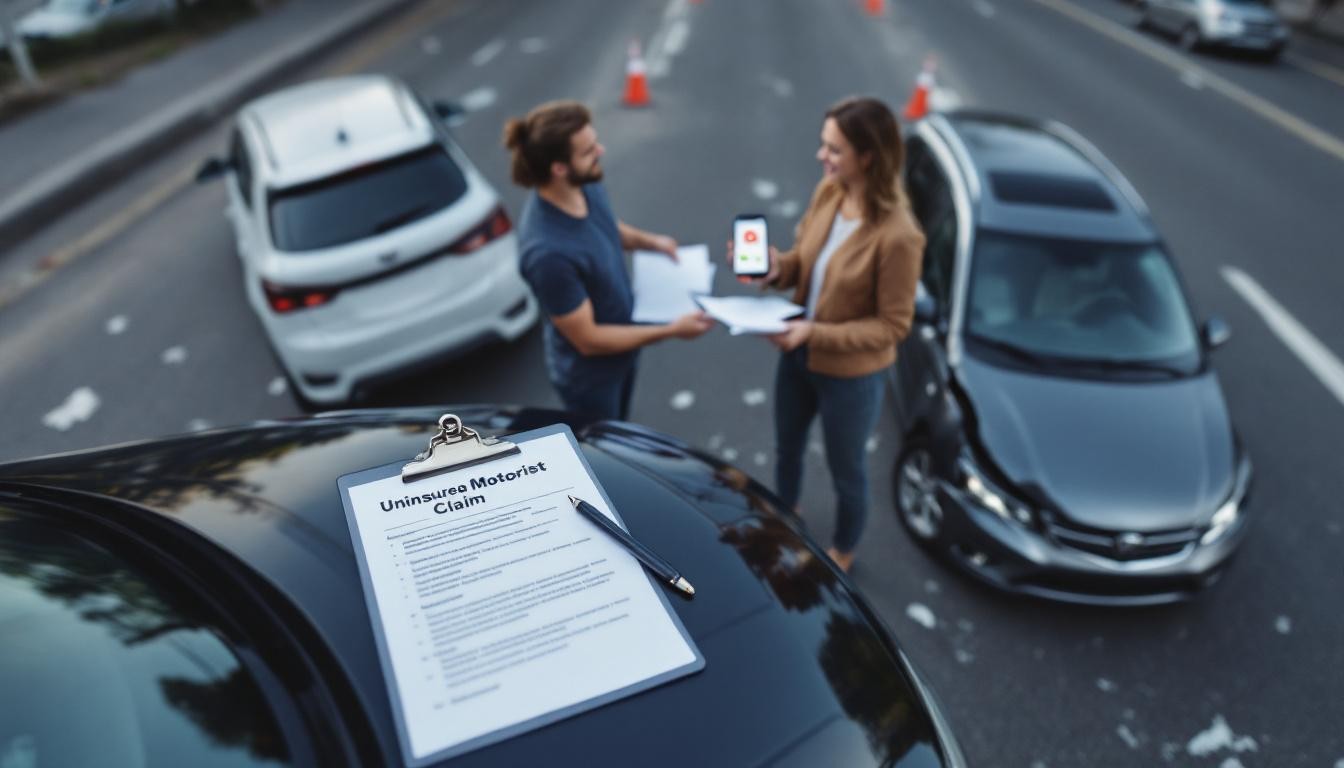
A car accident is stressful enough without discovering the other driver has no insurance. Uninsured motorist claims can help you recover damages when you’re hit by someone without coverage.
At Schaar & Silva LLP, we’ve helped accident victims in Santa Cruz County, Sacramento, and Oakland navigate these situations. This guide walks you through your options and how to protect your rights.
What Uninsured Motorist Coverage Actually Covers
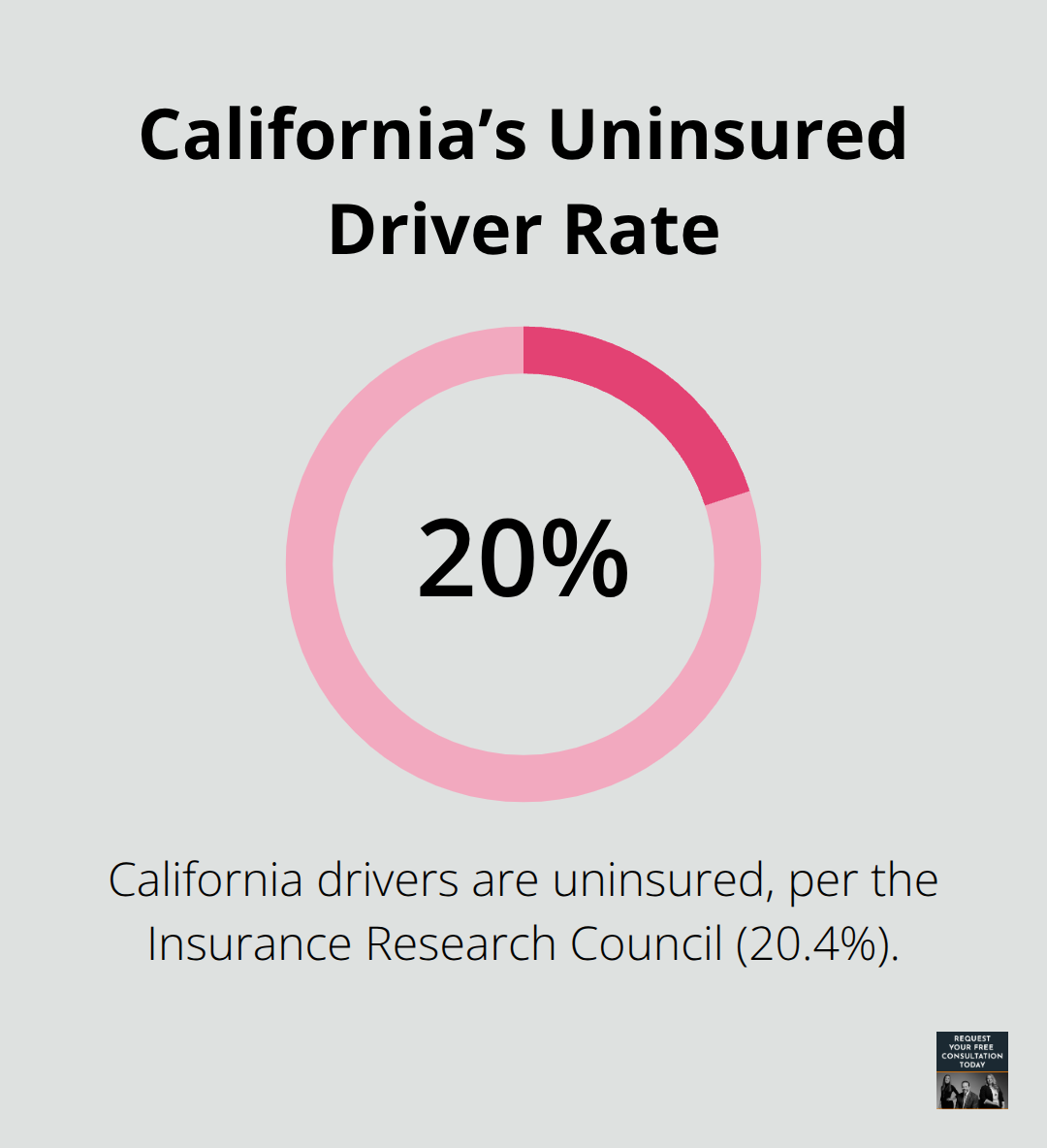
An uninsured motorist claim protects your finances when someone without insurance causes your accident. California law requires insurers to offer this coverage, though you can decline it by signing a waiver. About 20.4% of drivers in California are uninsured according to the Insurance Research Council, making this protection essential in Santa Cruz County, Sacramento, and Oakland.
How Uninsured Motorist Bodily Injury Coverage Works
Uninsured Motorist Bodily Injury coverage pays for your medical expenses, lost wages, and pain and suffering when the at-fault driver has no insurance. This coverage activates regardless of fault on your part, providing a safety net that health insurance cannot replicate. Health insurers pursue subrogation against your auto insurer, creating delays and complications that uninsured motorist coverage avoids.
Property Damage Coverage and Its Limitations
Uninsured Motorist Property Damage coverage handles vehicle repairs up to $3,500, but only if you can identify the uninsured driver. Hit-and-run accidents typically do not qualify for property damage recovery since the driver remains unknown. This distinction matters significantly when planning your overall protection strategy.
Setting Your Coverage Limits
Your coverage limits determine your maximum payout and work independently from the other driver’s insurance. If you carry $100,000 in bodily injury coverage, your uninsured motorist limits should ideally match that amount. California’s minimum liability is $15,000 per person for bodily injury, but this applies to the other driver’s insurance, not yours. Medical Payments coverage, separate from uninsured motorist protection, covers immediate medical costs for you and passengers up to your policy limit (typically starting at $1,000 per person). This coverage processes quickly and helps with deductibles while your larger uninsured motorist claim develops.
Closing the Gap With Underinsured Motorist Coverage
Underinsured Motorist coverage fills a critical gap when the at-fault driver has some insurance but insufficient limits. If an at-fault driver carries only $15,000 in liability and your damages total $75,000, underinsured motorist coverage bridges that $60,000 gap. You must first collect the full policy limit from the at-fault driver before tapping underinsured motorist coverage. Annual reviews of your uninsured and underinsured motorist limits help protect you as your assets grow or your financial obligations increase.
Understanding these coverage types sets the foundation for your claim, but knowing how to actually file one determines whether you receive fair compensation.
Your Options After an Accident With an Uninsured Driver
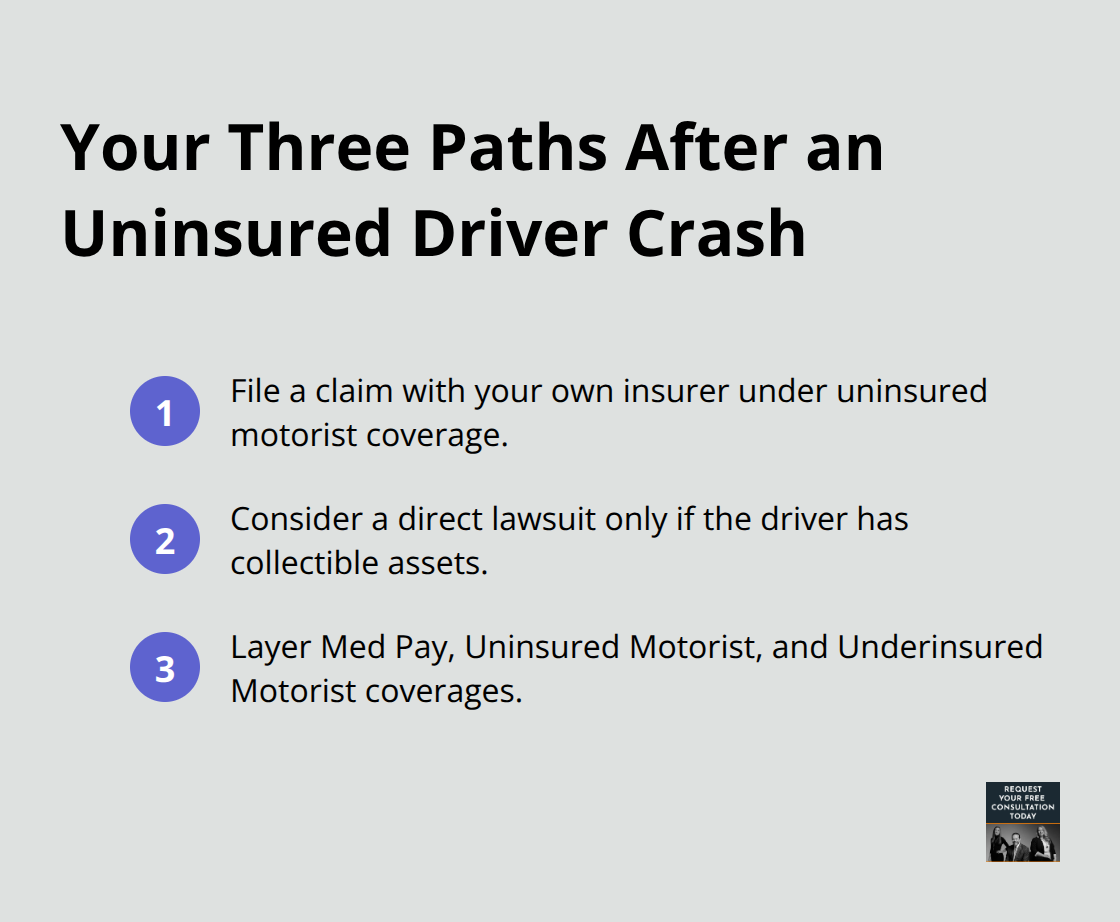
After an accident with an uninsured driver, you have three realistic paths forward, though not all will work equally well for your situation. Filing a claim with your own insurance company through your uninsured motorist coverage stands as your strongest option because your insurer has resources to investigate, negotiate, and pay claims quickly.
Filing a Claim With Your Own Insurance Company
When you report the accident to your insurer, stick to the facts without admitting fault, then formally open an uninsured motorist claim and request an adjuster. The adjuster will ask for the police report, medical records, bills, and wage-loss documentation, so gather these items immediately after the accident.
The police report matters most because it serves as official evidence that the other driver was uninsured and at fault, which forms the foundation of your entire claim.
Keep a dedicated file with copies of medical bills, receipts, and all communications with your insurer to strengthen your position. Your insurer may try to minimize the payout with a low initial offer, so understand that negotiation is normal and expected. Many accident victims accept the first offer without realizing they could recover significantly more by pushing back with documentation of total damages, including medical expenses, lost wages, and pain and suffering.
Pursuing a Direct Lawsuit Against the Uninsured Driver
A direct lawsuit against the uninsured driver is theoretically possible but practically problematic in most cases. Even if you win a judgment, collecting money from someone without insurance means they likely have few or no assets to pay you, making the victory hollow. You can hire an attorney to conduct an asset check on the uninsured driver to assess whether they own property or have bank accounts worth pursuing, but this process takes time and money.
Settlement negotiations with an uninsured driver rarely succeed because they cannot afford to pay settlements out of pocket. Instead, focus your energy on maximizing your uninsured motorist claim with your own insurer, which is where real recovery happens.
Layering Your Coverage for Maximum Protection
If your damages exceed your uninsured motorist limits and the at-fault driver carries some insurance, your underinsured motorist coverage steps in after you exhaust the other driver’s policy limits, providing additional protection. The combination of medical payments coverage for immediate costs, uninsured motorist coverage for your main claim, and underinsured motorist coverage for gaps creates a three-layer safety net that actual lawsuits against uninsured drivers simply cannot match.
This strategic approach to your claim requires careful documentation and persistence with your insurer, which brings us to the specific steps you must take to build the strongest possible case.
Building Your Case: What You Must Do Right Now
The moments after an accident determine whether you recover fairly or accept far less than you deserve. At the accident scene, photograph the other driver’s vehicle from multiple angles, capture the overall scene showing road conditions and vehicle positions, and document the uninsured driver’s license plate, vehicle identification number, and driver’s license information. Take photos of any visible injuries on yourself or passengers, and if witnesses are present, record their names and phone numbers before they leave-witnesses disappear quickly and their statements become impossible to obtain later.
Securing Official Documentation
File a police report immediately and obtain the report number; this document serves as the foundation for your entire claim because it provides official documentation that the other driver was uninsured and at fault. Without this report, your insurance company will scrutinize your claim far more heavily and may offer significantly lower settlements. Request the police report within a few days and verify it accurately reflects that the other driver lacked insurance; if errors exist, contact the police department to file a correction because inaccuracies weaken your position during claim negotiations.
Gathering Medical Evidence
Seek medical treatment immediately after the accident, even if injuries seem minor, because delayed treatment invites insurance company skepticism about whether the accident actually caused your injuries. Preserve every medical bill, receipt, prescription record, and wage-loss statement in a dedicated file organized by date; insurance adjusters review thousands of claims and disorganized documentation signals carelessness that translates into lower offers. Request itemized bills from all medical providers rather than accepting summary statements, because detailed billing supports your damages calculations and prevents disputes over treatment necessity. Document lost wages with written statements from your employer showing the dates you missed work and your hourly rate or salary.
Communicating With Your Insurance Company
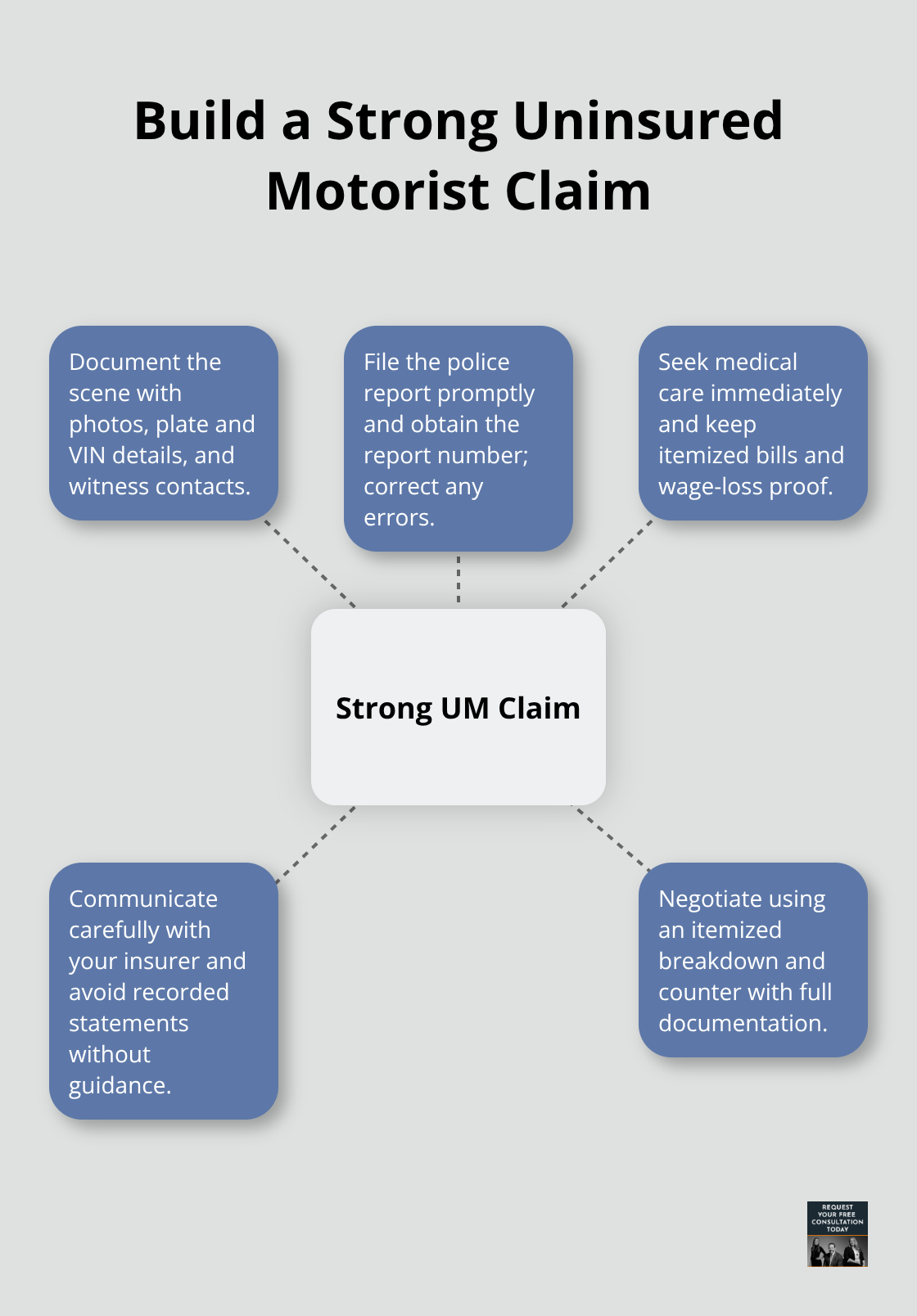
When working with your insurance company, respond to all requests promptly and completely, but never agree to recorded statements without understanding that adjusters use these statements to find reasons to deny or minimize claims. Submit your complete claim package (including the police report, medical records, bills, and wage documentation) to your adjuster in one organized submission rather than trickling information over weeks. Insurance companies process claims faster and pay more generously when presented with comprehensive documentation that requires minimal follow-up questions.
Negotiating Your Settlement
If your adjuster offers a settlement, request an itemized breakdown showing how they calculated medical expenses, lost wages, and pain and suffering rather than accepting a single lump-sum number; this breakdown reveals whether they overlooked significant damages and provides a starting point for negotiation. Most initial settlement offers fall substantially short of fair value because adjusters test whether you will accept quickly without pushing back. Counter-offers supported by your documentation almost always result in higher settlements than initial proposals.
Final Thoughts
Uninsured motorist claims succeed when you act decisively from the moment of impact. The three critical steps are documenting everything at the scene, filing your police report immediately, and submitting a complete claim package to your insurer with organized medical records and wage documentation. Insurance adjusters respond to comprehensive evidence with higher settlements, while incomplete submissions invite low offers that fall far short of your actual damages.
Your uninsured motorist coverage exists specifically to protect you when someone else drives without insurance. California’s 20.4% uninsured driver rate means this protection is not theoretical-it’s practical defense against a genuine risk in Santa Cruz County, Sacramento, and Oakland. Initial settlement offers rarely reflect fair value, so counter-offer with your documentation and expect negotiation as a normal part of the process.
We at Schaar & Silva LLP help accident victims navigate uninsured motorist claims and recover the compensation they deserve. Our team handles the legal complexities while you focus on healing, and we provide support with medical bill assistance, property damage evaluation, and connections to psychological resources when emotional trauma accompanies your injuries. Contact us today to discuss your specific situation and learn how we can help you maximize your recovery.
