

A rear end collision can happen in seconds, but the aftermath requires careful attention to protect your health and your rights.
At Schaar & Silva LLP, we’ve helped countless people in Santa Cruz County, Sacramento, and Oakland navigate the complex process of recovering from these accidents. This guide walks you through the essential steps you need to take immediately after the crash, how to handle insurance claims, and when medical evaluation matters.
What to Do Right After the Crash
Assess Safety and Call for Help
The first moments after a rear-end collision determine how well you protect yourself physically and legally. Your immediate actions shape the entire recovery process. Stop your vehicle in a safe location if possible and activate your hazard lights. Assess whether anyone needs emergency care. Call 911 immediately if there are injuries-this creates an official record that matters for your insurance claim and any future legal action. The California Department of Insurance emphasizes that documenting injuries early protects your claim, so even if you feel fine initially, medical evaluation within the first few days is essential because some injuries like whiplash don’t show symptoms immediately.
Document Everything at the Scene
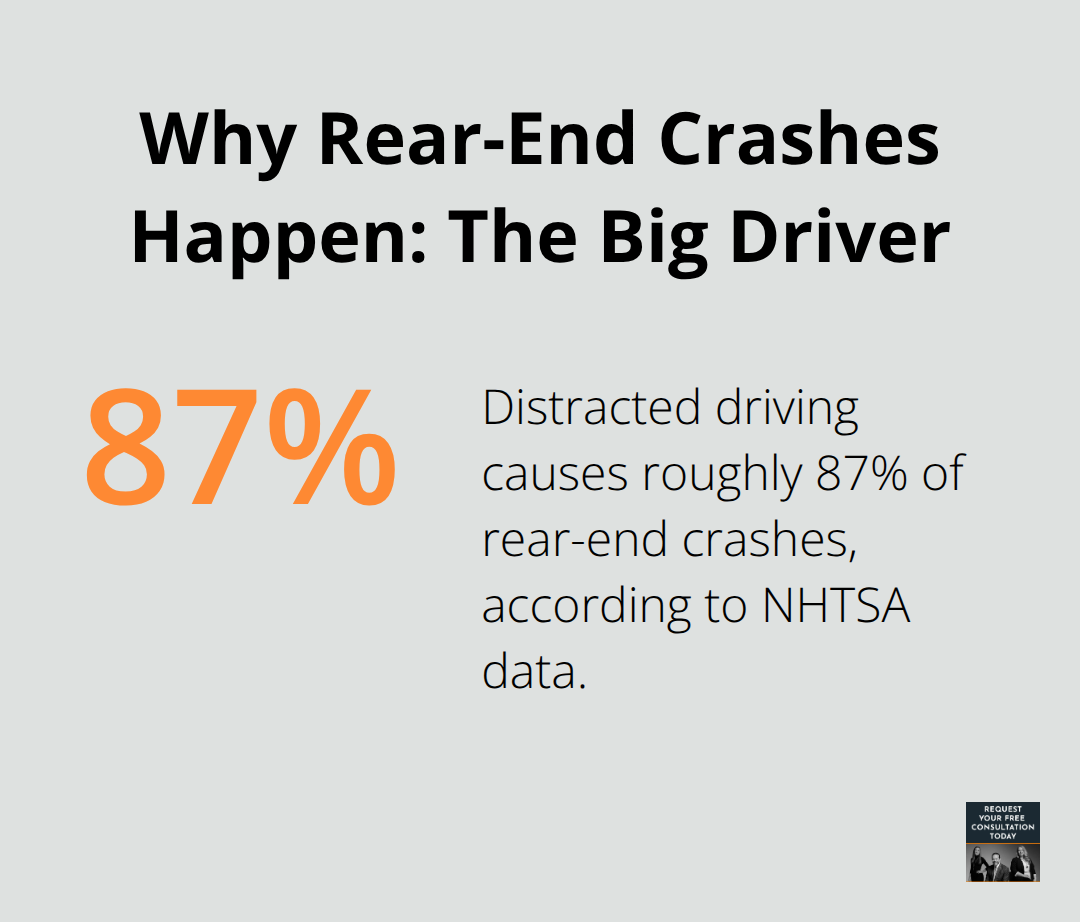
Take photos of the accident scene from multiple angles, including vehicle damage, road conditions, traffic signals, and the final positions of all vehicles involved. Photograph the other driver’s license, vehicle registration, and insurance card. Get the names, phone numbers, and addresses of all witnesses and ask them to describe what they saw. This information becomes invaluable when insurers investigate the claim. Rear-end collisions cause about 1.7 million incidents annually in the United States according to NHTSA data, and distracted driving accounts for roughly 87% of these crashes, which means the other driver’s liability is typically clear-but only if you’ve documented everything correctly from the start.
File Reports and Notify Your Insurer
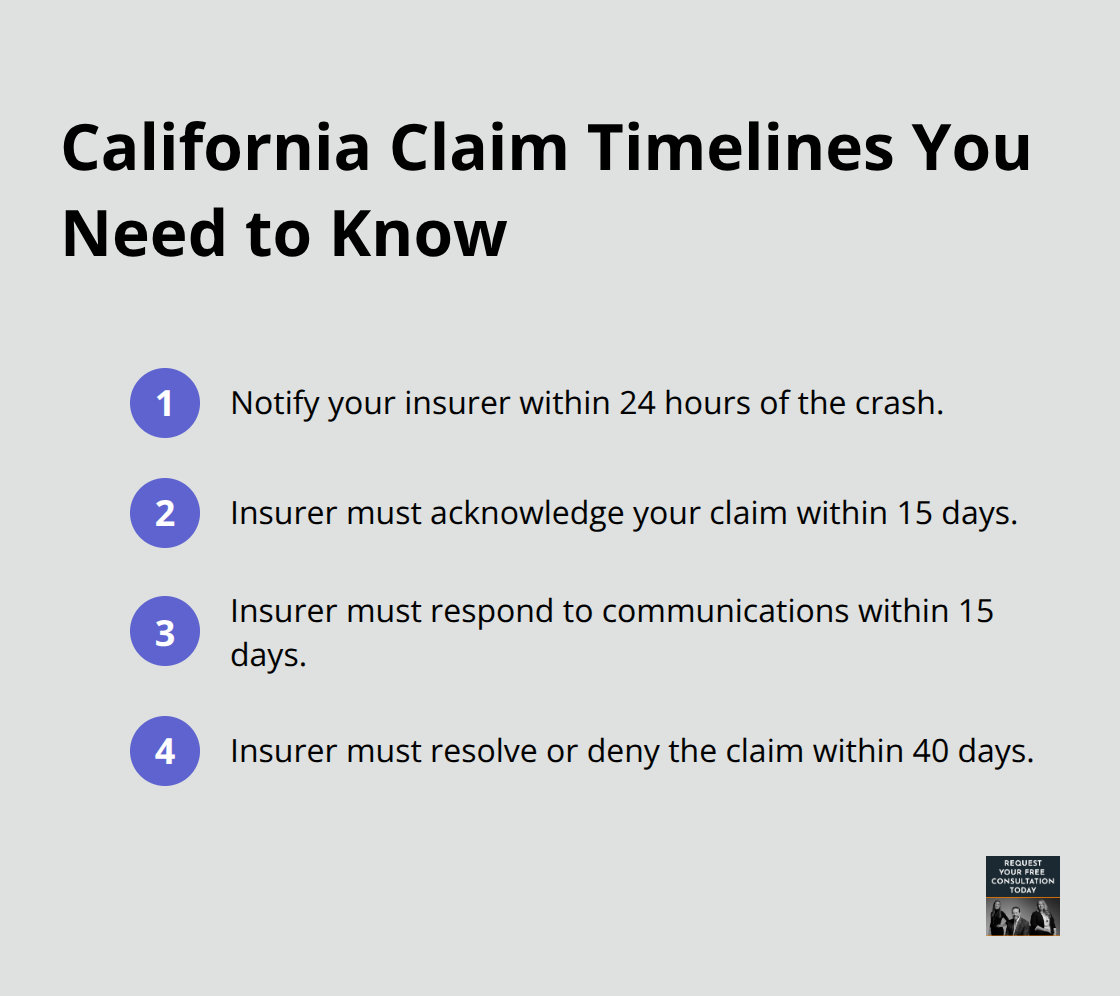
Move quickly to file a police report if required by your jurisdiction (some areas respond to all crashes while others only respond to incidents with injuries or significant property damage). Notify your insurance company within 24 hours; the Fair Claims Settlement Practices Regulations require insurers to acknowledge your claim within 15 days and start investigating immediately. Don’t admit fault or sign any statements at the scene, and share only essential driver and vehicle information with the other party. Keep all documents organized: police report number, photos, witness statements, medical records, repair estimates, and correspondence with insurers. This documentation protects your rights throughout the claims process and prevents delays or denials that result from incomplete records.
Understanding Liability and Insurance Claims
Fault in Rear-End Collisions
In rear-end collisions, fault determination is straightforward in most cases. California Vehicle Code section 21703 requires drivers to maintain a reasonable and prudent following distance based on speed, traffic volume, and road conditions. When someone hits you from behind, they violated this law by following too closely. NHTSA data shows that distracted driving causes roughly 87% of rear-end crashes, which means the rear driver’s negligence is usually documented through phone records, dashcam footage, or eyewitness accounts. This clarity works in your favor because insurance adjusters rarely dispute liability in these situations. Your job is to provide solid evidence: photos showing the point of impact, witness statements describing what the other driver was doing before the collision, and any police report that documents the crash dynamics. The rear driver’s insurance company knows they’re defending an indefensible position, so they move quickly to settle rather than fight a losing case.
Filing Your Claim Correctly
Contact your own insurance company within 24 hours and provide a detailed account of what happened without admitting any responsibility, even partial. The Fair Claims Settlement Practices Regulations require insurers to acknowledge claims within 15 days and respond to them within 15 days, with full resolution or denial within 40 days.
Many people waste time arguing with adjusters about the other driver’s fault when they should focus on documenting their own damages and injuries. For property damage, obtain repair estimates from at least two collision shops, and understand that insurers typically pay the lesser of repair costs or actual cash value. If you disagree with a total-loss valuation, most policies include an appraisal clause where two appraisers and a neutral umpire resolve the difference.
Dealing with the Other Driver’s Insurance
When the other driver’s insurance contacts you, be cautious-their adjuster works to minimize payouts, so provide only essential information and let your own insurer handle negotiations. Never sign statements accepting their valuation without consulting your own company first. If the other driver’s insurance denies your claim or offers an unreasonably low settlement, you may have grounds to pursue additional recovery. The legal team at Schaar & Silva LLP can evaluate whether their decision violates California law and help you understand your options for moving forward.
Medical Care Matters After a Rear-End Collision
Seek Medical Evaluation Within 48 Hours
Most people skip doctor visits after a rear-end collision because they feel fine in the immediate aftermath. This mistake costs accident victims thousands of dollars in uncompensated medical expenses and weakens their insurance claims. Whiplash and soft tissue injuries don’t always produce immediate symptoms-some victims experience pain and stiffness 24 to 72 hours after the crash. The California Department of Insurance strongly recommends medical evaluation within the first few days, and insurance adjusters scrutinize claims where gaps exist between the accident date and the first medical visit.
If you wait weeks to seek treatment, adjusters assume your injuries aren’t connected to the collision, which gives them legal grounds to deny or reduce your claim. Schedule an appointment with your primary care doctor or visit an urgent care clinic within 48 hours, even if you only have mild discomfort or no symptoms at all. Tell the medical provider you were in a rear-end collision and describe exactly what happened and where you felt any impact. This creates a documented medical record linking your injuries directly to the accident.
Organize Medical Records and Track All Expenses
From your first doctor’s visit forward, organize and preserve every medical document. Request copies of all diagnostic reports, imaging results, treatment notes, and billing statements from every provider you see. Rear-end collisions frequently cause hidden damage to your body that emerges gradually-alignment issues from frame damage can affect your spine over time, and suspension damage can cause ongoing back and neck strain that requires months of physical therapy.
Insurance companies pay based on documented medical treatment, so missing appointments or skipping recommended follow-up care directly reduces your settlement. If your doctor refers you to physical therapy, occupational therapy, or another provider, attend every session and keep the appointment confirmations and provider notes. Take photos of medical bills, prescription receipts, and any mobility aids you purchase. Track mileage to and from medical appointments, as California law allows you to recover transportation costs as part of your damages claim.
Recognize Injuries That Develop Over Time
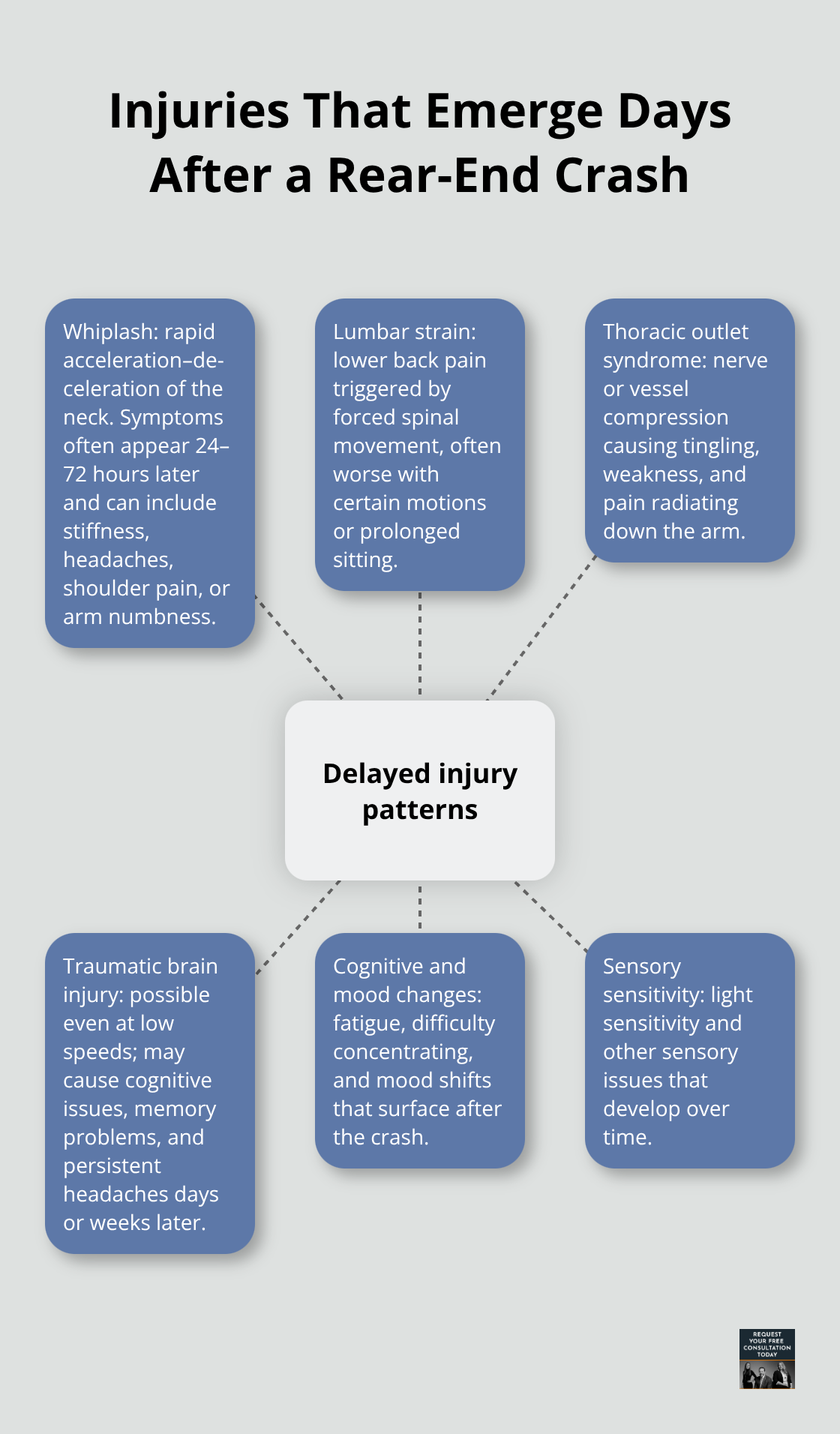
Rear-end collisions cause specific injuries that develop over time rather than appearing immediately. Whiplash results from the sudden acceleration-deceleration motion of your head and neck, producing neck stiffness, headaches, shoulder pain, and sometimes numbness in the arms or hands. Lumbar strain affects your lower back from the impact forcing your spine into abnormal positions, causing pain that worsens with certain movements or prolonged sitting.
Thoracic outlet syndrome can develop when the collision damages nerves or blood vessels in your shoulder and neck area, producing tingling, weakness, or pain radiating down your arm. Traumatic brain injury occurs even in low-speed collisions when your head strikes the steering wheel, headrest, or side window, potentially causing cognitive problems, memory issues, or persistent headaches that appear days or weeks later. Document any changes in your physical or mental condition after the collision-fatigue, difficulty concentrating, mood changes, or sensory issues like light sensitivity. These symptoms matter legally because they establish the full scope of your injuries, which determines your compensation amount.
Final Thoughts
A rear-end collision disrupts your life in ways that extend far beyond the initial impact. The steps you take in the first hours and days determine whether you recover fully and receive fair compensation for your injuries and losses. Start by documenting everything at the scene, notifying your insurance company within 24 hours, and seeking medical evaluation even if you feel fine.
Organize all records systematically because insurance adjusters rely on documentation to process your claim efficiently. Medical treatment matters most during the first weeks after the collision, so attend every appointment and report any symptoms that develop over time, including whiplash, back pain, or cognitive changes that appear days or weeks later. If the other driver’s insurance denies your claim or offers an unreasonably low settlement, legal representation becomes necessary.
The team at Schaar & Silva LLP helps people throughout Santa Cruz County, Sacramento, and Oakland understand their rights and recover what they’re owed. We assist with medical bill navigation, property damage evaluation, and the emotional burden that follows a serious accident. Contact us to discuss your situation and learn whether pursuing additional recovery makes sense for your case.
