
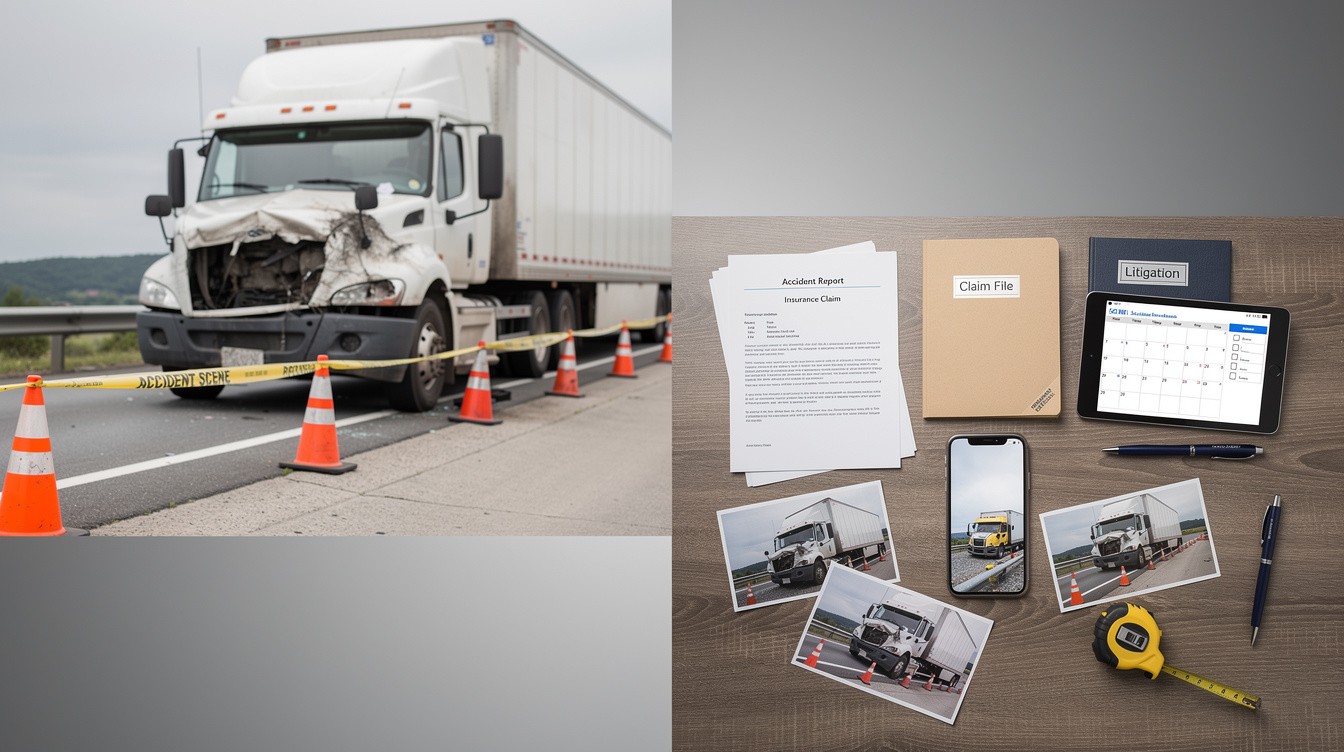
A truck accident can leave you facing medical bills, vehicle damage, and lost income. The truck accident claim process is complex, with multiple steps and tight deadlines that determine whether you recover fair compensation.
At Schaar & Silva LLP, we’ve guided countless clients through this journey. This guide walks you through each stage, from protecting evidence at the scene to preparing for court if needed.
What to Do Right After a Truck Accident
Protect Yourself and Document the Scene
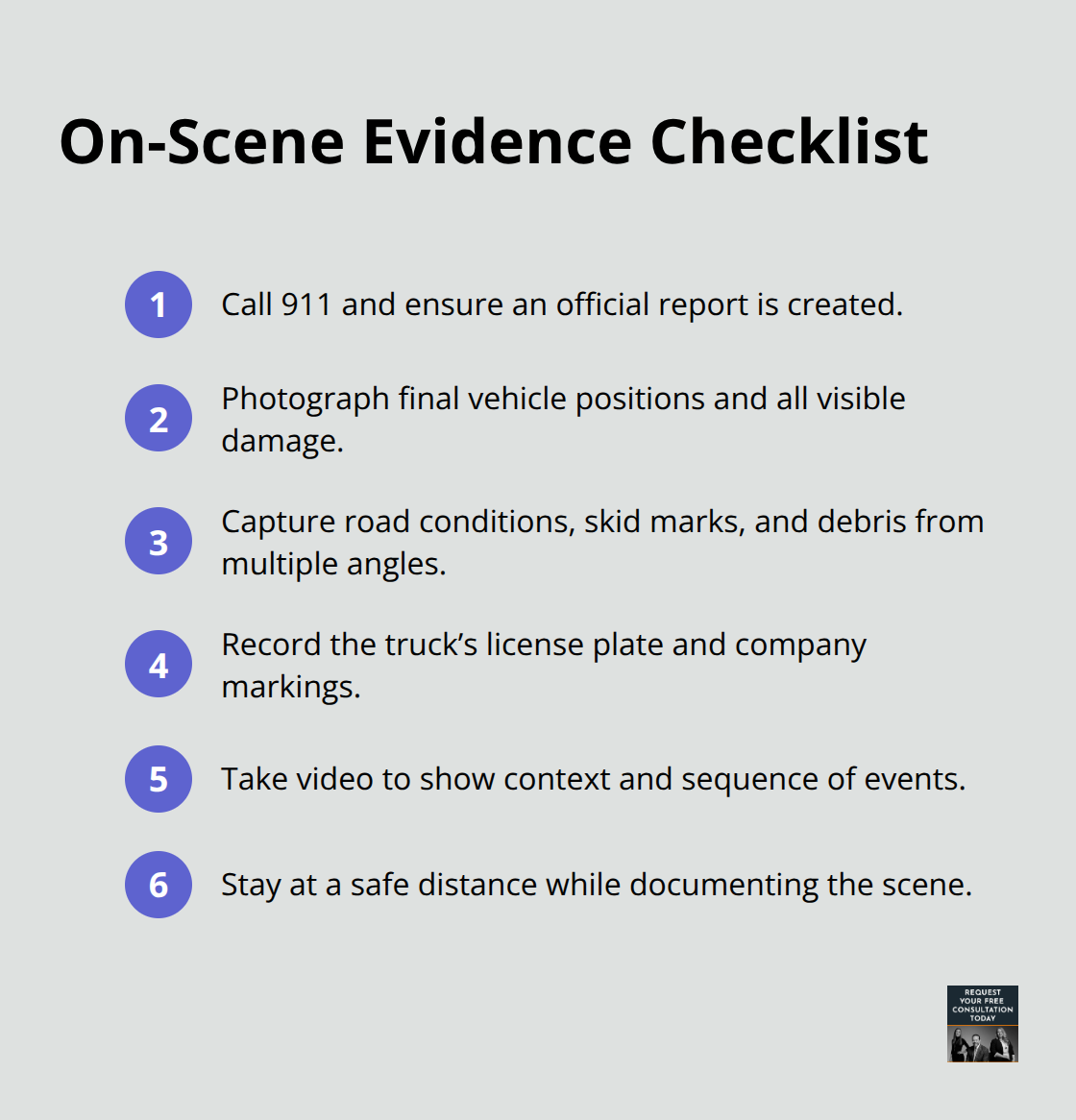
The first minutes after a truck accident determine whether you’ll have the evidence needed to prove your claim later. Move to safety immediately if possible, then call 911 to report injuries and create an official police record. Nearly 6,000 people died in large-truck crashes in 2022 according to the Federal Motor Carrier Safety Administration, and the severity of these accidents means that documentation from the scene becomes critical quickly. Start photographing the scene from multiple angles before vehicles are moved-capture the final resting positions, road conditions, tire marks, and all visible damage. Take photos of the truck’s license plate, the driver’s condition, and any visible cargo. Videos work even better than still photos because they establish context and sequence. Safety comes first, so photograph from a distance if needed rather than risk your own injury.
Collect Information from All Parties and Witnesses
Obtain the truck driver’s name, phone number, driver’s license number, and insurance information. Get the same details from any witnesses, along with their addresses and when they can be reached. Write down the names and badge numbers of police officers at the scene and ask for the official police report number before leaving. Note where the truck is being towed so you can retrieve important vehicle data later. This information forms the foundation of your claim, and delays in gathering it mean witnesses disappear, memories fade, and evidence degrades.
File Your Claim Quickly
Insurance companies move fast once they’re notified, so file your claim within 24 hours of the accident. Contact both your own insurer and the at-fault party’s insurer if you have that information. Provide the police report number, photos, and a straightforward description of what happened without admitting fault or speculating about causes. Tell your insurer about any injuries, no matter how minor they seem, and list all property damage. If new information surfaces later, update your claims adjuster immediately. The trucking industry’s complexity means multiple parties may share responsibility, and insurers will coordinate their investigations, but your prompt action preserves the accuracy of witness statements and scene conditions before they change.
Once you’ve secured the scene and notified insurers, seek medical attention to document any injuries and begin building a comprehensive record of your damages-a step that shapes how much compensation you ultimately recover.
Building Your Claim
Collect Medical Records Throughout Your Recovery
Medical records form the backbone of your truck accident claim, so you must collect them immediately and continue throughout your recovery. Each doctor visit, physical therapy session, and prescription creates documentation that proves the extent of your injuries and the costs you’ve incurred. Insurance adjusters scrutinize these records carefully, looking for gaps that might suggest your injuries weren’t serious. Attend every appointment your doctor recommends, even if you feel better, because missing treatments gives adjusters ammunition to argue your damages are lower than they actually are.
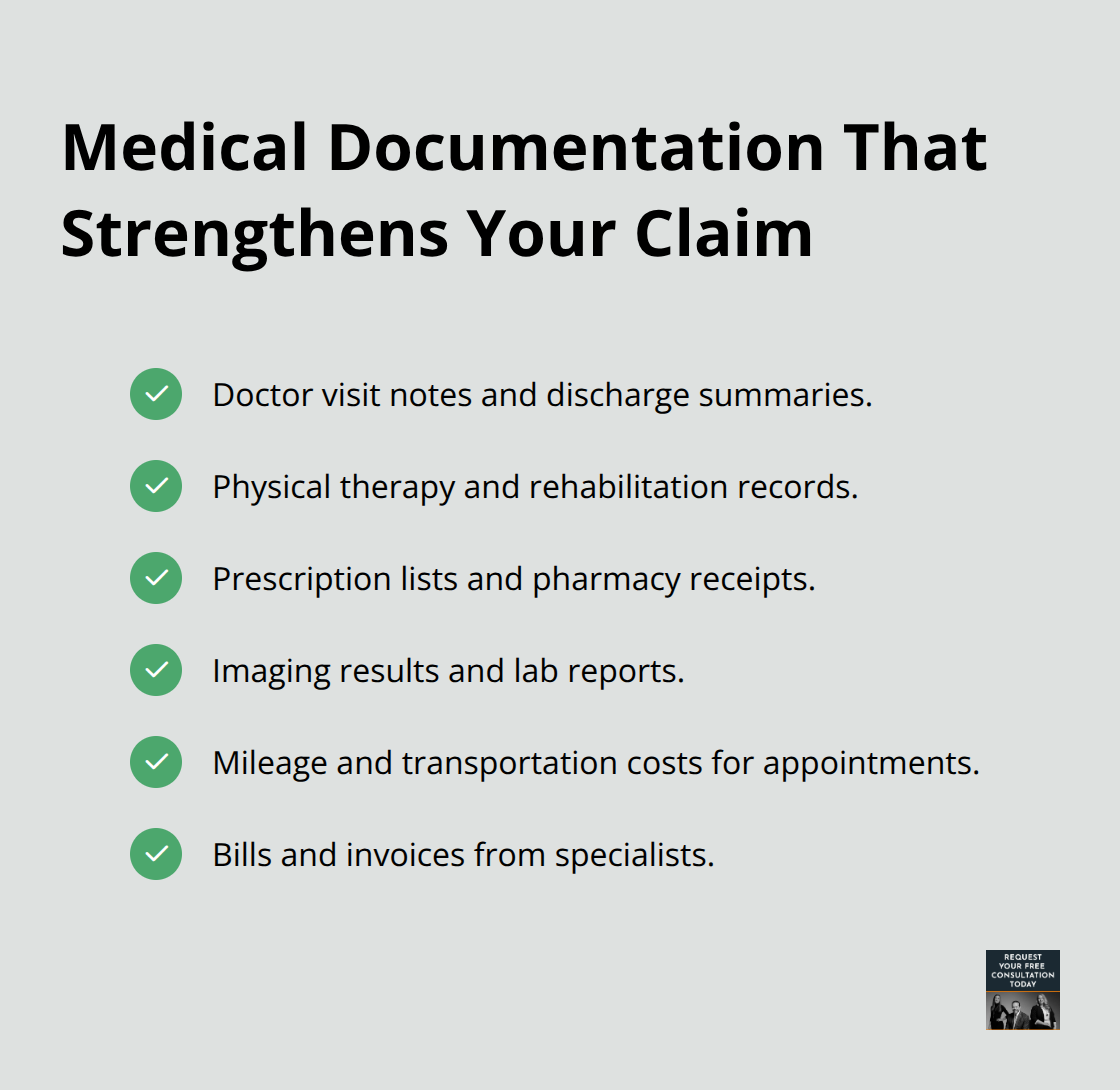
Keep copies of all bills, receipts for medications, and invoices from specialists. Transport costs to medical appointments count too, so save those receipts and mileage records. The Federal Motor Carrier Safety Administration reports that semi-trucks weigh up to 80,000 pounds, which means truck crash injuries tend to be severe and require extended treatment. Your consistent medical documentation directly correlates with higher settlement offers because it proves the crash’s impact on your life.
Obtain Police Reports and Accident Reconstruction Data
Police reports and accident reconstruction data carry significant weight in insurance negotiations and courtroom proceedings. Request the official police report within days of the accident, as the officer’s observations about road conditions, vehicle positions, and witness statements become harder to obtain later. Electronic logging device data from the truck shows whether the driver violated hours-of-service regulations, which establishes negligence under Federal Motor Carrier Safety Regulations. Vehicle data recorders in modern trucks capture speed, braking patterns, and steering information seconds before and after impact, providing objective evidence of what happened.
Photograph skid marks and debris patterns at the scene because these details fade quickly and reconstruction experts use them to estimate speeds and prove liability. Preservation of this electronic data requires swift action, so contact an attorney early to send a spoliation letter that legally obligates the trucking company and its insurers to retain all evidence.
Document Property Damage with Multiple Estimates
Repair estimates from certified mechanics document property damage with precision, and you should obtain multiple estimates if the damage is substantial because insurers sometimes dispute the first number you provide. These estimates also establish whether your vehicle is a total loss, which affects your compensation calculation since you’re entitled to the fair market value before the accident, not the salvage value afterward. The documentation you compile now-medical records, police reports, electronic data, and repair estimates-forms the complete picture that insurers use to evaluate your claim and determines what happens next in the negotiation phase.
How Insurance Companies Evaluate Your Truck Accident Claim
Understanding Your Coverage and the Adjuster’s Role
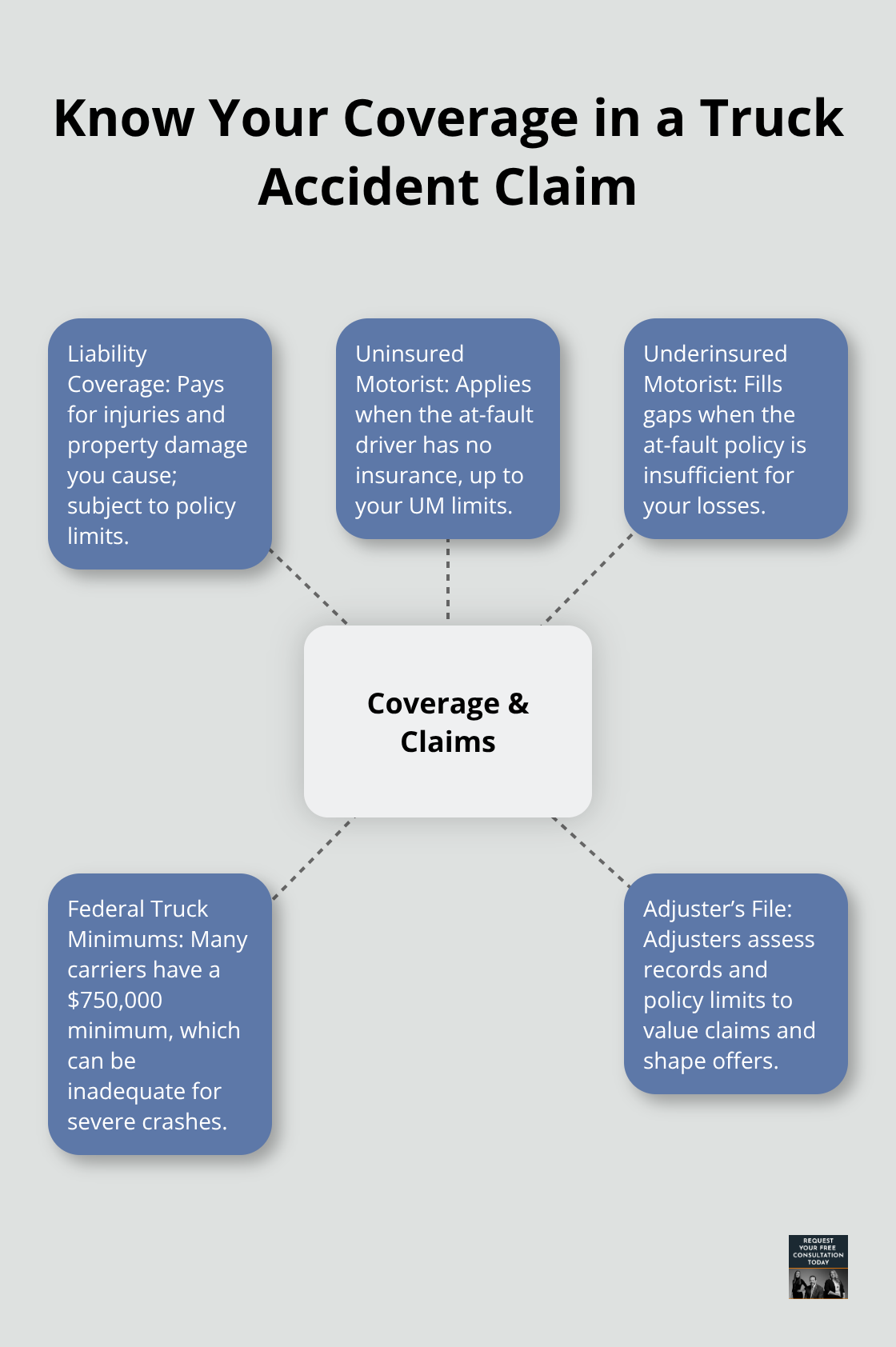
Insurance adjusters assigned to your truck accident case request specific documentation to build their investigation file, and understanding what they’re looking for helps you respond strategically rather than reactively. Your policy coverage limits determine the maximum payout available, so review your declarations page immediately to know whether you have liability coverage, uninsured motorist protection, or underinsured motorist coverage that applies when the at-fault driver lacks sufficient insurance. Semi-truck drivers carry federal minimum coverage of $750,000 for bodily injury and property damage according to the Federal Motor Carrier Safety Administration, but this amount often falls short when injuries are severe or multiple vehicles are involved, meaning your own underinsured motorist coverage becomes your safety net.
Responding to Adjuster Requests Strategically
When adjusters contact you, provide factual information about the accident and your injuries but avoid speculation about fault, causation, or the other driver’s actions. Adjusters scrutinize your medical records for gaps in treatment, so attending every recommended appointment and maintaining consistent documentation directly impacts their damage calculation. They’ll also request receipts for lost wages, transportation costs, and property damage, which is why organizing these documents immediately prevents delays and ensures nothing gets overlooked when settlement discussions begin.
Evaluating Settlement Offers Against Your Actual Damages
Settlement offers from insurance companies typically arrive lower than your actual damages because adjusters are trained negotiators working to minimize payouts, and accepting the first offer almost always costs you money you’re entitled to recover. Compare any settlement offer against your documented damages, which include medical expenses, lost wages, pain and suffering, property repair or replacement costs, and future rehabilitation needs if your injuries require ongoing treatment. If the offer falls short, your adjuster expects a counteroffer with supporting documentation explaining why the figure is insufficient.
Handling Complex Claims with Multiple Liable Parties
Truck accident claims involving multiple liable parties, such as the driver, trucking company, and cargo loader, often involve coordination among different insurers, which extends timelines but can also increase available coverage pools. When settlement negotiations stall or the insurer’s offer remains unreasonably low despite your documentation, that’s the point to contact an attorney who can escalate communications, demand additional coverage investigation, and prepare your case for litigation if fair resolution proves impossible through negotiation alone.
Moving Forward
When settlement negotiations stall, litigation becomes necessary to recover the compensation you deserve. An attorney handles all communications with insurers and the opposing party, removing the burden from you while you focus on healing. Your lawyer files the lawsuit within California’s statute of limitations (typically two to three years depending on your circumstances) and obtains electronic logging device data, maintenance records, and driver qualification files that prove negligence.
Court procedures require strict adherence to filing deadlines and evidence rules, which is why legal representation protects your rights throughout the truck accident claim process. Your attorney prepares you for depositions, manages expert reports, and negotiates settlement discussions even as the case moves toward trial. Witness testimony and accident reconstruction reports establish how the crash occurred and who bears responsibility, while medical experts quantify your injuries and project future treatment costs.
At Schaar & Silva LLP, we guide clients through every stage of truck accident claims in Santa Cruz County and surrounding areas. We handle property damage claims, connect you with medical lien services to manage bills during recovery, and provide emotional support resources because accidents affect more than just your finances. Contact us for a free case evaluation so you can understand your options without upfront costs or obligations.
