

Truck crash injury documentation can mean the difference between a successful claim and one that falls apart. Insurance companies and defense lawyers will scrutinize every detail, looking for gaps in your evidence.
We at Schaar & Silva LLP have seen how thorough documentation transforms cases. This guide walks you through exactly what to collect and preserve after a truck accident.
What to Document at the Truck Crash Scene
The first minutes after a truck accident are chaotic, but what you capture during those moments will shape your entire claim. Insurance adjusters and defense lawyers will ask why certain evidence is missing, and gaps hurt your credibility.
Photograph Everything Before Vehicles Move
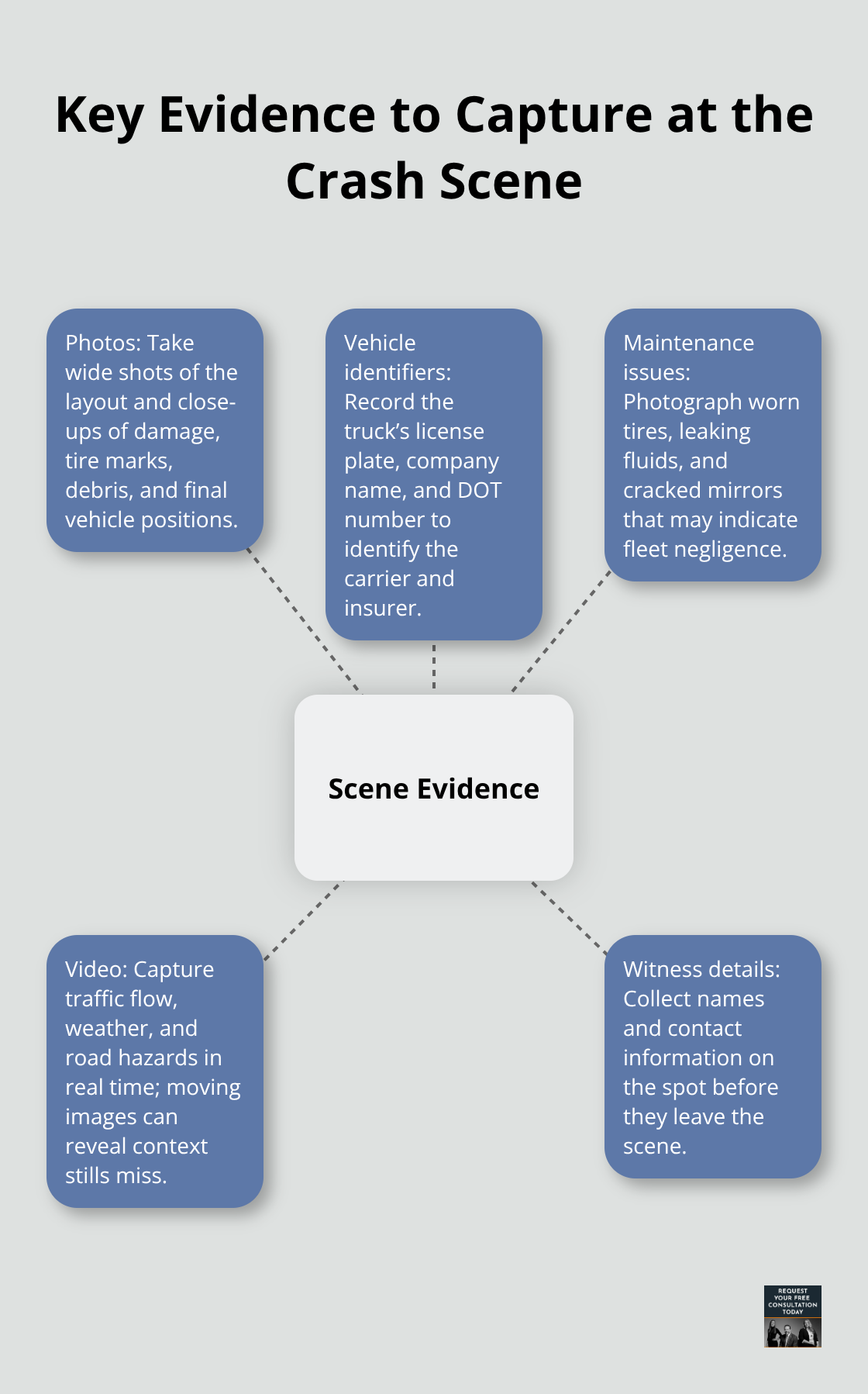
Start by taking photos before anything moves. Capture wide shots showing the overall scene layout, then close-ups of vehicle damage, tire marks on the pavement, debris fields, and the final resting positions of all vehicles involved. Police crash reports often contain inaccurate diagrams or miss critical details, so your photos become the truth.
Photograph the truck’s license plate, company name, and DOT number clearly-this identifies the carrier and its insurance. Get shots of any visible truck maintenance issues like worn tires, leaking fluids, or cracked mirrors, since these signal fleet negligence. Video footage works even better than still photos because it shows the scene in real time and captures elements like traffic flow, weather conditions, and road hazards that static images might miss.
Collect Witness Information Immediately
Witnesses disappear. Once they leave the scene, tracking them down becomes expensive and often impossible. Collect full names, phone numbers, email addresses, and home addresses from anyone who saw the crash. Ask open-ended questions about what they observed: speed, braking, lane position, traffic signals, and driver behavior.
Write down their answers verbatim in your phone or notebook. Get their vehicle information and insurance details if they were involved. A neutral bystander statement carries enormous weight because they have no stake in the outcome, unlike the truck driver or company. Insurance companies and juries trust impartial eyewitness accounts far more than driver claims.
Secure the Police Report
Request the police report number at the scene and confirm the responding officer’s name and badge number. Follow up within a week to obtain the full report from your local law enforcement agency. If someone refuses to give information, note their appearance and vehicle description anyway-this information may help investigators later.
With scene documentation and witness statements locked in, your next priority shifts to the medical side of your claim.
Building Your Medical Record After a Truck Accident
Seek Emergency Care Immediately
You must go to the emergency room or urgent care within the first few hours after the crash, regardless of how you feel. Many people delay treatment or skip follow-up visits thinking they feel fine-this mistake destroys claims. Insurance companies will argue that if your injuries were serious, you would have gone to the hospital right away. Even whiplash and internal injuries can take hours or days to surface.
The ER visit creates a timestamped medical record that links your injuries directly to the accident. Bring your insurance card and let medical staff document everything you report about pain, numbness, headaches, or difficulty moving. The medical record becomes your foundation for proving causation, which is exactly what insurers and defense lawyers will attack.
Document Your Symptoms Daily
Start a personal journal the day of the crash and write down your symptoms daily: pain levels on a scale of 1 to 10, which activities make it worse, sleep disruption, and how the injury affects your work or daily life. This journal is powerful evidence because it shows a continuous pattern of suffering rather than isolated complaints.
Schedule follow-up appointments consistently, even when you feel better. Insurance companies scrutinize gaps in treatment and will claim your injuries resolved if you skip weeks between visits. Each appointment reinforces that your condition requires ongoing care.

Preserve All Medical Documentation
Keep every medical document you receive from your first visit forward. This includes ER notes, imaging reports like X-rays and MRIs, discharge summaries, and treatment plans from physical therapists or other providers. Keep all prescription receipts and medication bottles, as they document the type and duration of treatment (these records also establish what you spent on recovery).
Request detailed medical reports from your healthcare providers that specifically describe your diagnosis, the mechanism of injury, prognosis, and recommended treatment duration. These reports explain your condition in medical language that insurers respect. Maintain copies of payment records and insurance explanations of benefits to track what was paid and what you still owe.
Organize Records for Your Claim
Organized medical documentation transforms how insurers and defense lawyers view your case. When you present a clear timeline of treatment, consistent follow-up care, and detailed symptom progression, you eliminate the gaps that insurers use to deny or reduce claims. Disorganized records-missing dates, incomplete notes, or scattered receipts-signal weakness and invite aggressive pushback on damages.
With your medical foundation solid, the next step involves collecting the broader evidence that proves liability and quantifies your losses.
Building Your Evidence Collection
Preserve Photos and Video Footage Immediately
Accident scene photos and videos become worthless if you don’t preserve them properly. Transfer all images and videos to your computer or cloud storage immediately after the crash, then back them up to a second location. Dashcam footage overwrites within 7 to 30 days depending on the device, so contact the truck driver’s employer and request they preserve the dashcam data before it deletes. Send a written preservation letter to the trucking company and their insurance carrier demanding they keep all electronic evidence, including black box data, GPS records, maintenance logs, and communications. This letter protects you legally because it prevents the other side from claiming evidence was lost accidentally. Police crash reports often contain incomplete diagrams or miss critical details, so your photos and videos become the authoritative record of what actually happened.

Document Lost Wages and Employment Impact
Lost wages and employment records require meticulous documentation because insurers will challenge every dollar you claim. Collect recent pay stubs covering at least three months before the crash, an employment letter from your employer stating your hourly rate or salary and the dates you missed work, and timesheets showing exactly which days you were absent due to recovery or medical appointments. If you’re self-employed, gather tax returns, invoices, and bank statements showing your average income before the crash. Insurance companies will scrutinize whether your lost wages align with your medical treatment timeline-if your medical records show you worked full days while claiming you couldn’t work, your credibility collapses.
Track All Insurance Communications
Document every communication with insurance adjusters in writing: send emails confirming phone calls, save all text messages, and keep detailed notes of conversations with dates and times. Never rely on verbal promises; insurance adjusters change and companies deny conversations happened. This written record protects you if disputes arise later about what was promised or discussed.
Obtain Vehicle Damage Estimates
Vehicle damage estimates from independent mechanics carry more weight than estimates from shops affiliated with insurance companies. Obtain at least two repair estimates from reputable shops, ensure they’re dated close to the crash, and ask the mechanic to document any hidden damage discovered during disassembly. These detailed estimates provide third-party validation of the crash’s severity and the costs required to restore your vehicle.
Final Thoughts
Complete truck crash injury documentation transforms how insurers and defense lawyers evaluate your claim. When you organize timestamped medical records, scene photos, witness statements, wage documentation, and preservation letters chronologically, you eliminate the gaps that adjusters exploit to deny or reduce payouts. Black box data showing the truck’s speed before impact, combined with your medical records showing injury onset, creates a causation chain that’s difficult for insurers to challenge.
Your immediate actions after the crash determine what evidence survives. Dashcam footage deletes within days, witnesses scatter, and medical records fade from memory. Preservation letters sent to the trucking company and their insurer create legal obligations to retain black box data, GPS records, and maintenance logs-without these steps, critical evidence vanishes and your claim weakens significantly.
If you’ve been injured in a truck accident in Santa Cruz County, Sacramento, or Oakland, contact Schaar & Silva LLP to discuss your truck crash injury documentation and next steps. We help with medical bill assistance, property damage claims, and connect you with support services while we handle the legal complexities of your case.
